

How to Install a Submersible Pump in a Commercial Drainage Sump
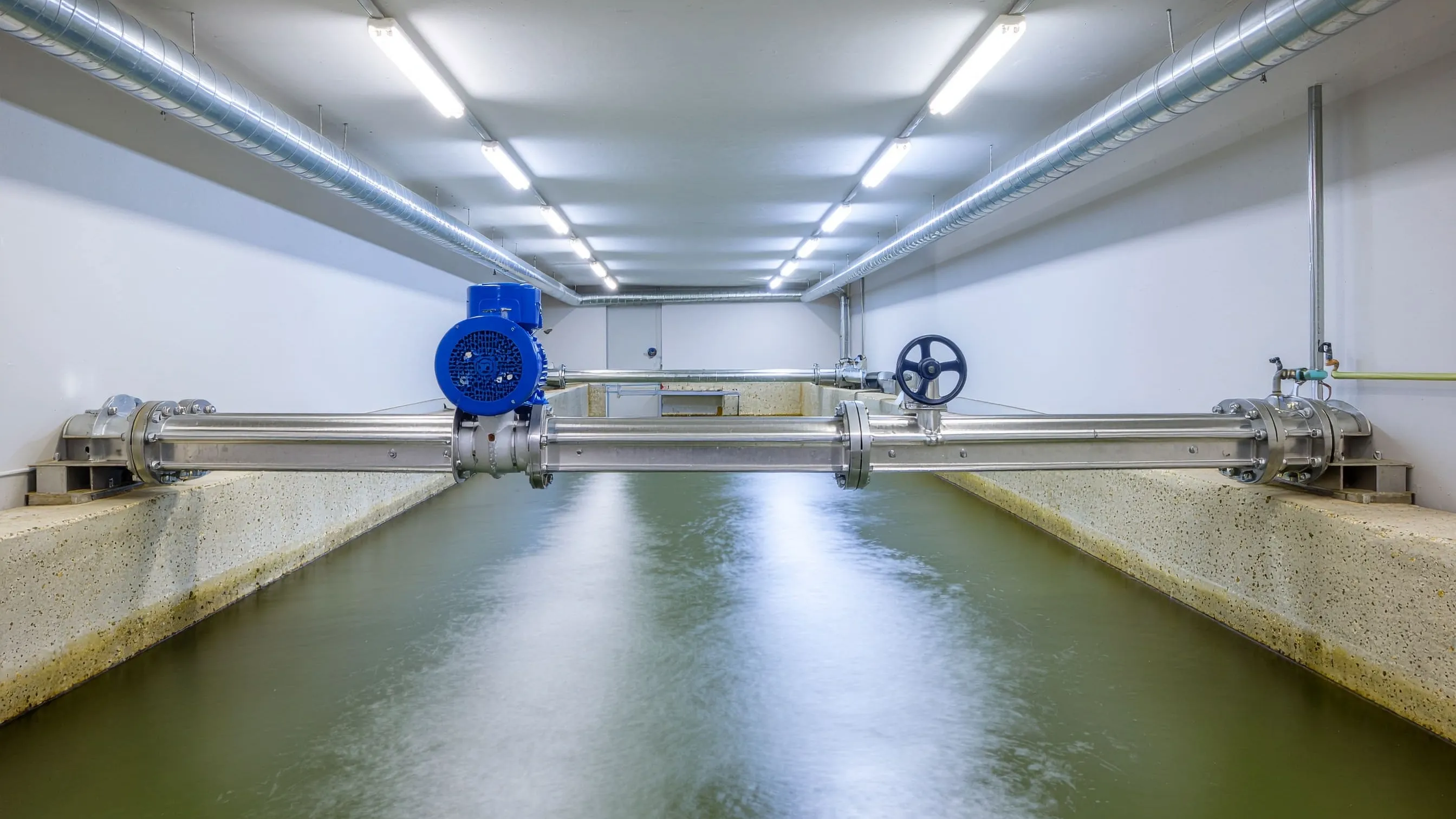
Commercial drainage sumps handle everything from groundwater ingress in basement car parks to wastewater from kitchen facilities, and a properly executed submersible pump installation drainage sump project represents the critical difference between reliable flood protection and recurring operational failure. Unlike domestic applications, commercial installations demand robust specifications, redundancy planning, and adherence to strict regulatory frameworks that govern everything from flow rate calculation through to alarm system provision and maintenance access design.
The consequences of inadequate installation extend well beyond the pump itself. Incorrectly aligned guide rails make future maintenance impractical. Undersized sumps cause motor cycling frequencies that overheat windings within months. Missing high-level alarm provision fails Building Regulations compliance. Getting the commercial drainage sump installation right from the start prevents the cascade of problems that result from treating it as a scaled-up domestic project.
Understanding Commercial Drainage Sump Systems
Drainage sumps collect water or effluent from areas below the natural drainage level, requiring mechanical pumping to discharge into the main drainage system where gravity drainage is physically impossible. Commercial buildings install these systems in basement levels, underground car parks, plant rooms, and food preparation areas as a fundamental building services requirement rather than an optional extra.
The submersible pump sits directly in the collected liquid, using its sealed motor housing to operate safely whilst submerged. Commercial submersible pump installation drainage sump applications typically require pumps rated between 0.75 kW and 7.5 kW depending on flow rates and discharge head requirements. Building Regulations Part H drainage requirements mandate specific provisions for foul drainage pumping stations, including alarm systems, ventilation, and access provisions that must inform the installation design from the outset. Even clean water sumps must comply with BS EN 12056 for gravity drainage systems and BS 8301 for building drainage.
Pre-Installation Planning and Site Assessment
Flow Rate Calculation
Accurate flow rate calculation forms the foundation of successful submersible pump installation drainage sump projects. Commercial drainage sump sizing must account for peak inflow rates rather than average flows - a basement car park sump during heavy rainfall faces demands that bear no relationship to dry-weather conditions.
Calculate required pump capacity using Q = A × i, where Q represents flow rate in litres per second, A equals catchment area in square metres, and i denotes rainfall intensity - typically 50 mm/hour for UK design standards. Apply a safety factor of 25–30% for commercial applications to accommodate unexpected peak flows and the system resistance increases that develop as installations age. Head requirements include vertical lift from sump bottom to discharge point plus friction losses in pipework and fittings: for every 10 metres of horizontal 100 mm pipe run, add approximately 0.5 metres of head. Grundfos pump performance curves provide precise flow-versus-head data for accurate duty point verification against the calculated system resistance curve.
Sump Chamber Sizing
The sump chamber must provide minimum dimensions ensuring proper pump operation and maintenance access. A typical commercial sump measures at least 1,000 mm × 1,000 mm × 1,200 mm deep, with larger installations requiring 1,500 mm square chambers to accommodate guide rail hardware and provide adequate clearance for pump removal.
The storage volume between pump start and stop levels determines cycling frequency. Insufficient volume causes rapid cycling - starting and stopping more times per hour than the motor winding specification permits - overheating windings and reducing motor service life proportionally to the cycling excess. The sump must provide adequate storage volume to limit cycling within manufacturer-specified maximums.
Electrical Supply Verification
Commercial submersible pumps typically operate on three-phase 400V supplies requiring dedicated circuits with appropriate isolation and protection. Confirming BS 7671 compliance and adequate fault protection at the supply point prevents the electrical infrastructure problems that delay commissioning. Phase rotation must be verified before the pump enters service - incorrect connection causes immediate reverse rotation and impeller destruction.
Selecting the Right Submersible Pump
Pump selection depends on the drainage application and effluent characteristics. For clean water drainage handling groundwater or rainwater, Lowara manufactures drainage pumps specifically engineered for commercial applications, offering robust construction and reliable performance in continuously wet environments. Grey water and light sewage applications require pumps with vortex or channel impellers capable of passing solids up to 50 mm diameter.
Commercial submersible pump installation drainage sump projects typically employ three float switches: one for pump start, one for pump stop, and a third for high-level alarm activation. Duty/standby pump arrangements with automatic changeover require additional float switches and control logic. The control panel specification must match this complexity - basic single-pump systems may use simple DOL starters, whilst larger installations require panels with alternation logic, run-time monitoring, remote alarm signalling, and phase failure protection. For commercial drainage sump installations requiring duty/standby capability with integrated BMS connectivity, Wilo submersible pump control panels provide factory-configured alternation logic and remote alarm outputs that satisfy commercial building management requirements without separate panel commissioning.
Essential Tools and Equipment
Professional submersible pump installation demands specific tools beyond standard plumbing supplies. Lifting equipment is essential: commercial pumps typically weigh 50–200 kg, requiring a portable gantry crane or chain block rated for twice the pump weight. Electrical testing instruments must verify supply voltage, phase rotation, insulation resistance, and earth continuity before energising the pump - a multifunction electrical tester complying with GS38 represents the minimum requirement.
Installation hardware includes stainless steel guide rails, pump base plates, and coupling systems that ensure the pump locates correctly on its base plate when lowered into the sump whilst allowing easy removal for maintenance without entering the chamber. Discharge pipework uses HDPE or steel depending on pressure ratings and site conditions. If entering the sump chamber proves necessary during installation, confined space entry procedures apply - atmospheric testing, rescue equipment, and trained personnel are mandatory, not discretionary.
Step-by-Step Installation Process
Base Preparation and Guide Rail Installation
Begin by preparing the sump chamber base. The pump base plate must sit on a level, stable concrete pad, with any irregularities causing vibration and premature wear. Check level accuracy within 2 mm over the plate length before proceeding. Install guide rail submersible pump brackets with upper fixings secured to sump walls using chemical anchors or through-bolts. The guide rails must run perfectly vertical - misaligned rails prevent proper pump seating and may damage the coupling system during installation or future maintenance removal. Use a plumb bob or laser level to verify alignment before anchor fixings cure.
Discharge Pipework and Pump Lowering
Fit the base elbow or coupling to the base plate first, ensuring all sealing faces are clean and undamaged. For central heating plant room drainage applications where the submersible pump sump is adjacent to heating system pipework, ensure adequate clearance between discharge pipework and any heating connections to allow independent maintenance access to both.
Lower the pump carefully using lifting equipment, guiding it down the rails until it engages with the base plate coupling. The pump weight compresses the coupling seal, creating a watertight connection without additional fasteners. Never force the pump onto the base - retrieve it and investigate any resistance before proceeding.
Electrical Connections and Float Switch Installation
Route the pump cable through a sealed gland in the sump cover, maintaining IP68 drainage pump electrical compliance throughout the cable run. Connect the cable to the control panel following the manufacturer's wiring diagram precisely - incorrect phase connections cause reverse rotation that destroys the impeller and motor within seconds of energisation.
Position the start float to activate when liquid reaches approximately 300 mm above the pump inlet, ensuring adequate submersion for motor cooling and mechanical seal lubrication. The stop float sits 150–200 mm below the start level, providing the switching differential that prevents rapid cycling. The high-level alarm float mounts 200 mm above the start level, allowing time for engineering intervention before overflow occurs.
Fit non-return valves in the discharge pipework immediately above the pump discharge. Pump valves including spring-loaded non-return valves rated for the system pressure must be accessible for maintenance without requiring pump removal - a positioning consideration that must be resolved during pipework design rather than after the sump cover is installed.
Commissioning and Testing Procedures
Before energising the pump, check insulation resistance between motor windings and earth using a 500V megger. Readings should exceed 2 megohms for new installations - lower values indicate moisture ingress or insulation damage requiring investigation before the pump enters service. This sump pump commissioning procedure step cannot be skipped: it is both a safety requirement and the baseline measurement against which future maintenance tests are compared. Ebara commissioning documentation requires recording these baseline insulation resistance values as a warranty activation condition, establishing the reference measurements against which future maintenance testing identifies developing insulation deterioration.
Verify correct phase rotation by briefly energising the pump and observing discharge flow. Incorrect rotation produces minimal flow and unusual noise - if wrong, swap any two phase conductors at the control panel terminals. Fill the sump gradually whilst observing float switch operation, measuring actual flow rate during pump operation using a calibrated flow meter or timed discharge volume method.
Test the high-level alarm by continuing to fill beyond normal operating range, confirming the alarm activates before liquid reaches the overflow point and that alarm signals reach the building management system as specified. Duty/standby systems require additional verification that the panel correctly alternates between pumps on successive calls and automatically switches to the standby pump on duty pump failure.
National Pumps and Boilers emphasises thorough commissioning documentation as essential for warranty compliance and long-term system reliability. Document all results including electrical test readings, measured flow rates, observed operating levels, and alarm function verification - this record forms both the Building Regulations Part H compliance evidence and the baseline for future maintenance comparison.
Maintenance Access and Future Servicing
The guide rail submersible pump system enables pump removal without entering the sump chamber: disconnect the electrical supply at the isolator, attach lifting equipment to the pump lifting eyes, and withdraw the pump vertically up the rails. This procedure typically takes 15–30 minutes and requires only basic lifting equipment - substantially simpler than accessing pumps installed without guide rails that require confined space entry procedures with all their associated safety requirements and programme time.
Establish a maintenance schedule reflecting the application. Clean water sumps typically require annual inspection, whilst grey water or sewage applications need quarterly servicing. Common issues include blocked impellers, failed seals, and float switch malfunctions. DAB commercial drainage pump documentation specifies inspection intervals and service tasks - use these as the baseline for the planned maintenance programme.
Compliance and Safety Considerations
Building Regulations Part H drainage compliance covers storage volume, alarms, ventilation of foul water sumps, and maintenance access provisions. The installation must not create health hazards or allow foul air to enter occupied spaces. BS 8301 provides detailed guidance on drainage system design and installation, with commercial submersible pump installations required to comply with flow rate calculations, pipe sizing, and material specifications. Failure to comply may invalidate building insurance and create liability. Plant rooms housing both drainage sumps and DHW pumps require adequate separation between drainage and domestic hot water systems to satisfy Water Regulations guidance on cross-contamination prevention - a compliance dimension that affects both drainage sump construction positioning and hot water pump installation layout.
Risk assessments are required before installation work commences. Method statements document the installation sequence and safety procedures - commercial installations in occupied buildings typically require approved method statements before work starts. Contact Us for guidance on developing comprehensive method statements for complex submersible pump installation drainage sump projects where site-specific safety requirements exceed standard documentation templates.
Conclusion
Installing a submersible pump in a commercial drainage sump demands careful planning, precise execution, and thorough compliance with the regulatory requirements that distinguish commercial from domestic practice. Accurate flow calculations, appropriate pump selection, step-by-step installation technique, and comprehensive sump pump commissioning procedures that document baseline performance data combine to deliver installations that protect buildings reliably for decades. The guide rail system provides essential maintenance access, whilst multi-float configurations ensure reliable automatic operation and alarm protection against system failures.