

How to Install Pumps in Plantrooms with Limited Space and Access
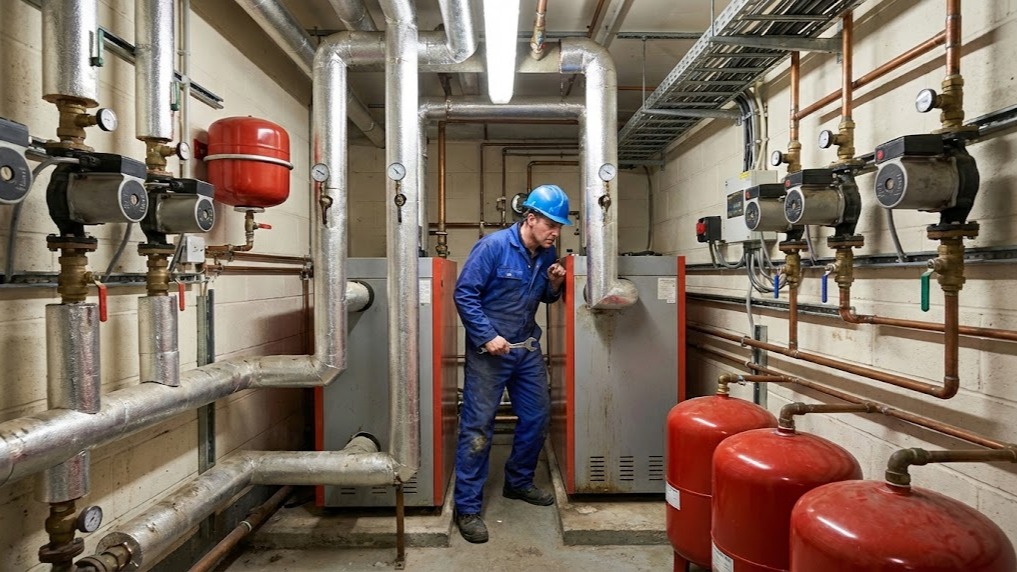
Installing pumps in tight spaces presents unique challenges for heating engineers and facilities managers. Modern buildings increasingly feature compact plantrooms where every square metre counts, yet these spaces must accommodate essential heating and hot water equipment. Whether retrofitting pumps into existing mechanical rooms or working within new-build constraints, understanding proper installation techniques ensures system reliability whilst maintaining safe working conditions.
This guide explores practical strategies for successful compact pump installation in space-constrained environments, from initial planning through to long-term serviceability considerations.
Understanding Space Constraints in Plantrooms
Plantroom space limitations typically arise from several factors. Basement locations often feature low ceiling heights, structural columns, and competing building services. Older buildings converted for modern use may have mechanical rooms carved from existing spaces, resulting in awkward layouts and restricted access routes. Even new developments increasingly allocate minimal floor area to plant equipment as property values drive space optimisation.
Access challenges compound these issues. Narrow doorways, tight stairwells, and weight-restricted service lifts can make equipment delivery problematic. Once inside the plantroom, engineers must navigate around existing pipework, cable trays, and other mechanical systems whilst manoeuvring heavy pump equipment into position.
Common Access Restrictions
Typical plantroom access constraints include corridor widths below 900mm, doorways that won't accommodate standard pump packaging, and stairwells with tight turns that prevent traditional equipment handling methods. Service lifts may have weight limits preventing the transport of larger assembled pump sets, requiring alternative delivery strategies.
For projects involving central heating pumps in constrained environments, careful dimensional checking prevents costly installation delays.
Pre-Installation Planning for Tight Spaces
Successful installing pumps in tight spaces begins with thorough pre-installation planning. A detailed site survey should document all access routes from delivery point to final installation location, including door widths, corridor dimensions, ceiling heights, and turning radii. Photograph or video potential problem areas to facilitate equipment selection and delivery planning.
Measure the available installation footprint precisely, accounting for mandatory maintenance clearances around pumps. British Standards typically require minimum clearances of 600mm for routine servicing, though compact installations may require specific arrangements with removable access panels or increased vertical separation.
Equipment Selection for Compact Spaces
Grundfos pumps and Wilo pumps offer numerous compact models specifically designed for space-constrained applications. When selecting equipment, consider:
Physical dimensions - Compare pump footprints and overall heights against available space, including allowances for pipework connections and electrical terminations. Some manufacturers offer vertical orientation options that reduce floor space requirements.
Modular construction - Pumps that can be partially disassembled for delivery simplify transport through restricted access routes. Compact pump installation often benefits from equipment that arrives in components for final assembly on-site.
Connection flexibility - Models with multiple port orientation options provide greater flexibility for pipework routing in cramped conditions. Top-suction/discharge configurations may prove more space-efficient than traditional horizontal arrangements.
Weight distribution - Lighter pump sets ease manual handling in confined spaces where mechanical lifting equipment cannot operate. Consider whether pumps can be broken down into sections not exceeding two-person manual handling limits (typically 25kg per person).
Installation Techniques for Limited Access
Disassembly and Modular Installation
Large commercial circulators may require partial disassembly for transport through restricted access routes. Motors, coupling guards, and baseplates can often be separated from pump casings, reducing individual component sizes. Develop a disassembly sequence that:
- Identifies which components can be safely separated without damaging seals or alignment
- Ensures critical fitted components remain together (impellers, shaft sleeves, mechanical seals)
- Protects machined surfaces during handling and storage
- Allows efficient reassembly in the final location
Photograph each disassembly stage to aid correct reassembly. Label mating flanges and mark shaft positions relative to coupling hubs to preserve factory alignment settings.
Rigging and Manoeuvring Strategies
Installing pumps in tight spaces demands careful manoeuvring techniques. Compact chain hoists or lever-operated tirfors provide lifting capability where overhead cranes cannot reach. Position equipment on roller skids or air-bearing pads to facilitate lateral movement across plantroom floors.
For particularly challenging access routes, consider these strategies:
Pivot manoeuvres - Use door frames or structural columns as pivot points to rotate equipment through tight corners. Protect both the equipment and building fabric with timber battens or protective sheeting.
Sequential positioning - Move equipment in stages, repositioning rigging points between plantroom obstacles. Allow adequate time for this patient approach rather than forcing equipment through tight gaps.
Temporary removal - Remove door frames, handrails, or non-structural elements blocking access routes where practical. Reinstate immediately after equipment delivery to maintain building safety.
Pipework Connection in Confined Spaces
Compact installations benefit from pre-fabricated pipework assemblies. Fabricate flanged spool pieces, valve assemblies, and connection manifolds off-site where access permits better quality control. This reduces on-site welding or brazing in cramped conditions where proper technique and quality inspection prove difficult.
Pump valves and isolation equipment should be positioned to remain accessible for operation and maintenance. In tight installations, consider compact ball valves or butterfly valves rather than gate valves that require greater operating clearances.
Space-Saving Installation Configurations
Vertical Mounting Solutions
Wall-mounted pump arrangements maximise floor space in compact plantrooms. Suitable for smaller duty pumps, vertical mounting requires substantial wall brackets capable of supporting equipment weight plus dynamic loads from pump operation. Verify wall construction provides adequate load-bearing capacity before specifying wall-mounted installations.
Compact pump installation in vertical orientation places motors above pump heads, reducing floor footprints by up to 60% compared to horizontal base-mounted arrangements. However, ensure adequate headroom exists for motor removal during maintenance, and consider how seal replacement will be accomplished with limited access below the pump.
Close-Coupled Arrangements
Inline circulator designs eliminate extended baseplates, reducing installation footprints significantly. Close-coupled pumps integrate motors directly to pump casings, eliminating flexible couplings and coupling guards. This configuration suits duties up to approximately 7.5kW where shaft deflection and bearing loads remain within acceptable limits.
Lowara pumps offer extensive inline circulator ranges suitable for space-critical applications. For larger duties, consider back-to-back pump arrangements that share common baseplates whilst keeping individual pump footprints manageable.
Overhead and Ceiling-Mounted Options
Utilising vertical space through ceiling-mounted or elevated platform installations preserves valuable floor area. DHW pumps serving domestic hot water systems often suit elevated mounting, particularly in plantrooms serving tall buildings where positive suction heads naturally exist.
Structural engineers should verify ceiling load capacities before specifying overhead installations. Consider vibration isolation mountings to prevent structure-borne noise transmission. Ensure elevated platforms provide safe working areas meeting Work at Height Regulations, with adequate guardrails and access provisions.
Ensuring Future Serviceability
Maintenance Access Planning
Installing pumps in tight spaces must not compromise future maintenance access. Even the most compact arrangement requires provision for seal replacement, bearing service, and impeller inspection. British Standards recommend minimum clearances, but practical serviceability demands consideration of:
Component removal routes - Can motors be lifted vertically clear of baseplates? Will removing coupling guards require displacing adjacent equipment? Trace the removal path for major service items during design, not after installation completion.
Tool access - Sufficient space must exist to use spanners, torque wrenches, and other tools required for maintenance tasks. Consider blind bolt locations that may prove inaccessible in tight configurations.
Replacement equipment delivery - Future pump replacement may occur decades after initial installation when delivery arrangements and personnel have changed. Ensure access routes remain viable by documenting maximum dimensions and weight capacities in operation and maintenance manuals.
Modular Component Replacement
Design installations to permit individual component replacement without disturbing entire pump sets. Mechanical seals and bearings require periodic renewal; ensuring these items can be accessed without major dismantling work reduces maintenance costs and system downtime.
For compact pump installation in particularly constrained locations, consider whether complete pump cartridge assemblies might prove more practical than in-situ repairs. Some manufacturers offer pre-assembled wet ends that can be exchanged rapidly, with refurbishment of removed units occurring in workshop environments.
Documentation and Labelling
Comprehensive as-installed documentation proves invaluable when maintenance occurs years after installation. Photograph the completed installation from multiple angles, clearly showing access routes, isolation points, and drain locations. Mark service clearances on plantroom floors using painted lines or applied markers that identify equipment-free zones.
Label all isolation valves, drain points, and vent connections clearly. In compact installations where multiple pump sets occupy adjacent spaces, clear labelling prevents dangerous cross-contamination during maintenance.
Safety Considerations for Confined Space Work
Risk Assessment Requirements
Plantroom work in restricted spaces may constitute "confined space" under Health and Safety regulations, triggering additional legal requirements. Conduct thorough risk assessments before commencing installation work, considering:
- Atmospheric hazards (lack of oxygen, presence of harmful gases)
- Access and egress difficulties in emergencies
- Communication limitations between workers inside and outside confined spaces
- Rescue arrangements if workers become incapacitated
Permit-to-work systems should govern installing pumps in tight spaces where confined space designations apply. Ensure adequate numbers of trained personnel are available, including designated attendants monitoring workers in confined areas.
Working at Height in Plantrooms
Low plantroom ceilings combined with elevated pump positions often necessitate working from ladders or temporary platforms. Follow Work at Height Regulations by:
- Using properly secured stepladders or mobile scaffold towers
- Ensuring three points of contact when ascending or descending
- Avoiding overreaching that could cause ladder instability
- Securing tools to prevent drops onto workers below or equipment
For repeated access to elevated equipment, consider permanent access platforms with compliant guardrails and fixed ladders or stairs.
Ventilation and Environmental Controls
Adequate ventilation during installation prevents atmospheric hazards, particularly when hot works such as welding or brazing become necessary. Portable extraction equipment may be required where natural ventilation proves insufficient in basement plantrooms.
Control dust and debris generation during cutting and drilling operations. In operational plantrooms where existing equipment continues running, protect operating systems from construction contaminants using temporary screening and regular cleaning.
Professional Installation Support
Successfully installing pumps in tight spaces requires careful planning, appropriate equipment selection, and experienced installation teams. For complex projects involving restricted access or challenging site conditions, professional support ensures installations meet performance requirements whilst maintaining safety standards.
At National Pumps and Boilers, our team provides comprehensive installation guidance for space-constrained applications. From initial site surveys through equipment specification to final commissioning, we ensure heating and hot water systems perform reliably regardless of space limitations.
For expert advice on your next compact plantroom project, contact us to discuss your specific requirements. Our extensive experience with challenging installations helps overcome space and access constraints whilst delivering systems that serve buildings effectively for decades.