

How to Match Pump Specifications to Your System Requirements
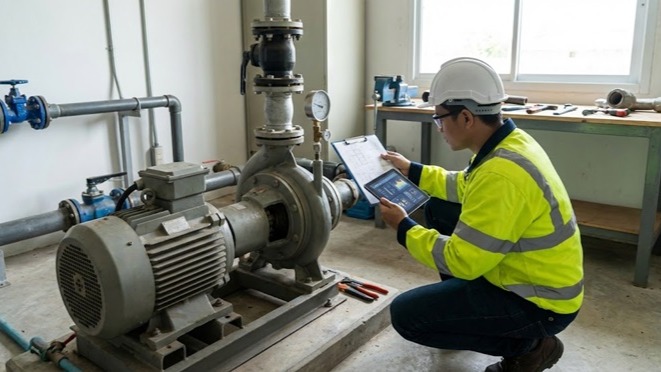
Selecting the wrong circulator pump costs more than the initial purchase price - it leads to inefficient heating, excessive energy bills, premature equipment failure, and frustrated clients. Yet many heating engineers still size pumps using outdated rules of thumb rather than matching specifications to actual system demands.
The difference between a properly specified pump and an oversized unit can mean 30-40% higher running costs over the pump's lifetime. For a commercial system operating 5,000 hours annually, that translates to hundreds of pounds wasted each year. More critically, incorrect pump specification matching creates noise complaints, balancing issues, and accelerated wear on system components.
This guide explains how to match pump to system requirements using flow rate calculations, head pressure analysis, and system curve matching - the technical approach that prevents costly specification errors.
Understanding System Requirements Before Pump Selection
Before examining pump specifications, engineers must quantify three fundamental system requirements: heat load, flow rate, and system resistance. These parameters define the operating envelope that the pump must satisfy.
Heat Load Determination
System heat load drives the required flow rate. For central heating applications, calculate the total radiator output or underfloor heating capacity across all zones. A typical domestic system might require 12-15 kW for a three-bedroom property, whilst commercial applications can demand 100+ kW depending on building size and insulation standards.
Building Regulations Part L establishes minimum efficiency standards, but actual heat loss calculations should follow BS EN 12831 methodology. This accounts for fabric losses, ventilation heat loss, and thermal bridging - factors that significantly impact pump sizing.
Flow Rate Calculation
Once heat load is established, calculate the required flow rate using the formula: Flow (l/s) = Heat Load (kW) / (4.2 × ΔT). For heating systems, ΔT typically ranges from 10-20°C depending on emitter type and system design.
A 15 kW domestic system with a 15°C temperature differential requires 0.24 l/s (14.4 l/min). Commercial heating systems with tighter temperature differentials need proportionally higher flow rates. Grundfos pumps and other manufacturers provide flow rate tables that correlate heat output to pump performance.
System Resistance Analysis
System resistance - measured in metres of head (mH) or kilopascals (kPa) - represents the pressure required to overcome friction losses through pipework, fittings, valves, and heat exchangers. This is where many specifications fail.
Resistance increases exponentially with flow rate and varies dramatically based on pipe diameter, length, and fitting count. A system with 50 metres of 22mm copper pipe, 15 radiator valves, and a plate heat exchanger might present 3-4 mH of resistance, whilst undersized pipework or complex layouts can double this figure.
Interpreting Pump Performance Curves
Pump manufacturers publish performance curves that plot flow rate against head pressure. Understanding these curves is essential for pump specification matching to system demands.
Reading Pump Curves Correctly
The pump curve shows maximum flow (at zero head) and maximum head (at zero flow). The actual operating point sits somewhere along this curve, determined by where the pump curve intersects the system curve.
A Wilo pump rated for 5 mH maximum head and 3 m³/h maximum flow won't deliver both simultaneously. At 2.5 mH, it might deliver 2.5 m³/h - the intersection point that matters for system design.
Duty Point Selection
The ideal duty point sits in the middle third of the pump curve, typically between 40-70% of maximum flow. This provides efficiency, quiet operation, and tolerance for system variations.
Operating at the extreme ends of the curve creates problems. Near maximum flow, efficiency drops and motor load increases. Near maximum head with minimal flow, the pump recirculates water internally, generating heat and noise.
Variable Speed Considerations
Modern circulators with variable speed control adjust performance to match system demand. These pumps maintain constant differential pressure or proportional pressure, reducing energy consumption by 30-50% compared to fixed-speed units.
When specifying variable speed pumps for central heating equipment, ensure the control mode matches the system type. Constant pressure suits systems with thermostatic radiator valves, whilst proportional pressure works better for weather-compensated systems.
Calculating System Head Loss
Accurate head loss calculation prevents the most common pump sizing error - overestimation. Many engineers add excessive safety margins, resulting in oversized pumps that waste energy and create balancing difficulties.
Pipe Friction Losses
Pipe friction follows established relationships documented in CIBSE Guide C. For copper pipe carrying water at 75°C, friction loss depends on flow velocity and pipe diameter.
A 22mm pipe carrying 0.3 l/s experiences approximately 100 Pa/m friction loss. The same flow through 15mm pipe increases friction to 500 Pa/m - five times higher. This relationship explains why proper pipe sizing is fundamental to efficient pump selection.
Fitting and Component Losses
Each elbow, tee, valve, and heat exchanger adds resistance. Rather than calculating each fitting individually, use equivalent length methods. A 22mm elbow equals approximately 0.5 metres of straight pipe, whilst a gate valve adds 0.3 metres.
For a typical domestic system with 40 metres of actual pipe plus fittings, the equivalent length might reach 55-60 metres. Commercial systems with multiple zones, balancing valves, and heat exchangers require more detailed analysis.
Index Circuit Identification
The index circuit - the path with the highest resistance from pump to furthest emitter and back - determines the minimum pump head. Calculate head loss for this circuit, not an average circuit.
In multi-storey buildings, the index circuit typically runs to the highest floor's furthest radiator. For underfloor heating, it extends to the longest loop in the furthest manifold. Identifying this circuit correctly prevents undersizing.
Matching Pump Specifications to System Curves
The system curve plots head loss against flow rate for the entire system. Where this curve intersects the pump curve determines the actual operating point and is critical for successful pump specification matching.
Creating the System Curve
System resistance increases with the square of the flow rate. If a system requires three mH at design flow rate (0.3 l/s), it needs approximately 0.75 mH at half flow (0.15 l/s) and 12 mH at double flow (0.6 l/s).
Plot these points to visualise the system curve. This curve remains constant unless system configuration changes - adding radiators, modifying pipework, or installing additional pump valves shift the curve upward.
Finding the Operating Point
Overlay the pump curve on the system curve. The intersection represents the actual operating point. If this point sits near the design requirement (calculated flow and head), the pump matches the system well.
A mismatch occurs when the intersection sits far from design requirements. An oversized pump intersects at excessive flow, whilst an undersized pump intersects below rthe equired flow. Both scenarios compromise system performance.
Allowance for Future Modifications
Some engineers deliberately oversize pumps to accommodate future system extensions. Whilst this seems prudent, it often creates immediate problems that outweigh potential benefits.
A better approach uses variable speed pumps that adapt to changing system demands. These units automatically adjust to maintain design conditions whether the system operates at 50% or 100% capacity, eliminating the need for oversizing.
Electrical Requirements and Control Integration
Pump specifications extend beyond hydraulic performance to include electrical characteristics and control compatibility.
Power Consumption Analysis
Pump power input (watts) differs from hydraulic output (flow × head). Efficiency typically ranges from 20-50% for small circulators to 60-80% for larger commercial units.
A pump delivering 0.3 l/s at four mH provides approximately 12 watts of hydraulic power. With 40% efficiency, it consumes 30 watts of electrical input. Over 5,000 annual operating hours, this totals 150 kWh - modest but significant when multiplied across multiple pumps in commercial systems.
ErP 2020 regulations mandate minimum efficiency standards for circulators. Compliant pumps display an Energy Efficiency Index (EEI) of 0.23 or lower, representing substantial improvements over older fixed-speed units.
Control Voltage and Compatibility
Standard circulators operate on a 230V single-phase supply, but control integration varies. Some pumps accept 0-10V analogue signals for speed control, whilst others use PWM (pulse width modulation) or digital bus communication.
When integrating pumps with building management systems or weather compensation controls, verify control compatibility before specification. Pump valves and control components must communicate effectively to maintain system efficiency.
Installation Environment Considerations
Pump specifications include ingress protection (IP) ratings and ambient temperature limits. Standard circulators rated IP42 suit dry plant rooms but require IP44 or higher for damp locations.
Ambient temperature affects motor cooling and component longevity. Most circulators operate reliably between 0-40°C, but installation in confined spaces or near boilers may exceed this range. Ensure adequate ventilation prevents thermal derating.
Common Specification Mistakes and How to Avoid Them
Decades of site experience reveal recurring specification errors that compromise system performance and demonstrate why proper pump specification matching matters.
Oversizing Based on Safety Factors
The most prevalent mistake involves adding cumulative safety margins. An engineer calculates 3 mH requirement, adds 20% for uncertainty (3.6 mH), then selects the next pump size up (5 mH). This double safety margin creates a pump 67% larger than necessary.
Oversized pumps operate inefficiently, generate noise, and create balancing difficulties. Thermostatic radiator valves close partially to restrict excessive flow, adding resistance and wasting pump energy fighting against closed valves.
Ignoring Pump Curve Shape
Not all pumps with similar maximum specifications perform identically. A steep pump curve (high head, low flow) suits systems with high resistance and moderate flow requirements. A flat curve (moderate head, high flow) matches low-resistance systems needing high circulation rates.
Selecting a pump based solely on maximum head and flow without considering curve shape leads to operating points far from the efficiency peak. This increases running costs and reduces component life.
Neglecting System Protection
Pump specifications must account for system protection requirements. Expansion vessels maintain system pressure, preventing cavitation that damages pump impellers.
Undersized expansion vessels or incorrect pre-charge pressure allow system pressure to drop during heating cycles. When pressure falls below the pump's net positive suction head requirement, cavitation occurs - creating noise and accelerating wear.
Failing to Consider Part-Load Operation
Systems rarely operate at design conditions continuously. Weather compensation, zone control, and occupancy patterns mean pumps spend most of their time at part load.
Fixed-speed pumps sized for peak load waste energy during part-load operation. The pump continues delivering full flow whilst control valves throttle to match reduced demand. Variable speed pumps eliminate this waste by reducing speed to match actual requirements.
Practical Specification Process
A systematic approach to match pump to system requirements combines calculation with practical verification. Following established pump specification matching protocols ensures optimal performance.
Step-by-Step Sizing Methodology
Begin with accurate heat load calculation following BS EN 12831. Convert heat load to flow rate using appropriate temperature differential for the emitter type - typically 15-20°C for radiators, 5-10°C for underfloor heating.
Calculate head loss for the index circuit, including pipe friction, fittings, and components. Add 10% contingency for calculation uncertainty - no more. This provides the design duty point.
Select a pump whose curve intersects the system curve at or near this duty point, ensuring the intersection sits in the middle third of the pump curve. Verify electrical compatibility and control requirements.
Verification and Commissioning
After installation, measure the actual flow rate and the differential pressure. These measurements confirm whether the pump operates at the design point or requires adjustment.
Variable speed pumps allow post-installation optimisation. Adjust the pump curve or control settings to match measured system characteristics, ensuring efficient operation across all load conditions.
National Pumps and Boilers supplies technical resources and pump selection tools that simplify this process, helping engineers specify appropriate equipment for diverse system types.
Conclusion
Properly matching pump specifications to system requirements delivers reliable heating performance, minimizes energy consumption, and prevents premature equipment failure. The process requires accurate flow rate calculation, detailed head loss analysis, and careful pump curve interpretation - not guesswork or excessive safety factors.
Engineers who invest time in thorough system analysis specify pumps that operate efficiently at design conditions and adapt effectively to part-load operation. This approach reduces running costs by 30-50% compared to oversized alternatives whilst improving comfort and system reliability.
Variable speed circulators represent the current best practice for most applications, automatically adjusting to match system demands without manual intervention. Combined with proper pipe sizing, system balancing, and control integration, these pumps provide optimal performance across the full operating range.
For technical guidance on pump selection for specific system types, or to discuss equipment options that match particular project requirements, contact us for expert support.