

How to Prevent Pump Damage from Foreign Objects and Debris
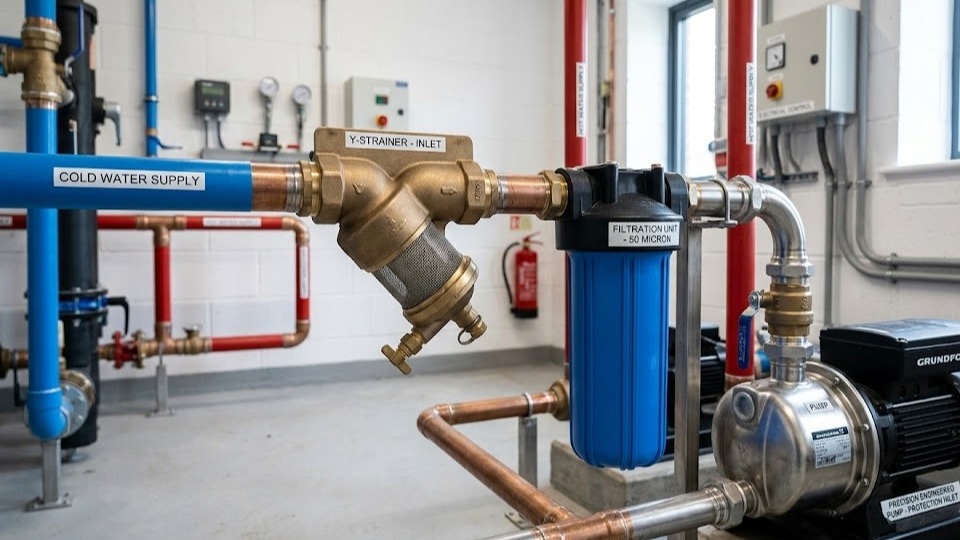
Foreign object damage remains one of the most preventable yet costly causes of circulating pump failure in commercial heating and plumbing systems. Installation debris, system contaminants, and particulate matter routinely bypass inadequate filtration, causing impeller erosion, bearing failure, and seal damage that leads to unplanned downtime and expensive emergency replacements.
Heating engineers and facilities managers face this challenge across both new installations and existing systems. Building site debris from copper swarf, welding slag, and PTFE tape fragments enters pipework during commissioning. Established systems accumulate magnetite, limescale, and corrosion products that gradually degrade pump performance. The financial impact extends beyond replacement costs - system downtime in commercial buildings can cost £2,000-£5,000 per day in lost productivity and emergency callouts.
National Pumps and Boilers supplies comprehensive pump debris protection solutions designed specifically for UK heating and plumbing applications, combining proven filtration technology with practical installation guidance that addresses real-world contamination challenges.
Understanding How Foreign Objects Damage Circulating Pumps
The internal components of modern circulating pumps operate with precise tolerances measured in fractions of millimetres. When foreign objects enter the pump chamber, they cause damage through multiple mechanisms that compromise both immediate performance and long-term reliability.
Mechanical Wear and Erosion
Hard particles like welding slag, pipe scale, and metal fragments act as abrasives when trapped between rotating impellers and stationary pump housings. This erosive action gradually wears away impeller vanes, reducing hydraulic efficiency by 15-30% before visible damage becomes apparent. Sharp-edged debris can chip impeller tips, creating an imbalance that accelerates bearing wear and increases vibration levels throughout the pump assembly.
Bearing and Seal Failure
Particulate contamination penetrates bearing assemblies and mechanical seals through system circulation. Fine particles suspended in heating system water act as grinding compounds, degrading bearing surfaces and reducing lubrication effectiveness. Magnetic filtration testing on contaminated systems regularly reveals iron oxide concentrations exceeding 500 parts per million - levels that accelerate bearing failure rates by 300-400% compared to clean systems.
Mechanical seal faces require smooth, debris-free operation to maintain water-tight integrity. Foreign object pump damage to seal faces creates leak paths that allow system water to escape whilst admitting air into the pump chamber. This dual failure mode leads to both visible water leakage and air-bound pump conditions that prevent proper circulation.
Blockage and Flow Restriction
Larger debris items can partially or completely obstruct impeller passages, reducing flow rates and creating hydraulic imbalance. Fibrous materials like PTFE tape, hemp, and jointing compound residue wrap around impeller vanes, progressively restricting flow until the pump can no longer maintain design circulation rates. Complete blockages cause immediate pump failure, whilst partial restrictions create performance degradation that often goes undiagnosed until system heating capacity drops noticeably.
Common Contamination Sources in Heating Systems
Effective pump debris protection strategies must address contamination from both installation activities and ongoing system operation. Understanding these sources allows heating engineers to implement targeted protection measures.
New Installation Debris
Commissioning new heating systems introduces multiple contamination sources. Copper pipe cutting generates swarf particles that enter pipework despite careful deburring. Threading operations on steel pipe create metal chips and cutting oil residue. Brazing and welding activities deposit flux residue and slag particles throughout the system. PTFE tape fragments, hemp fibres, and excess jointing compound routinely enter pipework during fitting assembly.
British Standard BS 7593 requires thorough system flushing before commissioning, yet field experience demonstrates that standard flushing procedures remove only 60-70% of installation debris. Heavy particulate matter settles in low points and horizontal pipe runs, only mobilising during initial circulation when pumps begin operating at full flow rates.
Corrosion Products and System Degradation
Established heating systems generate ongoing contamination through normal operation. Oxygen ingress through automatic air vents, expansion vessels, and micro-leaks initiates corrosion processes that produce magnetite (black iron oxide) and haematite (red iron oxide). These magnetic particles accumulate throughout the system, with concentrations highest in areas experiencing elevated temperatures and flow velocities.
Copper corrosion in mixed-metal systems creates cuprous oxide deposits that appear as green or blue-green particles. Aluminium radiators in systems with inadequate inhibitor protection generate white aluminium hydroxide sludge. Limescale precipitation occurs in hard water areas, particularly in domestic hot water circuits and DHW pumps operating above 60°C.
External Contamination Entry Points
System make-up water introduces fresh contamination with each top-up event. Mains water contains suspended solids, dissolved minerals, and biological matter that contribute to system fouling. Automatic filling systems lacking adequate filtration continuously introduce contaminants, particularly in systems with small leaks requiring frequent replenishment.
Open-vented systems face additional contamination from atmospheric exposure. Dust, insects, and airborne particles enter through open feed and expansion tanks. Biological growth including algae and bacteria can establish in stagnant water within header tanks, creating organic contamination that fouls pumps and heat exchangers.
Selecting and Installing Effective Filtration Systems
Proper filtration represents the primary defence against foreign object pump damage. Modern heating systems require multi-stage protection that addresses both installation debris and ongoing contamination.
Magnetic Filtration Technology
Magnetic filters capture ferrous particles using high-strength neodymium magnets positioned in the flow path. These devices excel at removing magnetite, the predominant contaminant in most heating systems. Quality magnetic filters capture particles down to 5 microns, preventing impeller erosion whilst maintaining low pressure drop across the filter body.
The installation position significantly affects magnetic filter performance. Optimal placement occurs on the return pipework immediately before the pump suction connection, where water temperature remains lowest and magnetic strength remains highest. This position captures debris before it reaches pump internals, whilst allowing the filter to collect contaminants circulating from all system areas.
Grundfos pumps and other premium circulation equipment benefit particularly from magnetic filtration, as their high-efficiency designs incorporate tighter tolerances, making them more susceptible to erosive wear. Regular filter maintenance - typically every 6-12 months - removes accumulated debris and restores full magnetic capture efficiency.
Y-Strainers and Inline Filters
Y-strainers provide essential protection against larger debris items during initial system commissioning. These mechanical filters incorporate mesh screens (typically 600-1000 microns) that capture installation debris, including pipe swarf, welding slag, and fitting fragments. The angled body design allows debris to settle in the collection chamber without creating excessive pressure drop.
Proper Y-strainer installation requires horizontal pipe orientation with the strainer body pointing downward, facilitating debris collection and simplifying maintenance access. Gate or ball valves fitted on either side of the strainer allow isolation for cleaning without draining the entire system. Initial commissioning requires daily strainer inspection during the first week of operation, when debris mobilisation reaches peak levels.
Inline cartridge filters offer finer filtration (typically 100-300 microns) for applications requiring enhanced protection. These devices suit domestic hot water circuits and systems incorporating sensitive components like plate heat exchangers. Pressure gauges fitted upstream and downstream indicate filter condition, with differential pressure exceeding 0.3 bar signalling the need for cartridge replacement.
Combination Filter Systems
Commercial installations increasingly specify combination filters integrating magnetic separation, mechanical straining, and dirt collection in single compact units. These devices capture both ferrous and non-ferrous contaminants whilst incorporating large-volume collection chambers that extend service intervals.
De-aeration functionality in premium combination filters removes micro-bubbles that accelerate corrosion and cause pump noise. This integrated approach suits Wilo pumps and other variable-speed circulators sensitive to air entrainment, providing comprehensive pump debris protection that addresses multiple system contamination mechanisms simultaneously.
Implementing Proper System Commissioning Procedures
Even the most effective filtration cannot compensate for inadequate commissioning. Thorough cleaning and flushing before pump installation prevents the majority of foreign object damage in new systems.
Pre-Commission Cleaning Requirements
BS 7593 specifies minimum cleanliness standards for heating and chilled water systems. Achieving these standards requires systematic flushing that removes installation debris before pumps begin operation. The process begins with visual inspection of all pipework, removing obvious debris accumulations and verifying proper pipe deburring.
Initial flushing uses mains water at maximum available flow velocity, continuing until the discharge water runs visibly clear. This removes loose debris and soluble contaminants, preparing the system for chemical cleaning. Temporary strainers fitted at strategic points capture debris, providing visual confirmation of contamination levels and flushing effectiveness.
Chemical Cleaning and Passivation
New system commissioning benefits from chemical cleaning using purpose-formulated products that dissolve flux residue, cutting oils, and light corrosion products. These alkaline cleaners circulate for 1-2 hours at elevated temperature (60-70°C), mobilising contaminants that mechanical flushing alone cannot remove.
After chemical cleaning, thorough rinsing removes all cleaning agent residue before introducing the system inhibitor. Passivation treatments applied to new steel pipework create protective oxide layers that reduce ongoing corrosion rates. This pre-treatment significantly reduces magnetite generation during the first 2-3 years of operation, when new systems generate peak contamination levels.
Phased Filter Installation Strategy
Professional commissioning employs temporary high-capacity strainers during initial system operation, capturing the bulk of mobilised debris without requiring frequent service interruptions. These temporary filters - often incorporating 400-600 micron mesh screens - remain in place for 2-4 weeks whilst debris levels stabilise.
After removing temporary filters, permanent magnetic and mechanical filtration maintain long-term system cleanliness. This phased approach prevents rapid filter clogging whilst ensuring comprehensive debris capture throughout the critical commissioning period.
Establishing Preventive Maintenance Protocols
Ongoing maintenance represents the final element in comprehensive pump debris protection. Regular inspection and filter servicing prevent gradual contamination accumulation that degrades pump performance and shortens equipment life.
Magnetic Filter Maintenance Schedule
Magnetic filters require regular cleaning to maintain capture efficiency. Service intervals depend on system condition, with new installations requiring monthly inspection during the first year. Established systems with good inhibitor protection typically need 6-12 month service intervals.
The cleaning process involves isolating the filter using service valves, removing the magnetic core, and thoroughly cleaning accumulated debris from the magnet surface and filter body. Weighing collected debris provides quantitative data on system contamination rates, indicating whether additional remedial action is necessary.
Systems generating more than 100 grams of magnetite annually require investigation to identify and address ongoing corrosion issues. Inhibitor concentration testing and system pH measurement help diagnose the root causes of excessive contamination generation.
System Water Quality Testing
Regular water sampling provides early warning of developing contamination issues before pump damage occurs. Heating engineers should test inhibitor concentration, pH, and total dissolved solids at 12-month intervals as a minimum practice. Magnetic particle testing using simple test kits indicates whether magnetic filtration is adequately controlling ferrous contamination.
Total iron concentration above 50 ppm suggests inadequate filtration or excessive corrosion rates requiring corrective action. Copper levels exceeding 0.5 ppm indicate potential galvanic corrosion in mixed-metal systems. These simple tests cost under £50 annually but provide invaluable data preventing expensive pump failures.
Pump Condition Monitoring
Regular pump inspection identifies early signs of debris damage before catastrophic failure occurs. Increased operating noise, elevated vibration, and reduced flow rates all suggest developing problems potentially caused by contamination. Temperature monitoring using infrared thermography detects bearing wear and seal degradation, allowing planned intervention before emergency failures occur.
Performance testing comparing actual flow rates and pressure differentials against manufacturer specifications quantifies pump degradation. Efficiency losses exceeding 15% justify detailed inspection and possible impeller replacement, particularly in central heating pumps where energy costs make degraded performance economically significant.
Addressing Contamination in Existing Systems
Retrofitting effective filtration to established heating systems presents unique challenges but delivers substantial benefits in reduced maintenance costs and extended pump life.
System Assessment and Contamination Diagnosis
Before specifying filtration upgrades, heating engineers should assess existing contamination levels and identify primary sources. Water sampling, magnetic testing, and visual inspection of system water provide baseline data. Radiator removal during routine maintenance allows direct observation of sludge accumulation and corrosion product distribution.
Systems exhibiting heavy contamination benefit from power flushing before installing permanent filtration. This intensive cleaning process uses high-velocity water circulation combined with chemical cleaning agents to mobilise and remove accumulated debris. Attempting to filter heavily contaminated systems without prior cleaning results in rapid filter saturation and minimal performance improvement.
Filter Sizing and Placement Optimisation
Retrofit filter selection must balance capture efficiency against pressure drop and installation practicality. Oversized filters operating at low flow velocities provide maximum debris capture with minimal hydraulic resistance. Compact filters suit space-constrained plant rooms but require more frequent maintenance.
Multiple smaller filters distributed throughout large systems often outperform single centralised units, particularly in multi-zone installations. This distributed approach captures debris close to generation sources whilst simplifying maintenance access. Each filter protects specific system zones, allowing isolated maintenance without affecting building-wide heating operation.
Integration with System Upgrades
Filter installation presents an ideal opportunity to address other system deficiencies affecting long-term reliability. Expansion vessels should be inspected and recharged, automatic air vents serviced, and inhibitor concentration restored to specification levels. This comprehensive approach maximises return on maintenance investment whilst ensuring all system protection measures function effectively.
Protecting Specific Pump Applications
Different pump applications face unique contamination challenges requiring tailored protection strategies.
Commercial Heating Circulators
Large commercial systems circulating high volumes face accelerated contamination accumulation. Lowara pumps and other commercial-duty circulators benefit from oversized filtration providing extended service intervals. Multiple redundant filters allow maintenance without system shutdown, critical in buildings requiring continuous heating.
Domestic Hot Water Circulation
DHW circuits operating at elevated temperatures experience accelerated limescale formation in hard water areas. Combination filters incorporating scale inhibition functionality protect pumps whilst reducing heat exchanger fouling. Bronze or stainless steel pump components resist corrosion in DHW applications where oxygen levels remain higher than sealed heating circuits.
Ground Source and Renewable Systems
Heat pump systems require exceptional cleanliness due to close-tolerance plate heat exchangers and sensitive controls. Dual-stage filtration combining magnetic separation with fine mechanical straining (100 microns) provides necessary protection. Glycol-based antifreeze solutions require compatible filter materials resistant to degradation from inhibited glycol formulations.
Conclusion
Preventing foreign object pump damage requires systematic attention throughout system design, installation, and ongoing operation. Effective magnetic filtration, proper commissioning procedures, and regular maintenance combine to eliminate the majority of contamination-related failures whilst extending pump service life by 50-100% compared to unprotected installations.
The financial case for comprehensive pump debris protection remains compelling - a quality magnetic filter costing £150-300 prevents pump failures costing £500-2,000 in parts and emergency labour. System efficiency improvements from maintaining clean conditions deliver ongoing energy savings of 10-15%, with payback periods typically under 18 months in commercial applications.
Heating engineers specifying new installations should incorporate magnetic filtration as standard practice, positioning filters correctly and sizing them appropriately for system volume and contamination risk. Retrofit applications benefit equally, particularly when combined with power flushing and inhibitor treatment that addresses accumulated contamination whilst preventing future debris generation.
For technical guidance on selecting appropriate filtration solutions for specific heating system applications or to discuss pump protection strategies for commercial installations, contact us for expert advice tailored to individual project requirements.