

How to Reduce Shower Pump Noise: Installation Tips That Make a Difference
A powerful shower transforms your daily routine completely. However, that luxurious water pressure often comes with a highly irritating mechanical soundtrack. Thousands of homeowners struggle to understand how to reduce shower pump noise effectively. They mistakenly believe that a premium pump should operate in absolute, total silence. This is a profound physical impossibility.
Any mechanical device moving massive volumes of water at high speeds generates physical energy. This energy translates directly into acoustic sound waves and heavy mechanical vibration. The goal is never to achieve total silence. The objective is to manage and isolate these physical forces correctly. Proper installation prevents this standard mechanical hum from becoming an unbearable structural roar.
Most severe noise complaints stem directly from incredibly poor installation practices. A perfectly healthy pump sounds like a pneumatic drill if it sits improperly on loose floorboards. You must address the exact physical mounting, the pipework connections, and the water supply quality. Implementing these strict mechanical rules reduces the acoustic output of your system drastically.
Understanding Airborne vs Structure-Borne Noise
You must diagnose the exact type of acoustic transmission before you attempt any physical fixes. Airborne noise consists of the actual sound waves traveling straight through the air. This includes the high-speed spinning of the internal cooling fan and the mechanical whir of the electrical motor. This sound is generally highly localized to the airing cupboard itself.
Structure-borne resonance presents a much more severe challenge for residential properties. This occurs when the heavy physical vibration of the motor transfers directly into the building materials. The physical kinetic energy travels effortlessly through timber floor joists and copper pipework. This vibration turns the entire ceiling cavity of the room below into a giant acoustic amplifier.
If the noise sounds incredibly loud in the bedroom directly beneath the pump, you have a structural problem. Premium Grundfos Pressure Sets feature highly balanced internal motors to minimize this initial kinetic energy. However, even the best engineering requires a dedicated physical mounting strategy to stop structural transmission entirely.
The Foundation: Solid Mounting and Acoustic Mass
The mounting surface dictates your acoustic success entirely. You must never place a heavy mechanical pump directly onto bare wooden floorboards. Thin timber boards act exactly like the skin of a drum. They flex slightly under the weight of the motor, magnifying the mechanical vibration massively throughout the entire house.
Professional installers use a highly effective trick involving simple acoustic mass. They place a small, incredibly dense concrete paving slab directly underneath the pump location. Concrete lacks the physical flexibility of wood. This massive density absorbs the low-frequency mechanical vibration instantly, stopping it from entering the timber joists below.
You must place a dedicated acoustic isolation mat between the concrete slab and the pump feet. This thick rubber mat acts as a secondary shock absorber. Intelligent Wilo Smart Pumps include rubberized mounting feet specifically designed to interface with these dense acoustic mats. You must ensure the pump sits perfectly level to prevent uneven mechanical wear.
Correct Use of Flexible Braided Hoses
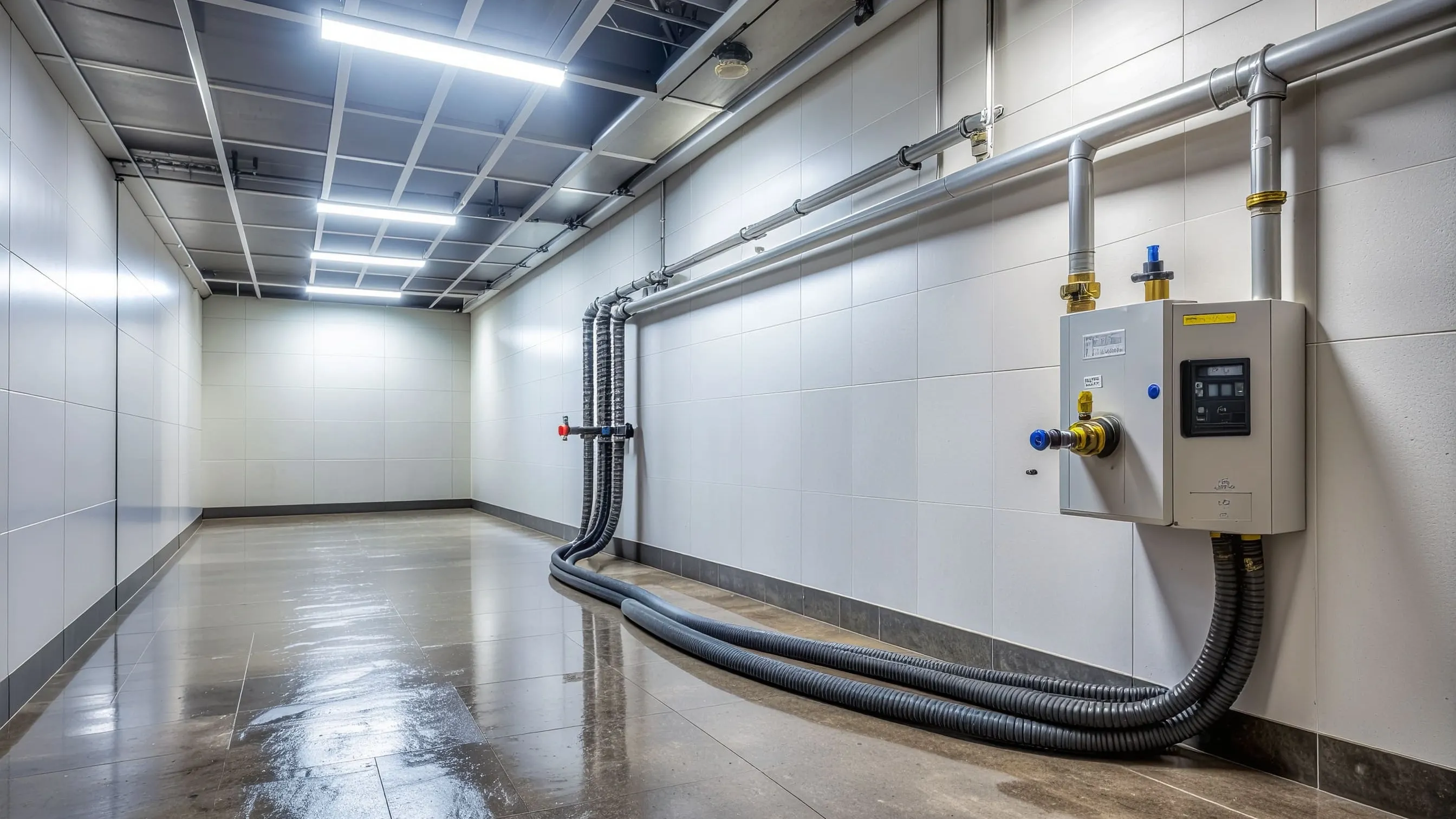
You absolutely must never connect rigid copper pipework directly to the pump casing. Rigid copper acts like a metallic tuning fork, carrying motor vibration straight into your bathroom walls. You must connect the unit using the dedicated flexible braided hoses supplied by the manufacturer. These heavy-duty hoses act as vital mechanical shock absorbers.
These hoses sever the direct physical connection between the vibrating motor and the static plumbing system. However, installers frequently ruin this acoustic protection by installing the hoses incorrectly. You must keep flexible braided hoses completely straight. You cannot bend them at sharp angles to force them onto awkward pipe connections.
Bending these hoses creates massive internal water turbulence. This turbulence generates loud rushing noises and severely restricts the water volume entering the pump. Advanced DAB Smart Pumps will simply starve of water and overheat if these hoses are kinked. If your pipework misaligns, you must re-solder the copper runs to meet the straight hoses perfectly.
Securing Pipework to Prevent Acoustic Transfer
Even with perfect hoses, your primary copper pipework requires meticulous physical support. The massive pressure generated by the pump causes the surrounding pipes to jolt and flex slightly during activation. If these pipes remain unsecured, they will rattle aggressively against the wooden timber frames inside your walls.
You must secure all accessible pipework using specialized rubber-lined acoustic pipe clips. Standard plastic or bare metal clips allow the copper to vibrate against the mounting screw. The rubber lining acts as a tiny shock absorber for the pipe itself. You must space these clips exactly every 500mm along horizontal pipe runs.
This rigid support network prevents the sudden physical shock of water hammer when you close your shower valve. Robust Lowara Smart Pumps deliver instant, heavy pressure that demands a highly secure pipework infrastructure. Checking and tightening your existing pipe clips is an incredibly cheap and effective acoustic upgrade.
Preventing Cavitation Noise Through Proper Water Supply
Sometimes the noise originates from highly destructive hydraulic forces inside the pump chamber itself. If your pump sounds exactly like it is grinding small stones or gravel, you are experiencing cavitation. Cavitation noise occurs when the pump draws heavily aerated water or starves for volume completely.
The low pressure inside the spinning impeller causes these tiny air bubbles to implode violently. These microscopic implosions blast tiny chunks of brass off the internal components, creating a horrific grinding sound. You must guarantee the pump receives a pure, bubble-free supply of water to stop this noise permanently.
This requires drawing water correctly from the hot water cylinder using a dedicated Essex or Surrey flange. You must never tee directly into the highly aerated vertical vent pipe. Highly capable Armstrong Smart Pumps require full, unrestricted flow to operate quietly. You must also verify that your hot water thermostat is set below 65°C to prevent natural steam bubbles.
Managing Air Locks and System Bleeding Techniques
Trapped air creates entirely different but equally irritating acoustic problems. A severe air lock generates a loud, high-pitched whining noise as the impellers spin uselessly in empty space. The trapped air also creates loud gurgling sounds as it attempts to move through the narrow pipework restrictions.
You must bleed the pump chamber entirely before operating the unit. Most premium models feature a dedicated bleeding screw on the brass casing. You open this screw slightly until a steady stream of water flows out, displacing all the trapped internal air safely.
You should always use full-bore isolation valves from our Isolation Valves Available range. Restrictive gate valves trap tiny pockets of air behind their brass mechanisms. Using full-bore lever valves provides a completely smooth internal pathway, preventing turbulent air accumulation and significantly reducing overall system noise.
Upgrading Old Technology and Acoustic Enclosures
Sometimes you simply cannot repair a noisy pump. Internal motor bearings wear down completely after a decade of heavy daily use. The impellers become heavily scaled with hard water deposits, throwing the internal rotation completely off balance. When this deep internal mechanical wear occurs, replacement is your only safe option.
If you purchase a new unit from National Pumps and Boilers, you might still want to mask the remaining airborne hum. You can build a small acoustic enclosure around the unit using sound-deadening materials. However, this introduces a massive physical risk of catastrophic thermal overload.
You must never box a pump in completely tightly. The heavy electric motor relies entirely on the internal fan drawing cool ambient air across the casing. Your acoustic enclosure must maintain a strict 100mm ventilation gap on all sides. You must leave adequate openings for cool air to enter and hot air to escape naturally.
Conclusion
Understanding exactly how to reduce shower pump noise transforms your daily bathing experience. You must address the root causes of mechanical vibration rather than simply throwing towels over the noisy unit. Eliminating structure-borne resonance through dense concrete slabs and proper rubber matting provides the greatest immediate acoustic improvement.
You must respect the strict hydraulic rules governing flexible braided hoses and dedicated hot water connections. Preventing internal turbulence and highly destructive cavitation noise ensures your unit runs smoothly and survives its full expected lifespan. Properly securing your copper pipework prevents irritating rattling through your interior walls.
If your system remains incredibly loud despite these physical checks, your unit may require a complete mechanical replacement. If you need assistance specifying a quieter modern unit or verifying your exact pipework requirements, Get the Right Solution today. Our technical team can help you design a perfectly balanced, whisper-quiet system.