

How to Replace Pumps Without Modifying Existing Pipework
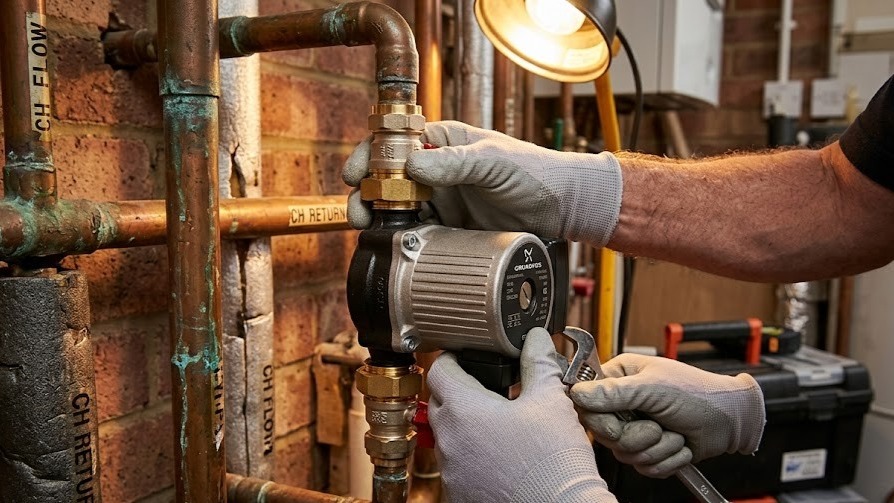
Replacing a failed circulator pump in a commercial building shouldn't require cutting pipes, draining entire systems, or calling in a team of fitters for a two-day installation. Yet many heating engineers still approach pump replacements as major interventions, when modern replacement strategies allow for direct swaps with minimal disruption.
The key to achieving a successful replace pump without repiping lies in understanding dimensional compatibility, connection standards, and the specific replacement ranges designed by manufacturers for this exact purpose. When a Grundfos pump fails in a twenty-year-old system, the right drop in pump replacement approach takes two hours, not two days.
Why Pipework Modifications Become Necessary
Most pipework modifications during pump replacement stem from three common mistakes: selecting pumps based solely on performance rather than physical dimensions, ignoring connection standards, and failing to verify mounting arrangements before ordering equipment.
Dimensional mismatches create the most obvious problems. A replacement pump with a different centre-to-centre distance between connections cannot fit existing pipework without modification. When the original pump has 180mm between flanges and the replacement has 220mm, something has to give - usually the pipework.
Connection Type Incompatibility
Connection type incompatibility forces modifications when engineers attempt to replace threaded connections with flanged units, or vice versa. A 2-inch BSP threaded pump cannot directly replace a DN50 flanged pump without adaptors and pipework changes.
Mounting footprint differences cause less obvious but equally problematic issues. Even when connection centres match, differences in base dimensions, bolt hole positions, or motor orientations can prevent direct installation on existing brackets or floor mounts.
Understanding these common pitfalls enables facilities managers and heating engineers to avoid them entirely through proper planning and equipment selection.
Understanding Pump Replacement Ranges
Major manufacturers produce specific replacement ranges designed to match the dimensional standards of pumps installed over the past 30 years. These ranges prioritise physical compatibility alongside hydraulic performance, making drop in pump replacement straightforward and cost-effective.
Wilo pumps in the TOP-S series, for example, maintain dimensional compatibility with earlier TOP-RL and TOP-Z models installed throughout the 1990s and 2000s. The connection centres, flange dimensions, and mounting footprints remain consistent across generations, allowing direct replacement without pipework modifications.
Manufacturer Dimensional Standards
Grundfos UPS and ALPHA ranges follow similar principles. The UPS3 series maintains the same installation dimensions as the original UPS series, despite incorporating variable speed technology and improved efficiency. An installer removing a 20-year-old UPS 25-60 can fit a UPS3 25-60 into the same space with the same connections - a perfect example of drop in pump replacement.
Standard centre-to-centre distances have become industry norms:
- 130mm for small domestic circulators
- 180mm for medium commercial units
- 250mm, 280mm, or 340mm for larger commercial and industrial pumps
Manufacturers design replacement models around these established dimensions specifically to enable direct swaps and replace pump without repiping scenarios.
Evolution of Replacement Standards
The heating industry learned valuable lessons from decades of incompatible pump generations that forced costly pipework modifications. Modern manufacturers now prioritise backward compatibility, recognising that facilities managers value installation simplicity alongside performance improvements.
This shift means that a commercial building installed with quality pumps in 2005 can expect to find compatible replacements in 2025 and likely beyond - provided the original installation followed standard practices and used reputable manufacturers committed to maintaining dimensional standards.
Measuring Existing Pump Dimensions
Accurate measurement prevents ordering errors that force pipework modifications. Three critical dimensions determine whether a replacement pump achieves true drop in pump replacement status with existing pipework.
Centre-to-Centre Connection Distance
Centre-to-centre connection distance measures from the centre of the inlet connection to the centre of the outlet connection. This dimension must match exactly for direct replacement. Measure along the pump centreline, not along the pipe run, as these can differ in offset installations.
Use a steel tape measure for accuracy - flexible measuring tapes can introduce errors of 2-3mm over 180-250mm distances. These small errors compound when ordering equipment, potentially resulting in pumps that almost fit but require forcing or modification.
Connection Type and Size Documentation
Connection type and size include both the nominal diameter and the connection method. Record whether connections are BSP threaded (common on pumps up to 2 inches), flanged (standard on pumps above DN40 in commercial systems), or compression fittings (occasionally used on small domestic circulators).
Note the flange standard if applicable - PN6, PN10, or PN16 flanges have different bolt hole arrangements. Attempting to fit a PN16 flange to existing PN10 bolts results in misaligned holes that prevent proper installation. This seemingly minor detail derails many attempted drop in pump replacement projects.
Mounting Arrangement Assessment
Mounting arrangement encompasses the base footprint, bolt hole positions, and clearances required for motor access and electrical connections. Photograph the existing installation from multiple angles, including above and below, to capture mounting details that affect replacement options.
Pay particular attention to clearances around the motor. Variable speed pumps often have slightly different motor housings than their fixed-speed predecessors. Ensuring adequate clearance prevents situations where the replacement pump technically fits the connections but cannot be installed due to motor-to-wall or motor-to-pipe interference.
Selecting Dimensionally Compatible Replacements
Once existing dimensions are confirmed, selecting a compatible replacement requires matching physical specifications before considering performance characteristics - the foundation of any successful replace pump without repiping strategy.
Manufacturer Replacement Guides
Manufacturer replacement guides provide the most reliable information for direct replacements. Grundfos publishes detailed replacement matrices showing which current models directly replace discontinued units. These guides specify not just hydraulic equivalents but dimensional compatibility matches that eliminate pipework modifications.
Access these guides through manufacturer websites or technical support lines. When ordering through distributors, specifically request confirmation of dimensional compatibility - not just performance equivalence. Many distributors focus primarily on hydraulic performance, potentially overlooking dimensional requirements that prove critical during installation.
Generic Replacement Options
Generic replacement options exist when original manufacturer replacements prove unavailable or uneconomical. The NPB range includes models designed to standard dimensions that match common Grundfos, Wilo, and DAB installations. These alternatives maintain dimensional compatibility while offering cost advantages for straightforward applications.
Generic replacements work particularly well for standard commercial circulators in the 25-60 to 32-80 size range, where dimensional standards are well-established and widely adopted across manufacturers. Exercise more caution with larger industrial pumps or specialised applications where dimensional variations between manufacturers increase.
Performance Verification Process
Performance verification becomes relevant only after confirming dimensional compatibility. A pump that matches existing connections but cannot deliver the required flow and head serves no purpose. Compare the replacement pump curve against original specifications, accounting for any system changes since initial installation.
Many systems operate well below their original design capacity due to building modifications, occupancy changes, or equipment upgrades. A pump that delivers 80% of the original capacity may prove perfectly adequate if the system now requires only 70% of the original design load. This consideration sometimes enables selecting smaller, more efficient pumps that maintain connection centres while reducing energy consumption.
Connection Compatibility Strategies
Even dimensionally compatible pumps sometimes require connection adaptations that stop short of full pipework modification. Several strategies maintain the principle of minimal intervention while ensuring secure, code-compliant connections.
Flange Adaptor Applications
Flange adaptors convert between different flange standards without cutting pipes. A PN10 to PN16 adaptor flange allows fitting a PN16 pump to existing PN10 pipework, using longer bolts to accommodate the additional flange thickness. These adaptors add minimal length - typically 15-20mm - that existing flexible connections can accommodate.
Quality flange adaptors maintain full bore flow without introducing restriction. Specify adaptors from reputable manufacturers that provide pressure and temperature ratings matching system requirements. Cheap adaptors with inadequate material specifications create liability risks and potential system failures.
Thread-to-Flange Conversion
Thread-to-flange unions enable replacing threaded pumps with flanged units when the flanged option offers better performance or availability. Quality unions maintain full bore flow and provide the disconnection point necessary for future maintenance.
This approach works particularly well when replacing small threaded circulators with more efficient variable speed pumps only available in flanged configurations. The union installation adds 40-60mm to the overall length, but most installations can absorb this increase without modifying rigid pipework.
Flexible Connector Use
Flexible connectors absorb minor dimensional variations between old and new pumps. Braided flexible connectors rated for heating system pressures and temperatures can accommodate 10-15mm differences in connection centres, preventing the need for rigid pipework modifications.
However, flexible connectors should not compensate for major dimensional mismatches or poor replacement selection. They serve as fine-tuning adjustments for otherwise compatible installations, not as solutions for fundamentally incompatible equipment. Over-stretching flexible connectors creates stress points that lead to premature failure and potential leaks.
Installation Techniques for Direct Replacement
Proper installation technique ensures dimensionally compatible pumps fit without forcing connections or stressing pipework - critical for achieving clean replace pump without repiping results.
System Isolation and Drainage
System isolation and drainage requires isolating only the pump section when possible. Many commercial installations include isolation valves immediately upstream and downstream of pumps specifically to enable replacement without draining entire systems. Where these valves don't exist, consider installing them during replacement to simplify future maintenance.
Partial system drainage through pump isolation valves typically releases 5-15 litres of system water compared to hundreds or thousands of litres when draining entire systems. This reduction saves time, preserves system water treatment chemicals, and minimizes air introduction that requires subsequent venting.
Removing Existing Pumps
Removing existing pumps sometimes proves more difficult than installing replacements, particularly when pumps have been in service for decades. Seized union nuts, corroded flange bolts, and mineral deposits around connections require patience and proper tools.
Apply penetrating fluid to threaded connections 24 hours before removal when possible. Use flange spreaders rather than pry bars to separate corroded flanges without damaging faces. Heat guns can free particularly stubborn threaded connections, though care must be taken to avoid damaging nearby plastic pipes, insulation, or electrical components.
Document any removal difficulties encountered. This information proves valuable when planning future replacements, particularly regarding access requirements and specialised tools needed for specific installation configurations.
Fitting Replacement Pumps
Fitting replacement pumps starts with dry-fitting before making final connections. Position the new pump and verify that connections align without forcing. If connections require more than light hand pressure to align, something doesn't match - forcing the issue will stress pipework and create future leak points.
Check that the pump body doesn't contact other equipment, pipework, or structural elements. Verify clearances for future motor removal or maintenance access. Many drop-in pump replacement projects fail not because the pump doesn't fit the connections, but because inadequate clearance prevents proper installation or future servicing.
Gasket and Seal Selection
Gasket and seal selection affects long-term reliability and leak prevention. Use gaskets appropriate for the system fluid and operating temperature. Standard EPDM gaskets suit most heating applications up to 110°C. Fibre gaskets provide better sealing on rough or pitted flange faces common in older installations.
Replace all gaskets and seals regardless of condition - reusing old gaskets to save £5 risks callbacks and system damage. When replacing pumps in systems with known water quality issues or aggressive fluid characteristics, consult gasket manufacturers for specific material recommendations.
Addressing Common Dimensional Challenges
Even with careful selection, certain situations present dimensional challenges that require creative solutions short of full pipework modification.
Minor Centre-to-Centre Variations
Slight centre-to-centre variations of 5-10mm sometimes occur when replacing very old pumps with modern equivalents. Before modifying pipework, check whether existing unions or flanges have an adjustment range. Loosening mounting bolts and shifting the pump position slightly often provides the necessary accommodation.
Flexible connectors can also absorb these minor differences without compromising system integrity. The key lies in recognising the difference between accommodation (using available adjustment within system tolerances) and forcing (stressing components beyond design limits).
Flange Face Alignment Issues
Flange face alignment issues arise when new pumps have different body shapes than the originals, even with matching connection centres. The flange faces may not align perfectly parallel to existing pipework flanges, creating sealing challenges that lead to leaks.
Tapered flange washers correct alignment issues up to approximately 3 degrees without stressing connections. These specialised washers compensate for minor angular misalignment while maintaining even gasket compression. For more severe misalignment, adjustable mounting arrangements or shimming the pump base provide correction without cutting pipes.
Mounting Footprint Conflicts
Mounting footprint conflicts occur when replacement pumps have different base dimensions or motor orientations despite matching connection centres. Before modifying structural mounts, consider whether rotating the pump body provides clearance.
Many pumps allow 360-degree rotation of the motor assembly relative to the pump body, enabling the motor to face different directions to avoid obstructions. This simple adjustment often resolves conflicts between the pump motor and nearby walls, pipes, or equipment without requiring any pipework modifications.
Upgrading to Variable Speed Without Repiping
Replacing fixed-speed pumps with variable-speed alternatives delivers significant energy savings without requiring pipework modifications when approached correctly - representing an ideal drop in pump replacement scenario that combines efficiency gains with installation simplicity.
Dimensionally Compatible Variable Speed Options
Grundfos ALPHA and Wilo Stratos ranges maintain dimensional compatibility with the fixed-speed pumps they replace while adding variable-speed control. An ALPHA2 25-60 fits directly where a UPS 25-60 previously operated, but reduces energy consumption by 50-80% through automatic speed adjustment.
This combination of physical compatibility and performance improvement makes variable speed upgrades particularly attractive. Facilities capture substantial energy savings without the disruption and cost associated with repiping projects, achieving payback periods typically under 18-24 months.
Control Integration Considerations
Control integration varies by replacement model. Basic variable-speed pumps include built-in differential pressure control requiring no external sensors or controllers - they simply respond to system demand automatically. More sophisticated installations might integrate with building management systems, but this remains optional rather than necessary for basic operation.
When replacing multiple pumps across a facility, consider standardising on a single variable speed platform that supports future integration. This approach maintains a drop in pump replacement simplicity while preserving options for enhanced control capabilities as budgets and requirements evolve.
Electrical Requirements
Electrical requirements for variable-speed pumps typically match or reduce requirements compared to fixed-speed predecessors. Most modern circulators operate on standard 230V single-phase supplies with lower current draw than older models.
Verify that existing electrical connections meet current regulations regarding cable sizing, overcurrent protection, and isolation switching. While electrical modifications prove unnecessary in most replacement scenarios, ageing electrical infrastructure sometimes requires updating to comply with current IET Wiring Regulations - work that should be addressed regardless of pump replacement.
When Pipework Modification Makes Sense
Certain situations justify pipework modifications during pump replacement, even though the replacement could technically proceed without them through replace pump without repiping methods.
Adding Isolation Valves
Adding isolation valves during replacement simplifies future maintenance and should be considered whenever practical. If the current replacement requires draining large system volumes because isolation valves don't exist, installing them now prevents repeating this disruption during the next replacement cycle.
Quality isolation valves with serviceable seals last 20-30 years, often outliving multiple pump generations. The incremental cost of £150-£300 for valve pairs proves insignificant compared to the cumulative cost and disruption of draining entire systems during future pump failures.
Correcting Poor Original Installations
Correcting poor original installations makes sense when replacing pumps in systems with inadequate pipe support, insufficient clearances, or connections that stress pump bodies. These issues often contribute to premature pump failure. Addressing them during replacement prevents recurring problems.
Common installation deficiencies include pumps supporting pipe weight, inadequate vibration isolation, and connections installed under tension. While the replacement pump might technically fit, correcting these underlying issues during replacement work delivers better long-term outcomes.
Right-Sizing Significantly Incorrect Pumps
Upgrading significantly oversized or undersized pumps sometimes requires connection type changes that necessitate pipework modifications. When original pumps were dramatically wrong for the application, matching their dimensions perpetuates the problem.
A grossly oversized pump creating excessive system velocity and noise, or an undersized pump failing to maintain adequate flow, should be corrected even if this requires modest pipework changes. The long-term benefits of proper sizing outweigh the short-term convenience of maintaining dimensional compatibility with an inappropriate original installation.
Documentation and Future Planning
Proper documentation during pump replacement simplifies future maintenance and subsequent replacements - essential for maintaining the drop in pump replacement capability over decades.
Recording Replacement Details
Recording replacement details should include the new pump model, serial number, installation date, and dimensional specifications. Photograph the installation showing connection arrangements, mounting details, and clearances. Store this information with system documentation and on-site in mechanical plant rooms.
Digital documentation proves most reliable for long-term retention. Cloud-based facilities management systems ensure information remains accessible even when personnel change or paper records disappear. Include equipment datasheets and manufacturer replacement guides in digital archives.
Labelling Systems
Labelling isolation valves and documenting system isolation procedures enables faster, safer future replacements. Many commercial buildings have complex piping arrangements where isolation valve locations aren't obvious. Clear labelling prevents extended searches during emergency replacements.
Use durable engraved tags or industrial label makers rather than handwritten labels that fade or become illegible. Include valve tag numbers on system diagrams and in documentation, creating a bidirectional reference that works regardless of whether technicians start with diagrams or equipment.
Planning Next Replacement
Planning the next replacement begins with the current installation. Note any dimensional challenges encountered, solutions applied, and improvements that would simplify future work. This information proves invaluable when the next pump fails, potentially years or decades later, when current installation details have been forgotten.
Document any non-standard aspects of the installation that might affect replacement selection. Unique mounting arrangements, unusual connection standards, or site-specific clearance constraints all deserve documentation that prevents future technicians from encountering the same challenges unprepared.
Conclusion
The ability to replace pump without repiping depends on understanding dimensional standards, selecting compatible replacements, and applying proper installation techniques. Modern replacement ranges from manufacturers like Grundfos, Wilo, and NPB, which maintain compatibility with installations dating back decades, enabling a drop in pump replacement projects that take hours rather than days.
The key lies in measuring accurately, selecting carefully, and resisting the temptation to force incompatible equipment into existing systems. When dimensional compatibility receives the same attention as hydraulic performance, most pump replacements proceed without touching pipework beyond the immediate pump connections.
For guidance on selecting dimensionally compatible replacements for specific installations, contact us. Technical specialists can verify compatibility and recommend solutions that minimise installation disruption whilst delivering required performance across all commercial and industrial heating applications.