

How to Size a Commercial Water Heater for Hotels and High-Occupancy Buildings
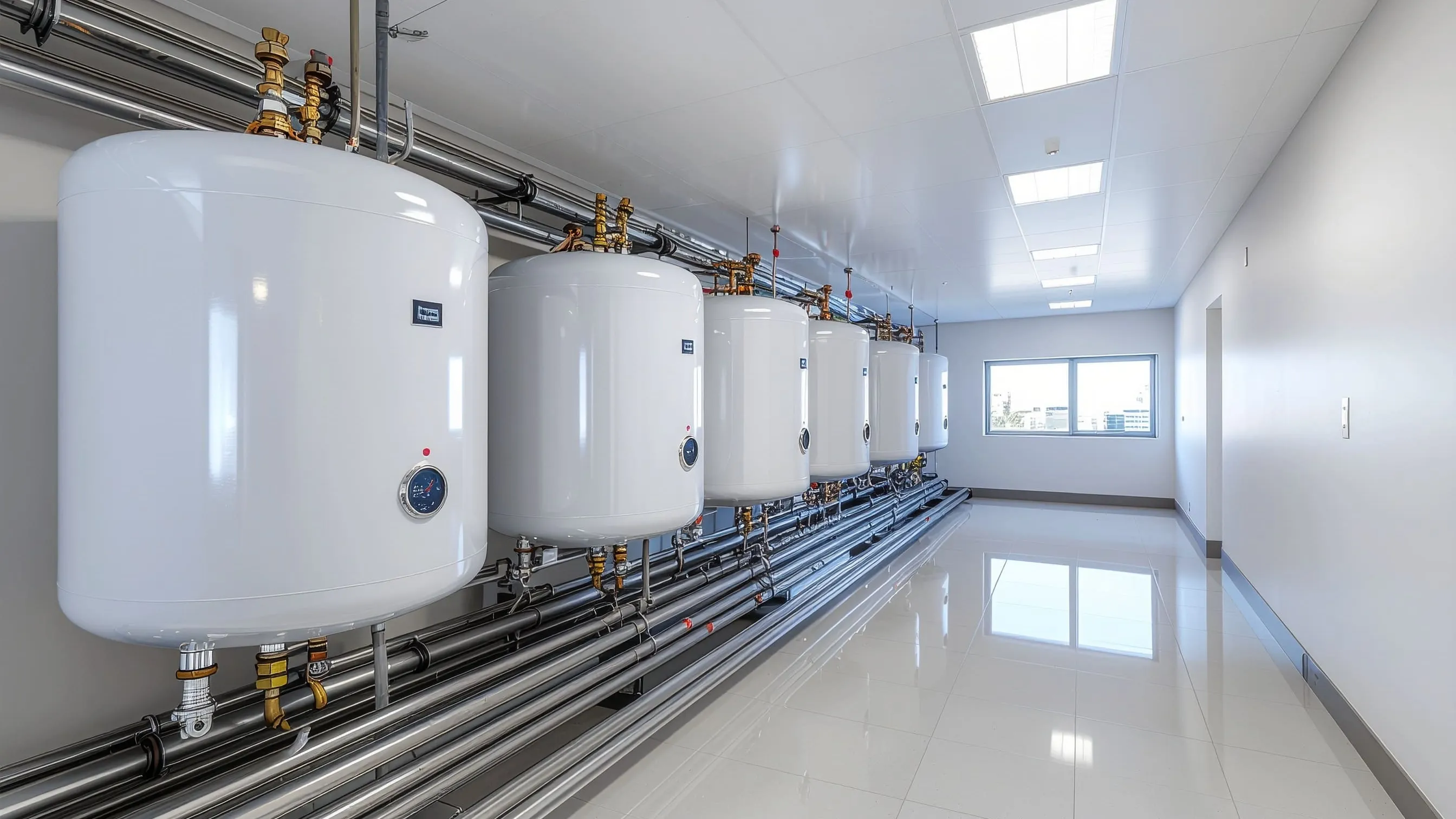
Hotels and high-occupancy buildings present incredibly complex engineering challenges for domestic hot water provision. A large commercial hotel can experience massive demand spikes within a highly narrow ninety-minute morning window. However, the exact same building might require almost zero hot water during quiet afternoon periods. This dramatic operational variation makes accurate commercial water heater sizing absolutely critical for daily success.
The financial consequences of incorrect capacity planning extend far beyond your initial capital expenditure. Undersized systems guarantee immediate guest complaints and severe reputational damage during busy peak seasons. Conversely, oversized installations waste massive amounts of thermal energy by maintaining unnecessary water volumes at high temperatures. Understanding complex hotel hot water demand requires a strict mathematical approach rather than simple guesswork. You must match your mechanical capacity to real-world usage safely.
Understanding Peak Demand in High-Occupancy Buildings
Proper peak demand calculation forms the absolute foundation of professional commercial system design. Unlike domestic properties, hotels experience highly concentrated usage patterns that stress mechanical systems heavily. The critical morning peak usually occurs between half past six and nine o'clock. This intense window happens when the majority of guests wake up and shower before checking out.
Think of your hot water system exactly like a busy commuter train network. The system sits practically empty all night long. However, it must handle hundreds of passengers simultaneously during the heavy morning rush hour. You must size your equipment to handle this intense hydraulic surge effortlessly.
Relying on total daily volume is a massive engineering mistake that leads to severe equipment failure. You must calculate the maximum simultaneous demand using professional diversity factors. Reliable Andrews Gas Heaters handle these intense morning spikes flawlessly when specified correctly by an engineer. For example, a hundred-room hotel rarely requires hot water for all hundred rooms at the exact same second. Diversity factors account for this natural staggering of use.
The CIBSE Method for Hot Water Sizing
British mechanical engineering relies heavily on CIBSE Guide G for commercial hot water system design. This strict methodology combines physical storage capacity calculations with highly specific heat recovery rates. It guarantees that mechanical systems meet peak demands without causing excessive energy waste overnight.
The strategy involves balancing stored thermal energy against the active burner output capacity. You use a stored volume of hot water to absorb the initial heavy morning shock. The burner then runs continuously to replenish this heat during the entire draw-off period. This approach prevents common recovery rate limitations from ruining the guest shower experience.
Most commercial designs aim to fully recover the storage tank volume within two hours. Accurate commercial water heater sizing also leverages physical temperature differentials to stretch capacity. Storing water at 60°C and delivering it at 40°C increases your usable volume dramatically. The experts at National Pumps and Boilers use this exact thermodynamic blending calculation every single day.
Evaluating Hotel-Specific Demand Factors
Room count provides the basic starting point for any commercial peak demand calculation. However, you must refine this baseline using specific occupancy rates and guest demographics carefully. A busy corporate business hotel operates very differently from a luxury family leisure resort.
Families on holiday tend to take longer baths and use hot water sporadically throughout the day. Business travellers follow highly predictable, concentrated morning shower routines with almost zero operational variation. You must model your specific hotel hot water demand around these exact customer habits.
Building star ratings also dictate your required flow volumes heavily during the specification phase. Budget properties usually calculate demand based on forty litres per room during peak hours. Luxury properties might require ninety litres per room due to massive dual showerheads and deep soaking tubs. Installing powerful Grundfos Trade Prices circulation pumps ensures these luxury fixtures receive adequate flow pressure constantly.
Analysing Additional Facility Requirements
Guest rooms only represent one fraction of the total building hot water requirement. You must calculate the exact requirements for commercial kitchens, laundry facilities, and leisure centres separately. A busy hotel restaurant requires massive volumes of hot water for dishwashing during dinner service.
Swimming pools and spa facilities add thousands of litres to your daily heating requirements. You must integrate these specific demand profiles into your primary plant room calculations accurately. Conference facilities also create highly unpredictable demand spikes during mid-morning tea breaks and public washroom usage.
Failing to account for these secondary facilities will starve your guest rooms of hot water entirely. Clever facility managers often shift heavy laundry operations to off-peak afternoon periods to protect morning shower capacity. Heavy-duty Remeha Floor Standing boilers provide the immense thermal output required to handle these combined multi-facility loads reliably.
System Configuration and Staging Options
Designers must choose between direct-fired storage units and separate indirect cylinder configurations carefully. Direct systems integrate the gas burner directly into the actual water storage tank itself. This provides excellent recovery speeds in a highly compact physical plant room footprint.
Indirect systems separate the heat generation entirely from the actual hot water storage cylinders. This allows one large central boiler plant to serve both space heating and hot water demands seamlessly. This combined approach often delivers superior seasonal efficiency for large institutional buildings over the entire year.
Many modern properties prefer installing multiple smaller water heaters instead of one massive single unit. This creates a highly efficient, staged cascade system that matches varying occupancy levels perfectly. Highly efficient Wilo Trade Prices pump models manage flow across these modular setups beautifully. This critical redundancy guarantees you never lose total hot water capacity if one unit requires sudden maintenance.
Overcoming Undersizing and Capacity Issues
Accurate peak demand calculation prevents you from destroying commercial hospitality businesses through terrible online reviews. If a system cannot handle the morning rush, guests suffer through freezing cold showers. This leads to immediate demands for refunds and permanent reputational damage for the property.
A regional hotel manager recently approved an undersized system to save money on a retrofit. During a fully booked bank holiday weekend, the system failed completely after thirty minutes of use. They had to refund fifty angry guests the very next morning.
Undersizing also destroys your expensive mechanical equipment through continuous, exhausting daily operation. The burners never shut off, and severe recovery rate limitations cause rapid internal component burnout. It also creates dangerous pressure drops across your secondary return pipework networks. Upgrading your plant room with intelligent Armstrong Digital Models prevents this catastrophic operational failure entirely.
Preventing Oversizing and Standing Losses
Many installers panic and deliberately oversize calculations to avoid cold showers at all costs. This "bigger is better" mentality creates terrible engineering outcomes and massive financial waste. Heating huge volumes of unnecessary water costs thousands of pounds annually in wasted gas.
Even perfectly insulated cylinders suffer from continuous standing heat losses twenty-four hours a day. Maintaining two thousand litres of water at 60°C during an empty off-season period is financially ruinous. Oversized systems also suffer from terrible part-load combustion efficiency during mild usage periods.
When a massive burner fires up to satisfy a tiny handwashing demand, it wastes fuel instantly. Professional sizing matches the equipment to realistic operational loads perfectly to prevent this. Furthermore, storing massive volumes of unused warm water creates a severe Legionella bacteria proliferation risk. Intelligent DAB Trade Prices variable speed pumps help manage these distribution networks to minimise energy waste safely.
Compliance with Regulatory Standards
Commercial hot water generation is strictly governed by rigid UK health and safety laws. The Health and Safety Executive enforces the L8 Approved Code of Practice for Legionella control. You must store commercial hot water strictly above 60°C to prevent fatal bacterial growth.
Building Regulations Part L strictly dictates the minimum acceptable seasonal efficiency for commercial heating equipment. Your sizing calculations must prove that the selected equipment operates efficiently across the entire year. You cannot simply install an oversized, highly inefficient boiler just to guarantee supply.
You must also adhere strictly to local water supply regulations regarding backflow prevention and safe expansion. Massive commercial cylinders require highly precise expansion vessel sizing to absorb thermal expansion safely. Heavy-duty DHW System Pumps require careful specification to ensure compliance with these complex commercial building codes and hygiene standards.
Conclusion
Accurate commercial water heater sizing requires a rigorous mathematical approach and deep operational understanding. You must balance extreme peak demand capabilities against strict long-term energy efficiency targets. Simply guessing the required volume based on total fixture counts leads to guaranteed system failure.
Following CIBSE Guide G ensures your mechanical plant handles morning surges without wasting gas overnight. You must map your specific hotel hot water demand carefully based on exact guest demographics. Avoiding the severe extremes of undersizing and oversizing protects your commercial profitability permanently.
Professional calculation separates functional commercial plumbing from highly expensive, damaging engineering disasters. If you need help calculating your exact peak demand or specifying commercial plant equipment safely, Contact Us for Sizing Support today. Our experienced technical team will engineer the perfect hot water solution for your specific property.