

How to Size a Submersible Pump for Commercial Sump Applications
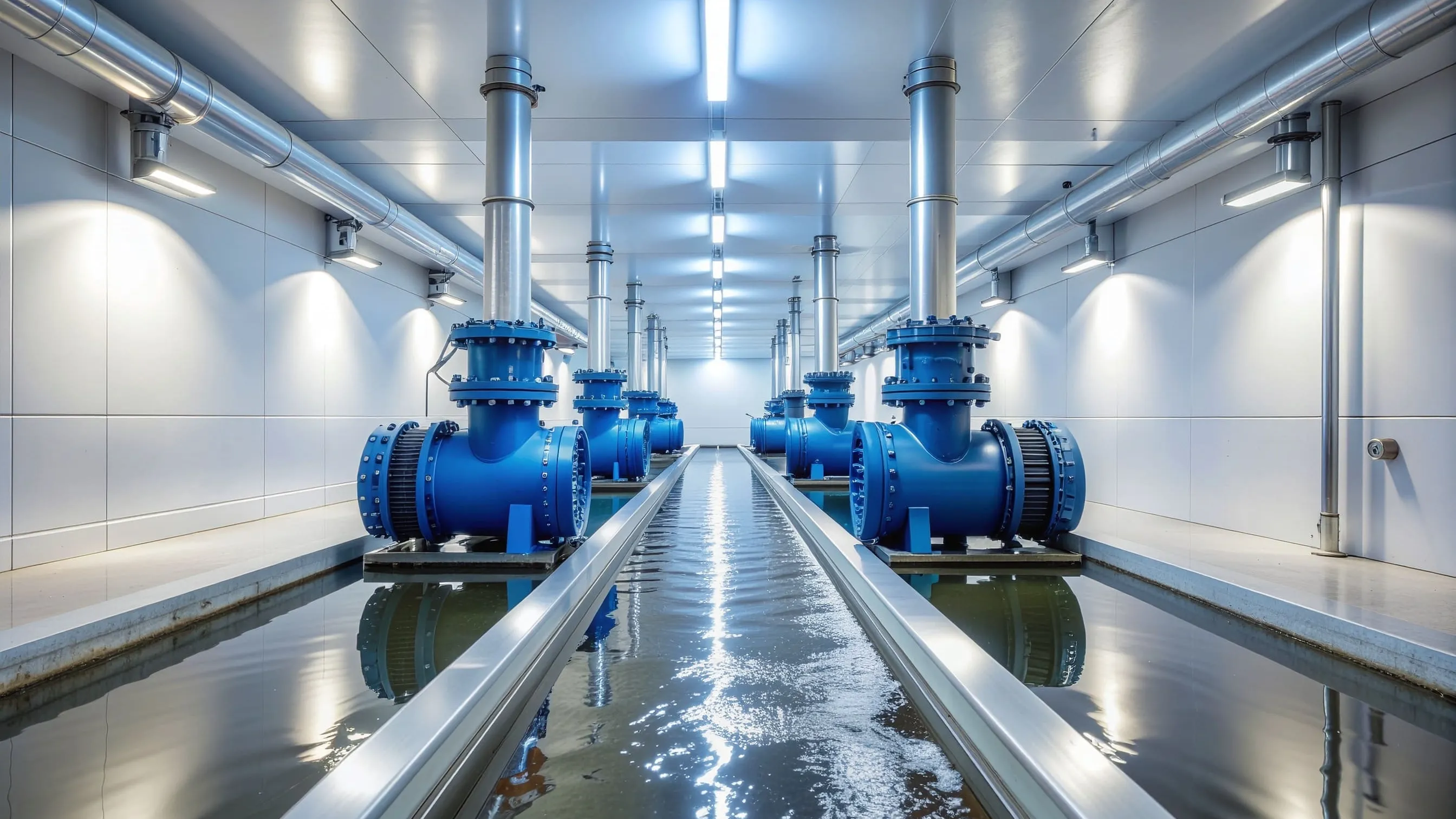
Submersible pump sizing commercial sump applications requires a systematic engineering methodology that differs fundamentally from domestic pump selection. Where a domestic basement pump might be chosen from a short list of suitable catalogue models based on a rough inflow estimate, commercial sump applications involve quantified inflow calculations, wet well volume design to prevent excessive motor cycling, duty point verification against the system resistance curve, and regulatory compliance under Building Regulations Part H and, where sanitary drainage is involved, BS EN 12050.
The consequences of incorrect submersible pump sizing commercial sump installations are immediate and costly. An undersized pump cannot keep pace with peak inflow, resulting in sump overflow and building flooding during the design storm events the system was installed to manage. An oversized pump cycles too rapidly in the undersized wet well, accumulating excessive motor starts per hour that overheat the windings and produce premature motor failure. Neither failure mode is acceptable in commercial premises where flooding causes business interruption, property damage, and potential liability.
What Commercial Sump Applications Require
Commercial sumps differ from domestic applications in three important respects: duty cycle intensity, regulatory requirements, and the consequences of failure. Where a domestic drainage pump might activate a few times per day during wet weather, a commercial sump in a busy car park or large basement may cycle many times per hour during peak inflow events. Motor selection and wet well sizing must both reflect this intensity of operation.
Building Regulations Approved Document H requires commercial drainage systems to be designed to specific return periods - typically 1 in 30 years for standard commercial applications and 1 in 100 years for critical infrastructure - with an additional allowance for climate change impacts on rainfall intensity. These design standards translate directly into the peak inflow rates that drive submersible pump sizing commercial sump calculations, making the regulatory framework a quantitative input to the engineering calculation rather than a separate compliance check.
For Grundfos commercial submersible pump applications, the manufacturer's selection software incorporates the pump's full characteristic curve and efficiency data alongside motor performance parameters, enabling duty point verification against the calculated system resistance that manual curve intersection cannot achieve with the same accuracy across the full operating range.
Step 1: Calculating Peak Inflow Rate
Groundwater Inflow
Groundwater inflow rate depends on soil permeability, the hydrostatic head pressing water against the basement construction, and the area and condition of the waterproofed surfaces. Clay soils with low permeability generate lower sustained inflow rates than gravel or chalk aquifer materials that transmit water rapidly to any available void. Geotechnical assessment providing measured permeability values enables quantified inflow calculation; where geotechnical data is unavailable, conservative estimates based on local geology and construction type provide a design basis that intentionally over-sizes rather than under-sizes the pump system.
For submersible pump sizing commercial sump applications in urban UK locations with made ground and mixed soil profiles, groundwater inflow estimation without site investigation data requires a conservative approach. CIRIA guidance on basement waterproofing and drainage provides infiltration rate tables by soil type that serve as a starting point for inflow calculation in the absence of site-specific measurements.
Surface Water Inflow
Surface water inflow from impermeable areas draining to the sump uses the rational method: peak flow = rainfall intensity × runoff coefficient × catchment area. UK rainfall intensity data from DEFRA Flood Estimation Handbook or the Wallingford Procedure provides the design storm intensity for the appropriate return period. A 0.5 hectare car park with a 1 in 30 year storm intensity of 50mm per hour and a runoff coefficient of 0.95 generates approximately 66 litres per second peak inflow - a flow rate that determines pump sizing and, in turn, wet well volume, without any ambiguity about the required capacity.
Climate change uplift factors specified in Approved Document H and the CIRIA SuDS Manual add a percentage to the design rainfall intensity to account for projected increases in extreme rainfall frequency under UK climate scenarios. For commercial developments where drainage infrastructure is expected to remain in service for 50–100 years, applying these uplift factors is not optional conservatism but a regulatory requirement.
Combined Inflow Sources
Commercial sumps frequently receive inflow from multiple independent sources that do not all peak simultaneously. Groundwater seepage is continuous and relatively steady. Surface water inflow occurs only during rainfall events. Plant room condensate and drainage from DHW pumps systems represents a low-level continuous background flow. When combining these sources for submersible pump sizing commercial sump calculations, the coincidence factor - the probability of multiple sources peaking simultaneously - determines whether flows are simply summed or combined with a discount for independent peak timing.
For groundwater and surface water in a commercial basement beneath a car park, simultaneous peak inflow from both sources is entirely plausible - heavy rainfall events that surge the surface drainage also saturate the surrounding soil and raise the water table. In this case, flows should be summed without coincidence discount, producing a conservative design basis.
Step 2: Wet Well and Sump Pit Sizing
Volume Between Operating Levels
The volume of water in the sump between the pump activation level (when the float switch turns the pump on) and the pump cutoff level (when the float switch turns the pump off) determines how frequently the pump cycles through each start-stop event. Motor manufacturers for commercial pump motors specify maximum starts per hour - typically 5–10 for motors above 2.2 kW - to prevent winding overheating from repeated start inrush currents.
The formula for minimum operating volume is: V = (Qp × 60) / (4 × Z), where V is minimum volume in litres, Qp is pump flow rate in litres per minute, and Z is maximum starts per hour. For a commercial pump delivering 900 litres per minute with a maximum 10 starts per hour: V = (900 × 60) / (4 × 10) = 1,350 litres minimum operating volume. This is not the total sump volume but the volume between switch-on and switch-off levels - the sump must be sized to contain this volume within the acceptable operating level range.
Sump Dimensions
Circular wet wells constructed from precast concrete rings offer the best volume efficiency per unit floor area and are the standard construction for circular sumps in new commercial development. For submersible pump sizing commercial sump installations requiring guide rails for pump removal without confined space entry, the sump internal diameter must accommodate the pump body plus guide rail clearances, with sufficient space between the pump and sump wall to allow water circulation without creating vortices.
Wilo commercial submersible pump guide rail systems specify minimum sump internal dimensions for each pump model, with the guide rail frame dimensions and required clearances documented in the installation manuals that must be consulted before the sump is constructed to ensure the pump and guide rail assembly can be installed without modification.
High-Level Alarm Freeboard
Volume above the pump activation level before the high-level alarm setpoint provides response time after alarm activation before the sump overflows. For commercial installations with 24-hour building management monitoring, a 30-minute response time is typically achievable, requiring sufficient freeboard volume to contain the peak inflow rate for 30 minutes without overflow. This calculation defines the vertical distance between the pump activation level and the alarm setpoint, which in turn determines where the alarm float switch must be positioned within the sump.
Step 3: Calculating Total Head
Static Head
Static head is the vertical distance from the sump base to the centreline of the discharge connection at the drainage system, measured in metres and converted to bar at 0.1 bar per metre. For a commercial basement with the sump base at 4 metres below street level and the discharge connection at street level, static head is 4 metres = 0.4 bar. This appears modest, but in shallow sumps serving large areas, the friction losses in the discharge pipework can equal or exceed the static head.
Friction Losses in Discharge Pipework
Friction losses depend on pipe diameter, flow velocity, pipe material, and pipe length. Using the Hazen-Williams equation for PVC pipework (C = 150), a 100mm diameter discharge pipe carrying 15 litres per second over 30 metres generates approximately 1.2 metres of friction loss. Adding minor losses from bends, the non-return valve, and the gate valve brings total friction losses to approximately 1.8 metres for this arrangement.
Total head = static head + friction losses = 4.0 + 1.8 = 5.8 metres for this example. The pump must deliver the required flow rate against this total head, not against the static head alone - selecting a pump based on static head without accounting for friction losses consistently produces undersized systems that cannot maintain drainage during peak inflow.
For Ebara commercial submersible pump selection where system resistance calculations require verification against published pump curves, the performance data provides total head versus flow rate across the full operating range, enabling confirmation that the selected pump delivers adequate flow at the calculated total system head under all operating conditions.
Step 4: Pump Selection and Duty Point Verification
Plotting the Duty Point
The duty point is the intersection of the pump's characteristic curve (head versus flow) and the system resistance curve (total head versus flow, which increases with flow due to increasing friction losses). This intersection represents the actual operating condition of the pump in the specific installation - the flow rate the pump will deliver and the head it will develop simultaneously.
The duty point must fall within the pump manufacturer's recommended operating range, which sits between 70% and 120% of the best efficiency point flow rate. Operating significantly to the left of the best efficiency point indicates an oversized pump that throttles against its own shutoff head, creating recirculation, vibration, and rapid bearing wear. Operating to the right indicates an undersized pump running at maximum flow with insufficient head margin, at risk of motor overload as the system resistance increases with minor blockages or pipe scaling.
Selection for Dual Pump Arrangements
BS EN 12050 requires dual pumps for sewage lifting stations serving below-ground sanitary facilities in commercial buildings. For submersible pump sizing commercial sump applications under this standard, each pump must be independently capable of handling 100% of the design duty - not 50% each with both running simultaneously for full capacity. This requirement doubles the individual pump capacity compared with a single-pump specification to the same design flow rate.
Armstrong commercial submersible pump duty/standby packages for sewage and drainage applications include control panels with automatic alternation logic that distributes running hours equally between pumps, standby activation at a higher level setpoint when the duty pump fails, and independent alarm contacts for high-level conditions and pump fault signals - providing the complete system functionality that BS EN 12050 requires without separate component selection for each control function.
Step 5: Checking Motor and Electrical Requirements
Motor power verification confirms the pump's shaft power demand at the duty point does not exceed the motor's nameplate rating. Many pump manufacturers state performance at the best efficiency point; operation away from this point changes power consumption in ways that may approach or exceed motor rating if the pump is running far from its design condition. For Lowara commercial submersible pump motors, the power consumption curve published alongside the performance curve enables power verification at the actual duty point rather than at peak efficiency alone.
Starting current management matters in commercial submersible pump sizing sump applications where multiple large pumps share electrical infrastructure. Direct-on-line starting for 7.5 kW three-phase motors draws inrush currents of 60–70 amps per phase, requiring cable sizing and circuit protection to accommodate this peak without nuisance tripping. Soft starters reduce inrush current to 2–3 times full load current during starting, significantly reducing the electrical supply impact of pump starting events and allowing use of smaller cable and protection device ratings.
Sump Configuration for Commercial Installations
Inlet pipe positioning within the sump affects sediment management and pump performance. Inlets entering below the minimum operating water level create turbulence that re-suspends settled sediment, increasing suspended solids concentration in the pumped fluid and accelerating impeller wear. Inlets entering above the operating levels allow water to fall through air to the sump surface, creating aeration and turbulence. The optimal inlet position enters the sump just below the normal operating level, allowing water to flow in with minimal turbulence.
Anti-vortex plates on the sump floor around the pump intake prevent air entrainment at high flow rates when the water level drops close to the pump intake. Vortex formation draws air into the pump impeller, reducing hydraulic efficiency and potentially causing the pump to lose prime - a significant operational risk in sumps where the water level fluctuates rapidly during peak inflow events. Sump geometry guidelines from Hydraulic Institute standards provide the dimensional criteria for vortex suppression that commercial wet well design should follow.
For pump valves in commercial sump discharge arrangements, including gate valves for pump isolation and non-return valves for backflow prevention, the valve specification must match the pipe diameter and maximum working pressure, with full-bore gate valves preferred over ball valves to minimise flow restriction and avoid the pressure losses that reduce available head for pumping.
Regulatory Requirements for Commercial Sump Systems
BS EN 12050 governs sewage lifting stations serving below-ground sanitary facilities, requiring minimum two independent pumps, automatic operation with alternating duty, high-level alarm with external notification capability, and adequate access provisions for maintenance without confined space entry where the wet well volume falls within confined space classification thresholds. Compliance with BS EN 12050 is verified by Building Control as part of the drainage approval process for commercial basement developments.
Confined space regulations under the Confined Spaces Regulations 1997 apply to sumps meeting the definition based on their dimensions and the risk from the atmosphere or water level within. Guide rail systems enabling pump removal from surface level without entry into the sump are the preferred solution for commercial pump installations, avoiding the permit-to-work requirements and specialist equipment that confined space entry demands for routine maintenance procedures.
Conclusion
Submersible pump sizing commercial sump applications requires systematic calculation of peak inflow rates, wet well volumes that prevent excessive cycling, total head accounting for both static lift and friction losses, and duty point verification against pump characteristic curves. Each step depends on quantified inputs rather than rules of thumb, and errors at any stage produce pump systems that fail to perform reliably from commissioning.
National Pumps and Boilers provides technical support for commercial sump pump sizing calculations, including duty point selection, wet well volume determination, and BS EN 12050 compliance review for sewage lifting station applications across commercial and industrial projects.
For expert guidance on submersible pump sizing commercial sump design for specific projects, including inflow calculation, wet well sizing, pump selection, and regulatory compliance, Contact Us to discuss your drainage engineering requirements.