
 -
- How to Verify Your New Pump Is Performing to Specification
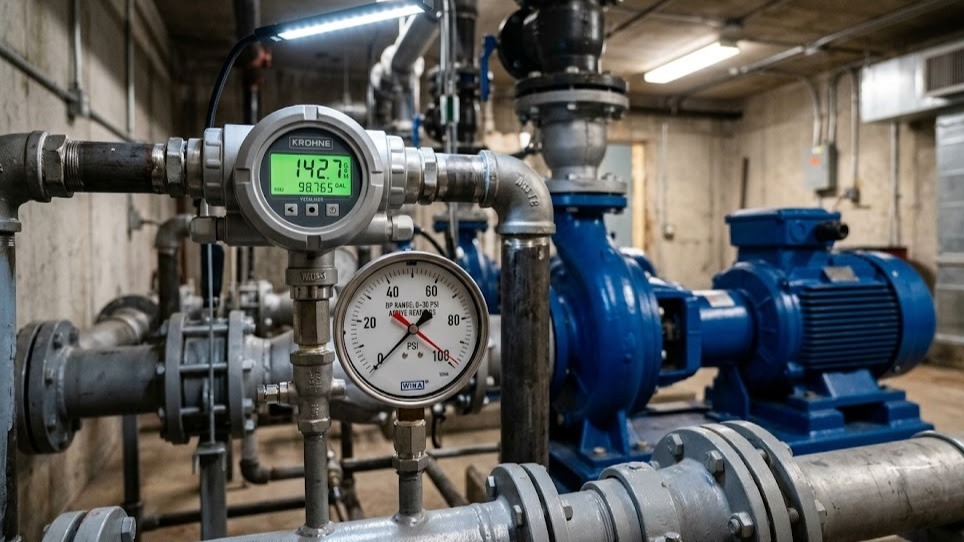
Installing a new central heating pump or circulator represents a significant investment in system performance and energy efficiency. Yet too many heating engineers commission equipment based on visual checks and noise levels alone, missing critical performance deficiencies that only emerge months later when clients report inadequate heating or escalating energy bills.
Proper pump performance verification confirms that specified flow rates, head pressures, and power consumption match manufacturer data sheets. This process protects professional reputation, prevents callback visits, and ensures systems operate at designed efficiency levels from day one.
Why Performance Verification Matters Beyond Basic Commissioning
Standard commissioning procedures focus on electrical safety, correct rotation, and the absence of obvious faults. Performance verification goes further by measuring actual hydraulic output against technical specifications.
Three scenarios demand rigorous verification. First, replacement installations where the new pump must match or exceed previous performance within existing system constraints. Second, system upgrades where pump selection calculations determine whether design flow rates actually materialise. Third, warranty claims where documented baseline performance provides evidence of subsequent degradation.
The Real Cost of Performance Issues
Performance issues cost real money. A pump delivering 15% below the specified flow rate reduces heat output proportionally, forcing boiler cycling and wasting fuel. Conversely, excessive flow rates increase electricity consumption and create noise problems whilst providing no additional heating benefit.
Essential Tools for Accurate Pump Performance Testing
Professional verification requires specific instruments beyond the standard commissioning kit. A differential pressure gauge measuring across the pump inlet and outlet determines the actual head pressure in metres or bars. Clamp-on ultrasonic flow meters provide non-invasive flow rate measurement without breaking into pipework, though inline flow meters offer greater accuracy where system design permits installation.
Power consumption testing needs a true RMS power meter capable of measuring apparent power, real power, and power factor on single or three-phase supplies. Basic multimeters prove insufficient for variable speed pumps where electronic drives create harmonic distortion.
Integrated Performance Monitoring
Temperature measurement at the inlet and outlet helps calculate heat transfer and identify flow distribution problems. Differential temperatures exceeding design parameters indicate insufficient flow rate regardless of gauge readings.
Grundfos circulators and other premium manufacturers increasingly incorporate integrated performance monitoring. Models with Bluetooth connectivity display real-time flow, head, and power data through smartphone applications, eliminating external instrumentation for basic verification.
Measuring Head Pressure Against Pump Curves
Head pressure represents the pump's ability to overcome system resistance. Manufacturers publish performance curves showing the relationship between flow rate and head at various impeller speeds or diameter settings.
Connect differential pressure gauges directly to pump isolation valves or test points positioned within five pipe diameters of inlet and outlet connections. Ensure gauges read in matching units - mixing bar and metres causes calculation errors. Record static pressure with the pump stopped, then dynamic pressure at operating speed.
Calculating Actual Head
The actual head equals the difference between discharge and suction pressure. For example, a discharge pressure of 2.5 bar and suction pressure of 1.2 bar produce 1.3 bar head (approximately 13 metres water gauge).
Plot this measured head against the pump curve at the observed flow rate. The operating point should fall on or very near the published curve for the installed impeller and speed setting. Significant deviation indicates incorrect pump selection, impeller diameter mismatch, or internal wear despite new installation.
Variable speed pumps complicate verification because head and flow vary continuously. Set the pump to fixed speed mode during testing, or record multiple data points across the speed range to map the actual performance envelope against manufacturer curves.
Determining Actual Flow Rate in Closed Loop Systems
Flow rate measurement proves more challenging than pressure testing in sealed heating systems. Three practical methods suit different installation scenarios.
Ultrasonic Clamp-On Method
Position transducers on straight pipe sections at least 10 diameters downstream and 5 diameters upstream of any fittings. Clean pipe surfaces thoroughly and apply coupling gel generously. Take readings at multiple locations and average results to account for flow profile variations. Accuracy degrades in pipes smaller than 25mm or containing air bubbles.
Temperature Differential Method
Measure supply and return temperatures simultaneously with calibrated sensors. Record boiler heat input in kilowatts. Calculate flow rate using the formula: Flow (litres/second) = Power (kW) ÷ (4.2 × Temperature Difference °C). This method requires stable operating conditions and accurate heat input measurement.
Balancing Valve Method
Systems with calibrated balancing valves allow flow calculation from valve pressure drop. Measure differential pressure across the valve and consult the manufacturer's charts correlating pressure drop to flow rate at specific valve positions. This proves most accurate when valves undergo recent calibration.
Compare measured flow against design calculations. A 3000-watt heat load with 10°C differential requires approximately 0.07 litres per second (4.2 litres per minute). Significant shortfalls indicate undersized pumps, excessive system resistance, or air locks restricting circulation.
Power Consumption Verification and Efficiency Assessment
Electrical input measurement confirms the pump operates within specified power bands and helps identify performance degradation over time. Wilo pumps typically specify power consumption at multiple operating points along their performance curves.
Connect the power meter between the electrical supply and pump terminals. Record voltage, current, power factor, and real power (kW) under stable operating conditions. Variable speed pumps require measurements at minimum, typical, and maximum speed settings.
Comparing Against Manufacturer Data
Compare measured values against manufacturer data sheets at equivalent operating points. New pumps should match published figures within 10%. Higher consumption suggests mechanical binding, incorrect voltage, or phase imbalance on three-phase supplies.
Calculate specific energy consumption by dividing power input by flow rate (Watts per litre/second). This metric enables comparison between different pump technologies and identifies inefficient operation even when absolute values appear normal.
ErP-compliant circulators display Energy Efficiency Index ratings. To properly verify pump performance standards, measured power consumption should align with the declared EEI rating at design flow conditions. Discrepancies may indicate incorrect pump selection despite meeting basic flow and head requirements.
Noise and Vibration Assessment During Performance Testing
Excessive noise or vibration during pump performance verification signals installation problems or component defects, even when hydraulic parameters appear satisfactory. These symptoms often indicate cavitation, bearing issues, or resonance with building structures.
Cavitation Detection
Cavitation occurs when suction pressure falls below the Net Positive Suction Head Required (NPSHr), causing vapour bubbles to form and collapse violently. This produces characteristic crackling sounds and rapidly damages impellers. Check that system pressure at the pump inlet exceeds NPSHr plus a safety margin, particularly on the suction side of DHW pumps in tall buildings.
Bearing and Vibration Issues
Bearing noise manifests as grinding or squealing, distinct from normal motor hum. New pumps should run smoothly without mechanical noise. Bearing problems in new installations typically result from installation damage, contamination during pipework, or manufacturing defects warranting immediate replacement.
Vibration measurement using accelerometers provides objective data, though experienced engineers detect concerning levels through hand contact with the pump casing and connected pipework. Excessive vibration damages pipe joints, creates noise transmission through building structures, and accelerates bearing wear.
Verify that flexible connections isolate pump vibration from pipework. Rigid connections transmit vibration throughout the system, amplifying noise and potentially causing leaks at threaded joints months after installation.
Documenting Baseline Performance for Future Reference
Systematic documentation during commissioning creates invaluable reference data for maintenance planning and warranty claims. Photograph instrument readings, pump nameplates, and control settings. Record ambient conditions, system temperatures, and any deviations from design specifications.
Creating Comprehensive Records
Create a commissioning report including pump make and model, serial number, installation date, and electrical supply details. Document measured head pressure, estimated or measured flow rate, power consumption, and operating speed. Include pump curve sheets with the actual operating point marked clearly.
Photograph the pump installation showing isolation valves, pressure test points, and electrical connections. These images prove installation quality if performance issues emerge later and help service engineers understand system configuration during maintenance visits.
Storage and Accessibility
Store documentation accessibly for building operators and maintenance contractors. Digital copies uploaded to building management systems or cloud storage survive longer than paper records filed in plant rooms. Include commissioning data in operation and maintenance manuals handed over to clients.
Schedule follow-up verification after one month and six months of operation. Performance degradation during this period indicates system contamination, component defects, or incorrect system balancing requiring correction before problems escalate.
Common Performance Issues and Their Diagnostic Signatures
Certain fault patterns emerge repeatedly during pump performance verification. Recognising these signatures enables rapid diagnosis and correction.
Air-Locked Systems
Air-locked systems produce normal head pressure but an inadequate flow rate. Temperature sensors show poor circulation to specific zones, while others heat normally. Bleeding high points and ensuring expansion vessels maintain correct pre-charge pressure resolve most air lock problems.
Impeller and Resistance Issues
An incorrect impeller diameter causes the operating point to fall on a different performance curve than specified. Both head and flow deviate proportionally from design values. Verify impeller markings match pump documentation and selection calculations.
Excessive system resistance forces the pump to operate at high head and low flow, moving the operating point left on the performance curve. This often results from undersized pipework, partially closed valves, or blocked strainers. System resistance calculations should be reviewed and compared against the actual installation.
Rotation and Cavitation Problems
Reverse rotation on three-phase pumps produces minimal pressure and flow despite normal motor operation. Verify rotation direction matches arrows on pump casing and correct phase sequence if necessary.
Cavitation damage appears as pitting on impeller vanes even in new installations if commissioning occurs with insufficient system pressure. Ensure cold fill pressure provides adequate NPSHa before initial pump operation.
Integrating Performance Data With Building Management Systems
Modern commercial installations increasingly integrate pump performance data into building management systems for continuous monitoring. This integration transforms one-time commissioning verification into ongoing performance assurance.
National Pumps and Boilers supplies pumps with various communication protocols, including Modbus, BACnet, and proprietary systems. These interfaces transmit real-time flow, head, power consumption, and alarm status to centralised monitoring platforms.
Setting Up Performance Monitoring
Configure alarm thresholds based on commissioning baseline data. Alert facilities managers when flow drops 15% below design values, power consumption exceeds normal operating range, or operating hours indicate approaching service intervals.
Trending performance data over months and years reveals gradual degradation that escapes notice during routine inspections. A pump requiring 10% more power to deliver the same flow indicates bearing wear or impeller damage requiring attention before complete failure occurs.
Energy monitoring proves particularly valuable for variable speed pumps, where consumption should track heating demand. Constant high power draw during mild weather suggests control problems or stuck valves maintaining unnecessary flow rates.
Conclusion
Learning how to verify pump performance against manufacturer specifications transforms installation quality from assumption to documented fact. Measuring head pressure, flow rate, and power consumption takes minimal additional time during commissioning but prevents costly callbacks and ensures systems deliver designed efficiency from the outset.
Professional pump performance verification protects reputation, provides baseline data for maintenance planning, and identifies installation errors while correction remains straightforward. The investment in proper instrumentation and systematic testing procedures pays dividends through reduced warranty claims and enhanced client satisfaction.
For expert guidance on pump selection, performance verification procedures, or technical support with challenging installations, contact us today. Technical specialists provide practical advice grounded in real-world commercial and domestic heating system experience.