

HSG274 and L8 Compliance for Hot and Cold Water Systems: A Practical Overview
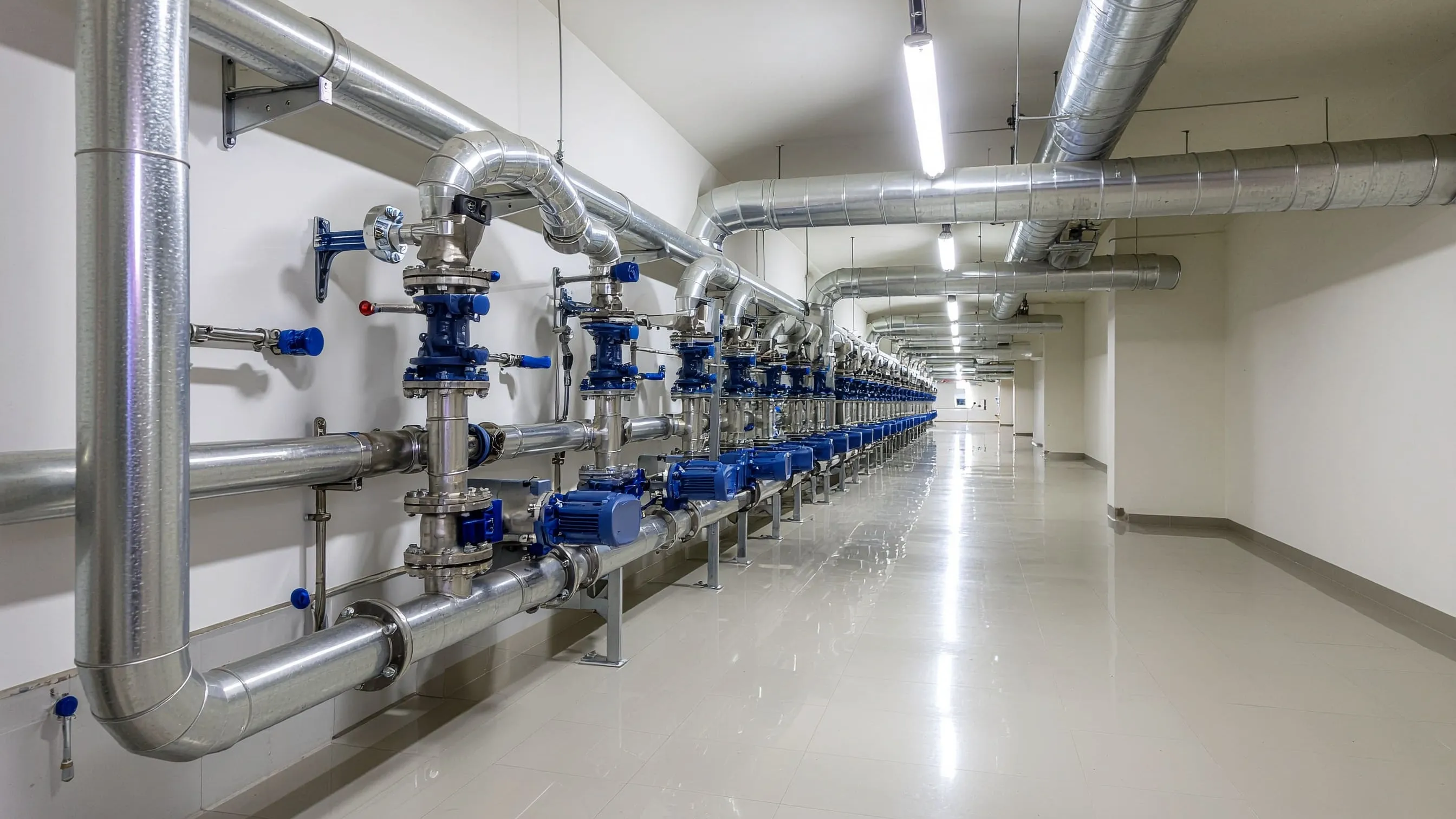
Legionella bacteria thrive in poorly managed water systems, and the consequences of non-compliance extend well beyond regulatory penalties. Building managers, facilities operators, and heating engineers carry clear legal obligations under the Health and Safety Executive's Approved Code of Practice L8 and its associated technical companion HSG274. Together, these documents establish the complete framework for controlling legionella risk in hot and cold water systems across commercial, industrial, and multi-occupancy residential properties throughout the UK.
The regulations apply to any premises where water is stored, heated, or distributed, making HSG274 L8 compliance water systems obligations relevant to hospitals, hotels, office buildings, manufacturing facilities, educational establishments, and residential developments. Understanding the technical requirements and translating them into practical operational controls protects building occupants from a potentially fatal disease whilst demonstrating the due diligence that health and safety legislation demands.
Understanding the Legal Framework
L8 establishes the legal duties for controlling legionella bacteria in water systems, whilst HSG274 provides the detailed technical implementation guidance for engineers and facilities professionals. The Approved Code of Practice carries quasi-legal status - compliance with L8 provides strong evidence that legal requirements have been met, though alternative approaches can be accepted where duty holders can demonstrate equivalent or superior control has been achieved through different means.
HSG274 divides into three parts addressing different system types. Part 2 specifically covers hot and cold water systems, providing detailed technical specifications for temperature control parameters, system design requirements, and monitoring frequency protocols. The guidance references British Standards including BS 8558 for domestic hot water safety and the BS EN 806 series for cold water system design, creating a coherent technical framework that supports both initial system specification and ongoing compliance management.
The regulations require duty holders to identify and assess sources of legionella risk, prepare a written water safety control scheme, implement and manage the precautions within that scheme, and maintain proper records demonstrating that obligations are being met. These duties apply regardless of building size or complexity - a small office with basic central heating and domestic water services faces the same fundamental requirements as a large hospital, though the scale, detail, and resource commitment of appropriate control measures will differ substantially.
The duty holder - typically the building owner or employer in day-to-day control of the premises - may delegate operational management to a competent person but retains overall legal accountability for compliance. For leased commercial properties, landlords generally retain responsibility for communal water systems and plant rooms, whilst tenants may hold duties for systems within their exclusive leased area. This responsibility split must be clearly documented in leases and service charge agreements to prevent compliance gaps arising from ambiguity about who manages which system elements.
Central heating sealed primary circuits operating at temperatures above 60°C throughout present minimal legionella risk when properly maintained as closed systems without potable water connections. However, any arrangement where primary heating water interfaces with domestic hot water supply through indirect vessels, plate heat exchangers, or combination cylinders requires specific risk assessment to ensure sufficient heat transfer and prevent the thermal stratification that allows legionella colonisation in the stored domestic hot water volume.
Key Requirements for Hot Water Systems
HSG274 Part 2 specifies that hot water must be stored at a minimum 60°C and distributed so that outlets deliver 50°C or above within one minute of opening taps. These temperature standards represent the thermal conditions under which legionella bacteria cannot sustain population growth, making them the primary engineering control measure for hot water system HSG274 L8 compliance.
Calorifiers and hot water cylinders require temperature monitoring at multiple points within the vessel to verify that stratification is not creating cooler zones where bacteria can establish. A single sensor at the top of the vessel or on the flow outlet confirms only that the water leaving the calorifier is at the required temperature - it cannot confirm that the entire vessel contents have reached 60°C throughout. Sensors at the top, middle, and bottom of the vessel provide the comprehensive evidence that demonstrates full vessel heating rather than surface compliance.
DHW pumps on secondary circulation systems must be specified to maintain minimum 50°C return temperatures under all normal operating conditions. Flow rates that are inadequate for the total distribution pipework length and heat loss characteristics result in return temperatures below 50°C - a compliance failure that directly enables bacterial growth in the cooler sections of the distribution network despite correct storage temperature at the calorifier.
Monthly temperature checks at sentinel outlets - the first and last outlets on each distribution branch, plus any outlets identified as vulnerable during risk assessment - verify ongoing system performance. Engineers must record temperatures after allowing water to run until stabilisation occurs rather than taking immediate readings, which capture residual pipe temperature rather than true distribution temperature. Consistent sentinel outlet failures below 50°C require documented investigation and remediation rather than simply recording the non-compliant reading.
Grundfos pump control systems with integrated temperature monitoring and BMS connectivity support continuous return temperature verification between scheduled monthly sentinel outlet checks, providing ongoing assurance of circulation performance and early warning of developing pump deterioration that would otherwise only be identified during the next scheduled manual inspection.
Cold Water System Compliance Standards
Cold water storage tanks must prevent bacterial growth through sustained temperature control and effective contamination barrier design. Tank positioning away from heat sources, correct insulation to current standards, and adequate ventilation to prevent summer temperature rise collectively maintain the below-20°C requirement that HSG274 Part 2 specifies for cold water storage.
Tank design must promote complete water turnover through the entire vessel volume. Inlet and outlet positions should be specified and installed to promote flow through the full tank capacity, avoiding dead zones where water remains static and temperature consequently rises towards the risk threshold. Right-sizing storage capacity to actual daily demand - avoiding the oversizing that was common in older building specifications - balances supply security against the water residence time that drives temperature and quality management challenges.
National Pumps and Boilers supplies complete cold and hot water system packages designed to meet current HSG274 L8 compliance water systems requirements, with specification support that addresses tank sizing, circulation pump selection, and monitoring system integration from a single coordinated source - reducing the specification risk that arises when these interdependent elements are sourced separately.
All tanks require secure, close-fitting lids to exclude light, insects, and airborne debris that could compromise potable water quality. Overflow and vent pipes require insect-proof screens, and all penetrations for pipework, sensors, and access hatches must be properly sealed against contamination ingress. Tank interiors must be accessible for annual internal inspection and cleaning, with all such work documented as part of the written control scheme maintenance records.
Temperature maintenance below 20°C throughout the cold water distribution system requires insulation of all cold water pipework in locations where ambient heat gain could raise temperatures, separation of cold water services from hot water distribution mains and plant room heat sources, and monitoring that covers both storage tanks and the extremities of the cold water distribution network where heat gain accumulates most significantly.
Risk Assessment and Management Protocols
Comprehensive risk assessment maps the entire water system, identifying components and locations where legionella risk concentrates. Dead legs - pipework sections serving redundant outlets or extending beyond the last active fixture - create ideal conditions for bacterial growth. HSG274 specifies that dead legs should not exceed one metre in length, with shorter runs preferable and physical elimination as the recommended approach wherever practical.
Infrequently used outlets require specific risk categorisation and control specification. Guest rooms in hotels, shower facilities in sports and leisure centres, and wash stations in industrial premises with shift-based patterns all include outlets with sporadic or seasonal use. The risk assessment must identify these points explicitly and specify flushing regimes with frequencies calculated to maintain water age within safe limits. Weekly flushing until stable outlet temperature is reached provides the documented control measure for low-use fixtures that cannot be removed from the system.
Spray outlets and aerosol-generating equipment require separate risk assessment from standard hot and cold water distribution. Showers, mixer taps with aerating inserts, and any decorative or therapeutic water features generate fine water droplets that can carry legionella bacteria directly into the breathing zone. The assessment must consider both the temperature and microbiological quality of water reaching these outlets and the proximity and vulnerability of building users during normal operation.
Documentation requirements under L8 are comprehensive and non-negotiable. The risk assessment must describe the complete system layout with schematic drawings, identify all potential risk sources with individual risk ratings, evaluate the likelihood and severity of harm for each hazard, and detail control measures with named individual responsibility assignments. Missing any element makes the assessment legally insufficient regardless of how thorough the physical control measures are in practice.
The control scheme requires formal review whenever significant changes occur to the building, water system capacity, or occupancy pattern. Completing a refurbishment, adding building floors, changing tenant use, or modifying system configuration all trigger review requirements under HSG274. Many compliance failures identified during HSE inspections involve systems where modifications have been made without updating the risk assessment and control scheme to reflect the changed conditions.
Practical Implementation Steps
Correctly specified and designed systems eliminate many compliance challenges before they arise. Engineers should specify storage vessels and distribution pipework to minimise water residence time and eliminate dead legs at design stage, rather than accepting their creation as an inevitable consequence of building layout. Secondary circulation systems with correctly sized pumps maintain temperature throughout distribution networks without creating excessive flow velocities that cause noise and accelerate erosion.
Wilo variable speed circulation pumps with temperature feedback control allow flow optimisation that maintains target return temperatures under varying demand conditions, reducing energy consumption during low-demand periods without compromising the thermal performance that HSG274 L8 compliance water systems requires throughout all operating conditions.
Material selection impacts long-term system hygiene in ways that the initial specification decision determines for the life of the installation. Copper pipework provides natural antimicrobial properties that inhibit biofilm formation compared to plastic alternatives. All materials must comply with Water Supply (Water Fittings) Regulations and carry appropriate WRAS approval for drinking water contact applications. Gasket and seal materials selected for their chemical compatibility with hot water service conditions prevent the organic material release that can elevate nutrient availability for biofilm bacteria.
Armstrong commercial pump systems with integrated energy monitoring and performance trending capabilities support the operational efficiency of HSG274-compliant hot water circulation systems, providing the data that facilities managers need both for compliance documentation and for identifying pump performance deterioration before it causes temperature control failures.
System zoning enables maintenance isolation of individual building sections without disrupting water supply to occupied areas. Well-designed valve arrangements allow specific floors or wings to be drained and thermally disinfected whilst maintaining service continuity elsewhere. This approach proves particularly valuable in healthcare facilities, hotels, and commercial office buildings where partial occupation during maintenance periods is the norm rather than the exception.
Monthly temperature monitoring provides the compliance foundation, with results reviewed promptly by the responsible person to identify developing trends before they become recorded non-compliance events. Quarterly physical inspection of accessible pipework adds visual assessment for insulation damage, unauthorised modifications, or developing leak points that monthly temperature monitoring cannot identify. Annual system disinfection provides a comprehensive reset for systems with persistent temperature control challenges or following invasive maintenance work on distribution pipework.
Common Compliance Failures and Prevention
Inadequate circulation pump performance remains the most common cause of hot water temperature control failure in commercial buildings operating under HSG274 L8 compliance requirements. Pumps specified for initial system conditions may prove insufficient following building modifications that extend distribution runs, add outlet numbers, or change occupancy patterns in ways that increase simultaneous demand.
Lowara variable speed circulation pumps allow flow adjustment through inverter control to compensate for system changes that would otherwise require pump replacement, providing practical flexibility for commercial buildings where incremental modifications accumulate over time without triggering formal system redesign.
Poor system design creates compliance problems that are expensive and disruptive to remedy after commissioning. Dead legs beyond the one-metre HSG274 maximum require physical pipework modifications to remove the redundant section or bring it into active circulation. Oversized storage tanks with insufficient daily turnover need replacement with appropriately sized vessels or supplementary usage systems to reduce water residence time. These remedial works are substantially more costly when carried out reactively after an enforcement notice than when addressed proactively through correct specification at design stage.
Insufficient staff training contributes to monitoring failures, inappropriate responses to identified problems, and documentation gaps that undermine otherwise adequate control programmes. Personnel conducting temperature checks must understand the significance of readings in the context of the HSG274 temperature thresholds, recognise when a reading requires immediate escalation rather than simple documentation, and know how to conduct accurate measurements using correct technique. Training records must demonstrate ongoing competence rather than one-time completion of an initial course.
DAB booster and circulation systems with integrated fault monitoring and remote diagnostic capability reduce the dependence on manual inspection frequency for performance verification, providing continuous operational data that supports compliance documentation and enables trained staff to focus attention on the system elements that require human assessment rather than those that continuous monitoring already covers adequately.
Pump valves in hot water circulation and cold water distribution systems require specific inclusion in maintenance programmes - isolation valve seizure affects the ability to isolate sections for maintenance or emergency response, whilst non-return valve failure can allow reverse flow that compromises distribution temperature management in ways that routine temperature monitoring may not immediately identify.
Conclusion
HSG274 L8 compliance water systems obligations require systematic attention to temperature management, system design, monitoring frequency, documentation quality, and staff competence across the full scope of hot and cold water services in commercial buildings. Temperature control provides the primary engineering defence: hot water stored at 60°C, distributed at 50°C minimum, cold water maintained below 20°C throughout, and secondary circulation correctly sized to maintain these standards under all normal operating conditions.
Regular monitoring with accurate technique, comprehensive records, and prompt corrective action when readings fall outside acceptable ranges demonstrates the active management approach that L8 requires. Written control schemes with named responsible persons and documented training records transform technical requirements into operational reality that survives HSE inspection scrutiny. System design decisions made at specification stage - correct pipe sizing, elimination of dead legs, appropriate storage vessel capacity, and correctly sized circulation equipment - establish the technical foundation for compliance that is far more cost-effective to build in than to retrofit.
For guidance on HSG274-compliant system design, circulation pump selection, and upgrading existing installations to meet current L8 requirements, Contact Us to discuss specific building requirements and practical compliance solutions.