

Hydraulic Balancing After Installation: Why It Matters for Multi-Pump Systems
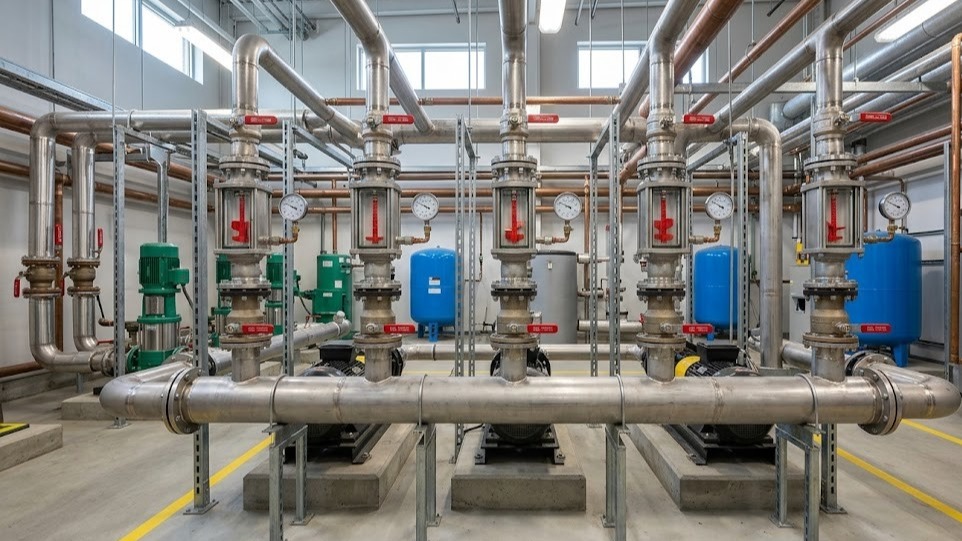
Multi-pump systems in commercial heating installations frequently underperform despite correct equipment specification and installation. The culprit? Inadequate hydraulic balancing. When multiple pumps operate within the same system, unbalanced flow distribution creates zones of excess pressure whilst starving others of adequate circulation. The result: comfort complaints, energy waste, and premature equipment failure.
Hydraulic balancing multi pump configurations after installation represents the difference between a system that meets design parameters and one that merely functions. For building services contractors and facilities managers, understanding this process prevents costly callbacks and ensures long-term system efficiency.
What Hydraulic Balancing Actually Achieves
Hydraulic balancing distributes flow rates proportionally across all system branches according to design specifications. In multi-pump configurations serving large commercial buildings, district heating networks, or industrial processes, achieving this balance requires methodical adjustment of control valves, differential pressure regulators, and pump operating parameters.
Without proper balancing, the path of least resistance dominates. Circuits closest to the pump receive excessive flow whilst distant branches struggle with inadequate circulation. This imbalance manifests as temperature differentials between zones, increased pump energy consumption, and accelerated wear on system components.
Variable Speed Drive Advantages
Grundfos circulators equipped with variable speed drives offer significant advantages during balancing procedures, allowing precise flow adjustment without mechanical valve manipulation alone. However, even sophisticated pump technology cannot compensate for fundamentally unbalanced hydraulic circuits.
Why Multi-Pump Systems Demand Specific Attention
Single-pump systems present relatively straightforward balancing challenges. Multi-pump installations introduce complexity through parallel operation, duty/standby configurations, and staged capacity control. Each operational scenario creates different hydraulic conditions requiring verification.
Consider a commercial building with four Wilo pumps configured for lead/lag operation. During low-demand periods with one pump running, the system operates under different pressure conditions than during peak loads with three pumps active. Balancing pump systems must account for these varying operational states to maintain proportional flow distribution across all scenarios.
Parallel Pump Complications
Parallel pump installations compound this challenge. When multiple pumps feed a common header, their combined output creates pressure interactions that shift flow patterns. Balancing valves set for single-pump operation may prove inadequate when additional pumps engage, allowing flow to redistribute unpredictably.
The Installation-to-Commissioning Gap
Most installation contracts specify equipment placement, pipe sizing, and electrical connections. Few allocate sufficient time for comprehensive hydraulic balancing. This gap between mechanical completion and proper commissioning creates systems that technically operate but fail to deliver design performance.
National Pumps and Boilers supplies complete pump packages with integrated controls specifically designed to simplify balancing procedures. However, even premium equipment requires systematic commissioning to achieve optimal performance. The balancing process cannot be rushed or abbreviated without compromising long-term system operation.
Building services engineers frequently encounter systems where installers adjust a few accessible valves, declare the system "balanced," and depart. True hydraulic balancing multi-pump installations demand measurement, calculation, and iterative adjustment across every circuit until design flow rates are verified throughout the system.
Measurement Points That Matter
Effective hydraulic balancing relies on accurate measurement at strategic locations. Multi-pump systems require differential pressure readings across each pump, flow measurements at major distribution points, and temperature differentials across heat exchangers and terminal units.
Modern balancing techniques employ ultrasonic flow meters, differential pressure gauges, and thermal imaging to verify performance without system disruption. These tools reveal flow distribution patterns that remain invisible through simple visual inspection or subjective comfort assessment.
DHW and Space Heating Integration
For systems incorporating DHW pumps alongside space heating circuits, balancing becomes particularly critical. Domestic hot water demands fluctuate dramatically throughout the day, creating pressure variations that affect central heating distribution. Proper balancing maintains stable flow to both services regardless of demand patterns.
Valve Selection and Placement Strategy
Hydraulic balancing depends on appropriate control valve selection and strategic placement. Automatic balancing valves, manual commissioning valves, and differential pressure regulators each serve specific functions within the balancing strategy.
Automatic Balancing Valves
Automatic balancing valves maintain constant flow regardless of pressure fluctuations, providing stability in systems where pump operation varies. These devices prove particularly valuable in multi-pump installations where staging pumps on and off creates pressure transients that would otherwise redistribute flow.
Manual commissioning valves allow precise flow adjustment during initial balancing and subsequent system modifications. Quality pump valves include integral flow measurement ports, eliminating the need for temporary test equipment during commissioning procedures.
Differential Pressure Regulators
Differential pressure regulators prevent excessive pressure from reaching terminal circuits, protecting equipment whilst maintaining balanced flow distribution. In tall buildings or systems with significant elevation changes, these regulators prove essential for preventing pressure-induced flow maldistribution.
The Iterative Balancing Process
Hydraulic balancing follows a systematic procedure starting with the circuits furthest from the pump and working progressively toward the pump itself. This "balancing from the index circuit" approach prevents repeated adjustments as upstream changes affect downstream conditions.
The process begins by fully opening all balancing valves, then measuring actual flow rates throughout the system. Calculations determine the required valve adjustment at each point to achieve design flows. Adjustments proceed from the most remote circuit, with each valve set to restrict flow to design values.
Re-Measurement Requirements
After initial adjustment, the entire system requires re-measurement. Changes at one point affect conditions elsewhere, necessitating iterative refinement until all circuits simultaneously achieve design flows within acceptable tolerances - typically plus or minus five percent.
For complex multi-pump systems, this process may require multiple days of methodical measurement and adjustment. Attempting to abbreviate the procedure invariably results in compromised performance and eventual system problems.
Pressure Control and System Protection
Multi-pump systems generate substantial pressure, particularly during low-flow conditions when multiple pumps operate against partially closed valves. Without proper pressure control, this excess pressure damages seals, causes valve noise, and wastes energy.
Variable speed drives provide the most effective pressure control, modulating pump speed to match system demand whilst maintaining target differential pressure. When properly configured, these drives eliminate pressure-induced flow maldistribution whilst dramatically reducing energy consumption compared to fixed-speed operation with throttling valves.
Expansion Vessel Role
Expansion vessels play a crucial role in maintaining system pressure stability during pump operation changes. Correctly sized and pre-charged expansion vessels absorb pressure transients that would otherwise disrupt hydraulic balance and stress system components.
Documentation and Long-Term Verification
Proper hydraulic balancing generates comprehensive documentation recording valve positions, measured flow rates, differential pressures, and system temperatures under various operating conditions. This documentation proves invaluable during troubleshooting, system modifications, and routine maintenance.
Without accurate commissioning records, subsequent maintenance personnel lack baseline data to verify continued proper operation. Systems gradually drift from balanced conditions through valve tampering, component wear, and incremental system modifications. Regular verification against commissioning data identifies degradation before it causes significant performance problems.
Building Management System Integration
Building management systems can monitor key parameters continuously, alerting operators to conditions indicating hydraulic imbalance. Monitoring pump differential pressure, return temperature spreads, and zone temperature variations provides early warning of developing balance problems.
Common Balancing Mistakes and Their Consequences
The most prevalent balancing error involves adjusting only the most accessible valves whilst ignoring difficult-to-reach locations. This selective approach creates an illusion of balance in visible areas whilst leaving remote circuits fundamentally unbalanced.
Single-Pump Operation Testing Only
Another frequent mistake involves balancing during single-pump operation without verifying performance when additional pumps engage. Systems balanced for one operational state often become severely unbalanced under different pump combinations, creating the mystifying situation where the system performs acceptably during low demand but fails during peak loads.
Neglecting to account for control valve authority represents a third common error. When control valves lack sufficient authority due to excessive system pressure drop elsewhere, they cannot effectively modulate flow. The result: zones that cannot achieve setpoint temperatures despite properly sized equipment and adequate pump capacity.
Integration With Building Controls
Modern building management systems offer sophisticated control strategies for multi-pump installations, but these controls depend absolutely on proper hydraulic balancing. Advanced control algorithms cannot compensate for fundamentally unbalanced hydraulic circuits.
Weather compensation, load anticipation, and optimised start/stop routines all assume balanced flow distribution. When hydraulic imbalance exists, control systems respond by driving pumps harder, opening valves wider, and increasing boiler temperatures - precisely the opposite of efficient operation.
Coordination Requirements
Proper integration between hydraulic balancing and control system commissioning ensures that both mechanical and control systems work synergistically. This integration requires coordination between mechanical contractors, controls specialists, and commissioning engineers - coordination frequently absent from traditional project delivery methods.
Energy Performance Implications
Unbalanced multi-pump systems waste substantial energy through several mechanisms. Pumps operate at higher speeds to overcome artificial resistance created by balancing valve throttling in over-served circuits. Boilers fire at elevated temperatures, attempting to satisfy underserved zones. Terminal units run continuously, trying to extract adequate heat from insufficient flow.
Research by the Building Services Research and Information Association (BSRIA) indicates that properly balanced systems consume 15-30% less pump energy compared to unbalanced installations. For large commercial buildings operating pumps continuously, this represents thousands of pounds in annual energy costs.
Heating Plant Efficiency Impact
Beyond direct pump energy, unbalanced systems increase heating plant energy consumption. When some zones receive inadequate flow, building controls increase supply temperature, attempting to compensate. This elevated temperature reduces boiler efficiency, particularly in condensing boilers that achieve peak efficiency only at lower return temperatures.
Retrofit and Existing System Challenges
Balancing pump systems in existing installations presents unique challenges compared to new construction. Decades-old systems may lack adequate balancing valves, measurement points, or documentation of original design intent. Modifications over the years create hydraulic conditions far removed from the original design.
Retrofitting proper balancing capability into existing systems requires careful assessment of current conditions, identification of missing components, and strategic addition of balancing valves and measurement points. This investment pays dividends through improved comfort, reduced energy consumption, and extended equipment life.
Pump Replacement Considerations
For facilities managers considering system upgrades, hydraulic rebalancing should accompany any pump replacement or control system modification. Installing modern, efficient pumps into an unbalanced system wastes the potential efficiency gains whilst potentially worsening performance through increased available pressure driving flow maldistribution.
Specialist Support and Technical Resources
Complex multi-pump installations benefit from specialist commissioning expertise. Experienced commissioning engineers employ sophisticated measurement equipment, computational tools, and systematic procedures that ensure thorough balancing across all operating conditions.
Professional commissioning services document system performance comprehensively, providing building owners with verified confirmation that installations meet design specifications. This documentation protects all parties whilst establishing baseline data for long-term performance verification.
Conclusion
Understanding hydraulic balancing multi pump configurations transforms systems from technically operational to genuinely efficient. The process demands systematic measurement, calculation, and iterative adjustment across all operating conditions - work that cannot be abbreviated without compromising performance.
For building services contractors, proper balancing pump systems prevents callbacks, ensures client satisfaction, and differentiates professional installation from merely adequate work. For facilities managers, balanced systems deliver lower energy costs, improved comfort, and extended equipment life.
Multi-pump installations serving commercial buildings, district heating networks, and industrial processes represent significant capital investments. Proper hydraulic balancing protects this investment whilst ensuring design performance throughout the system's operational life. The time and expertise required for thorough commissioning prove insignificant compared to years of efficient, trouble-free operation.
Building services professionals seeking guidance on multi-pump system design, equipment selection, or commissioning procedures can contact us for technical support tailored to specific project requirements.