

Installing Air-to-Water Heat Pumps in Commercial Buildings: A Step-by-Step Guide
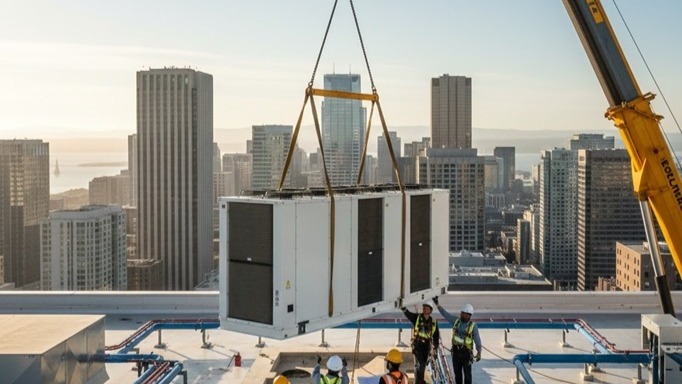
Installing an air-to-water heat pump in a commercial building requires meticulous planning, skilled tradespeople, and careful attention to technical specifications. Unlike domestic installations, commercial projects involve larger equipment capacities, complex distribution networks, and strict regulatory compliance requirements. This comprehensive guide details the complete installation process from initial site assessment through to system commissioning, providing facility managers and building owners with a clear understanding of what to expect during an air to water heat pump installation project.
Pre-Installation Planning and Site Assessment
Successful installations begin long before equipment arrives on site. A thorough site survey identifies potential challenges early, allowing design adjustments that prevent costly delays during installation. Engineers measure available space for outdoor and indoor equipment, verify structural capacity for equipment weight, and assess access routes for delivery. Large commercial heat pumps may weigh several hundred kilograms and require crane lifting or specialist handling equipment to manoeuvre into position.
Electrical infrastructure capacity deserves careful evaluation. Commercial air-to-water systems typically require three-phase electrical supplies with substantial current ratings - often 100 amperes or more for larger units. Facility managers should verify that existing electrical switchboards have sufficient spare capacity or budget for electrical infrastructure upgrades. Distance from distribution boards to equipment locations affects cable sizing and installation costs.
Hydraulic connections to existing heating distribution networks require investigation. Identify pipe sizes, materials, and routing for flow and return connections. Systems with multiple heating zones may need additional valves, controllers, and pipework modifications. Understanding the existing system thoroughly prevents unpleasant surprises during installation and helps contractors provide accurate cost estimates.
Building Regulations approval and MCS certification ensure installations meet required standards. Part L (Conservation of fuel and power) requires specific efficiency levels and control provisions. Planning permission may be necessary for outdoor units visible from public areas or in conservation areas. F-Gas regulations mandate qualified engineers handle refrigerant systems, with proper certification and record-keeping obligations. Address these regulatory requirements early to avoid project delays.
Preparing the Installation Site
Outdoor unit foundations must provide stable, level support capable of handling equipment weight and operational vibration. Concrete pads typically measure 100mm thick reinforced with steel mesh, extending 150mm beyond equipment footprints on all sides. Poor foundations lead to noise transmission, equipment stress, and potential component failure. Position foundations to allow adequate clearance for airflow, maintenance access, and drainage of condensate water produced during operation.
Noise considerations influence outdoor unit placement significantly in commercial settings. Heat pumps generate sound from compressor operation, fan rotation, and refrigerant flow. While modern equipment operates relatively quietly, sound propagation to noise-sensitive areas such as offices, meeting rooms, or neighbouring properties requires mitigation. Acoustic barriers, strategic positioning away from windows, and low-noise operating modes help address concerns whilst maintaining equipment performance.
Indoor plant room preparation involves allocating space for buffer vessels, circulation pumps, expansion vessels, controls, and associated pipework. Adequate working space around equipment facilitates installation and future maintenance. Ventilation requirements vary based on equipment specifications - some systems need outdoor air supply for combustion safety controls or heat exchanger protection. Floor loading capacity must accommodate water-filled vessels and equipment - a 500-litre buffer vessel weighs approximately 500kg when full.
Cable routes and containment systems require careful planning. Install separate containment for power cables and low-voltage control wiring to prevent electrical interference. Plan routes that minimise cable lengths whilst avoiding areas subject to physical damage. Consider future maintenance access when positioning containment - subsequent modifications become difficult if access is restricted.
Electrical Infrastructure Installation
Three-phase electrical supplies form the backbone of commercial heat pump installations. Calculate electrical loads accurately, accounting for compressor starting currents that may exceed running currents by 3-4 times. Motor soft-start technology or variable frequency drives reduce starting current demands but remain substantial for large equipment. Install appropriately rated circuit breakers with proper discrimination to protect equipment whilst minimising nuisance tripping.
Cable sizing must account for voltage drop over cable length as well as current carrying capacity. Excessive voltage drop causes poor compressor starting performance and potential equipment damage. Consult manufacturer specifications for maximum permissible voltage drop - typically 2-3% for heat pump equipment. Earthing and bonding provisions ensure electrical safety, with supplementary earth connections to equipment frames and metallic pipework.
Isolation switches allow safe equipment disconnection during maintenance or emergency situations. Position isolators within sight of equipment but far enough away to prevent accidental contact with live components. Lockable isolators provide additional safety for maintenance work. Comply with local electrical regulations regarding isolation switch ratings, positioning, and labelling requirements.
Control wiring installation connects outdoor units to indoor controllers, room thermostats, zone valves, and building management systems. Use screened cable for sensor wiring to prevent electrical interference affecting temperature readings. Wilo pumps often specified for commercial installations include electrical connections requiring proper cable sizing and circuit protection. Follow manufacturer wiring diagrams precisely - incorrect control wiring causes operational problems that prove difficult to diagnose.
Weather compensation sensors require outdoor placement away from direct sunlight, wind tunnels, or heat sources that affect temperature readings. North-facing walls typically provide suitable locations. Secure sensors properly to prevent water ingress and temperature measurement errors. Building management system integration involves communication cable installation, often using RS485, Modbus, or BACnet protocols depending on BMS platform requirements.
Hydraulic System Installation and Pipework
Primary circuit pipework connects the heat pump to buffer vessels or directly to distribution networks, depending on system design. Copper pipework remains popular for its reliability and ease of installation, though plastic pressure pipe systems gain acceptance for their corrosion resistance and simpler jointing methods. Size pipework according to design flow rates, maintaining flow velocities between 0.5-1.5 metres per second to minimise pressure drop whilst preventing noise and erosion issues.
Insulation on all pipework significantly impacts system efficiency. Heat loss from uninsulated hot pipework wastes energy and reduces delivered heating capacity. British Standards recommend minimum insulation thicknesses based on pipe diameter and operating temperature. Use closed-cell foam insulation materials resistant to moisture absorption. Pay particular attention to insulating pipework in unheated spaces where heat loss is greatest.
Pressure testing verifies pipework integrity before system filling. Pressurise the system to 1.5 times operating pressure for at least one hour, monitoring for pressure drops indicating leaks. Address any leaks before proceeding - hunting for leaks after filling with water creates mess and delays. Flush pipework thoroughly to remove installation debris, flux residue, and swarf that could damage pump seals or heat exchanger surfaces.
Buffer vessels provide thermal storage that improves system performance by reducing short cycling, accommodating minimum flow requirements, and allowing heat pumps to operate at steady state for maximum efficiency. Expansion vessels accommodate water volume changes with temperature, preventing excessive pressure build-up. Size vessels appropriately for system water volume and operating temperature range. Install vessels with pre-charge pressures set according to system static head.
Hydraulic separation between primary (heat pump) and secondary (distribution) circuits simplifies system balancing and allows independent optimisation of each circuit. Low-loss headers or buffer vessels provide hydraulic separation whilst maintaining thermal connectivity. Install temperature and pressure gauges at strategic locations for monitoring system operation and fault diagnosis. Position air elimination valves at high points where air naturally accumulates.
Refrigerant Pipework Installation
Many commercial air-to-water systems use split configurations with separate outdoor and indoor units connected by refrigerant pipework. Pre-charged line sets simplify installation by containing refrigerant within sealed copper tubing, eliminating the need for refrigerant charging on site. However, line sets have maximum length and elevation restrictions that constrain unit placement flexibility.
Route refrigerant lines carefully to avoid kinks, stress points, or areas subject to physical damage. Support pipework adequately to prevent vibration and sagging. Insulate both liquid and suction lines - suction line insulation prevents condensation whilst liquid line insulation maintains refrigerant sub-cooling for optimal efficiency. Use closed-cell foam insulation rated for refrigerant system temperatures.
Flare connections at indoor and outdoor units require careful preparation. Ensure copper pipe ends are cut square, deburred, and clean before flaring. Under-tightening causes refrigerant leaks whilst over-tightening damages flare surfaces or cracks fittings. Use calibrated torque wrenches to achieve manufacturer-specified tightening torques. Leak test all connections using nitrogen pressure before evacuating the system.
Vacuum pump procedures remove air and moisture from refrigerant circuits before charging. Moisture within refrigerant systems causes ice formation in expansion devices, acid formation that damages compressors, and reduced heat transfer efficiency. Evacuate systems to pressures below 500 microns and hold for at least 30 minutes to verify leak-tightness. Only qualified, F-Gas certified engineers should perform refrigerant handling procedures.
Installing Circulation Pumps and Ancillary Equipment
Pressurisation units maintain system pressure within acceptable operating ranges despite water volume changes with temperature. For larger commercial installations, automatic pressurisation units replace simple expansion vessels, providing more sophisticated pressure control with pumped replenishment from integral water reservoirs. Install units according to manufacturer guidance, typically on primary circuit return pipework where temperatures are lowest.
Circulation pumps selected for setting up air to water heat pump systems must deliver design flow rates against system pressure drop. Variable speed pumps offer significant energy savings compared to fixed-speed alternatives by modulating flow to match instantaneous demand. Position pumps with motors horizontal to simplify bearing lubrication and air venting. Install isolation valves either side of pumps to facilitate future maintenance or replacement without draining the entire system.
Flow meters help verify system performance during commissioning and provide ongoing monitoring capability. Measure flow rates at design operating conditions and compare against design specifications. Significant discrepancies indicate pipework restrictions, pump selection errors, or air locks preventing proper circulation. DHW pumps serving domestic hot water circuits require separate sizing considerations based on hot water demand patterns rather than space heating loads.
Automatic air vents eliminate trapped air that impairs circulation and heat transfer. Install air vents at high points in system where air naturally collects. Check air vent operation during commissioning by opening manual vents downstream to verify air release. Safety valves sized appropriately for system volume protect against over-pressure conditions. Set relief pressures slightly above maximum operating pressure but below equipment pressure ratings.
Control System Configuration and Programming
Weather compensation controls adjust flow temperature based on outdoor temperature, maintaining comfort whilst maximising efficiency. Install outdoor sensors on north-facing walls away from direct sunlight, wind-sheltered corners, or heat sources like flues. Programme compensation curves based on building characteristics - buildings with good insulation require less aggressive compensation compared to poorly insulated structures.
Zone controls allow different building areas to be heated independently, improving comfort and reducing energy waste. Multiple heating zones require zone valves, individual circulation pumps, or a combination depending on system design. National Pumps and Boilers provides expertise in multi-zone heating system design and control integration. Wire zone controls according to controller specifications, ensuring proper interlocking between heat pump operation and zone demand.
Room thermostats provide occupant control and feedback to the heating system. Position thermostats approximately 1.5 metres above floor level on internal walls away from heat sources, drafts, or direct sunlight. Wireless thermostats simplify installation in refurbishment projects where cabling is difficult. Programme temperature setback during unoccupied periods - even modest temperature reductions (2-3°C) generate significant energy savings in commercial buildings.
Domestic hot water priority control ensures adequate hot water availability without compromising space heating. Configure controls to suspend space heating when hot water production is required, switching circulation to DHW circuits. Some systems offer simultaneous heating and hot water production if heat pump capacity suffices for both loads.
Building management system integration enables centralised monitoring and control. Configure communication protocols matching existing BMS infrastructure. Map heat pump operational parameters to BMS graphics, allowing facility managers to monitor performance remotely. Set up alarm notifications for fault conditions requiring attention. Trend historical data to identify performance deterioration or efficiency improvement opportunities.
System Commissioning and Performance Verification
Pre-start checks verify all installation work is complete and compliant before energising equipment. Confirm electrical connections are tight, properly protected, and correctly wired. Verify refrigerant system pressure indicates proper refrigerant charge. Check hydraulic system pressure meets design specifications. Ensure all isolation valves are open in operational circuits. Review control programming to confirm correct parameter settings.
Initial system start-up follows manufacturer procedures precisely. Experienced commissioning engineers understand equipment-specific requirements and potential issues. Monitor compressor starting - smooth starting without excessive current draw indicates proper electrical configuration. Verify circulation flow through primary and secondary circuits. Check for unusual noises, vibrations, or refrigerant system irregularities indicating installation problems.
Performance testing validates that installed systems meet design specifications. Measure temperature differentials across heat pump to calculate delivered heating capacity. Monitor electrical power consumption and calculate coefficient of performance under various operating conditions. Compare measured performance against manufacturer data and design predictions. Significant deviations warrant investigation and rectification before handover.
Flow balancing ensures uniform distribution to multiple heating circuits. Adjust balancing valves systematically to achieve design flow rates to each zone. Inadequate flow causes poor heating performance whilst excessive flow wastes pump energy. Use differential pressure measurements or flow meters to verify correct flows. Recheck flows after making adjustments as changes to one circuit affect others.
Defrost cycle operation requires observation during commissioning, particularly during cold weather conditions. Modern systems employ intelligent defrost control that minimises frequency whilst ensuring coils remain ice-free. Excessive defrosting indicates control issues or inadequate coil design. Conversely, infrequent defrosting may allow ice accumulation that blocks airflow and damages equipment.
Documentation and Handover
Comprehensive documentation ensures facility staff understand system operation and maintenance requirements. Electrical installation certificates verify compliance with wiring regulations and safety standards. Commissioning sheets record test results, settings, and performance measurements establishing baseline data for comparison during future service visits. F-Gas records document refrigerant quantities, leak test results, and qualified engineer certification as required by environmental regulations.
Building Control notification confirms installations comply with Building Regulations. Provide evidence of Part L compliance including efficiency calculations and commissioning results. Obtain completion certificates for project records and potential future property transactions. Register equipment warranties with manufacturers, noting any specific requirements regarding service intervals or approved contractors.
Operation and maintenance manuals should include manufacturer technical documentation, system schematics showing equipment locations and connections, control wiring diagrams, and commissioning data. Provide clear instructions for routine operation including seasonal setting changes, troubleshooting common issues, and emergency shutdown procedures. Include supplier contact information for spare parts and technical support.
Training for facility staff covers day-to-day operational aspects rather than in-depth technical service requirements. Demonstrate control interface operation and adjustment procedures. Explain routine maintenance tasks facility personnel can undertake including filter cleaning and condensate drain inspection. Discuss alarm conditions and appropriate responses. Provide written instructions supplementing hands-on training.
Post-Installation Optimisation and Fine-Tuning
Monitor first heating season performance closely to verify system meets comfort and efficiency expectations. Data logging systems record outdoor temperatures, indoor temperatures, energy consumption, and operating hours. Compare actual performance against design predictions and adjust control parameters if necessary. Occupant feedback regarding comfort levels identifies issues requiring attention.
Control parameter optimisation continues beyond initial commissioning. Weather compensation curves may require adjustment based on actual building response. Zone temperature settings may need modification to balance comfort demands across different areas. Domestic hot water production schedules should align with actual usage patterns to minimise energy waste from maintaining unnecessarily high storage temperatures.
Schedule annual maintenance with qualified service engineers to maintain performance and reliability. Annual services typically include refrigerant system leak testing as required by F-Gas regulations, electrical connection inspection and tightening, condensate drain cleaning, filter cleaning or replacement, and control system verification. Regular maintenance prevents small issues developing into expensive failures and maintains manufacturer warranty coverage.
Establish ongoing support arrangements appropriate for building criticality. Commercial buildings requiring high reliability may benefit from comprehensive service contracts including emergency callout coverage and guaranteed response times. Less critical applications may use time-and-materials service arrangements. Whatever approach is chosen, maintain relationships with qualified service providers rather than attempting sourcing new contractors during emergency situations.
Commercial air to water heat pump installation projects demand careful planning, skilled installation, and thorough commissioning to achieve optimal performance. By following systematic procedures from site assessment through post-installation optimisation, facility managers ensure systems deliver expected comfort, efficiency, and reliability. Engage experienced heat pump specialists who understand commercial applications and regulatory requirements. With proper installation and ongoing maintenance, air-to-water heat pumps provide decades of efficient heating whilst reducing operating costs and environmental impact. For professional installation services and technical support, contact us to discuss your commercial heating project requirements.