

Insulation and Heat Loss: Why Tank Quality Matters
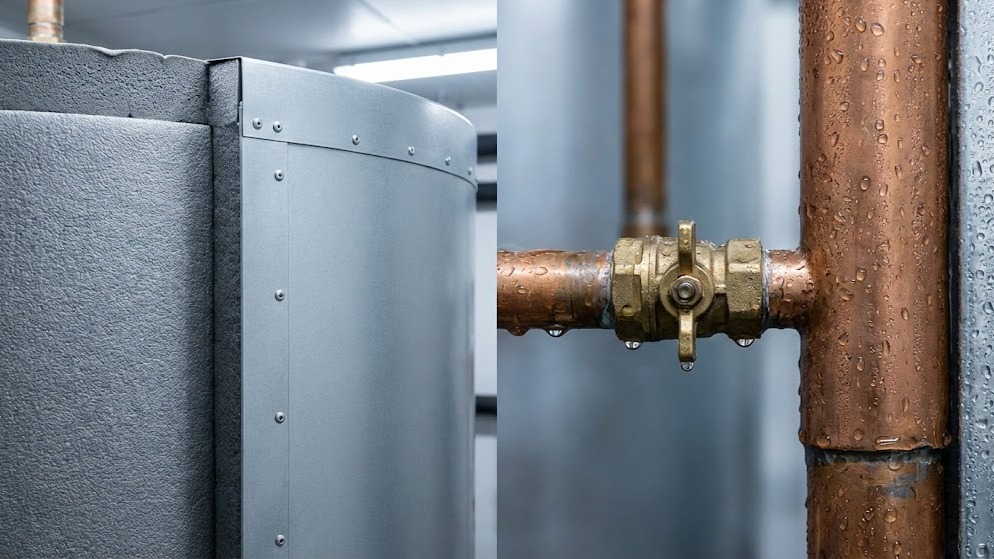
Thermal storage vessels continuously lose heat to their surroundings through mechanisms that quality construction minimises. The rate of tank insulation heat loss directly affects operating economics, with poorly insulated vessels wasting energy that properly specified alternatives would retain. Understanding insulation performance helps specifiers select storage equipment that delivers thermal storage efficiency throughout extended service lives.
The difference between budget and quality storage vessels often lies primarily in insulation specification. External dimensions may appear similar, but internal construction details determine how effectively each vessel retains stored heat. Investing in quality insulation delivers returns through reduced energy consumption that compounds across years of operation.
Understanding Heat Loss in Storage Vessels
Heat stored in buffer tanks and cylinders naturally flows toward the cooler surroundings. This heat transfer cannot be eliminated but can be minimised through effective insulation that resists the driving temperature differential between stored water and ambient conditions.
The rate of tank insulation heat loss depends on multiple factors including temperature differential, surface area, and insulation effectiveness. Higher storage temperatures, larger vessels, and poorer insulation all increase loss rates. Understanding these relationships guides specification decisions.
Thermal storage efficiency describes how effectively vessels retain stored heat for useful delivery. Systems achieving high efficiency lose minimal heat between charging and discharge cycles. Quality insulation directly improves this efficiency metric.
The economic impact of heat loss compounds over operating hours. A vessel losing one kilowatt continuously wastes nearly nine thousand kilowatt-hours annually. At typical commercial energy rates, this represents substantial ongoing cost that quality insulation would prevent.
Heat Loss Mechanisms
Heat escapes from storage vessels through several physical mechanisms, each addressable through appropriate design and construction.
Conduction Through Vessel Walls
Conductive heat transfer occurs when heat energy passes through solid materials from warm to cool regions. In storage vessels, conduction carries heat from stored water through the tank shell and insulation to the exterior surface.
The rate of conductive loss depends on material thermal conductivity, thickness, and temperature differential. High-conductivity materials like steel conduct heat readily, making effective insulation essential for limiting overall conduction.
Tank insulation heat loss through conduction reduces with increasing insulation thickness. Doubling insulation thickness approximately halves conductive losses, though diminishing returns eventually limit worthwhile thickness increases.
Thermal bridging occurs where conductive paths bypass insulation, such as at uninsulated pipe connections, mounting brackets, or inspection ports. Quality construction minimises these bridges through careful detail design and additional local insulation.
Surface Radiation and Convection
Heat reaching the outer surface of storage vessels escapes through radiation to surrounding surfaces and convection to ambient air. These mechanisms account for significant losses, particularly from poorly clad vessels.
Ambient temperature strongly affects surface loss rates. Vessels in cold plant rooms lose heat faster than those in heated spaces. Installation location influences ongoing energy costs regardless of insulation quality.
Outer cladding affects surface losses through both emissivity and convection effects. Reflective finishes reduce radiative losses whilst smooth surfaces minimise convective coefficients. Quality cladding contributes to overall thermal storage efficiency.
Installation positioning relative to airflow affects convective losses. Vessels exposed to ventilation currents or near cold external walls experience elevated losses compared to protected installations.
Insulation Types and Performance
Various insulation materials suit storage vessel applications, each with characteristics affecting performance, durability, and cost.
Rigid Foam Insulation
Polyurethane and polyisocyanurate rigid foams provide excellent thermal performance in compact thicknesses. Their closed-cell structure traps gas with lower thermal conductivity than air, achieving insulation values exceeding mineral alternatives.
Tank insulation heat loss with rigid foam insulation typically achieves the lowest rates for given thickness. This efficiency enables compact external dimensions important where space constraints limit vessel sizing.
Thickness options typically range from fifty to one hundred millimetres for commercial storage vessels. Increasing thickness improves performance but adds cost and external dimensions. Specification balances performance requirements against practical constraints.
Factory-applied foam integral with vessel construction ensures consistent quality and complete coverage. Field-applied alternatives may prove necessary for retrofit insulation but require careful installation to achieve equivalent performance.
Quality vessels from suppliers like National Pumps and Boilers feature factory-applied insulation optimised for the specific vessel design, ensuring reliable thermal performance.
Mineral Wool Insulation
Mineral wool provides cost-effective insulation with good thermal performance, though at greater thickness than equivalent foam installations. Glass fibre and stone wool variants suit different temperature ranges and application requirements.
Compression and settling affect mineral wool performance over time. Insulation packed too loosely may settle, creating gaps at vessel tops. Overly compressed material loses air pockets that provide insulation value. Proper density specification and installation maintain long-term performance.
Fire resistance represents a significant advantage for mineral wool insulation. Applications requiring non-combustible construction may mandate mineral alternatives despite slightly reduced thermal performance.
Appropriate applications for mineral wool include industrial environments where physical damage risks exist, fire-rated installations, and budget-constrained projects accepting higher heat loss rates.
Vacuum Insulation Panels
Vacuum insulation panels achieve exceptional thermal resistance through evacuated cores that eliminate gaseous conduction. Performance exceeds conventional insulation by factors of five to ten for equivalent thickness.
The exceptional performance enables extremely compact insulation for space-constrained applications. Vessels achieving specified heat loss rates in minimal external dimensions suit installations where space commands premium value.
Cost-benefit considerations limit vacuum panel applications to situations where performance or space requirements justify significant cost premiums. Standard foam insulation proves more economical for most commercial applications.
Durability and handling requirements exceed those for conventional insulation. Vacuum panel damage from puncture or compression destroys insulating performance irreversibly. Installation requires careful handling that adds to overall costs.
Impact on Operating Economics
Insulation quality directly affects operating costs through energy consumed replacing lost heat. Quantifying this relationship supports informed specification decisions.
Standing Loss Calculations
Calculating tank insulation heat loss costs requires loss rate data from manufacturer specifications or standardised test results. Loss rates expressed in watts or kilowatt-hours per day enable direct energy cost calculations.
Annual energy loss multiplies daily loss by 365 days, accounting for any temperature setback periods when storage runs cooler. Continuous high-temperature storage accumulates greater annual losses than systems with night setback.
The relationship between quality and thermal storage efficiency appears directly in comparative loss calculations. Quality vessels losing half the heat of budget alternatives save their cost premium through reduced energy consumption over reasonable periods.
Temperature effects on loss rates follow approximately linear relationships with temperature differential. Vessels storing water at 80°C in 20°C ambient lose approximately three times more heat than equivalent vessels storing at 40°C in the same ambient.
Payback Analysis for Insulation Quality
Cost comparison between insulation grades considers both capital premium and ongoing energy savings. Quality vessels typically cost ten to thirty percent more than basic alternatives but may reduce losses by forty to sixty percent.
Lifecycle cost analysis calculates total cost of ownership including initial purchase and cumulative energy costs over service life. This analysis typically favours quality insulation within five to ten years, with ongoing savings thereafter.
Energy price sensitivity affects payback calculations significantly. Rising energy costs accelerate payback on insulation investment, making quality specification increasingly attractive as prices increase.
Future-proofing through quality insulation protects against energy cost uncertainty. Investment in better insulation hedges against future price increases by reducing ongoing consumption exposure.
Quality Indicators in Tank Specification
Identifying quality storage vessels requires understanding the indicators and standards that differentiate performance levels.
Insulation Standards and Ratings
Relevant standards for storage vessel insulation include EN 12897 for indirect cylinders and EN 12977-3 for thermal stores. These standards establish test methods and performance classes enabling meaningful comparison.
Heat loss class ratings categorise vessels by standing loss performance. Class A represents the best performance whilst lower classes indicate progressively higher loss rates. Specification should identify minimum acceptable class for each application.
Thermal storage efficiency specifications may express performance as percentage retention over specified periods or absolute loss rates. Understanding which metric applies enables valid comparison between products.
Certification and compliance verification through third-party testing provides confidence in stated performance. Manufacturer claims without independent verification warrant scepticism, particularly for unfamiliar brands.
Construction Quality Factors
Construction quality beyond insulation specification affects heat retention. Joint sealing, fitting penetrations, and cladding integrity all contribute to overall performance.
Joint sealing prevents air infiltration that bypasses insulation effectiveness. Poorly sealed joints allow convective heat transfer through gaps that intact insulation would prevent.
Fitting penetrations require local insulation to prevent thermal bridging. Quality vessels incorporate insulated bosses or removable insulation sections enabling access without compromising overall performance.
Cladding quality affects both appearance and durability. Quality metal or plastic cladding protects underlying insulation from damage whilst providing attractive finished appearance suitable for visible installations.
Equipment from manufacturers like Remeha and Vaillant integrates effectively with quality storage vessels, creating systems that maintain efficiency throughout their service lives.
Maintenance and Long-Term Performance
Insulation performance can degrade over time through various mechanisms that proper maintenance addresses.
Moisture ingress represents the primary degradation mechanism for most insulation types. Water infiltration dramatically reduces insulation effectiveness whilst potentially causing corrosion damage to vessel shells. Maintaining cladding integrity prevents moisture problems.
Physical damage from impacts or compression reduces insulation effectiveness locally. Plant room activities and maintenance access can damage exposed insulation if protective measures are inadequate.
Inspection and maintenance should include visual assessment of cladding condition, checking for damage that might admit moisture, and thermal imaging to identify unusual heat loss patterns indicating insulation failure.
Repair options for damaged insulation include local patching for minor damage or complete re-insulation for severe degradation. Early repair prevents progressive deterioration that would eventually require full replacement.
Systems protected by properly sized expansion vessels avoid the pressure fluctuations that can stress insulation and cladding, contributing to long-term performance maintenance.
Conclusion
Tank insulation heat loss significantly affects the operating economics of thermal storage systems. Quality insulation specification delivers returns through reduced energy consumption that compounds across years of continuous operation.
Understanding thermal storage efficiency and the factors affecting heat retention enables informed specification decisions. Investment in quality storage equipment typically proves economical within reasonable payback periods, with ongoing savings thereafter.
Facilities managers and specifiers should prioritise insulation quality when selecting thermal storage equipment. The modest premium for quality construction delivers substantial value through reduced operating costs and extended effective service life.
For guidance on quality thermal storage equipment and heating system components, contact the National Pumps and Boilers team for expert technical support.