
 -
- Key Performance Indicators to Track for Pump and Boiler Systems
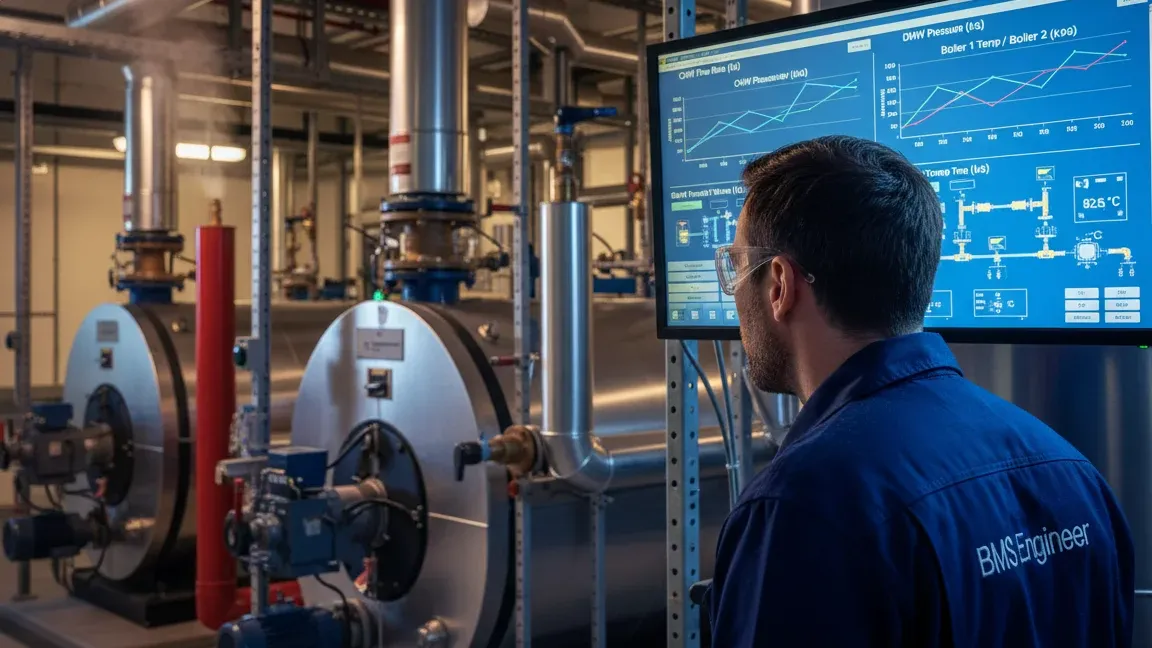
Effective system management requires more than reactive repairs when equipment fails. Tracking pump KPIs transforms maintenance from crisis response into strategic asset management, reducing costs whilst improving reliability and comfort across commercial and residential heating installations.
Understanding the Importance of Pump and Boiler KPIs
Why Performance Monitoring Matters
Building operators face constant pressure to maintain comfortable conditions whilst controlling operational costs. Without systematic monitoring, pump and boiler systems operate as black boxes - working until they suddenly stop. This reactive approach leads to emergency callouts at premium rates, extended downtime, and occupant complaints that damage reputations.
Pump KPIs provide early warning signs before minor issues escalate into major failures. A gradual increase in motor current draw might indicate bearing wear, allowing scheduled replacement during planned maintenance rather than a 2am emergency. Similarly, declining temperature differentials reveal fouling or air entrainment problems whilst systems still function, preventing complete failures.
Energy waste represents another hidden cost of unmonitored systems. A pump operating with worn impellers or a boiler with scaled heat exchangers might still heat the building, but fuel and electricity consumption creeps upward. Over months and years, this inefficiency costs thousands of pounds that proper monitoring would prevent.
National Pumps and Boilers systems benefit significantly from structured performance tracking. Modern Grundfos pumps often include built-in monitoring capabilities that simplify data collection whilst providing accurate baseline measurements for comparison.
The Financial Impact of Poor System Performance
The true cost of neglected monitoring extends beyond obvious repair bills. When a central heating pump fails during winter, emergency replacement might cost £800-1,200 including premium labour rates and expedited parts delivery. The same replacement during scheduled maintenance costs £400-600, representing immediate savings of 50% or more.
Energy inefficiency compounds over time. A boiler operating at 75% efficiency instead of the designed 90% wastes 17% of fuel consumed. For a commercial building spending £20,000 annually on gas, this represents £3,400 in avoidable costs. Pump inefficiency similarly increases electrical consumption, with worn or oversized pumps consuming 20-40% more power than properly specified equipment.
Essential Flow and Pressure Metrics
Monitoring Flow Rates
Flow rate measurement provides fundamental insight into system hydraulic performance. Each system has design flow rates that balance heat delivery with pumping energy consumption. Measuring actual flow against design specifications reveals whether systems operate as intended or have drifted from optimal performance.
Accurate flow measurement requires proper instrumentation placement. Ultrasonic flow meters offer non-invasive measurement without system modifications, whilst inline turbine meters provide continuous data for automated monitoring. For smaller central heating pumps, periodic manual measurement during maintenance visits establishes baseline data for trend analysis.
Flow rates below design specifications indicate restrictions - closed valves, clogged filters, or pipe blockages. Flow rates significantly above design suggest control valve failures, bypass valve problems, or incorrect pump selection. Either condition wastes energy and compromises comfort whilst accelerating component wear.
Pressure Differential Tracking
Pressure measurements across pumps, heat exchangers, and filters reveal system hydraulic health. A pump's pressure differential indicates whether it delivers design head, whilst pressure drop across heat exchangers shows fouling progression. Filter pressure differential provides objective data for replacement scheduling rather than arbitrary time intervals.
New, clean systems establish baseline pressure differential readings that serve as comparison references. As systems age, gradual pressure increases indicate scale buildup, corrosion product accumulation, or biofilm growth. Sudden pressure changes suggest acute problems - filter loading, valve position changes, or pipe blockages requiring immediate attention.
Commercial circulators in larger systems particularly benefit from pressure monitoring. These high-capacity pumps move substantial flow rates, making pressure deviations expensive in wasted energy. Automated pressure transducers connected to building management systems provide continuous monitoring without manual intervention.
Temperature Performance Indicators
Supply and Return Temperature Monitoring
Temperature differential between supply and return lines indicates heat transfer effectiveness. Design temperature differentials typically range from 11°C for low-temperature systems to 20°C for traditional radiator circuits. Actual differentials reveal whether systems deliver intended heat output whilst operating efficiently.
Narrow temperature differentials (supply and return temperatures too close) suggest excessive flow rates - pumps running too fast or control valves stuck open. This condition wastes pumping energy whilst potentially causing noise and erosion problems. Wide differentials indicate insufficient flow, leaving some areas underheated whilst overworking the boiler.
Pump performance directly affects temperature differentials. Worn impellers or air-bound pumps reduce flow rates, widening temperature differentials beyond design parameters. Conversely, incorrect pump sizing or failed control systems create narrow differentials and poor comfort control.
Boiler Efficiency Through Temperature Analysis
Flue gas temperature provides direct insight into combustion efficiency. Modern condensing boilers achieve peak efficiency with return temperatures below 55°C, allowing flue gas condensation and latent heat recovery. Flue temperatures exceeding 150°C indicate poor heat transfer, fouled heat exchangers, or excessive combustion air.
Return temperature monitoring particularly matters for condensing boiler performance. Return temperatures above the condensing threshold prevent latent heat recovery, reducing efficiency from 90%+ to 80% or less. This efficiency penalty costs hundreds or thousands of pounds annually in wasted fuel.
Temperature cycling frequency affects boiler lifespan. Excessive cycling causes thermal stress, particularly in cast iron heat exchangers. Monitoring cycling through temperature data helps optimise control systems for longer equipment life whilst maintaining comfort.
Energy Consumption Metrics
Electrical Power Monitoring
Motor current draw provides real-time indication of pump mechanical condition. Each pump has characteristic energy consumption under normal operation. Current measurements above baseline indicate mechanical resistance - bearing wear, impeller damage, or shaft misalignment. Current below normal suggests cavitation, loss of prime, or broken impeller vanes.
Power monitoring also reveals control system performance. Variable speed pumps should modulate power consumption with demand. Constant high power consumption regardless of demand indicates control failure or incorrect programming. Modern Wilo pumps with integrated power monitoring simplify this analysis considerably.
Trending power consumption over months and years reveals gradual efficiency degradation. A pump drawing 5% more current than last year might still function adequately, but the trend indicates developing problems requiring attention before failure occurs.
Fuel Efficiency Tracking
Fuel consumption per unit of heat delivered represents the ultimate boiler efficiency metric. Measuring gas or oil consumption against delivered heat output provides objective efficiency data independent of manufacturer claims or theoretical calculations.
Seasonal efficiency variations help distinguish normal performance from developing problems. Boilers naturally operate less efficiently during summer with low firing rates and short cycles. Efficiency declining faster than seasonal patterns predict indicates maintenance needs - cleaning, combustion adjustment, or component replacement.
Comparing actual efficiency against manufacturer specifications highlights underperforming equipment. A boiler rated for 90% efficiency operating at 82% wastes nearly 10% of fuel consumed. For large commercial systems, this inefficiency justifies significant maintenance investment or early replacement.
Operational Runtime and Cycling Data
Equipment Running Hours
Cumulative operating hours provide the most reliable basis for maintenance scheduling. Time-based maintenance ignores actual equipment usage. A boiler running 4,000 hours annually needs more frequent attention than one operating 1,500 hours, yet calendar-based schedules treat them identically.
Runtime tracking enables predictive maintenance. Components have expected lifespans measured in operating hours - bearings rated for 40,000 hours, igniters for 10,000 cycles, pumps for 60,000 hours. Tracking actual runtime allows replacement before failure rather than after breakdown.
Load distribution across multiple pumps or boilers affects individual equipment runtime. Proper sequencing rotates equipment to equalise wear, extending overall system life. Runtime monitoring verifies sequencing operates correctly and identifies equipment running disproportionately.
Start-Stop Cycle Counting
Cycle counting reveals mechanical stress independent of runtime. A pump running continuously for 8,000 hours experiences less wear than one cycling on and off 50 times daily for the same total runtime. Thermal cycling, inrush current, and mechanical shock during starts accelerate component fatigue.
Excessive cycling indicates control system problems or incorrect equipment sizing. Boilers cycling more than 6 times hourly waste fuel through repeated startup losses and purge cycles. Pumps cycling frequently suggest poor control dead bands or oversized equipment hunting for load.
Mechanical wear patterns correlate strongly with cycling frequency. Starter contactors, motor bearings, and shaft seals all degrade faster with frequent starts. Cycle counting helps predict component replacement needs and justify control system improvements through extended equipment life.
Water Quality and Chemical Balance
System Water Chemistry
Water chemistry dramatically affects system longevity and efficiency. Corrosion from improper pH levels causes leaks, reduces heat transfer, and creates debris that damages pumps and valves. Scale formation from hard water insulates heat exchanger surfaces, reducing efficiency whilst restricting flow.
pH monitoring establishes whether system water remains within acceptable ranges (typically 7.5-8.5 for steel systems, 8.5-10 for aluminium components). pH drift indicates inhibitor depletion or contamination requiring water treatment adjustment. Regular testing prevents corrosion damage.
Expansion vessels and pressurisation systems particularly benefit from proper water treatment to prevent membrane degradation and ensure long-term reliability.
Glycol Concentration in Closed Systems
Glycol-based antifreeze protects systems from freezing whilst providing corrosion inhibition. Glycol concentration requires periodic verification because glycol degrades over time, reducing both freeze protection and corrosion inhibition effectiveness. Testing with a refractometer provides accurate concentration measurements in minutes.
Glycol degradation produces acidic compounds that accelerate corrosion. pH testing of glycol systems indicates degradation progression. Declining pH despite adequate inhibitor concentration suggests glycol replacement rather than simple inhibitor addition.
Vibration and Noise Analysis
Mechanical Condition Monitoring
Vibration analysis provides early warning of mechanical problems before catastrophic failure. Every rotating machine generates characteristic vibration patterns when operating correctly. Changes in vibration amplitude, frequency, or pattern indicate developing problems - bearing wear, impeller imbalance, or shaft misalignment.
Baseline vibration measurements during commissioning or after maintenance establish comparison standards. Periodic vibration testing reveals gradual degradation. Vibration increases of 50% or more warrant investigation regardless of whether equipment still operates normally.
Pump and Motor Alignment
Alignment tolerances for coupled equipment affect long-term reliability. Misalignment creates vibration that accelerates bearing wear and seal failure. Thermal expansion during operation can shift alignment from cold commissioning settings.
Lowara and other quality pump manufacturers specify alignment tolerances in their documentation. Following these specifications during installation and verifying alignment during maintenance prevents premature wear from misalignment damage.
Implementing a KPI Tracking System
Data Collection Methods
Manual logging provides basic tracking capability for smaller facilities. Regular readings of pressure gauges, temperature displays, and energy meters create trend data without sophisticated equipment. Consistency matters more than frequency - weekly readings recorded reliably prove more valuable than sporadic daily measurements.
Building management system integration offers automated monitoring for larger installations. Modern systems capture multiple parameters continuously, storing data for trend analysis. Alert functions notify maintenance staff when readings exceed acceptable ranges, enabling rapid response to developing problems.
Reporting and Analysis Procedures
Dashboard design for quick performance assessment presents key metrics at a glance. Trend charts showing parameter changes over time reveal gradual degradation invisible in single readings. Exception reporting highlights equipment requiring immediate attention whilst filtering routine data that confirms normal operation.
Monthly and annual performance summaries support budgeting and capital planning. Historical data demonstrates maintenance programme effectiveness and identifies equipment approaching replacement age based on performance trends rather than arbitrary timelines.
For guidance on implementing KPI tracking systems or interpreting performance data, Contact Us to discuss specific monitoring requirements with experienced heating specialists.