

Legionella Risk in Hot Water Systems: What Every Building Manager Should Know
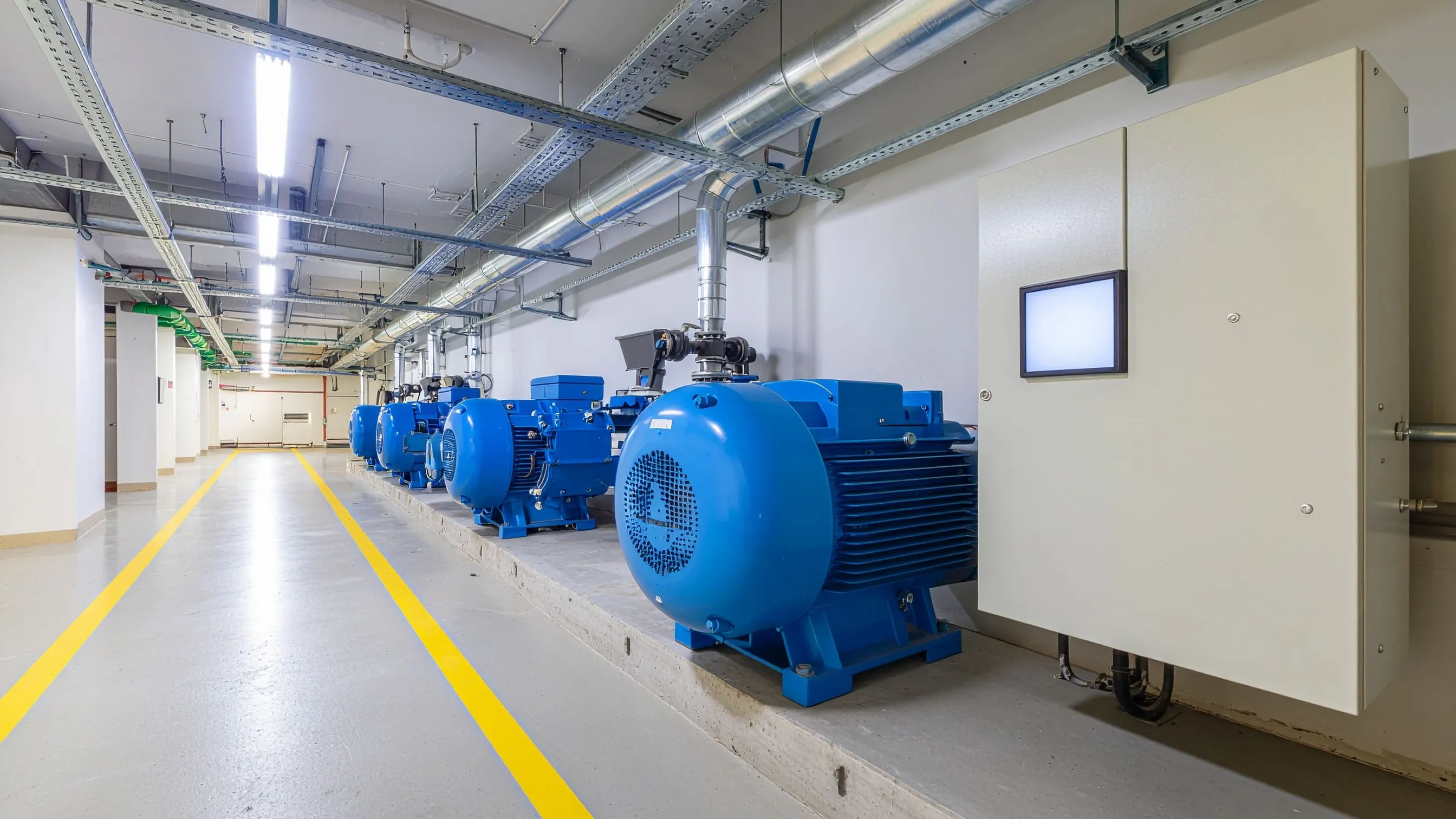
Legionella bacteria kill between 300 and 400 people in the UK each year, with hot water systems representing one of the highest-risk environments for bacterial proliferation. Building managers carry direct legal responsibility for preventing outbreaks, yet many commercial properties continue operating with inadequate controls that create conditions ideal for Legionella pneumophila colonisation. Understanding legionella risk in hot water systems is not a compliance option - it is a legal obligation carrying severe personal and corporate consequences.
The bacterium thrives in water temperatures between 20°C and 45°C - precisely the range where poorly managed hot water systems operate during distribution to distant outlets. When building occupants inhale contaminated water droplets from showers, taps, or spray fittings, they risk developing Legionnaires' disease, a severe form of pneumonia with mortality rates reaching 10% even with prompt medical treatment. Eliminating the conditions that allow this risk to develop is what effective legionella prevention UK compliance demands of every building manager.
Why Legionella Thrives in Hot Water Systems
Hot water systems create multiple points of opportunity for bacterial colonisation. The primary risk factor is temperature - whilst primary hot water storage is typically maintained above 60°C, distribution pipework cools as water travels to distant outlets. This temperature drop creates zones where legionella multiplies rapidly, particularly in buildings with long horizontal pipe runs, insufficient circulation, or inadequate insulation on distribution mains.
Stagnation amplifies the risk significantly. Infrequently used outlets in plant rooms, spare offices, or seasonal facilities allow water to sit static for days or weeks at a time. During these periods, bacteria multiply exponentially whilst protective chlorine residuals dissipate entirely. Dead legs - sections of pipework serving removed or redundant fixtures - present identical risks without even the possibility of periodic flushing to disrupt bacterial accumulation.
Biofilm formation provides legionella with protected microenvironments that are resistant to both temperature extremes and chemical disinfection. These layers of bacteria, algae, and organic matter coat the internal surfaces of pipes, storage vessels, and heat exchangers. Once established, biofilm shields bacteria from conditions that would eliminate free-floating organisms, requiring mechanical removal through descaling and system cleaning rather than simply raising flow temperatures.
Scale and sediment accumulation in calorifiers creates nutrient-rich environments that actively support bacterial colony growth. Rust particles, mineral deposits, and organic debris settle at vessel bottoms, providing food sources and thermal insulation that allows bacterial growth even when storage temperatures appear adequate at the sensor location. This stratification problem is one of the most frequently underestimated aspects of legionella risk in hot water systems.
Legal Requirements Under UK Regulations
The Health and Safety at Work Act 1974 places absolute duty on employers and building controllers to protect occupants from legionella exposure. This responsibility cannot be delegated - whilst specialist contractors may conduct risk assessments and carry out maintenance work, legal accountability remains with the duty holder at all times.
The L8 Approved Code of Practice provides specific guidance for controlling legionella bacteria in water systems and carries quasi-legal status. Courts treat L8 as the minimum acceptable standard, and failures resulting in outbreaks routinely lead to corporate manslaughter charges alongside Health and Safety Act prosecutions. Recent successful prosecutions have resulted in fines exceeding £2 million, plus director disqualification orders and significant reputational damage to the organisations involved.
Duty holders must appoint a responsible person with sufficient competence and authority to manage legionella risk in hot water systems. This individual requires technical understanding of water system design and operation, access to resources for implementing and maintaining control measures, and genuine authority to shut down systems posing immediate danger. Many organisations mistakenly assign this role to facilities staff who lack the technical knowledge or decision-making authority that the role requires.
Record-keeping obligations extend well beyond simple temperature logs. Duty holders must maintain schematic drawings showing all water systems, risk assessment documentation updated at least biennially, maintenance records demonstrating control measure implementation, and training records proving the competence of responsible persons. HSE inspectors actively prosecute organisations with incomplete or inconsistent documentation even where no outbreak has occurred.
High-Risk System Components
Calorifiers and storage vessels present elevated legionella risk due to their large water volume and the complexity of achieving uniform temperature throughout. Large vessels struggle to maintain consistent temperature from top to bottom, creating thermal stratification where cooler water at the bottom supports bacterial colonisation despite adequate temperatures at the sensor location. Vessels with multiple temperature sensors at different heights enable early identification of stratification before it develops into a compliance failure.
Dead legs - pipework sections serving removed fixtures or extending beyond the last active outlet - create perfect bacterial incubation conditions within otherwise compliant systems. Building Regulations define dead legs as pipe sections exceeding 2 metres from the nearest outlet or containing more than 1.5 litres of static water. Many commercial buildings contain undocumented dead legs created by previous refurbishments or equipment changes, making comprehensive system mapping an essential first step in any legionella prevention UK programme.
Thermostatic mixing valves (TMVs) introduce specific risks that require active management. These devices blend hot and cold water to prevent scalding at outlets, but the mixing process creates water at temperatures between 38°C and 43°C - precisely within the legionella growth range - if allowed to sit in TMV bodies or downstream pipework. TMVs require annual servicing including internal disinfection and performance verification, yet many building managers treat them as maintenance-free components that only require attention when they fail completely.
DHW pumps maintaining secondary circulation are critical to legionella control in distribution systems - undersized or poorly commissioned circulation pumps allow return temperatures to fall below 50°C, creating the temperature conditions in distribution pipework that enable bacterial proliferation regardless of correct calorifier storage temperature.
Shower heads and spray outlets generate the aerosols that transmit legionella to building occupants. These fixtures accumulate biofilm rapidly, particularly in hard water areas where scale provides ideal bacterial attachment surfaces. Quarterly removal and physical descaling of shower heads and spray fittings should be standard practice in any building maintenance programme - simply running hot water through fixtures provides inadequate cleaning of established biofilm.
Legal Requirements Under UK Regulations
The Health and Safety at Work Act 1974 places absolute duty on employers and building controllers to protect occupants from legionella exposure. This responsibility cannot be delegated - whilst specialist contractors may conduct risk assessments and carry out maintenance work, legal accountability remains with the duty holder at all times.
The L8 Approved Code of Practice provides specific guidance for controlling legionella bacteria in water systems and carries quasi-legal status. Courts treat L8 as the minimum acceptable standard, and failures resulting in outbreaks routinely lead to corporate manslaughter charges alongside Health and Safety Act prosecutions. Recent successful prosecutions have resulted in fines exceeding £2 million, plus director disqualification orders and significant reputational damage to the organisations involved.
Duty holders must appoint a responsible person with sufficient competence and authority to manage legionella risk in hot water systems. This individual requires technical understanding of water system design and operation, access to resources for implementing and maintaining control measures, and genuine authority to shut down systems posing immediate danger. Many organisations mistakenly assign this role to facilities staff who lack the technical knowledge or decision-making authority that the role requires.
Temperature Control as Primary Defence
Storage temperature represents the most critical engineering control. Water stored below 60°C allows legionella multiplication to continue, whilst temperatures above 60°C kill the bacteria within a defined timeframe. The entire contents of calorifiers must reach and sustain 60°C minimum - not just the water at the top or adjacent to the heating element. Systems showing adequate temperatures at the single monitoring sensor whilst cooler water remains at the vessel base represent a compliance failure that standard single-point monitoring cannot detect.
Distribution temperature standards require hot water to reach outlets at 50°C minimum within one minute of opening the tap. This specification ensures that distribution pipework temperatures remain above the bacterial growth range throughout the active distribution network. Achieving this standard consistently requires properly sized and commissioned circulation systems to maintain continuous flow, preventing temperature drop in long horizontal pipe runs.
Grundfos circulation pump systems with temperature-compensated variable speed control maintain appropriate distribution flow rates regardless of seasonal demand variations, ensuring return temperatures remain above the 50°C threshold throughout the year rather than only during periods of high hot water draw-off.
Return temperature monitoring provides early warning of developing circulation problems before outlet temperatures fall outside acceptable ranges. Water returning to the calorifier should consistently measure at least 50°C - lower readings indicate inadequate pump flow rates, excessive heat loss from poorly insulated pipework, or developing pump performance deterioration. Installing temperature sensors on return pipework enables trend monitoring that identifies problems proactively.
Seasonal temperature management requires specific attention in commercial buildings. Summer months see reduced heating demand, leading building managers to lower boiler temperatures for energy efficiency purposes. This practice can inadvertently reduce hot water storage below safe levels. Legionella prevention UK compliance requires that hot water storage temperature is maintained at 60°C minimum regardless of ambient temperature or seasonal heating demand patterns.
Risk Assessment and Water Management Plans
Identifying potential hazard sources begins with comprehensive system mapping. This process documents every pipe, vessel, outlet, and component within the water system, noting distances, water volumes, and actual usage patterns. Many commercial buildings lack accurate as-built drawings, requiring physical surveys to establish the true system configuration rather than relying on potentially outdated design documentation.
System mapping must identify all water sources rather than focusing solely on hot water distribution. Cold water storage tanks, water softeners, emergency eyewash stations, decorative water features, and cooling towers all present legionella risks requiring individual assessment. The mapping process typically reveals undocumented system modifications and dead legs that would otherwise remain unknown until an outbreak investigation identifies them retrospectively.
Wilo circulation pump systems with integrated BMS connectivity support continuous temperature monitoring across distributed building water systems, providing the real-time data that modern risk management programmes require as an alternative to periodic manual sentinel outlet checks alone.
Monitoring frequency is determined by risk level. High-risk systems serving vulnerable populations - healthcare, care homes, hospices - require weekly temperature checks at sentinel outlets representing the furthest, highest, and lowest points in the distribution network. Medium-risk commercial buildings typically implement monthly monitoring as a minimum. Documentation standards require that assessments record the competence of persons conducting them, evidence supporting risk classifications, and control measures with justification for their adequacy against L8 requirements.
Maintenance Protocols That Reduce Legionella Risk
Weekly temperature checks at sentinel outlets provide ongoing verification that control measures are performing as intended. These checks must record both the initial flow temperature and the time required to reach 50°C minimum at each outlet. An increasing time-to-temperature trend at specific outlets indicates developing circulation problems that require investigation before complete control failure occurs.
Monthly outlet flushing addresses infrequently used taps, showers, and other fixtures across the building. The process involves running each outlet for at least two minutes to purge stagnant water and disrupt early-stage biofilm formation. Many facilities struggle to maintain consistent flushing schedules across large buildings with numerous low-use outlets - automated flushing valve systems provide a reliable alternative to manual flushing regimes for outlets that cannot be reliably included in manual schedules.
Lowara variable speed circulation pumps allow flow rate adjustment to match actual system heat loss and distribution requirements, ensuring return temperatures remain within the safe range regardless of seasonal changes in ambient conditions or variations in hot water demand across different areas of the building.
Quarterly descaling requirements apply to shower heads, tap aerators, and TMV bodies. These components accumulate scale rapidly in hard water areas, creating surfaces that support biofilm attachment and growth. Descaling requires physical removal and soaking in appropriate descaling solution - running water through fixtures at higher temperature provides inadequate cleaning once biofilm has established.
Annual calorifier internal examination is legally supportable under L8 and provides the only reliable means of assessing internal vessel condition. This process requires draining vessels, removing inspection hatches, and physically examining internal surfaces for scale build-up, sediment accumulation, and signs of internal corrosion. Building managers who defer this inspection due to system downtime requirements accept unknown internal contamination as the trade-off.
Pump Selection for Legionella Control
Circulation pump specifications directly affect legionella control system effectiveness. Undersized pumps fail to maintain adequate flow rates throughout distribution networks, allowing temperature drops that create bacterial growth conditions regardless of correct calorifier temperature. Oversized pumps waste energy and can cause pipework erosion and noise issues. Accurate pump sizing based on system volume, pipe lengths, insulation standards, and ambient heat loss prevents both failure modes.
National Pumps and Boilers specifies secondary circulation pumps for hot water systems based on calculated system volume and pipe run length requirements, ensuring that return temperatures consistently meet the 50°C minimum throughout distribution networks of all sizes and configurations.
Flow rate requirements for legionella control depend on system size and layout. BS 8558 specifies minimum velocity thresholds to prevent stagnation whilst avoiding excessive flow velocities that strip protective oxide layers from copper pipework. Variable speed drives allow pumps to modulate output to maintain target return temperatures regardless of demand variations throughout the building day.
DAB twin-head pump configurations provide the redundancy that critical facilities require for legionella control - when one pump head requires maintenance or fails, the second maintains circulation without interruption, preventing the temperature drops that immediately create bacterial growth conditions in distribution pipework.
Energy-efficient ECM motor pumps reduce operating costs whilst maintaining the consistent circulation that legionella control depends upon. Efficiency improvements typically recover upgrade costs within two to three years through reduced electrical consumption, making pump efficiency investment financially compelling alongside its compliance benefits.
Remeha commercial boiler systems with integrated domestic hot water priority controls maintain calorifier storage temperatures at the required 60°C during high hot water demand periods, preventing the temperature depletion that can occur when high draw-off rates are not matched by sufficient heat input from the primary heating source.
Warning Signs of System Compromise
Temperature drop indicators warrant immediate investigation. Longer waiting times for hot water at specific outlets, lukewarm water from taps that previously ran hot, and growing temperature differentials between flow and return pipework all suggest developing circulation problems or calorifier performance deterioration. These symptoms frequently develop gradually, making them easy to dismiss as minor inconveniences until they become severe enough to generate formal occupant complaints.
Flow rate reductions suggest pump deterioration, partial valve closure, or developing pipe blockages. Outlets providing noticeably weaker flow than previously recorded indicate developing problems requiring prompt investigation. Pump valves should be inspected for partial closure, scale build-up around valve seats, or debris accumulation in strainers when flow problems present without an obvious cause elsewhere in the system.
Discolouration from hot water outlets - brown, red, or black water - indicates internal corrosion, biofilm detachment, or sediment disturbance from the calorifier base. Whilst discolouration does not directly confirm legionella presence, it demonstrates system conditions conducive to bacterial colonisation and typically warrants immediate system sampling alongside investigation of the root cause.
Building managers who ignore these warning signs risk not only occupant health but also substantial legal, financial, and reputational consequences. The financial cost of proactive legionella prevention UK maintenance is a fraction of the emergency disinfection, system shutdown, public health investigation, potential prosecution, and compensation claims that a confirmed outbreak generates.
Conclusion
Legionella risk in hot water systems demands active, documented management rather than passive compliance. Temperature control - calorifiers maintained at 60°C, distribution delivering 50°C at all outlets, return temperatures confirming circulation effectiveness - provides the primary engineering defence. Structured maintenance programmes, comprehensive system mapping, and systematic monitoring of sentinel outlets translate regulatory requirements into practical operational protection.
Building managers who treat L8 Approved Code of Practice compliance as a documentation exercise rather than a genuine operational commitment expose both their buildings and their occupants to risks that modern engineering and management practice can reliably prevent. The investment in proper legionella prevention UK systems, correctly specified pumps, and structured maintenance programmes delivers both regulatory compliance and genuine occupant safety outcomes.
For comprehensive legionella risk assessments, hot water system specification, and circulation pump selection for commercial buildings, Contact Us to discuss specific building requirements and develop control programmes that meet current UK standards.