

Material Corrosion Resistance Guide for Commercial Pumps
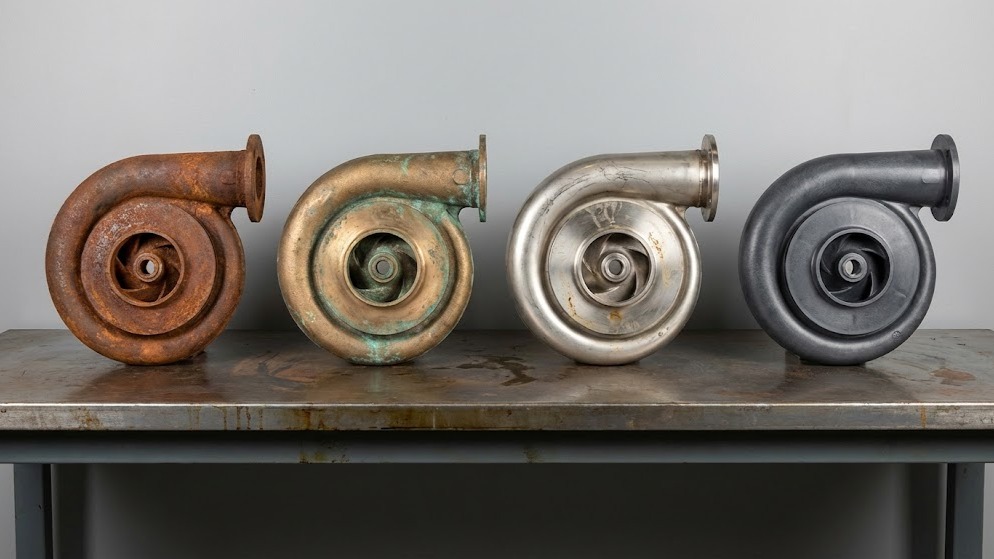
Corrosion failures account for 40% of unplanned pump replacements in commercial heating systems, costing UK facilities an average of £3,200 per incident when factoring in emergency callouts, lost productivity, and water damage. Yet most of these failures stem from a single preventable mistake: specifying the wrong pump materials for the system chemistry.
Pump corrosion resistance isn't about choosing the "best" material - it's about matching material properties to the specific corrosive agents in each application. A bronze impeller that performs flawlessly in a sealed central heating system can fail within months when exposed to chlorinated water or glycol mixtures. Understanding this relationship between materials and environments determines whether a commercial circulator delivers 15 years of reliable service or requires replacement within three.
Why Material Selection Matters More Than Pump Performance
Most commercial pump specifications focus on hydraulic performance - flow rate, head pressure, and efficiency ratings. These matter, but they're meaningless if corrosion destroys the impeller within two years.
Material degradation affects pump performance before complete failure occurs. As corrosion pits develop on impeller surfaces, hydraulic efficiency drops by 8-15%. Cavitation damage accelerates around these pits, creating a cascade effect that rapidly degrades performance. By the time visible corrosion appears on external components, internal damage has typically reduced pump output by 20-30%.
The financial impact extends beyond replacement costs. A corroded circulator on a central heating system doesn't fail cleanly - it deposits corrosion products throughout the system, contaminating heat exchangers, blocking automatic air vents, and damaging zone valves. One £400 pump failure can trigger £2,000 in system-wide remediation work.
Common Corrosive Environments in Commercial Pump Applications
Commercial pumps encounter five primary corrosive environments, each requiring different material strategies:
Sealed Central Heating Systems
These closed-loop systems contain dissolved oxygen during initial fill, but oxygen levels drop once the system operates. The main corrosion risk comes from pH drift (typically becoming more acidic over time), suspended solids from mild steel radiators, and localised galvanic corrosion where dissimilar metals contact each other. Systems with aluminium components present additional challenges, as aluminium corrosion products can attack other materials.
Open Vented Systems
Continuous oxygen ingress makes these environments more aggressive than sealed systems. Every time the system cools and draws fresh water from the feed and expansion tank, it introduces dissolved oxygen. This creates ongoing oxidation conditions that accelerate corrosion rates by 3-5 times compared to sealed systems.
Domestic Hot Water Circulation
Chlorinated mains water contains free chlorine (typically 0.2-0.5 mg/L in UK supplies) that attacks specific materials. Temperature cycling between 50-60°C accelerates chloride-induced corrosion. Scale formation from hard water creates differential aeration cells that cause pitting corrosion beneath deposits. DHW pumps require materials that resist both chlorine attack and scale-related corrosion mechanisms.
Glycol-Based Systems
Propylene glycol and ethylene glycol solutions become corrosive when oxidised or contaminated. Degraded glycol forms organic acids that drop system pH below 7.0, attacking ferrous metals and copper alloys. Glycol concentration above 50% can cause seal swelling and elastomer degradation. These systems require both corrosion-resistant wetted materials and compatible seals.
Condenser Water and Cooling Systems
These open-loop systems expose pumps to the most aggressive conditions - continuous oxygen exposure, biological growth, suspended solids, and chemical treatment additives. Chlorine-based biocides, pH adjustment chemicals, and scale inhibitors create a complex corrosive environment that eliminates many common pump materials from consideration.
Material Performance Characteristics
Cast Iron
Cast iron remains the most economical choice for commercial heating pumps, but its application window is narrower than many installers assume. Standard grey cast iron (Grade 220 or 250) performs adequately in sealed central heating systems with pH between 7.0-9.5 and chloride content below 250 mg/L.
Corrosion rates in properly maintained sealed systems typically run 0.02-0.05 mm/year - acceptable for a 15-20 year service life. However, cast iron fails rapidly when conditions deviate from this narrow window. pH below 6.5 causes generalised corrosion that can perforate pump casings within 3-5 years. Chloride levels above 500 mg/L trigger pitting corrosion that creates through-wall failures.
The graphitic corrosion mechanism in cast iron creates a specific failure mode. Iron leaches from the material structure, leaving behind a porous graphite skeleton that maintains dimensional stability but loses mechanical strength. A corroded cast iron component may look intact externally while having lost 60% of its structural integrity.
Bronze and Brass
Bronze alloys (typically gunmetal with 85% copper, 5% tin, 5% zinc, 5% lead) offer superior corrosion resistance compared to cast iron in most heating applications. Bronze resists pH variations better than cast iron, tolerating ranges from 6.0-10.0 without significant degradation.
The protective copper oxide patina that forms on bronze surfaces provides ongoing corrosion protection, creating a self-limiting corrosion process. Corrosion rates in sealed heating systems typically measure 0.005-0.015 mm/year - one-third to one-fifth the rate of cast iron under identical conditions.
However, bronze has specific vulnerabilities. Dezincification occurs when zinc selectively leaches from the alloy structure, leaving behind porous copper. This happens in waters with high chloride content, low pH, or elevated temperatures above 70°C. Dezincified bronze loses 40-50% of its tensile strength and becomes brittle.
Ammonia and ammonia compounds attack copper alloys through stress corrosion cracking. Even trace ammonia concentrations (5-10 mg/L) can cause catastrophic failure in bronze components under tensile stress. This makes bronze unsuitable for systems using ammonia-based water treatment chemicals.
Stainless Steel
Austenitic stainless steel grades (304 and 316) provide the broadest corrosion resistance for commercial pump applications. The chromium oxide passive layer that forms on stainless steel surfaces resists corrosion across pH ranges from 4.0-12.0 and tolerates chloride levels that would rapidly destroy cast iron or bronze.
Grade 304 stainless (18% chromium, 8% nickel) handles most sealed heating applications and many DHW circulation duties. Corrosion rates typically measure below 0.002 mm/year in these environments - essentially negligible over a 20-year service life.
Grade 316 stainless adds 2-3% molybdenum, which dramatically improves resistance to chloride-induced pitting and crevice corrosion. This makes 316 the preferred choice for coastal installations, swimming pool systems, and any application with chloride levels above 1,000 mg/L. The molybdenum addition increases material cost by 40-60% compared to 304, but eliminates pitting corrosion that causes 70% of stainless steel pump failures.
Stainless steel's primary vulnerability is crevice corrosion in stagnant areas where oxygen cannot reach the surface to maintain the passive layer. Pump designs must eliminate crevices between flanges, under gaskets, and in threaded connections. Proper system flow velocity (minimum 0.3 m/s) prevents stagnant conditions that initiate crevice corrosion.
Composite Materials
Modern engineered composites - primarily glass-reinforced noryl and polypropylene - offer complete immunity to electrochemical corrosion. These materials don't corrode in the traditional sense because they're non-metallic and electrically non-conductive.
Composite pump components resist pH extremes from 2.0-13.0, handle chloride concentrations above 10,000 mg/L, and remain unaffected by galvanic corrosion mechanisms. This makes composites ideal for aggressive water chemistry conditions that would rapidly destroy metallic materials.
However, composites have limitations. Mechanical strength decreases at elevated temperatures - most composites lose 30-40% of their tensile strength at 80°C compared to 20°C ratings. This restricts their use in high-temperature applications above 90°C. Thermal expansion rates for composites (8-12 x 10⁻⁵ /°C) significantly exceed those of metals (1-2 x 10⁻⁵ /°C), requiring careful consideration of clearances and bearing designs in temperature-cycling applications.
Matching Materials to System Chemistry
Effective material selection requires testing three key water chemistry parameters: pH, chloride content, and total dissolved solids (TDS). These measurements cost £150-200 from commercial water testing laboratories and prevent specification errors that lead to premature pump failure.
pH Below 6.5
Acidic conditions eliminate cast iron from consideration. Bronze tolerates pH down to 6.0 if chloride levels remain below 250 mg/L. Below pH 6.0, specify 316 stainless steel or composites. Acidic conditions typically result from carbonic acid formation in vented systems or glycol degradation in closed systems.
Chloride 250-1,000 mg/L
This moderate chloride range eliminates cast iron but allows bronze in sealed heating systems below 60°C. For DHW circulation or systems above 60°C, specify 304 stainless steel minimum. Chloride concentrations in this range commonly occur in coastal areas or systems using mains water with high mineral content.
Chloride Above 1,000 mg/L
High chloride environments require 316 stainless steel wetted components or composite materials. Bronze and 304 stainless will develop pitting corrosion within 2-3 years. These conditions occur in coastal installations, swimming pools, and industrial process systems.
Glycol Concentrations Above 30%
Specify pumps with EPDM seals rather than standard nitrile rubber. Glycol concentrations above 40% require mechanical seals designed specifically for glycol service. Standard elastomers swell in concentrated glycol solutions, causing seal failures within 6-12 months. Grundfos pumps designed for glycol service include seal materials and bearing designs that accommodate glycol's different lubrication properties.
Ammonia or Amine-Based Inhibitors
These chemicals eliminate bronze and brass from consideration due to stress corrosion cracking. Specify stainless steel or composite materials. Check inhibitor chemistry before selecting pump materials - many installers discover incompatibility only after commissioning when bronze impellers crack within weeks.
Galvanic Corrosion Considerations
Galvanic corrosion occurs when dissimilar metals contact each other in the presence of an electrolyte (water). The more anodic metal corrodes preferentially, protecting the cathodic metal. This creates accelerated localised corrosion that can perforate components in months.
The galvanic series ranks metals by their electrochemical potential. Larger voltage differences between metals create more aggressive galvanic corrosion. Common commercial pump combinations and their galvanic potential differences include:
- Aluminium to bronze: 0.75V (severe corrosion risk)
- Cast iron to bronze: 0.25V (moderate corrosion risk)
- Bronze to 304 stainless: 0.15V (low corrosion risk)
- 304 to 316 stainless: 0.05V (negligible corrosion risk)
Galvanic corrosion severity depends on the area ratio between anodic and cathodic metals. A small anodic component (like an aluminium heat exchanger) coupled to a large cathodic component (like a bronze pump) experiences concentrated corrosion. The opposite ratio - large anode, small cathode - distributes corrosion over a larger area, reducing perforation risk.
Preventing Galvanic Corrosion
Preventing galvanic corrosion requires one of three strategies:
Isolate dissimilar metals using dielectric unions or non-conductive gaskets. This breaks the electrical connection that drives galvanic current flow. Dielectric isolation works for pipe connections but proves impractical for internal pump components.
Match pump materials to system metallurgy. Specify bronze pumps for systems with copper pipe and bronze components. Use cast iron pumps with steel radiators and pipe. This minimises voltage differences and reduces galvanic current.
Install sacrificial anodes that corrode preferentially, protecting both pump and system components. Magnesium or zinc anodes work effectively in larger commercial systems above 500 litres. Replace anodes every 2-3 years before complete consumption occurs.
Seal Material Compatibility
Mechanical seal and O-ring failures cause 60% of commercial pump leaks - more common than corrosion-related failures. Seal material must resist both the pumped fluid chemistry and temperature cycling.
Nitrile Rubber (Buna-N)
Standard seal material for central heating applications below 90°C. Resists mineral oils and petroleum products but degrades in glycol concentrations above 30%. Service life typically reaches 5-7 years in properly maintained systems.
EPDM (Ethylene Propylene)
Preferred for glycol systems and hot water applications up to 110°C. Superior heat resistance compared to nitrile but lower tear strength. EPDM swells in petroleum-based lubricants, making it unsuitable for systems with oil contamination.
Viton (Fluoroelastomer)
Premium seal material for aggressive chemical environments and high temperatures to 150°C. Resists acids, chlorinated water, and petroleum products. Cost runs 3-4 times higher than nitrile, limiting use to applications where standard materials fail.
PTFE (Teflon)
Chemically inert and temperature-resistant to 200°C, but requires careful installation due to cold flow under compression. PTFE seals work well in applications with aggressive chemistry but minimal vibration. Not suitable for pumps with shaft runout above 0.1mm.
Service Life Expectations
Properly specified pump materials deliver predictable service lives based on operating conditions:
Cast iron in sealed heating (pH 7-9, chloride <250 mg/L): 15-20 years before significant corrosion affects performance. Failure mode typically involves gradual efficiency loss rather than catastrophic failure.
Bronze in sealed heating: 20-25 years with minimal performance degradation. Bronze pumps often outlast the systems they serve, remaining serviceable through multiple boiler replacements.
Stainless steel in DHW circulation: 15-20 years in chlorinated mains water. Pitting corrosion rarely develops if grade 316 is specified for chloride levels above 500 mg/L. Seal replacement every 7-10 years typically required before wetted metal components show wear.
Composites in aggressive chemistry: 10-15 years limited by mechanical wear rather than corrosion. Bearing surfaces and seal faces wear faster in composite pumps compared to metallic alternatives. Temperature cycling above 70°C reduces service life by 30-40%.
These service life estimates assume proper system water treatment and maintenance. Neglected systems with pH drift, oxygen ingress, or biological growth can reduce service life by 50-70% regardless of material specification.
Conclusion
Achieving optimal pump corrosion resistance depends on matching material properties to specific system chemistry rather than defaulting to "premium" materials for every application. Cast iron performs reliably in sealed central heating systems with controlled pH, while stainless steel or composites become essential in chlorinated water or coastal environments.
The £200 investment in water chemistry testing before pump specification prevents £3,000+ failures from material incompatibility. Testing pH, chloride content, and TDS takes 48 hours and provides the data needed to specify corrosion resistant pumps with confidence.
Wilo circulators and other manufacturers offer material selection guides that cross-reference water chemistry parameters with recommended pump constructions. These guides eliminate guesswork and ensure material compatibility before installation.
For commercial systems with aggressive chemistry, glycol concentrations above 30%, or chloride levels exceeding 1,000 mg/L, National Pumps and Boilers supplies corrosion resistant pumps with 316 stainless steel wetted components and compatible seal materials. Technical specifications for each pump model detail material construction, allowing precise matching to application requirements.
System designers and installers who prioritise material compatibility alongside hydraulic performance achieve 15-20 year pump service lives with minimal maintenance. Those who ignore water chemistry face repeated failures, emergency replacements, and system contamination from corrosion products.
For technical guidance on pump material selection for specific applications, contact us today. Water chemistry analysis and material compatibility recommendations help prevent costly specification errors before installation.