

Meeting UK Building Regulations Part L With Energy-Efficient Pumps
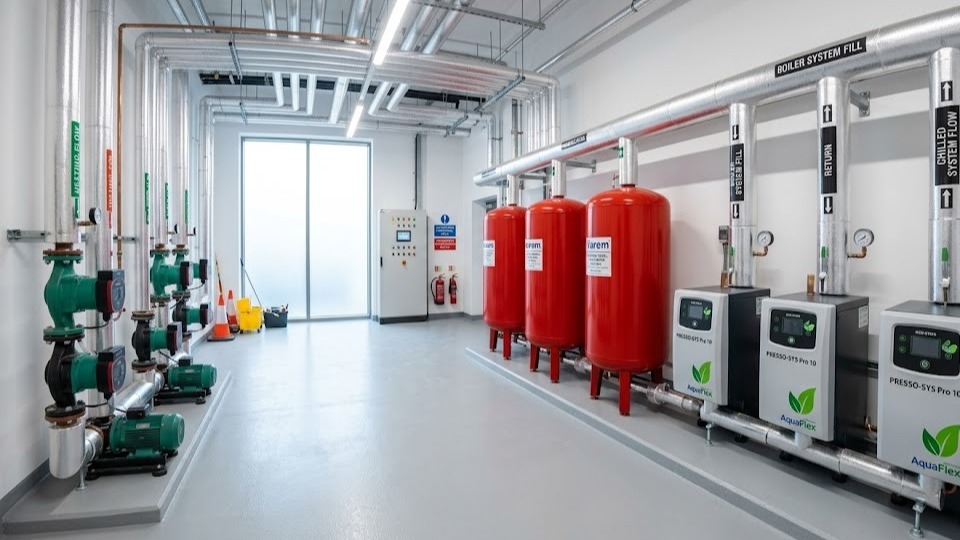
Building Regulations Part L sets the framework for energy efficiency in UK buildings, and heating system circulators represent one of the most significant opportunities for compliance and cost reduction. A single inefficient pump can consume more electricity annually than a household refrigerator. Yet, many commercial and domestic heating systems still operate with outdated equipment that fails to meet current energy-efficient pump standards.
Part L compliance isn't merely a legal checkbox - it directly impacts operational costs, carbon emissions, and system performance. The 2021 amendments to Part L raised the bar considerably, requiring ErP (Energy-related Products) ratings that eliminate the least efficient pump models from new installations and major renovations. For heating engineers, contractors, and building managers, understanding which MEI-compliant pumps meet these standards has become essential to project approval and long-term system efficiency.
Understanding Part L Requirements for Heating Circulators
Building Regulations Part L (Conservation of Fuel and Power) establishes minimum energy performance standards for building services, including heating and hot water systems. The regulations apply to new builds, extensions, and material alterations, with specific provisions for replacement equipment in existing buildings.
For circulator pumps, Part L compliance centres on the ErP Directive (2009/125/EC), which classifies pumps according to their Energy Efficiency Index (EEI). Since 2013, all new circulator pumps installed in UK buildings must achieve a minimum EEI rating, with progressively stricter requirements introduced over subsequent years. The current standard effectively mandates A-rated pumps for most applications, eliminating older D and E-rated models that dominated the market two decades ago.
Pump Classification Standards
The regulations distinguish between standalone circulators and glandless circulators (wet rotor pumps), with different EEI thresholds for each category. Most domestic and light commercial heating systems use glandless circulators, which must achieve an EEI ≤ 0.23 to qualify as A-rated. High-efficiency models now reach EEI values as low as 0.15, delivering substantial energy savings compared to minimum-compliant alternatives.
Part L also requires that heating system controls meet specific standards, including appropriate pump speed adjustment, system zoning, and time control. Modern MEI-compliant pumps typically incorporate variable speed technology that automatically adjusts flow rates to match system demand, reducing energy consumption during partial load conditions that represent the majority of operating hours.
The Energy Efficiency Index and ErP Ratings Explained
The Energy Efficiency Index provides a standardised method for comparing pump efficiency across different manufacturers and models. The EEI calculation considers the pump's electrical input power relative to a reference value based on hydraulic performance, creating a dimensionless figure that enables direct comparison between products.
ErP ratings translate EEI values into letter grades from A (most efficient) to G (least efficient), similar to household appliance ratings. For heating circulators, the relationship between EEI and ErP rating follows this structure:
A-rated: EEI ≤ 0.23 (required for most new installations)
B-rated: EEI 0.24-0.27 (acceptable for specific applications)
C-rated: EEI 0.28-0.34 (legacy equipment only)
D-G rated: EEI > 0.34 (prohibited in new installations)
Real-World Energy Savings
The practical difference between these ratings translates directly to electricity consumption. A typical D-rated pump in a domestic heating system might consume 600-800 kWh annually, costing £180-240 at current electricity rates. An A-rated equivalent performing identical hydraulic work consumes 150-250 kWh annually, reducing operating costs by 60-70% whilst maintaining system performance.
Variable speed operation represents the primary technology enabling these efficiency gains. Traditional fixed-speed pumps operate at constant power regardless of system demand, whereas variable speed models adjust motor speed to deliver only the required flow rate and pressure. This adaptive operation reduces energy consumption during partial load conditions, which represent 80-90% of operating hours in most heating systems.
Grundfos pioneered much of this technology with their ALPHA series, which introduced automatic pressure adjustment and demand-based operation to the domestic market. Similar innovations from Wilo and other manufacturers have made an A-rated performance standard across the industry, with many premium models now achieving EEI values below 0.20.
Selecting Part L Compliant Pumps for Different Applications
Compliance requirements vary according to application, system size, and installation context. Domestic heating systems, commercial buildings, and industrial applications each present distinct considerations for pump selection and regulatory compliance.
Domestic Central Heating Systems
Most domestic heating systems require small glandless circulators with flow rates between 1-3 m³/h and head pressures of 2-6 metres. Part L compliance for domestic applications mandates A-rated pumps with automatic speed adjustment, typically achieved through one of three control strategies:
Proportional pressure control adjusts pump speed to maintain constant differential pressure across the system, regardless of valve positions or zone demands. This approach suits systems with thermostatic radiator valves (TRVs) or zone valves, reducing flow rates as valves close whilst maintaining adequate circulation to open zones.
Constant curve control maintains a fixed relationship between flow rate and pressure, mimicking a traditional fixed-speed pump whilst reducing power consumption during low-flow conditions. This strategy works well in systems without significant valve control, providing predictable performance across varying load conditions.
AUTOADAPT technology (proprietary to specific manufacturers) learns system characteristics during initial operation and continuously optimises pump speed to match actual requirements. This represents the most advanced approach, often delivering the lowest energy consumption in real-world installations.
For standard domestic installations, models like the Grundfos ALPHA2 or Wilo Stratos PICO provide straightforward Part L compliance with EEI values around 0.20 and simple installation procedures. These MEI-compliant pumps automatically detect system requirements and adjust operation accordingly, eliminating manual pump curve selection and reducing commissioning time.
Commercial and Industrial Systems
Larger commercial systems introduce additional complexity, with multiple zones, variable loads, and higher performance requirements. Part L compliance for commercial applications still requires A-rated efficiency where technically feasible, though specific exemptions exist for specialist applications requiring particular performance characteristics.
Commercial systems often employ larger glandless circulators or small inline pumps with flow rates from 3-20 m³/h. These applications benefit from more sophisticated control integration, with pump speed modulated by building management systems (BMS) based on temperature sensors, flow measurements, and occupancy patterns.
Twin-head pumps provide redundancy for critical applications, with duty/standby operation ensuring continuous heating availability during maintenance or component failure. Part L compliance requires that both pumps meet energy efficient pump standards, with automatic changeover controls preventing extended operation of a single pump head.
For larger commercial projects, Lowara offers robust solutions with integrated variable frequency drives (VFDs) and extensive control options. These systems typically interface with BMS platforms via BACnet or Modbus protocols, enabling sophisticated optimisation strategies that reduce energy consumption beyond basic pump efficiency improvements.
DHW Circulation Applications
Domestic hot water (DHW) circulation presents specific challenges for Part L compliance, as continuous or frequent operation increases energy consumption relative to heating circulators that operate seasonally. Part L requires that DHW systems incorporate time control, temperature limitation, and appropriate circulation pump efficiency.
DHW pumps must achieve the same ErP ratings as heating circulators, with A-rated efficiency mandatory for new installations. However, DHW applications often require bronze or stainless steel pump construction to withstand higher temperatures and water quality variations, which can affect efficiency ratings compared to standard heating circulators.
Effective DHW circulation system design minimises pump operating hours through appropriate pipe sizing, insulation standards, and control strategies. Time switches that operate pumps only during peak demand periods, combined with thermostatic control that prevents unnecessary circulation when water temperature remains adequate, reduce energy consumption whilst maintaining hygiene standards and user comfort.
Installation and Commissioning for Optimal Efficiency
Achieving Part L compliance extends beyond selecting A-rated equipment - proper installation, commissioning, and system integration determine whether theoretical efficiency ratings translate to real-world energy savings.
Correct Pump Sizing
Oversized pumps represent one of the most common efficiency problems in heating systems. A pump rated for 6 metres head pressure operating in a system requiring only 3 metres will consume excessive energy even with variable speed control, as the motor operates inefficiently at the low end of its performance range.
Accurate system calculations should determine required flow rates based on heat load, temperature differential, and pipe sizing. Head pressure calculations must account for pipe friction losses, fittings, valves, and other resistance components across the longest circuit. Modern software tools and manufacturer selection guides simplify these calculations, though understanding fundamental principles remains essential for non-standard applications.
For replacement installations, measuring actual system performance often reveals that existing pumps significantly exceed requirements. Installing a correctly sized A-rated pump typically delivers greater efficiency gains than replacing an oversized D-rated pump with an oversized A-rated alternative.
System Balancing and Control Integration
Variable speed pumps deliver maximum efficiency only when integrated with appropriate system controls and proper hydraulic balancing. Unbalanced systems create excessive flow through low-resistance circuits whilst starving high-resistance zones, forcing pumps to operate at higher speeds to compensate.
Proper balancing involves adjusting lockshield valves or balancing valves to distribute flow according to design requirements, ensuring each circuit receives adequate flow at minimum pump speed. This process reduces overall system resistance, enabling lower pump speeds and reduced energy consumption.
Control integration should coordinate pump operation with zone valves, boiler firing, and temperature sensors. The pump should operate only when heating demand exists, with speed modulation responding to valve positions and temperature differentials. Sophisticated systems may incorporate weather compensation, optimum start/stop control, and load anticipation algorithms that further reduce energy consumption.
Electrical Requirements and Safety
Part L compliant pumps typically operate on 230V single-phase power supplies, with current draw ranging from 0.15-0.80A depending on model and operating point. Electrical installation must comply with BS 7671 (IEC Wiring Regulations), with appropriate circuit protection, earthing, and isolation provisions.
Variable speed pumps incorporate electronic controls sensitive to power quality issues, voltage fluctuations, and electrical noise. Installation should include adequate cable sizing, proper earth connections, and separation from high-current switching equipment that might introduce electrical interference.
Wiring connections to building management systems, external controls, or remote monitoring equipment require careful attention to signal specifications, with many pumps offering both analogue (0-10V, 4-20mA) and digital (Modbus, BACnet) interface options. Incorrect wiring or incompatible signal types can prevent proper speed modulation, eliminating efficiency benefits and potentially causing system malfunctions.
Compliance Documentation and Verification
Building Control approval requires documentation demonstrating Part L compliance, including equipment specifications, system design calculations, and commissioning records. For heating system pumps, this documentation should include:
Product specifications confirming ErP rating and EEI value are typically provided via manufacturer data sheets or product labels. All A-rated pumps display energy labels similar to household appliances, showing ErP classification and annual energy consumption estimates.
System design calculations demonstrating appropriate pump sizing for the application, including flow rate requirements, head pressure calculations, and pump curve selection. These calculations prove that the selected pump operates efficiently within its design range rather than at extreme points of its performance envelope.
Commissioning records documenting installed pump settings, measured flow rates, system pressures, and control integration verification. These records demonstrate that theoretical design assumptions translate to actual installation performance.
Large-Scale Project Requirements
For larger commercial projects, Part L compliance assessment often involves dynamic simulation modelling that predicts building energy performance under various operating conditions. These assessments evaluate heating system efficiency holistically, considering pump energy consumption alongside boiler efficiency, distribution losses, and control effectiveness.
National Pumps and Boilers supplies comprehensive technical documentation with all pump equipment, including ErP labels, performance data, and installation guidance that supports Building Control submissions. Technical support assists with system design verification and compliance documentation preparation for complex projects.
Long-Term Performance and Maintenance Considerations
Part L compliance represents a minimum standard at installation, but long-term efficiency depends on continued proper operation and appropriate maintenance. Heating system pumps typically operate for 10-15 years, during which time performance degradation, control failures, or system modifications can compromise initial efficiency gains.
Monitoring and Performance Verification
Modern A-rated pumps often incorporate diagnostic features that monitor operating hours, power consumption, and performance parameters. These features enable ongoing verification that pumps operate efficiently and alert users to potential problems before they cause system failures.
Building management systems should log pump operating data, including run hours, speed settings, and power consumption. Unexpected changes in these parameters often indicate developing problems - increased operating hours might suggest control failures, whilst higher power consumption could indicate bearing wear or hydraulic blockages.
Annual system inspections should verify pump operation, check for unusual noise or vibration, and confirm that control integration functions correctly. Simple measurements of flow rate and differential pressure enable comparison against design values, identifying performance degradation that might require maintenance or component replacement.
Common Efficiency Problems
Several common issues compromise pump efficiency over time:
Control failures that lock pumps at fixed speeds eliminate variable speed benefits, returning energy consumption to levels comparable with older fixed-speed equipment. Regular verification of automatic speed adjustment ensures controls function correctly.
System contamination with sludge, scale, or corrosion products increases hydraulic resistance, forcing pumps to operate at higher speeds to maintain adequate circulation. Chemical cleaning and system protection measures prevent these problems.
Valve failures that stick open or closed create hydraulic imbalances requiring higher pump speeds to compensate. Periodic valve maintenance and system balancing verification maintain efficient operation.
Air accumulation in systems increases resistance and causes circulation problems that drive pumps to maximum speed. Proper air elimination through automatic air vents and system design prevents these issues.
Addressing these problems maintains the efficiency gains that energy-efficient pump standards aim to achieve, ensuring that initial equipment investment delivers anticipated operational cost reductions throughout system life.
Conclusion
Part L compliance for heating system pumps represents both a regulatory requirement and a significant opportunity for operational cost reduction. Modern A-rated circulators consume 60-70% less electricity than older equipment whilst delivering equivalent or superior hydraulic performance, with typical payback periods of 2-4 years in continuously operated systems.
Achieving compliance requires careful pump selection based on accurate system calculations, proper installation with appropriate control integration, and thorough commissioning that verifies efficient operation. The transition from fixed-speed D-rated pumps to variable-speed A-rated alternatives represents one of the most cost-effective efficiency improvements available in heating system upgrades, delivering immediate energy savings and reduced carbon emissions.
For heating engineers and contractors, understanding ErP ratings, EEI calculations, and energy-efficient pump standards has become essential to professional practice. Building Control increasingly scrutinises heating system specifications, requiring documented evidence of compliance rather than accepting generic equipment schedules.
National Pumps and Boilers specialises in Part L compliant heating equipment, offering technical guidance for system design, compliance documentation support, and rapid delivery of MEI compliant pumps from leading manufacturers. Whether specifying equipment for new construction projects or upgrading existing systems, contact us for expert advice on meeting Building Regulations whilst optimising system performance and operational costs.