

Pump Component Materials for Borehole and Groundwater Applications
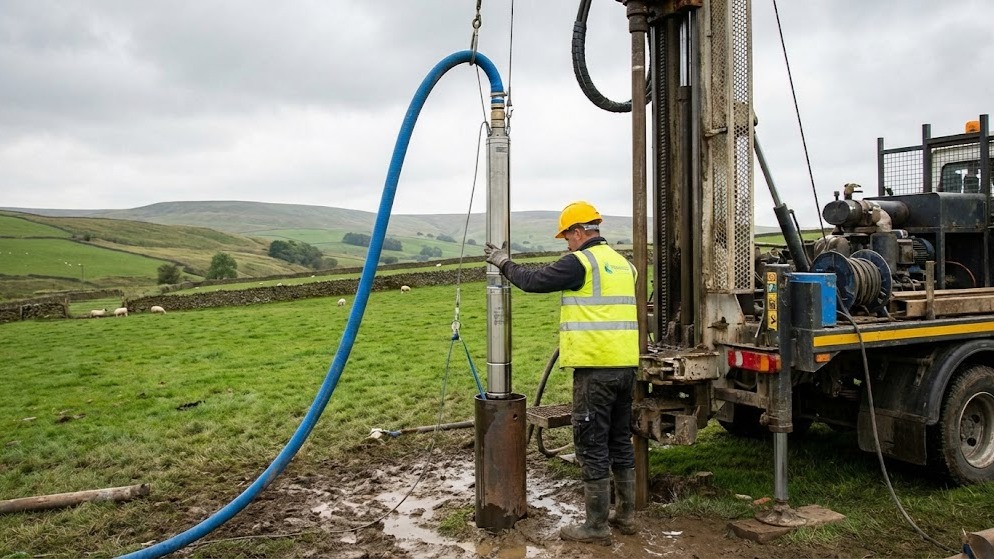
Borehole pumps operate in some of the most demanding conditions in the water industry - submerged for years, handling abrasive sediment, and exposed to corrosive minerals. The materials used in these pumps determine whether a system runs reliably for 15 years or fails within 18 months. For contractors specifying equipment for groundwater extraction, irrigation systems, or commercial water supply, understanding material selection isn't just technical knowledge - it's the difference between a profitable installation and costly callbacks.
National Pumps and Boilers supplies borehole and groundwater pumps across sectors where material durability directly impacts operational costs. The choice between stainless steel grades, composite housings, and elastomer seals affects everything from initial capital expenditure to lifecycle maintenance schedules. This guide examines the engineering considerations behind pump component materials, focusing on how different components perform in real groundwater conditions.
Why Material Selection Matters in Borehole Applications
Groundwater chemistry varies dramatically between UK aquifers. A borehole in chalk formations presents entirely different corrosion challenges compared to one extracting from sandstone or limestone. Water pH levels ranging from 6.5 to 8.5, chloride concentrations, dissolved oxygen content, and suspended solids all attack pump components through different mechanisms.
The cost implications are substantial. A commercial borehole pump installation typically represents £8,000-£25,000 in equipment and commissioning costs. Premature failure due to inadequate material specification can mean:
- Crane hire for pump extraction: £1,500-£3,000 per visit
- Production downtime for commercial facilities
- Emergency replacement equipment at premium rates
- Reputational damage for specifying contractors
Effective groundwater pump selection also determines maintenance intervals. A correctly specified pump in favourable groundwater conditions might require inspection every 5-7 years, whilst poor material choices in aggressive water can necessitate annual interventions.
Stainless Steel Grades for Pump Housings and Impellers
Borehole pump materials for wetted components almost universally involve stainless steel alloys, but the specific grade determines corrosion resistance and mechanical strength. The most common specifications include:
304 Stainless Steel (1.4301)
This austenitic grade offers good general corrosion resistance and represents the baseline specification for many domestic and light commercial applications. With approximately 18% chromium and 8% nickel, 304 stainless forms a passive chromium oxide layer that protects against oxidation.
However, 304 shows vulnerability to chloride-induced pitting corrosion. In coastal boreholes or groundwater with chloride concentrations exceeding 200mg/l, this grade experiences accelerated degradation. Contractors working in these conditions should specify higher grades.
316 Stainless Steel (1.4401/1.4404)
The addition of 2-3% molybdenum significantly improves chloride resistance, making 316 stainless the preferred choice for most commercial borehole applications. This grade handles chloride concentrations up to 1,000mg/l without excessive pitting, covering the majority of UK groundwater conditions.
Grundfos pumps commonly specify 316 stainless for submersible borehole pumps rated for continuous duty cycles. The material cost premium over 304 typically adds 15-20% to component prices but extends service life by 3-5 years in moderately aggressive water.
Duplex Stainless Steels (1.4462)
For highly corrosive environments - groundwater with high chloride content, low pH, or elevated temperatures - duplex grades combine austenitic and ferritic microstructures. This delivers approximately twice the yield strength of 316 stainless whilst improving stress corrosion cracking resistance.
Industrial facilities extracting groundwater for process cooling or irrigation systems in challenging chemistry often justify the 40-50% material cost premium. The mechanical strength also allows thinner wall sections, partially offsetting weight and cost increases.
Motor Housing Materials and Thermal Management
Submersible motor housings require materials that combine corrosion resistance with effective heat dissipation. Motors generate significant thermal energy during operation, and groundwater flow provides cooling. The housing material must conduct heat efficiently whilst resisting chemical attack.
Stainless Steel Motor Housings
Most commercial borehole pumps use 304 or 316 stainless steel motor casings. The material provides adequate thermal conductivity (approximately 16 W/m·K for 316 stainless) whilst maintaining structural integrity under hydrostatic pressure.
For installations deeper than 100 metres, hydrostatic pressure exceeds 10 bar. Motor housing thickness and material grade must account for this external loading whilst maintaining heat transfer characteristics. Lowara pumps engineer motor housings with wall thickness calculations that balance pressure resistance against thermal performance.
Cast Iron Components
Some heavy-duty industrial borehole pumps incorporate cast iron for motor housings or pump bodies. Cast iron offers superior thermal conductivity (approximately 50 W/m·K) and costs 60-70% less than equivalent stainless steel components.
However, cast iron requires protective coatings in corrosive groundwater. Epoxy or polyurethane coatings add manufacturing steps and create potential failure points if coating integrity is compromised. For aggressive water chemistry, the long-term reliability of coated cast iron rarely justifies the initial cost savings.
Shaft Materials and Mechanical Strength Requirements
Pump shafts transmit rotational force from the motor to the impeller whilst supporting radial and axial loads. The material must resist both mechanical fatigue and corrosion, particularly at bearing interfaces where stress concentration occurs.
Stainless Steel Shafts
Solid 316 or 431 stainless steel shafts represent the standard specification for most commercial applications. Grade 431 (a martensitic stainless) offers higher tensile strength (approximately 850 MPa) compared to austenitic 316 (approximately 580 MPa), making it preferable for high-power applications or installations with lateral loading.
The critical consideration is stress corrosion cracking at bearing surfaces. Rotational wear combined with corrosive groundwater can initiate cracks that propagate until catastrophic failure. Proper groundwater pump selection and surface hardening treatments mitigate this risk.
Ceramic-Coated Shafts
For extremely abrasive groundwater containing sand or silt, ceramic coatings on stainless steel shafts extend bearing life significantly. Tungsten carbide or aluminium oxide coatings create hardness ratings exceeding 1,200 HV (Vickers hardness), compared to approximately 200 HV for uncoated stainless steel.
The coating thickness (typically 0.1-0.3mm) must be controlled precisely - too thin provides inadequate protection, whilst excessive thickness risks coating delamination under thermal cycling. This specification adds 8-12% to shaft component costs but can triple bearing life in abrasive conditions.
Bearing Materials for Submersible Applications
Bearings support the rotating shaft and must operate continuously submerged in groundwater without external lubrication. Material selection determines bearing life, which often governs pump service intervals.
Rubber Bearings
Nitrile rubber (NBR) or ethylene propylene diene monomer (EPDM) rubber bearings operate with water lubrication and tolerate moderate abrasives. These materials absorb shock loads and accommodate slight shaft misalignment, making them suitable for variable-speed applications.
However, rubber bearings degrade in water temperatures exceeding 40°C or in groundwater containing hydrocarbons. Service life typically ranges from 15,000-30,000 operating hours, depending on water quality and pump loading.
Carbon-Ceramic Composite Bearings
Advanced bearing materials combine carbon with ceramic particles (typically silicon carbide) to create self-lubricating surfaces with excellent wear resistance. These bearings handle abrasive particles more effectively than rubber whilst maintaining low friction coefficients.
DAB pumps specify carbon-ceramic bearings for installations where water quality analysis indicates high suspended solids. The material cost premium (approximately 30-40% over rubber bearings) delivers 50-70% longer service intervals in abrasive conditions.
Silicon Carbide Bearings
For the most demanding applications - high temperatures, aggressive chemistry, or extreme abrasives - solid silicon carbide bearings provide maximum durability. With hardness approaching 2,500 HV and excellent chemical resistance, these bearings operate reliably in conditions that destroy other materials within months.
The cost implications are significant: silicon carbide bearings can represent 15-20% of total pump component costs. However, for critical installations where access costs are high or downtime is unacceptable, the investment proves economical over 10-15 year lifecycles.
Seal Materials and Groundwater Compatibility
Mechanical seals prevent groundwater from entering the motor housing whilst containing motor cooling oil. Seal failure represents the most common cause of premature borehole pump replacement, making component material selection critical.
Elastomer Seal Faces
Nitrile rubber (NBR) provides adequate sealing for water temperatures below 80°C and handles most groundwater chemistry. However, NBR degrades in water containing aromatic hydrocarbons or at pH levels below 6.0 or above 9.0.
Fluoroelastomer (FKM/Viton) seals offer superior chemical resistance and temperature tolerance up to 120°C. The material cost premium (approximately 60-80% over NBR) is justified for installations where groundwater analysis indicates aggressive conditions or elevated temperatures.
Ceramic and Silicon Carbide Seal Faces
The rotating and stationary seal faces require materials that maintain flatness whilst resisting wear. Silicon carbide against carbon, or silicon carbide against silicon carbide, represents the gold standard for borehole applications.
Silicon carbide seal faces tolerate abrasive particles, resist chemical attack, and maintain sealing integrity across temperature fluctuations. Specifying silicon carbide seals for all commercial installations proves worthwhile, despite the 40-50% cost premium over alternative materials. The extended seal life (typically 8-12 years versus 3-5 years for standard materials) justifies the investment.
Cable and Electrical Connection Materials
Submersible pump cables must resist water ingress whilst maintaining electrical integrity under continuous immersion. Material selection affects both electrical performance and mechanical durability.
Cable Insulation Materials
Ethylene propylene rubber (EPR) insulation provides excellent water resistance and flexibility for installations requiring cable movement during installation. The material tolerates temperatures from -40°C to +90°C and resists most groundwater chemistry.
Cross-linked polyethylene (XLPE) offers superior thermal performance and mechanical strength, making it preferable for deep installations where cable weight creates significant tensile loading. XLPE maintains insulation properties at temperatures up to 105°C continuously.
Cable Gland and Termination Materials
Stainless steel cable glands with EPDM or Viton seals ensure water-tight motor connections. The gland material must match the motor housing specification to prevent galvanic corrosion - using brass glands on stainless steel housings creates an electrochemical cell that accelerates corrosion.
Proper cable termination requires heat-shrink tubing with adhesive liners that create moisture barriers. Contractors should specify tubing materials rated for continuous water immersion, not standard heat-shrink tubing designed for dry applications.
Material Selection for Specific Groundwater Conditions
Water chemistry analysis should inform material specifications. Key parameters include:
High Chloride Content (>500mg/l)
Specify 316 stainless steel minimum for all wetted components. Consider duplex stainless for chloride concentrations exceeding 1,500mg/l. Use FKM elastomers rather than NBR for seals and gaskets.
Low pH (<6.5) or High pH (>8.5)
Acidic or alkaline groundwater attacks passive oxide layers on stainless steel. Specify 316L (low carbon variant) to minimise sensitisation risks. Consider ceramic coatings for shafts and wear surfaces. Use FKM or FFKM (perfluoroelastomer) seals for pH extremes.
High Suspended Solids
Abrasive particles accelerate wear on all moving components. Specify ceramic-coated shafts, silicon carbide bearings, and tungsten carbide wear rings. Consider flush-mounted designs that minimise crevices where particles accumulate.
Elevated Temperature (>25°C)
Higher water temperatures reduce cooling efficiency and accelerate chemical reactions. Specify motors with Class F or H insulation (155°C or 180°C rating). Use FKM seals and XLPE cable insulation. Consider oversized motor frames to improve heat dissipation.
Lifecycle Cost Analysis and Material Justification
Initial equipment costs represent only 30-40% of total lifecycle costs for borehole pumps. Maintenance interventions, energy consumption, and replacement cycles dominate long-term economics.
A comparative analysis for a commercial installation (50m³/hr at 80m head, 15-year lifecycle) demonstrates borehole pump materials impact:
Standard specification (304 stainless, NBR seals, rubber bearings):
- Initial cost: £8,500
- Expected service life: 5-6 years
- Lifecycle cost (including 2 replacements): £31,000
Premium specification (316 stainless, silicon carbide seals, ceramic bearings):
- Initial cost: £12,800
- Expected service life: 12-15 years
- Lifecycle cost (including 1 replacement): £28,500
The premium pump component materials deliver £2,500 savings over 15 years whilst reducing maintenance interventions from 4-5 events to 2-3 events. For installations where access costs are high, the economic advantage increases substantially.
Regulatory Compliance and Material Certification
Borehole pump materials must comply with Water Supply (Water Fittings) Regulations 1999 for potable water applications. All wetted materials require WRAS (Water Regulations Advisory Scheme) approval, confirming they don't contaminate drinking water.
Stainless steel grades, elastomers, and coatings must demonstrate compliance through material certification and testing. Contractors should verify WRAS approval for all components in contact with potable water, including pump housings, impellers, seals, and cable insulation.
For non-potable applications (irrigation, industrial process water), material selection focuses on durability and chemical resistance rather than water quality impact. However, proper material specification remains critical for reliable operation and lifecycle cost management.
Conclusion
Material selection for borehole and groundwater pump applications requires matching component specifications to actual operating conditions. The £3,000-£5,000 premium for superior pump component materials in a commercial installation typically delivers 5-8 years of additional service life whilst reducing maintenance interventions by 40-60%.
Contractors should prioritise water chemistry analysis before specifying equipment. Chloride content, pH, suspended solids, and temperature determine which borehole pump materials provide optimal performance. The baseline specification of 316 stainless steel wetted components, silicon carbide seals, and FKM elastomers handles the majority of UK groundwater conditions reliably.
For installations in challenging chemistry or where access costs justify premium specifications, duplex stainless steel, ceramic bearings, and advanced seal materials extend service life significantly. The initial cost premium is recovered through reduced maintenance frequency and extended replacement cycles.
Proper groundwater pump selection based on water chemistry analysis ensures reliable operation and minimises lifecycle costs. For guidance on specifying borehole pumps for commercial installations, contact us for water chemistry analysis and material recommendations tailored to site conditions.