

Pump Requirements for Commercial Fountain and Water Feature Systems
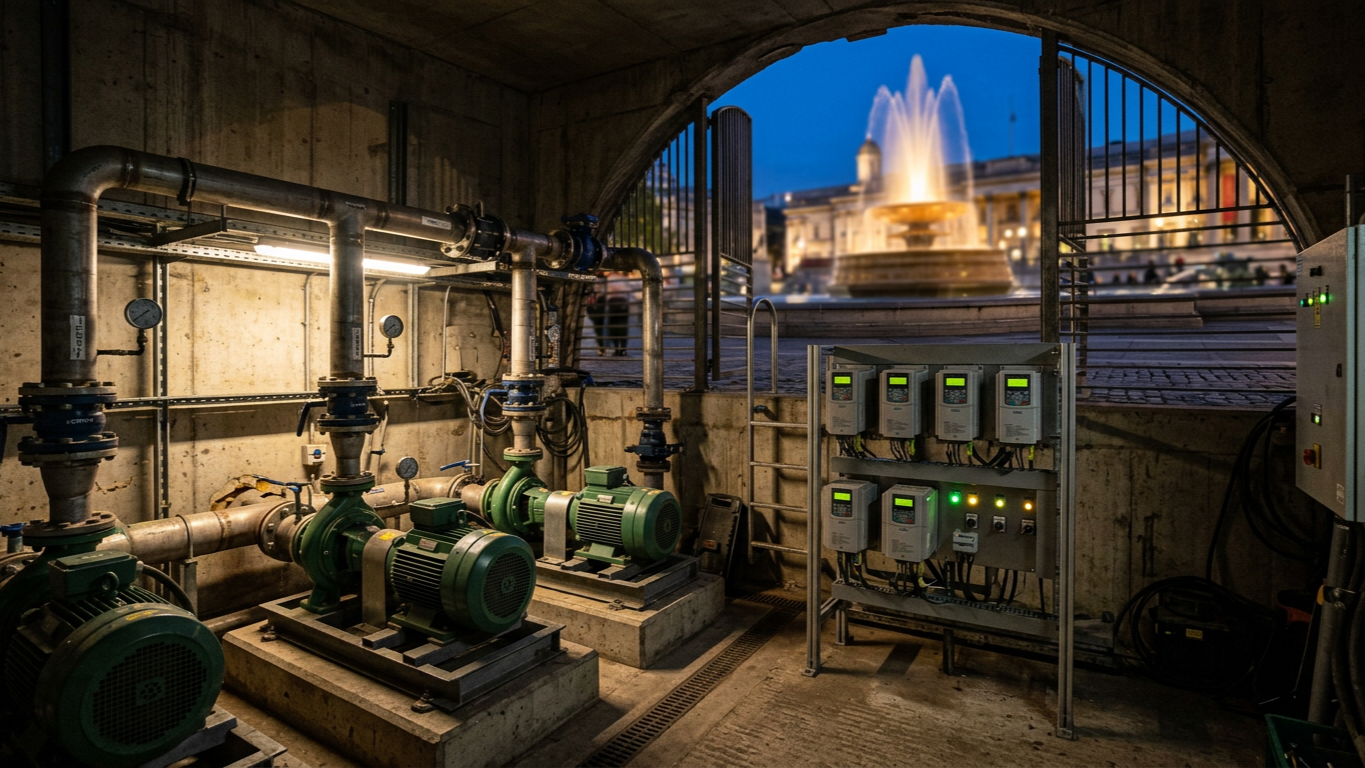
Commercial fountains and water features demand precise pump specifications to maintain visual appeal, operational reliability, and energy efficiency. Selecting the wrong pump leads to inadequate flow, excessive noise, premature equipment failure, and inflated running costs. Understanding the fountain pump requirements for these installations ensures systems perform as intended while minimising maintenance interventions and operational expenses.
Understanding Commercial Fountain Hydraulics
Commercial fountain systems operate under fundamentally different conditions than standard circulation applications. Water features require pumps to deliver specific flow rates while overcoming static head, friction losses, and nozzle pressure requirements. A typical display fountain might need to lift water 3-5 metres through pipework before discharging through multiple nozzles, each requiring minimum pressure thresholds to achieve the desired spray pattern.
Total Dynamic Head Calculations
The hydraulic calculation begins with determining total dynamic head (TDH) - the sum of static lift, friction losses through pipework and fittings, and pressure requirements at discharge points. A fountain with a 4-metre static lift, 1.5 metres of friction loss, and nozzles requiring 2 metres of pressure head demands a pump capable of delivering the required flow rate at 7.5 metres TDH minimum.
Flow rate requirements vary dramatically based on fountain design. A simple laminar jet might require 15-20 litres per minute per nozzle, while aerating foam jets can demand 40-60 litres per minute. Multi-tier cascading features need sufficient flow to maintain continuous water sheets across each level - typically 100-150 litres per minute per metre of weir width.
Design Considerations
Proper water feature pump selection accounts for peak demand scenarios while avoiding excessive oversizing that wastes energy during normal operation. Many designers fail to consider the simultaneous operation of all nozzles and features, resulting in undersized pumps that cannot deliver full design performance. Conversely, oversizing pumps by more than 20% leads to inefficient operation, excessive noise, and increased energy costs.
Pump Types for Water Feature Applications
Submersible Pumps
Submersible pumps dominate commercial fountain installations due to their silent operation, compact footprint, and simplified installation. These units sit directly in the basin, eliminating priming concerns and reducing pipework complexity. Grundfos pumps offer submersible models specifically designed for fountain duty, with stainless steel construction resisting the corrosive effects of treated water and built-in thermal protection preventing motor damage during low-flow conditions.
External Centrifugal Pumps
External centrifugal pumps suit larger installations where maintenance accessibility outweighs the advantages of submersible units. These pumps mount in separate plant rooms or enclosures, allowing service without draining the basin. The approach works particularly well for multi-pump systems serving complex water features with variable flow requirements. External installations require proper priming systems and consideration of suction lift limitations - most centrifugal pumps struggle with suction lifts exceeding 4-5 metres.
Variable Speed Pumps
Variable speed pumps deliver significant advantages for fountains with multiple display modes. Rather than switching pumps on and off or throttling valves to adjust flow, variable frequency drives (VFDs) modulate pump speed to match demand. This approach reduces energy consumption by up to 50% compared to fixed-speed alternatives while eliminating water hammer and mechanical stress from frequent starts and stops. The technology proves especially valuable for programmed fountain displays that cycle through different patterns throughout the day.
Material Selection and Corrosion Resistance
Fountain water chemistry presents unique challenges for pump materials and directly influences fountain pump requirements. Most commercial water features use chlorine, bromine, or UV treatment to prevent algae growth and maintain water clarity. These treatment methods create corrosive conditions that rapidly degrade unsuitable materials. Bronze and cast iron components - common in standard heating circulators - fail prematurely in treated fountain water.
Stainless Steel Construction
Stainless steel construction provides the necessary corrosion resistance for fountain duty. Grade 316 stainless steel offers superior resistance to chloride attack compared to grade 304, making it the preferred choice for heavily treated systems. Pump housings, impellers, shafts, and fasteners should all use appropriate stainless grades. Some manufacturers offer pumps with ceramic bearings and Viton seals specifically engineered for aggressive water chemistry.
DAB pumps manufacture fountain-specific models with all-stainless wetted components and reinforced sealing systems. These units typically cost 30-40% more than standard submersible pumps but deliver service lives three to four times longer in treated water applications. The investment proves economical when factoring in replacement costs, labour for pump changes, and system downtime.
Electrical Considerations and Safety Requirements
Commercial fountain pumps must comply with stringent electrical safety standards due to their proximity to water and public access areas. All submersible pumps require IP68 ingress protection ratings - complete protection against dust ingress and continuous immersion beyond 1 metre depth. Cable glands must maintain this protection level, with proper cable entry preventing water migration into motor windings.
Power Supply Requirements
Three-phase power suits larger fountain installations, providing more efficient motor operation and eliminating the starting capacitors that often fail in single-phase submersible pumps. Most commercial fountains above 2kW benefit from a three-phase supply. The electrical installation must include residual current devices (RCDs) rated at 30mA or less, providing protection against earth leakage faults. BS 7671 wiring regulations specify requirements for installations in zones around water features.
Control System Integration
Control systems for commercial fountains increasingly incorporate programmable logic controllers (PLCs) or building management system (BMS) integration. These systems monitor pump performance, water levels, and treatment parameters while executing programmed display sequences. Proper integration requires pumps with compatible control interfaces - many modern fountain pumps include 4-20mA analogue inputs for speed control and dry contact outputs for alarm signalling.
Sizing Calculations and Performance Matching
Accurate pump sizing prevents the most common fountain failures - inadequate display height, poor spray patterns, and excessive energy consumption. The process begins with detailed hydraulic calculations accounting for all system resistances. Many installers underestimate friction losses through decorative pipework, leading to undersized pump selections that never achieve design performance.
Nozzle Requirements
Nozzle manufacturers provide performance data specifying minimum flow rates and pressures for each product. A typical vertical jet nozzle might require 25 litres per minute at 3 metres pressure to achieve a 4-metre display height. Multiply these requirements by the number of nozzles to determine total system demand. Add 10-15% safety margin to account for fouling and performance degradation over time.
Performance Curve Selection
Pump performance curves show the relationship between flow rate and head pressure. Select pumps operating in the middle third of their curve - this region provides optimal efficiency and stable operation. Pumps running at the extreme ends of their curves suffer from cavitation, excessive noise, and premature wear. National Pumps and Boilers provides technical support for water feature pump selection, helping specifiers match equipment to specific fountain requirements.
Multiple Pump Configurations
Large commercial fountains often employ multiple pumps rather than single large units. This approach provides redundancy, operational flexibility, and improved turndown capability. A fountain with three 50% capacity pumps can operate at 50%, 100%, or 150% design flow by running different pump combinations. If one pump fails, the display continues at reduced capacity rather than shutting down completely.
Duty-Standby Arrangements
Duty-standby configurations suit installations where continuous operation is critical. Two identical pumps alternate as duty and standby units, with automatic changeover if the operating pump fails. Lead-lag control sequences equalise runtime between pumps, preventing the standby unit from seizing due to prolonged inactivity. The configuration requires proper check valve installation, preventing backflow through idle pumps.
Parallel Pump Installations
Parallel pump installations require careful hydraulic design, ensuring balanced flow distribution. Pumps with significantly different performance characteristics create flow imbalances where stronger pumps carry disproportionate loads. Select identical pump models and use individual isolation valve,s allowing maintenance without system shutdown. Pump valves designed for fountain service include stainless steel construction and full-port design,s minimising pressure drop.
Filtration Integration and System Protection
Commercial fountains require continuous filtration, removing debris, organic matter, and suspended particles. The water feature pump selection must account for filter pressure drop - typically 2-4 metres of additional head when filters reach their cleaning threshold. Undersized pumps cannot overcome filter resistance, resulting in reduced flow and poor display performance.
Filter Types and Considerations
Most commercial systems use cartridge or sand filters rated for the full system flow rate. Cartridge filters offer finer filtration (down to 5 microns) in compact packages but require more frequent cleaning. Sand filters handle larger debris loads with less maintenance but occupy more space and require backwash capabilities. The filter location affects pump sizing - suction-side filtration reduces available net positive suction head (NPSH), while discharge-side filtration adds directly to TDH requirements.
Strainer Protection
Strainer baskets provide coarse filtration, protecting pumps from large debris. Submersible fountain pumps should include integral strainers with 3-5mm opening,s preventing leaves, plastic bags, and other debris from entering impeller passages. External strainers suit larger installations, offering higher capacity and easier cleaning access. Regular strainer maintenance prevents flow restriction and pump damage.
Energy Efficiency and Running Costs
Fountain pump energy consumption represents a significant operational expense for commercial installations and forms a critical component of fountain pump requirements. A typical 3kW fountain pump running 12 hours daily consumes approximately 13,000 kWh annually. At commercial electricity rates of £0.25-0.30 per kWh, this equates to £3,250-3,900 in annual energy costs per pump. Efficient pump selection and control strategies substantially reduce these expenses.
Motor Efficiency Standards
High-efficiency motors meeting IE3 or IE4 standards reduce energy consumption by 10-20% compared to standard efficiency units. The premium for high-efficiency motors typically pays back within 18-24 months through reduced running costs. Variable speed operation delivers even greater savings - reducing pump speed by 20% cuts power consumption by approximately 50% due to the cubic relationship between speed and power (affinity laws).
Operational Scheduling
Seasonal operation schedules optimise energy consumption for outdoor fountains. Many installations run reduced hours during the winter months when visitor numbers decline. Programmable controls adjust operating schedules automatically, while astronomical timers sync operation with daylight hours. Some systems incorporate weather stations shutting down fountains during high winds or freezing conditions, preventing water loss and equipment damage while eliminating unnecessary energy consumption.
Maintenance Access and Serviceability
Commercial fountain pumps require regular maintenance, including impeller cleaning, seal inspection, and bearing lubrication. Installation design should facilitate these tasks without extensive system disruption. Submersible pumps need adequate basin depth allowing removal without complete drainage - minimum 200mm clearance below the pump proves sufficient for most maintenance procedures.
Quick-Disconnect Systems
Quick-disconnect couplings simplify pump removal for service. These fittings allow disconnection without tools, reducing maintenance time and minimising water spillage. Specify stainless steel couplings with captured seals preventing loss during disconnection. The coupling design should prevent cross-threading and ensure proper alignment during reconnection.
Spare Parts Strategy
Spare pump availability proves critical for commercial installations where downtime affects visitor experience or building aesthetics. Many facilities maintain complete spare pumps for critical systems, allowing immediate replacement while failed units undergo repair. Lowara pumps offer extensive spare parts availability and modular construction, allowing in-house repairs for facilities with qualified maintenance staff.
Noise and Vibration Control
Fountain pumps in public spaces must operate quietly to avoid disturbing occupants or visitors. Submersible installations naturally attenuate noise through water immersion, but poor installation practices create unnecessary sound transmission. Rigid mounting to basin structures conducts vibration into surrounding materials, amplifying pump noise. Flexible mounting pads or suspension systems isolate vibration, reducing structure-borne sound transmission.
External Pump Noise Control
External pump installations require more extensive noise control measures. Acoustic enclosures reduce airborne noise while vibration isolation mounts prevent transmission through floor structures. Select pumps with inherently quiet operation - models with enclosed fan-cooled motors generate less noise than open-drip-proof designs. Proper pipe support prevents resonance amplification - flexible connectors at pump connections and regular pipe supports every 2-3 metres minimise vibration transmission.
Variable Speed Benefits
Variable speed operation reduces noise levels during low-demand periods. Pump noise increases exponentially with speed - reducing operation to 70% speed can cut noise levels by 10-15 dB, making systems significantly quieter without compromising display quality during off-peak hours.
Winterisation and Freeze Protection
Outdoor fountain systems in the UK face freezing risks during the winter months. Pumps left filled with water suffer catastrophic damage when temperatures drop below zero - ice expansion cracks housings, destroys impellers, and ruptures seals. Proper winterisation procedures prevent this damage while ensuring systems restart reliably each spring.
Drainage Methods
Complete drainage represents the most reliable freeze protection method. Remove pumps from basins, drain all water, and store them in frost-free locations. This approach suits seasonal installations shut down for extended winter periods. The method requires proper labelling and storage procedures, ensuring correct reinstallation and preventing component loss.
Heated Enclosure Systems
Heated enclosures allow year-round operation in freezing climates. Thermostatically controlled heaters maintain basin temperatures above 5°C, preventing ice formation while minimising energy consumption. Insulated covers reduce heat loss, improving efficiency. The approach suits installations where winter operation provides value or where drainage proves impractical due to system complexity.
Conclusion
Selecting appropriate pumps for commercial fountain systems requires a thorough understanding of fountain pump requirements, material compatibility, electrical safety standards, and operational considerations. Proper pump sizing, accounting for total dynamic head, nozzle requirements, and filtration resistance, ensures reliable performance and visual appeal. Stainless steel construction with appropriate sealing systems delivers the corrosion resistance necessary for treated water environments, while variable speed control optimises energy efficiency and operational flexibility.
Multiple pump configurations provide redundancy and turndown capability for critical installations, though proper hydraulic design ensures balanced operation. Integration with filtration systems, consideration of maintenance access, and attention to noise control create installations that perform reliably with minimal disruption. For guidance on water feature pump selection for specific fountain applications, contact the team for technical support tailored to project requirements.