

Pump Requirements for Rainwater Harvesting Systems in Commercial Buildings
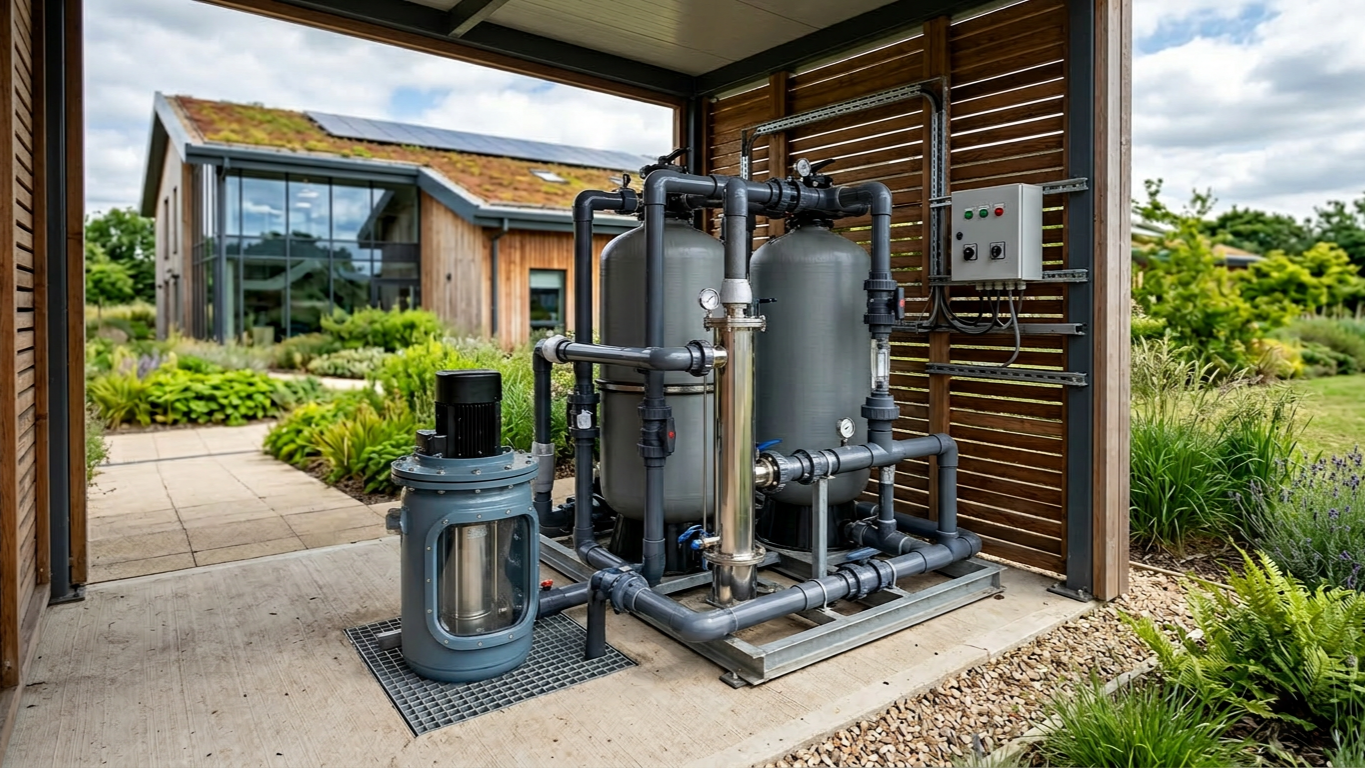
Commercial buildings across the UK are increasingly turning to rainwater harvesting systems to reduce mains water consumption, lower operating costs, and meet sustainability targets. These systems can supply up to 50% of a building's non-potable water needs - from toilet flushing to irrigation and cooling tower makeup - but their effectiveness depends entirely on proper pump specification and system design.
The pump sits at the heart of any rainwater harvesting installation, responsible for delivering collected water at the correct pressure and flow rate to where it's needed. Unlike domestic systems that might serve a single property, commercial installations must handle variable demand patterns, multiple draw-off points, and often significant vertical distances. Specifying the wrong pump leads to inadequate pressure, excessive energy consumption, or premature equipment failure.
Understanding Commercial Rainwater System Demands
Commercial rainwater harvesting systems face operational challenges that domestic installations rarely encounter. A typical office building might require 15-20 litres per person per day for toilet flushing alone, whilst a manufacturing facility could demand hundreds of cubic metres daily for process cooling and cleaning operations.
The pump must accommodate peak demand periods - the morning rush in office buildings, simultaneous toilet flushing across multiple floors, or irrigation systems activating across large landscaped areas. These demand spikes can exceed average flow rates by 300-400%, requiring pumps with sufficient capacity to maintain pressure without cycling excessively or causing system pressure drops.
Building height introduces additional complexity. A five-storey commercial building requires approximately 0.5 bar of pressure per floor just to overcome static head, before accounting for friction losses in pipework and pressure requirements at outlets. This means a pump serving upper floors might need to generate 3-4 bar, compared to 1.5-2 bar for a ground-floor system.
Pump Types for Rainwater Harvesting Applications
Submersible Pumps
Submersible pumps installed directly in the storage tank offer several advantages for commercial rainwater systems. These units operate quietly, require no priming, and remain protected from frost damage. DAB pumps manufacture submersible models specifically designed for rainwater applications, with corrosion-resistant materials and built-in float switches.
The submersible configuration works particularly well for underground tank installations, eliminating the need for a separate pump chamber and reducing installation costs. However, maintenance requires tank access, which can prove problematic for buried tanks without adequate access hatches.
Surface-Mounted Pumps
Surface-mounted pumps installed in dedicated plant rooms provide easier access for maintenance and service. These units suit applications where the storage tank sits below the pump location, though they require proper priming systems and frost protection in unheated spaces.
Multi-stage centrifugal pumps deliver the higher pressures needed for tall buildings, whilst booster sets with multiple pumps provide redundancy for critical applications. Lowara pumps offer robust surface-mounted options designed for commercial water supply applications, with stainless steel construction and efficient motor designs.
Pressure Boosting Systems
Large commercial installations often specify complete pressure boosting systems rather than single pumps. These systems incorporate multiple pumps, pressure vessels, variable speed drives, and intelligent controls that adjust operation based on demand.
A typical booster set might include two or three pumps configured for duty/standby operation, ensuring the water supply continues even during pump maintenance. The system monitors pressure continuously, activating additional pumps during peak demand and reducing capacity during low-flow periods to optimise energy consumption.
Critical Specification Parameters
Understanding rainwater harvesting pump requirements begins with accurate calculation of flow rate and head pressure demands specific to each building application.
Flow Rate Requirements
Calculating the required flow rate starts with identifying the simultaneous demand. Building Services Engineers typically use diversity factors rather than summing every potential outlet, recognising that not all fixtures operate simultaneously.
For office buildings, a reasonable estimate assumes 30-40% of WC outlets might operate simultaneously during peak periods. A 200-person office with 20 WCs rated at 6 litres per minute each would theoretically require 120 l/min total flow, but applying a 35% diversity factor reduces the actual pump requirement to approximately 42 l/min.
Manufacturing and industrial facilities require more detailed analysis based on specific process demands. A cooling tower might require a constant flow of 50-100 l/min, whilst cleaning operations could demand 80-120 l/min intermittently. The pump must handle the highest credible simultaneous demand scenario.
Head Pressure Calculations
Total head comprises static head (vertical lift), friction losses in pipework, and residual pressure required at outlets. Static head calculation is straightforward - approximately 10 metres of head per bar of pressure, or 1 metre per floor height.
Friction losses depend on pipe diameter, length, material, and flow velocity. A 50mm pipe carrying 40 l/min experiences approximately 0.2 bar per 100 metres, whilst the same flow through 32mm pipe generates nearly 1 bar per 100 metres. Undersized distribution pipework dramatically increases pump head requirements and energy consumption.
Outlet pressure requirements vary by application. WC cisterns operate adequately at 0.5-1.0 bar, whilst spray wash systems might require 2-3 bar minimum. The pump must deliver adequate pressure to the most demanding outlet whilst maintaining acceptable pressure at all other points.
Control Systems and Operating Modes
Variable Speed Drive Integration
Variable speed drives (VSDs) transform pump efficiency in commercial rainwater systems by adjusting motor speed to match instantaneous demand. Rather than cycling on/off or using pressure bypass valves, the VSD modulates pump speed to maintain constant pressure across varying flow rates.
A VSD-controlled pump might operate at 40% speed during low-demand periods, reducing power consumption by approximately 75% compared to full-speed operation. As demand increases, the drive ramps up motor speed smoothly, maintaining steady pressure without the water hammer effects of conventional pump cycling.
Energy savings typically justify VSD investment within 2-3 years for commercial installations operating more than 8 hours daily. Grundfos pumps incorporate integrated VSDs in many commercial models, simplifying installation and optimising pump performance across the operating range.
Mains Water Backup Integration
Commercial rainwater systems require automatic mains water backup to ensure a continuous supply during dry periods or high-demand situations. The control system monitors tank level and switches to the mains supply when stored rainwater depletes below a preset threshold.
Proper backup integration prevents pump dry-running whilst ensuring seamless transition between water sources. The system might incorporate a separate mains pressure set or use the rainwater pump with automatic valve switching. Building Regulations require appropriate backflow prevention to maintain mains water quality.
Monitoring and Telemetry
Modern commercial installations incorporate remote monitoring systems that track pump performance, energy consumption, and water usage patterns. These systems alert facilities managers to potential issues before they cause system failure - declining pump efficiency might indicate impeller wear, whilst increased cycling frequency could signal pressure vessel failure.
Data logging helps optimise system operation and demonstrates water savings for sustainability reporting. Some systems integrate with building management systems (BMS), allowing coordinated control of multiple water-using systems.
Sizing Considerations for Different Building Types
Office Buildings
Office buildings present relatively predictable demand patterns, with peak usage during working hours and minimal overnight demand. Toilet flushing typically accounts for 80-90% of rainwater use, with the remainder for cleaning and irrigation.
A medium-sized office (100-300 occupants) typically requires a pump delivering 30-50 l/min at 2.5-3.5 bar, depending on building height. Dual-pump configurations provide redundancy, though many installations specify single pumps with mains backup as the redundancy measure.
Retail and Leisure Facilities
Shopping centres, leisure centres, and similar facilities experience more variable demand patterns, with significant peak periods and seasonal variations. Swimming pools and leisure facilities add complexity through higher flow requirements and continuous demand from changing facilities.
These applications often justify larger booster sets with multiple pumps, pressure vessels of 200-500 litres, and sophisticated controls managing diverse demand patterns. Flow rates might range from 60-150 l/min, depending on facility size and usage.
Industrial and Manufacturing
Industrial applications demand careful analysis of specific process requirements. Central heating equipment manufacturers using rainwater for cooling systems might require a constant flow of 80-120 l/min, whilst food processing facilities need intermittent high flows for cleaning operations.
Pump materials become critical in industrial applications - stainless steel construction resists corrosion from collected rainwater, whilst mechanical seals prevent contamination. Some processes require dedicated pumps separate from toilet flushing circuits to maintain appropriate water quality for each application.
Educational Facilities
Schools and universities combine characteristics of office and leisure facilities, with concentrated demand during break periods and minimal usage during holidays. Pump sizing must accommodate the morning rush when hundreds of students arrive simultaneously, creating demand spikes that can overwhelm undersized systems.
A secondary school with 800-1200 students typically requires 50-80 l/min capacity with 3-4 bar pressure for multi-storey buildings. Holiday periods provide opportunities for maintenance without disrupting building operations.
Energy Efficiency and Operating Costs
Rainwater system pumps consume energy continuously, representing the largest ongoing cost in rainwater harvesting systems, potentially exceeding £500-1500 annually for medium commercial installations. Efficient pump selection and proper system design dramatically reduce these costs whilst improving environmental credentials.
High-efficiency motors meeting IE3 or IE4 standards reduce electrical consumption by 15-25% compared to standard motors. When combined with variable speed drives, total energy savings can reach 40-60% compared to fixed-speed pumps with on/off control.
Wilo pumps incorporate ECM (electronically commutated motor) technology in many commercial models, delivering exceptional efficiency across the operating range. These motors adjust magnetic field strength to match load requirements, minimising losses during part-load operation when pumps spend most of their operating time.
Proper system design reduces pumping energy as effectively as efficient equipment. Minimising static head by locating tanks as high as practical, using adequately sized distribution pipework to reduce friction losses, and incorporating pressure vessels to reduce pump cycling all contribute to lower energy consumption.
Installation Requirements and Considerations
Electrical Supply and Controls
Commercial rainwater pumps typically require a three-phase electrical supply, particularly for motors exceeding 3kW. The installation must comply with BS 7671 wiring regulations, with appropriate circuit protection, earthing, and isolation facilities.
Control panels should be mounted in accessible locations with adequate space for maintenance. IP65-rated enclosures suit damp plant room environments, protecting sensitive electronics from moisture and dust. Emergency stop buttons and clear operational indicators help facilities staff manage the system safely.
Pipework and Valve Configuration
Suction pipework requires careful design to prevent air entrainment and cavitation. Pipe sizing should maintain velocities below 1.5 m/s on the suction side, with gradual bends rather than sharp elbows. A foot valve or non-return valve on the suction line prevents the pump from losing prime.
Discharge pipework should include isolation valves on either side of the pump, a non-return valve, a pressure gauge, and a drain valve - this configuration allows pump removal for maintenance without draining the entire system. Pump valves must suit the operating pressure range and provide reliable sealing to prevent backflow.
Pressure Vessels and Expansion Control
Pressure vessels reduce pump cycling by providing a buffer volume that accommodates small draw-offs without pump activation. Vessel sizing typically follows the rule of 10-15 litres per kilowatt of pump motor power, though detailed calculations based on pump characteristics and system demand provide more accurate sizing.
The vessel must include proper pre-charge pressure - typically 0.7-0.8 times the pump cut-in pressure. Regular pre-charge checks maintain system performance, as vessels losing pre-charge pressure cause excessive pump cycling and premature pump failure. Expansion vessels designed for potable water applications suit rainwater systems, providing reliable membrane materials resistant to water quality variations.
Filtration and Pre-Treatment
Commercial rainwater systems require appropriate filtration to protect pumps from debris whilst maintaining water quality for intended applications. Primary filtration removes leaves and coarse debris before water enters storage, whilst secondary filters before the pump protect against smaller particles that might damage impellers or block outlets.
Stainless steel basket strainers with 1-2mm mesh suit most applications, providing adequate protection whilst minimising pressure drop. The installation should allow easy strainer access for regular cleaning - quarterly inspection intervals suit most commercial buildings, though sites with heavy tree coverage might require monthly attention.
Maintenance and Service Requirements
Proactive maintenance prevents costly breakdowns and extends equipment life. Commercial rainwater pumps require quarterly inspection covering pump operation, unusual noise or vibration, control system function, and pressure vessel pre-charge. Annual service should include a detailed inspection of wearing parts, electrical connections, and seal condition.
Pump manufacturers typically recommend impeller inspection every 2-3 years, with replacement if wear exceeds 10% of original dimensions. Mechanical seals might last 5-8 years in commercial applications, though operation with debris-laden water or frequent dry-running episodes significantly reduces seal life.
Regulatory Compliance and Standards
Commercial rainwater harvesting installations must comply with Building Regulations Part G (sanitation and water efficiency) and Part L (conservation of fuel and power). The Water Supply (Water Fittings) Regulations 1999 mandate appropriate backflow prevention where rainwater systems connect to mains water backup.
BS 8515:2009 provides comprehensive guidance for rainwater harvesting system design, installation, and maintenance. The standard addresses tank sizing, pump specification, filtration requirements, and water quality considerations. Compliance demonstrates due diligence and helps avoid issues during building control inspections.
BREEAM and similar environmental assessment schemes award credits for rainwater harvesting installations, contributing to overall building sustainability ratings. Proper pump specification and energy-efficient operation maximise these credits whilst delivering genuine environmental benefits through reduced mains water consumption.
Conclusion
Specifying rainwater system pumps for commercial installations demands careful analysis of building demand patterns, vertical distribution requirements, and operating conditions. The pump must deliver adequate flow and pressure during peak demand whilst operating efficiently during typical conditions that might represent 80-90% of running time.
Variable speed drives, high-efficiency motors, and intelligent controls transform pump performance, reducing energy consumption by 40-60% compared to basic fixed-speed installations. These technologies justify their additional cost through energy savings, typically achieving payback within 2-4 years for commercial applications.
Proper system design extends beyond the pump itself - adequate pressure vessels reduce cycling, correctly sized pipework minimises friction losses, and appropriate filtration protects equipment from premature wear. Professional specification considers the complete system, ensuring reliable operation and optimal efficiency.
National Pumps and Boilers supplies commercial rainwater pumping equipment with technical expertise in rainwater harvesting pump requirements for diverse applications. For guidance on pump selection for specific commercial installations, contact us for expert advice on system design and equipment specification.