

Pump Selection for Commercial Fire Suppression and Sprinkler Systems
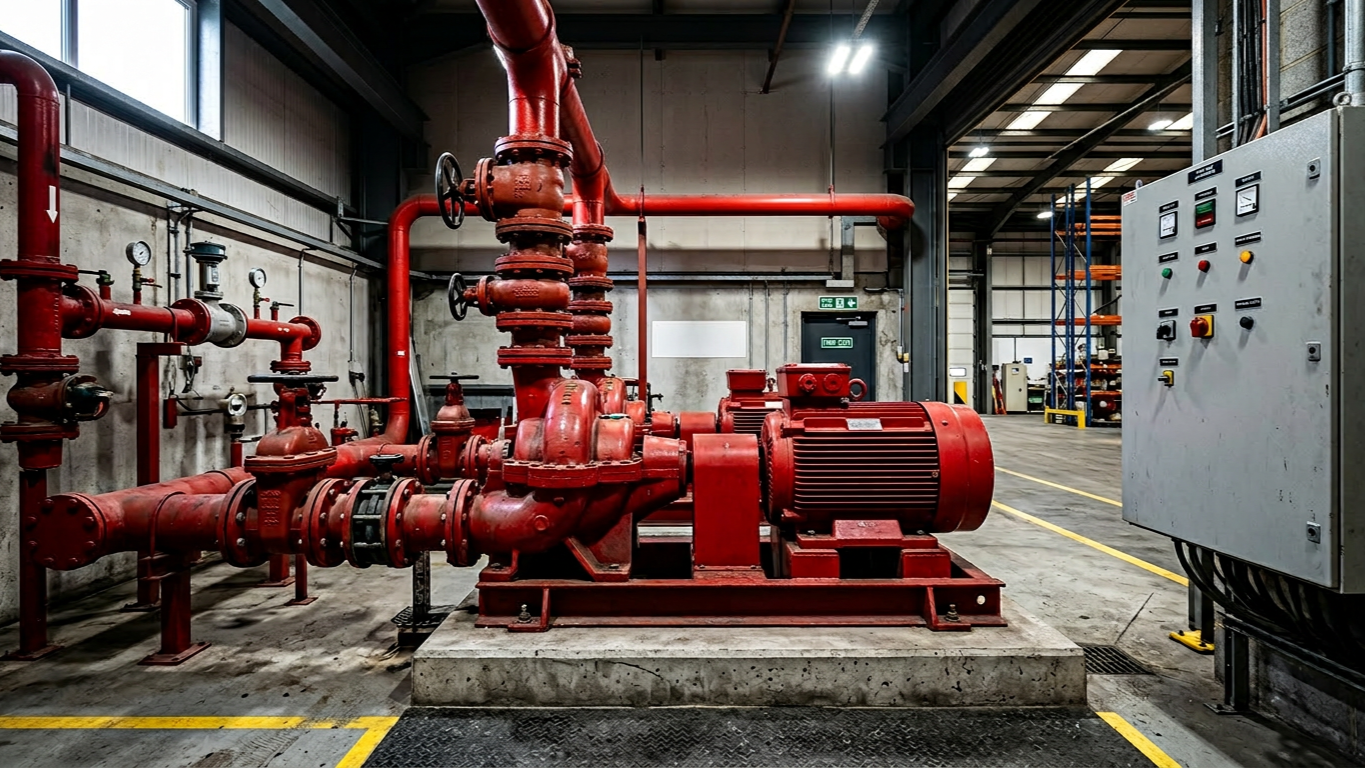
When a fire breaks out in a commercial building, the difference between containment and catastrophe often comes down to whether water reaches the sprinkler heads at the right pressure and flow rate. Fire suppression pump systems form the critical backbone of life safety infrastructure in warehouses, hospitals, hotels, and high-rise buildings across the UK - yet selecting the wrong pump specification can render an entire sprinkler installation ineffective when it matters most.
British Standard BS EN 12845 defines stringent requirements for fixed firefighting systems, including specific pump performance criteria, redundancy provisions, and testing protocols. Unlike standard central heating circulation pumps that operate continuously, fire pumps must deliver peak performance after months or years of standby operation, starting within seconds and maintaining design pressure throughout the hydraulically most demanding sprinkler zones.
National Pumps and Boilers supplies fire-rated pump equipment that meets British Standards and LPCB (Loss Prevention Certification Board) approval requirements, supporting mechanical contractors and building services engineers in specifying compliant systems for commercial fire protection applications.
Understanding Fire Pump System Requirements
Fire suppression pump systems differ fundamentally from standard building services pumps in their operational profile, regulatory requirements, and reliability expectations. These systems must satisfy simultaneous demands from sprinkler heads whilst maintaining minimum residual pressure at the hydraulically remote point - typically 0.5 bar for standard hazard occupancies under BS EN 12845.
Regulatory Framework and Standards
BS EN 12845 establishes the design, installation, and maintenance requirements for automatic sprinkler systems throughout the UK. The standard specifies pump performance characteristics, control arrangements, and testing protocols that directly influence equipment selection. Systems must achieve LPCB certification to satisfy insurance requirements and Building Regulations Approved Document B (Fire Safety).
The Water Supply (Water Fittings) Regulations 1999 impose additional requirements where fire pumps connect to mains water supplies, including backflow prevention and pressure surge protection. Building Regulations Part B mandates sprinkler protection in specific building types, including residential buildings above 11 metres and certain care facilities, creating consistent demand for compliant pump installations.
Performance Parameters for Fire Pumps
Fire pump specifications centre on three critical parameters: rated flow (litres per minute), rated pressure (bar), and churn pressure (shut-off pressure). BS EN 12845 requires pumps to deliver 150% of rated flow at 70% of rated pressure, ensuring adequate performance across the full operating range.
A typical light hazard occupancy (offices, hotels) requires 375 litres per minute for 30 minutes at the design density of 5 mm/min over the assumed maximum area of operation. Ordinary hazard Group 2 (retail, warehouses) demands 1,500 litres per minute for 60 minutes. High-hazard applications (chemical storage, vehicle workshops) may require 3,000 litres per minute or more with extended duration requirements.
Pump head calculations must account for elevation differences, friction losses through pipework, and the pressure required at the most hydraulically remote sprinkler head. A six-storey building with sprinklers on all floors typically requires 6-8 bar pump discharge pressure to overcome static elevation (approximately 0.6 bar per 6 metres) plus friction losses and terminal device requirements.
Pump Types for Fire Suppression Applications
Selecting appropriate pump technology depends on system size, building height, hazard classification, and redundancy requirements. Understanding sprinkler pump requirements ensures proper equipment selection.
Horizontal Split Case Pumps
Horizontal split case pumps dominate large commercial fire suppression installations due to their robust construction, high flow capacity, and ease of maintenance. These pumps feature axially-split casings that allow impeller access without disturbing suction or discharge pipework - critical for periodic inspection and testing.
Split case designs efficiently handle flows from 500 to 5,000 litres per minute at pressures up to 16 bar, making them suitable for high-rise buildings and large industrial complexes. The horizontal configuration simplifies installation and maintenance compared to vertical designs, though they require greater floor space in pump rooms.
LPCB-approved split case pumps incorporate specific features, including bronze or stainless steel impellers, mechanical seals rated for continuous duty, and mounting arrangements that prevent misalignment during operation. Manufacturers provide certified performance curves showing flow-pressure relationships across the full operating range.
Vertical Turbine Pumps
Vertical turbine pumps suit applications where suction lift exceeds horizontal pump capabilities or where pump room space limitations prevent horizontal installation. These multi-stage pumps draw water from underground tanks or reservoirs, with the pump bowl submerged below the minimum water level.
The vertical configuration eliminates priming concerns and allows installation in confined spaces, though maintenance requires lifting the entire pump assembly to access wear components. Vertical turbines efficiently serve high-rise buildings requiring 10-20 bar discharge pressure, using multiple impeller stages to achieve the necessary head.
BS EN 12845 permits vertical turbine pumps for fire service, provided they meet the same performance and reliability criteria as horizontal designs. The standard requires accessible discharge check valves and test circulation arrangements that allow full-flow testing without operating sprinkler heads.
End Suction Pumps
End suction centrifugal pumps provide cost-effective solutions for smaller fire suppression pump systems in low-rise buildings with modest flow requirements. These compact pumps handle flows up to 1,000 litres per minute at pressures up to 10 bar, suitable for light hazard occupancies and residential sprinkler systems.
The simple construction reduces initial cost and simplifies spare parts inventory, though end suction designs offer less accessibility for maintenance compared to split case arrangements. LPCB-approved end suction pumps incorporate bronze-fitted construction and mechanical seals suitable for extended standby periods.
System Configuration and Redundancy
BS EN 12845 mandates specific pump arrangements based on building classification and water supply reliability. Most commercial installations require duty-standby configurations with automatic changeover, ensuring system availability even during pump maintenance or component failure.
Duty-Standby Arrangements
The standard duty-standby configuration comprises two identical pumps, either of which can satisfy full system demand. Control panels alternate pumps on successive tests or alarms, equalising runtime and ensuring both units remain operational. If the duty pump fails to achieve pressure within 15 seconds, the standby pump starts automatically.
Each pump must independently deliver the full design flow and pressure, sized for the hydraulically most demanding scenario rather than shared capacity. A system requiring 1,500 litres per minute installs two pumps, each rated for 1,500 litres per minute, not two 750 litres per minute units operating in parallel.
Suction pipework must supply both pumps from a common manifold with individual isolating valves, allowing maintenance on one pump whilst the other remains available. Discharge pipework incorporates check valves preventing backflow through the idle pump, plus test circulation loops for full-flow verification without discharging through sprinkler heads.
Pressure Maintenance Pumps
Fire suppression pump systems incorporate small jockey pumps (pressure maintenance pumps) that compensate for minor leakage and maintain system pressure without starting the main fire pumps. These compact units typically deliver 5-10 litres per minute at 10-15% above main pump pressure, cycling on and off to maintain the pressure switch deadband.
Correctly sized jockey pumps prevent nuisance alarms from minor pressure variations whilst ensuring genuine demand triggers main pump operation. Oversized jockey pumps may mask small leaks or even supply initial sprinkler heads, delaying main pump activation and potentially compromising system performance.
Wilo pumps manufacture pressure maintenance equipment specifically designed for fire system applications, with corrosion-resistant construction and controls that log cycle counts for maintenance planning. The jockey pump operates continuously throughout the system lifecycle, making reliability and efficiency important selection criteria.
Electrical Supply and Control Requirements
Fire pump reliability depends critically on the electrical infrastructure that remains operational during building emergencies. BS EN 12845 specifies dedicated electrical supplies, control panel requirements, and testing provisions that directly influence installation design and cost, all essential to meeting sprinkler pump requirements.
Power Supply Provisions
The standard requires fire pumps to receive power from dedicated circuits independent of general building distribution, protected by discrimination with upstream devices to prevent nuisance tripping. Supplies must remain available during fire conditions, typically achieved through early disconnection from the main fire alarm panel.
Diesel engine-driven pumps provide ultimate reliability for critical installations, starting automatically if the electrical supply fails or if the electric pump cannot achieve pressure. The diesel engine drives the pump directly through a flexible coupling, with fuel tanks sized for the system duration requirement plus margin for testing.
Electric motor-driven pumps typically use three-phase induction motors from 7.5 kW to 150 kW, depending on pump size. Motors must be suitable for across-the-line starting (direct-on-line) without soft starters or variable frequency drives, ensuring immediate full-power availability. Starting current can reach 6-8 times full load current, requiring appropriately rated cables and switchgear.
Control Panel Specifications
LPCB-approved control panels manage pump starting sequences, alternation between duty and standby pumps, alarm signalling, and test functions. Panels monitor suction pressure, discharge pressure, pump running status, and electrical supply, with alarm outputs to building management systems and remote monitoring stations.
The control philosophy prioritises pump operation over protection - once started by pressure drop, pumps continue running until manually stopped at the panel, even if pressure is restored. This prevents pumps cycling during fire conditions and ensures water remains available throughout the incident.
Weekly automatic test routines verify pump starting and pressure switch operation without flowing water through the system. Monthly tests require full-flow operation through test headers, confirming pumps achieve rated performance. Control panels log all tests and alarms, providing maintenance history for insurance inspections.
Suction Supply and Tank Requirements
A reliable water supply forms the foundation of effective fire suppression. BS EN 12845 defines minimum storage volumes, tank construction requirements, and suction arrangement specifications that ensure adequate water reaches pump inlets under all operating conditions.
Storage Tank Sizing
Tank capacity must satisfy the system flow rate multiplied by the required duration, plus additional volume for testing and pressure maintenance. An ordinary hazard system requiring 1,500 litres per minute for 60 minutes needs 90,000 litres minimum stored volume, plus approximately 5,000 litres for testing and jockey pump operation.
The standard permits combined storage serving multiple systems, provided total capacity satisfies the largest single demand plus 30 minutes of the next largest system. Tanks serving high-rise buildings often exceed 200,000 litres, requiring structural engineering assessment and dedicated plant room space.
Tank construction must prevent contamination and maintain water quality throughout extended storage periods. Steel tanks require internal coating or cathodic protection to prevent corrosion. GRP (glass-reinforced plastic) tanks offer corrosion resistance and lighter weight, simplifying installation in rooftop locations.
Suction Arrangements
Pump suction pipework must maintain minimum velocities (typically 1.0-1.5 m/s) whilst avoiding excessive friction losses that reduce available NPSH (net positive suction head). Undersized suction pipes cause cavitation and performance loss; oversized pipes increase cost without performance benefit.
BS EN 12845 requires suction screens with 10mm mesh to prevent debris from entering pumps, plus individual isolating valves allowing pump removal without draining the entire system. Suction pipework must avoid air pockets through proper gradient design and incorporate air release valves at high points.
Where tanks are located below the pump centreline, flooded suction provides positive pressure at the pump inlets, improving reliability and performance. Negative suction (pump above water level) requires careful NPSH calculation to prevent cavitation, particularly at high flow rates or elevated temperatures.
Testing, Commissioning and Maintenance
Fire suppression pump systems require rigorous testing protocols to verify performance and maintain reliability throughout their service life. BS EN 12845 and LPCB requirements define specific test procedures, acceptance criteria, and maintenance intervals that ensure continued compliance.
Commissioning Tests
Initial commissioning includes full-flow performance tests measuring flow, pressure, and power consumption across the operating range. Tests verify pumps achieve 150% of rated flow at 70% of rated pressure, with churn pressure (zero flow) not exceeding 140% of rated pressure.
Performance tests use calibrated flow meters and pressure gauges traceable to national standards, with results recorded on certified test sheets. Tests must demonstrate automatic starting from pressure drop, duty-standby changeover, and alarm signalling to remote monitoring points.
Suction pressure tests verify adequate NPSH margin under full flow conditions, whilst discharge pressure tests confirm system pressures remain within pipe and component ratings. Run-out tests at maximum flow verify motor current remains below nameplate rating, preventing thermal overload.
Ongoing Maintenance Requirements
Weekly inspections verify pump room conditions, check panel indications, and confirm that automatic test routines have completed successfully. Monthly tests require full-flow operation through test headers, confirming pumps maintain performance within 5% of commissioning values.
Annual maintenance includes impeller inspection, mechanical seal examination, coupling alignment checks, and motor insulation testing. Pump performance typically degrades gradually through wear ring erosion, impeller damage, or seal deterioration. Regular testing identifies performance decline before it compromises system effectiveness, allowing planned maintenance rather than emergency repairs.
Specification Considerations for Mechanical Contractors
Selecting appropriate fire pump equipment requires balancing performance requirements, regulatory compliance, budget constraints, and long-term reliability. Understanding sprinkler pump requirements guides proper specification.
Manufacturer Selection and Approval
LPCB approval provides independent verification that equipment meets British and European standards for fire service. Approved pumps undergo rigorous testing, including performance verification, endurance testing, and quality system audits. Specifying LPCB-approved equipment simplifies insurance approval and Building Control acceptance.
Established manufacturers like Grundfos, Lowara, and Wilo offer comprehensive fire pump ranges with LPCB certification, technical support, and spare parts availability throughout the equipment lifecycle. Manufacturer selection should consider local service support, particularly for remote or critical installations.
Lifecycle Cost Analysis
Initial equipment cost represents only 20-30% of the total lifecycle cost for fire suppression pump systems operating over 25-year design lives. Energy consumption, maintenance requirements, and spare parts availability significantly impact long-term ownership costs.
High-efficiency motors and hydraulically optimised impellers reduce energy consumption during testing and operation, though fire pumps operate infrequently compared to building services equipment. Maintenance accessibility and spare parts standardisation offer greater lifecycle cost benefits than marginal efficiency improvements.
Diesel engine options increase initial cost substantially (typically 2-3 times electric pump cost) but provide ultimate reliability for critical applications. Fuel storage, exhaust systems, and battery maintenance add ongoing costs that must be weighed against the security of an independent power supply.
Conclusion
Fire suppression pump systems represent critical life safety infrastructure that must perform reliably after extended standby periods, delivering design flow and pressure throughout the hydraulically most demanding scenarios. Selecting appropriate equipment requires understanding BS EN 12845 requirements, matching pump technology to application parameters, and specifying compliant electrical and control systems.
Horizontal split case pumps suit large commercial installations requiring high flows and pressures, whilst end suction designs offer cost-effective solutions for smaller buildings. Duty-standby configurations provide redundancy for critical applications, with pressure maintenance pumps preventing nuisance alarms whilst ensuring main pumps activate for genuine demand.
Commissioning tests verify performance across the operating range, whilst ongoing maintenance preserves reliability throughout 25-year service lives. LPCB-approved equipment from established manufacturers simplifies compliance whilst ensuring spare parts availability and technical support.
National Pumps and Boilers supplies fire-rated pump equipment meeting British Standards and insurance requirements, supporting mechanical contractors in specifying compliant systems for commercial fire protection. Contact us for technical guidance on fire pump selection, performance verification, or system design assistance for commercial building applications.