

Pump Sequencing Strategies: How Multi-Pump Systems Share the Load
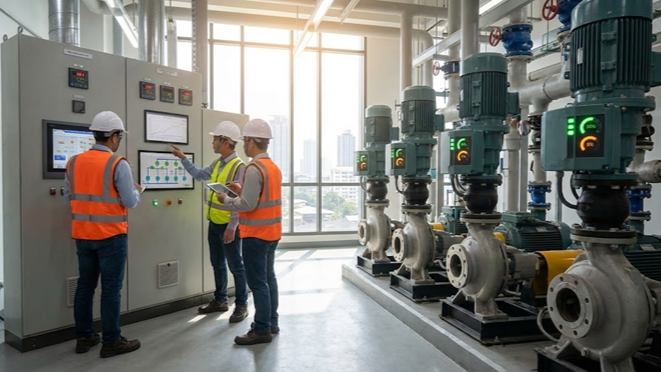
Multi-pump installations dominate commercial heating and cooling systems across the UK, yet many facilities operate these arrays inefficiently. A 2023 BSRIA study found that 47% of commercial buildings run multiple pumps simultaneously when load conditions require only one or two units, wasting energy and accelerating wear on all equipment.
Proper pump sequencing strategies determine which pumps operate, when they start, and how long they run. These control protocols directly affect energy consumption, equipment lifespan, and system reliability. A well-designed sequencing system can reduce pump energy use by 30-40% whilst extending equipment life by preventing premature wear on individual units.
National Pumps and Boilers supplies multi pump operation systems with integrated sequencing controls for commercial heating, cooling, and pressurisation applications. This technical guide explains how to optimise pump arrays for maximum efficiency and reliability.
Understanding Load Distribution in Multi-Pump Arrays
Commercial buildings rarely operate at peak capacity. A typical office building reaches maximum heating demand only 5-8% of annual operating hours, whilst shopping centres see peak cooling loads during afternoon periods on summer weekends. The remaining 90-95% of operating time represents partial load conditions.
Single vs Multiple Pump Configurations
Single large pumps handle varying loads poorly. They operate at fixed speeds or use throttling valves, both inefficient methods. Multi-pump configurations with proper sequencing match system capacity to actual demand by activating only the pumps needed for current conditions.
Consider a system with four identical 15 kW pumps rated at 50 m³/h each. At 25% load, one pump delivers required flow whilst consuming 15 kW. Without sequencing, four pumps running at reduced speed might consume 35-40 kW for identical flow delivery. The energy difference compounds across thousands of operating hours annually.
Pressure Requirements and System Resistance
Pressure requirements also vary with load. Fewer active zones mean lower system resistance, requiring less pump head. Pump sequencing strategies detect these conditions and adjust pump operation accordingly, preventing the energy waste of generating unnecessary pressure.
Primary Sequencing Methods for Commercial Systems
Effective multi pump operation requires selecting the appropriate control strategy for specific system characteristics and load patterns.
Duty-Standby Rotation
The simplest sequencing approach designates one pump as the duty unit and others as standby. The duty pump handles all loads within its capacity range. When demand exceeds duty pump capacity, a standby unit starts. When demand drops, the second pump stops.
This method works for systems with relatively stable loads and infrequent peak demand periods. A district heating secondary circuit serving residential blocks might operate one pump continuously, with a second unit activating only during morning and evening peaks.
Runtime Equalisation Requirements
Duty-standby systems require rotation schedules to equalise runtime across pumps. Without rotation, the duty pump accumulates 90-95% of total operating hours whilst standby units sit idle. Mechanical seals dry out, bearings develop flat spots, and impellers corrode from stagnant water exposure. Monthly or quarterly rotation prevents these issues.
Grundfos pumps often feature built-in rotation timers that automatically switch duty designation based on calendar intervals or accumulated runtime. This automation removes reliance on manual intervention and maintenance logs.
Lead-Lag-Lag Configuration
Three-pump systems commonly employ lead-lag-lag sequencing, where one pump leads (operates first), with two lag pumps starting in sequence as demand increases. This configuration provides finer capacity increments than simple duty-standby arrangements.
The lead pump handles base load. When system demand reaches 90-95% of lead pump capacity, the first lag pump starts. Both pumps then share the load. If demand continues rising to 90-95% of combined capacity, the second lag pump activates.
Demand-Based Staging
As demand decreases, pumps stop in reverse order. The second lag pump stops first, then the first lag pump, leaving only the lead pump operating. Hysteresis bands prevent rapid cycling - a lag pump won't stop until demand drops below 80-85% of remaining pump capacity.
Lead designation rotates automatically based on runtime or calendar periods. When rotation occurs, the previous lead pump becomes the second lag pump, ensuring the unit with lowest accumulated hours becomes the new lead.
Variable Speed Sequencing
Systems with variable frequency drives (VFDs) add another dimension to pump sequencing strategies. VFDs modulate pump speed to match demand precisely, providing infinitely variable capacity between minimum and maximum speeds.
Combined VFD and Fixed-Speed Operation
A common approach combines one variable speed pump with fixed-speed units. The VFD pump operates continuously, adjusting speed to maintain system pressure. When the VFD pump reaches maximum speed and pressure drops below setpoint, a fixed-speed pump starts. The VFD pump then reduces speed whilst the fixed-speed unit runs at full capacity.
As demand decreases, the VFD pump continues reducing speed. When it reaches minimum speed (typically 40-50% of maximum), a fixed-speed pump stops. The VFD pump then increases speed to maintain pressure.
Part-Load Efficiency Benefits
This configuration delivers excellent part-load efficiency. The VFD pump consumes only power required for actual demand, whilst fixed-speed pumps provide capacity increments during higher loads. Wilo pumps with integrated VFDs and CAN bus communication simplify implementation of these control strategies for multi pump operation.
Equal Runtime Sequencing
Large installations with four or more identical pumps often employ equal runtime sequencing to maximise equipment life. Rather than designating specific lead and lag pumps, the control system tracks accumulated runtime for each unit and prioritises operation of pumps with lowest hours.
When the system requires one pump, the unit with fewest operating hours starts. When demand requires a second pump, the unit with second-fewest hours starts. This pattern continues as additional pumps activate.
Dynamic Runtime Balancing
As pumps stop during decreasing demand, the unit with most accumulated hours stops first, then the second-highest, maintaining operation of pumps with lowest runtime.
This approach equalises wear across all equipment, preventing situations where one pump accumulates 80% of total hours whilst others remain largely idle. Maintenance intervals align across all units, simplifying spare parts inventory and technician scheduling.
Control System Components and Sensors
Effective sequencing requires accurate system feedback. Pressure transducers mounted in system headers provide the primary control signal. These sensors detect pressure variations caused by changing demand - opening zone valves reduce system pressure, triggering pump starts; closing valves increase pressure, triggering pump stops.
Pressure and Flow Monitoring
Differential pressure sensors across pump headers confirm individual pump operation. A pump showing zero differential pressure despite receiving a run command indicates mechanical failure, triggering an alarm and automatic start of the next sequencing pump.
Flow meters provide additional verification in critical applications. Comparing commanded pump operation against measured flow reveals system anomalies - low flow despite multiple pumps running might indicate closed isolation valves or blocked strainers.
Temperature and Energy Measurement
Temperature sensors at system supply and return enable energy monitoring. Combined with flow measurement, temperature differential calculates thermal energy delivery, allowing performance tracking against design expectations.
Modern central heating equipment increasingly incorporates these sensors as standard features. Integrated sensor packages reduce installation complexity and ensure compatibility between measurement devices and control algorithms.
Staging Parameters and Setpoint Configuration
Proper staging parameters prevent excessive pump cycling whilst maintaining system performance. Start and stop pressure setpoints require careful calibration based on system characteristics.
Start and Stop Pressure Setpoints
The primary pump starts when system pressure drops below the start setpoint, typically 0.5-1.0 bar below design operating pressure. Additional pumps stage on at 0.3-0.5 bar increments below the previous pump's start point.
Stop setpoints incorporate hysteresis bands to prevent rapid on-off cycling. A pump won't stop until pressure exceeds the stop setpoint for a minimum time delay, typically 2-5 minutes. This delay filters transient pressure spikes from zone valve movements or control adjustments.
Timing and Delay Configuration
Time delays between pump starts prevent simultaneous starting of multiple units during rapid demand increases. Staggered starts reduce electrical inrush current and mechanical shock to piping systems. Typical delays range from 30 seconds to 2 minutes between sequential pump starts.
Minimum runtime timers prevent short cycling that damages motors and starters. Once started, a pump continues operating for a minimum period (typically 5-10 minutes) regardless of pressure conditions. This protection applies particularly to fixed-speed pumps, where frequent starts cause thermal and mechanical stress.
Addressing Common Sequencing Problems
Unbalanced Runtime Distribution
Systems without proper rotation accumulate disproportionate hours on certain pumps. The lead pump might show 8,000 hours whilst standby units register only 500-1,000 hours annually. This imbalance creates maintenance headaches - one pump requires frequent service whilst others sit idle.
Automatic rotation based on accumulated runtime solves this issue. Control systems track individual pump hours and rotate lead designation when runtime differences exceed preset thresholds (typically 100-200 hours). Calendar-based rotation provides a simpler alternative, switching lead designation monthly or quarterly.
Excessive Cycling During Marginal Loads
Demand hovering near pump staging points causes rapid on-off cycling. The second pump starts, pressure increases, the pump stops, pressure drops, the pump restarts - repeating every few minutes.
Wider hysteresis bands between start and stop setpoints prevent this behaviour. If the second pump starts at 2.5 bar, configure the stop setpoint at 3.2-3.5 bar rather than 3.0 bar. The increased differential ensures stable operation once the pump starts.
Extended time delays also help. Rather than stopping immediately when pressure reaches the stop setpoint, the pump continues operating for 3-5 minutes. Brief demand fluctuations won't trigger stops, whilst sustained pressure increases eventually stop the pump.
Simultaneous Pump Starts During Morning Start-Up
Building systems starting after night setback create sudden, large demand increases. Without proper controls, all pumps might start simultaneously, causing electrical supply issues and mechanical shock.
Sequential start timers stagger pump activation. The control system starts the first pump, waits 60-90 seconds for the unit to reach full speed and pressure to stabilise, then starts the second pump if pressure remains below setpoint. This pattern continues until sufficient pumps operate to satisfy demand.
Pre-start circulation routines gradually increase system pressure before occupancy periods begin. Starting pumps 30-60 minutes before scheduled occupancy allows gradual system pressurisation, reducing peak electrical demand and mechanical stress.
Energy Optimisation Through Advanced Sequencing
Beyond basic staging, advanced pump sequencing strategies incorporate energy optimisation algorithms. These systems calculate the most efficient combination of pump operation for current demand conditions.
Efficiency-Based Pump Selection
Consider a system with three pumps: two at 22 kW and one at 11 kW. At 60% system load, operators could run both large pumps at reduced speed, or one large pump at full speed plus the small pump. The control system calculates power consumption for each scenario and selects the most efficient combination.
Variable speed systems benefit from pump performance curves programmed into controllers. The system calculates the speed-flow-power relationship for each pump and determines the optimal speed and pump combination for current demand. This calculation occurs continuously, adjusting operation as conditions change.
Application-Specific Optimisation
DHW pumps serving domestic hot water systems particularly benefit from these optimisation strategies, as demand patterns vary dramatically between morning peaks, midday lulls, and evening peaks. Pressurisation units with multiple pumps also require sophisticated sequencing to maintain system pressure efficiently across varying make-up water demands.
Maintenance Considerations for Sequenced Systems
Regular maintenance ensures reliable sequencing operation. Pressure transducers require annual calibration to maintain accuracy. Drift in sensor readings causes improper staging - pumps starting too early or too late relative to actual demand.
Valve and Component Verification
Valve position verification confirms that isolation valves remain fully open. Partially closed valves create artificial pressure drops that trigger unnecessary pump starts. Quarterly checks of valve positions prevent this issue.
Pump performance testing validates that units deliver design flow and pressure. Worn impellers or mechanical problems reduce pump capacity, forcing additional units to start earlier than design conditions anticipate. Annual performance testing identifies degraded pumps before they cause system problems.
Diagnostic Data Analysis
Control system logs provide valuable diagnostic information. Reviewing pump start/stop frequency, runtime distribution, and pressure trends reveals developing issues. Sudden increases in cycling frequency might indicate failing zone valves or control problems requiring investigation.
Integrating Sequencing with Building Management Systems
Modern installations integrate pump sequencing with building management systems (BMS) for centralised monitoring and control. BACnet, Modbus, or proprietary protocols connect pump controllers to BMS platforms, enabling remote monitoring and adjustment.
Centralised Monitoring Benefits
BMS integration provides visibility into pump operation across multiple systems. Facilities managers view chiller pumps, heating pumps, and condenser water pumps from a single interface, identifying patterns and optimising operation across the entire mechanical plant.
Alarm integration ensures rapid response to pump failures. When sequencing systems detect pump faults, BMS platforms generate notifications via email, text message, or paging systems. Maintenance staff receive immediate alerts rather than discovering failures during routine rounds.
Data-Driven Performance Improvement
Trend logging captures operational data for analysis. Tracking pump runtime, energy consumption, and system pressures over weeks or months reveals opportunities for improved sequencing parameters or equipment upgrades. This data supports evidence-based decisions about system modifications.
Making Informed Multi Pump Operation Decisions
Effective pump sequencing strategies transform multi-pump installations from energy-wasting liabilities into efficient, reliable systems. Proper staging parameters, rotation schedules, and control strategies reduce energy consumption by 30-40% whilst extending equipment life and improving system reliability.
The specific sequencing approach depends on system characteristics - duty-standby for stable loads, lead-lag-lag for variable demand, or variable speed control for maximum efficiency. Regardless of method, accurate sensors, proper setpoints, and regular maintenance ensure optimal performance.
Buildings operating multiple pumps without coordinated sequencing waste energy and accelerate equipment wear. Implementing proper control strategies delivers immediate operational savings and long-term maintenance benefits. National Pumps and Boilers supplies complete pump packages from manufacturers including DAB and Lowara with integrated sequencing controls designed for commercial heating and cooling applications.
For guidance on implementing pump sequencing strategies in specific applications or selecting pumps with appropriate control capabilities, contact us for technical support tailored to project requirements.