

Remote Pump Monitoring via BMS: What You Need to Know
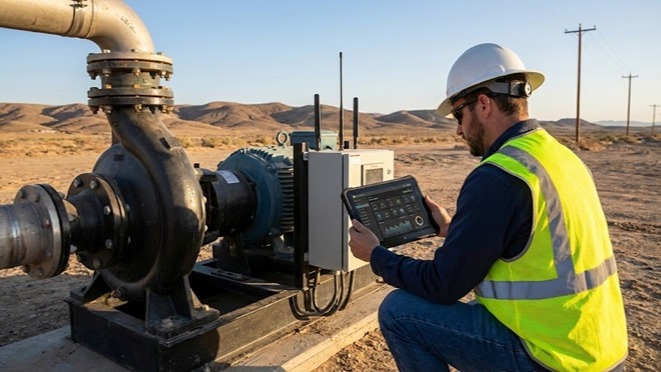
Building management systems have transformed how commercial facilities handle mechanical equipment, yet many operators still rely on reactive maintenance for circulation pumps. When a heating pump fails at 3 am during winter, the cost extends beyond emergency callouts - tenant complaints, system damage, and lost operational time compound the initial problem.
Remote pump monitoring through building management systems addresses this by providing continuous visibility into pump performance, enabling facilities teams to identify issues before they escalate into failures. For commercial buildings, hospitals, universities, and industrial facilities, this capability represents a fundamental shift from reactive to predictive maintenance strategies.
National Pumps and Boilers supplies Grundfos pumps and other major brands with integrated communication protocols designed specifically for BMS integration, making remote pump monitoring accessible for both new installations and retrofit projects.
How Remote Pump Monitoring Works
Remote pump monitoring BMS integration operates through communication protocols that connect circulation pumps directly to building management systems. Modern building automation pumps from manufacturers like Grundfos, Wilo, and Lowara include built-in communication interfaces - typically Modbus RTU, Modbus TCP/IP, BACnet, or proprietary protocols - that transmit operational data to the BMS controller.
Data Transmission and System Architecture
The BMS receives continuous data streams including flow rate, pressure, power consumption, motor temperature, operating hours, and fault codes. This information appears on the BMS interface alongside HVAC, lighting, and other building systems, providing facilities managers with centralised visibility across all mechanical equipment.
The physical connection varies by system architecture. Hardwired installations use RS485 cables running from pump terminals to BMS input modules. Network-based systems connect pumps to the building's IP network via Ethernet, allowing data transmission over existing infrastructure without dedicated cabling.
For buildings with multiple pump stations across different floors or zones, network-based monitoring offers significant advantages. A university campus might have twenty circulation pumps spread across five buildings - all reporting to a single BMS interface that facilities staff access from any networked computer or mobile device.
Key Performance Parameters to Monitor
Effective remote pump monitoring BMS strategies focus on specific parameters that indicate pump health and system performance. Monitoring everything generates noise; monitoring the right metrics enables actionable insights.
Flow Rate Monitoring
Flow rate provides the most direct indicator of pump performance. Declining flow rates often signal impeller wear, blockages, or system issues affecting pump operation. A central heating pump designed to deliver 15 litres per second that drops to 12 l/s indicates developing problems requiring investigation.
Differential Pressure Tracking
Differential pressure across the pump reveals whether the unit maintains design head pressure. Pumps operating outside their design curve - either too high or too low on the performance spectrum - experience accelerated wear and reduced efficiency. BMS trending of pressure data over weeks or months identifies gradual performance degradation that daily checks might miss.
Power Consumption Analysis
Power consumption monitoring detects efficiency losses and mechanical problems. A pump drawing 15% more power than baseline whilst delivering the same flow suggests bearing wear, seal friction, or motor issues. Energy monitoring also quantifies the financial impact of pump inefficiency, supporting maintenance budget justifications.
Temperature and Runtime Monitoring
Motor temperature tracking prevents thermal failures. Pumps operating continuously at elevated temperatures experience shortened bearing life and increased seal failure rates. Temperature alarms configured in the BMS enable intervention before thermal damage occurs.
Operating hours and start counts support predictive maintenance scheduling. Rather than servicing building automation pumps on arbitrary annual intervals, facilities teams can schedule maintenance based on actual runtime - 8,000 operating hours or 500 start cycles, for example.
Vibration Analysis
Vibration monitoring, available on premium pump models with integrated sensors, detects bearing wear, shaft misalignment, and cavitation. Vibration analysis provides early warning of mechanical deterioration, often identifying problems months before they cause operational failures.
Communication Protocols and Integration Options
The effectiveness of remote pump monitoring BMS depends largely on protocol compatibility between pumps and building management systems. Understanding available options helps specify appropriate equipment for new installations and retrofit projects.
Modbus Protocols
Modbus RTU remains the most common protocol for pump integration. This serial communication standard uses RS485 wiring to connect multiple pumps to a single BMS input module. Modbus RTU works reliably over distances up to 1,200 metres, making it suitable for large facilities with distributed pump locations.
Modbus TCP/IP provides the same functionality as Modbus RTU but operates over Ethernet networks rather than dedicated serial cables. For buildings with structured cabling already in place, TCP/IP integration eliminates the need for additional wiring runs. Network-based communication also simplifies adding pumps to existing systems - connecting a new pump requires only an Ethernet drop rather than extending RS485 cables back to the BMS controller.
BACnet and LonWorks Integration
BACnet integration suits facilities standardising on this protocol across all building systems. Wilo pumps and other manufacturers offer BACnet-compatible models that appear as native BACnet devices on the building network, simplifying configuration and reducing integration complexity.
LonWorks appears in older BMS installations, particularly in educational and healthcare facilities. Whilst less common in new projects, LonWorks compatibility remains important for retrofit applications where replacing the entire BMS isn't practical.
Proprietary Protocols and Gateways
Proprietary protocols from pump manufacturers offer enhanced functionality beyond standard Modbus or BACnet capabilities. Grundfos GENIbus and Wilo CAN bus provide access to advanced diagnostics and configuration options not available through generic protocols. However, proprietary systems require manufacturer-specific gateways to interface with building management systems.
Gateway devices bridge protocol incompatibilities when building automation pumps and BMS use different communication standards. A Modbus-to-BACnet gateway, for example, allows Modbus pumps to integrate with a BACnet BMS. Whilst gateways add cost and complexity, they enable integration that wouldn't otherwise be possible.
Benefits for Commercial and Industrial Facilities
Implementing remote pump monitoring BMS delivers measurable operational and financial benefits that typically justify the investment within two to three years.
Maintenance Cost Reduction
Reduced maintenance costs result from transitioning to condition-based rather than time-based servicing. Instead of servicing all pumps annually regardless of actual condition, facilities teams focus resources on equipment showing signs of deterioration. A hospital maintaining forty circulation pumps might reduce annual service visits by 30% whilst actually improving reliability through better-targeted interventions.
Equipment Life Extension
Extended equipment life follows from early problem detection. Bearing wear detected through vibration monitoring allows scheduled replacement before bearing failure damages the pump shaft. Seal leaks identified through performance monitoring enable repair before water ingress corrodes motor windings. These interventions prevent minor issues from escalating into major failures requiring complete pump replacement.
Energy and Operational Savings
Energy savings emerge from identifying pumps operating inefficiently. A pump running continuously at full speed when variable speed control would reduce energy consumption by 40% represents a significant ongoing cost. BMS data revealing this condition enables corrective action - either adjusting controls or replacing the pump with a variable speed model.
Minimised downtime results from predictive maintenance and rapid fault diagnosis. When a pump does fail, BMS fault codes immediately identify the specific problem, allowing technicians to arrive with correct parts and complete repairs in a single visit. For critical applications like hospital heating or data centre cooling, this responsiveness prevents extended outages.
Compliance and Satisfaction
Compliance documentation for Building Regulations Part L and energy performance certificates becomes straightforward when BMS systems log pump energy consumption and operating efficiency. Automated reporting eliminates manual data collection whilst providing auditable records of system performance.
Tenant satisfaction improves when heating and hot water systems operate reliably. Commercial property managers report fewer comfort complaints and maintenance requests from tenants when pump monitoring prevents service disruptions.
Selecting Pumps for BMS Integration
Not all circulation pumps offer equal monitoring capabilities. Specifications for remote pump monitoring BMS projects should address communication features alongside hydraulic performance.
Communication Interface Requirements
Communication interface represents the fundamental requirement. Verify that building automation pumps include the specific protocol required for your BMS - Modbus RTU, Modbus TCP/IP, or BACnet. Some pump models offer communication as standard equipment; others require optional modules specified at time of order.
Sensor Capabilities
Sensor complement determines what parameters the pump can report. Basic models monitor speed, power, and fault status. Premium models add flow measurement, differential pressure sensing, and vibration monitoring. For critical applications, comprehensive sensor packages justify their additional cost through enhanced diagnostic capability.
Control and Diagnostic Features
Control integration extends beyond monitoring to active BMS control of pump operation. Variable speed pumps accepting speed setpoints from the BMS enable advanced control strategies - adjusting pump speed based on system demand, outdoor temperature, or time schedules. This capability transforms the BMS from a monitoring system into an optimisation platform.
Diagnostic features vary significantly across manufacturers and model ranges. Advanced pumps provide detailed fault logging, performance trending, and predictive maintenance alerts. These features enhance the value of BMS integration by surfacing insights that basic monitoring cannot provide.
Retrofit Considerations
Retrofit compatibility matters for existing installations. Some pumps require only firmware updates to enable communication features; others need hardware modules added. For buildings with multiple pumps of the same model, retrofitting communication capability across the entire population may prove more cost-effective than selective replacement.
Grundfos pumps with integrated Grundfos GO communication and Wilo pumps featuring Wilo-Stratos connectivity exemplify modern designs optimised for BMS integration, offering comprehensive monitoring in compact packages suitable for both new construction and retrofit applications.
Installation and Configuration Considerations
Successful remote pump monitoring BMS implementation requires careful attention to installation details and system configuration.
Network Planning and Architecture
Network architecture planning should occur during design phases, not during installation. Determine whether pumps will connect via dedicated RS485 networks or integrate into the building's IP network. For IP-based systems, coordinate with IT staff regarding network segmentation, IP address allocation, and firewall rules. Building management systems and IT networks increasingly converge, requiring collaboration between facilities and IT departments.
Cable and Power Specifications
Cable specifications matter for hardwired installations. RS485 networks require twisted-pair cable with appropriate impedance and shielding characteristics. Using incorrect cable types causes communication errors and intermittent failures that prove difficult to diagnose. Follow manufacturer specifications for cable type, maximum run lengths, and termination requirements.
Power supply quality affects communication reliability. Electrical noise from variable frequency drives, motors, and other equipment can interfere with communication signals. Install communication cables separately from power cables, maintain specified separation distances, and use shielded cable where electrical noise levels are high.
BMS Configuration and Alarm Strategy
BMS configuration involves mapping pump data points to the building management system's database. Each monitored parameter requires configuration - assigning unique identifiers, defining engineering units, setting alarm thresholds, and establishing trending intervals. This configuration work represents significant effort for large installations; allocate appropriate time and resources during commissioning.
Alarm strategy development prevents alert fatigue whilst ensuring critical conditions receive attention. Configure alarms in tiers - critical faults requiring immediate response, warnings indicating developing problems, and informational notices for routine events. A pump running slightly above normal temperature might generate a warning logged for review; the same pump exceeding maximum temperature triggers an immediate critical alarm.
Security Considerations
Access control and security become important when building automation pumps connect to IP networks. Implement appropriate network security measures - VLANs, firewalls, and access controls - to prevent unauthorised access to pump controls. The convergence of building systems and IT networks introduces cybersecurity considerations previously irrelevant to mechanical systems.
Troubleshooting Common Integration Challenges
Even properly specified systems encounter integration challenges during commissioning. Understanding common issues accelerates resolution.
Communication Failures
Communication failures often result from incorrect addressing or termination. Modbus RTU networks require each device to have a unique address and proper termination resistors at network endpoints. Verify addressing schemes match configuration documentation and check termination at both ends of RS485 networks.
Intermittent connectivity suggests electrical noise interference or marginal cable installations. Review cable routing for proximity to electrical noise sources. Check cable quality and verify all connections are secure. For network-based systems, verify network switch configuration and check for IP address conflicts.
Data Quality Issues
Data quality issues where BMS receives communication but values appear incorrect indicate scaling or unit conversion problems. A flow rate displaying as 150 when the actual value is 15.0 l/s suggests a decimal point error in BMS configuration. Review engineering unit settings and scaling factors in both pump and BMS configurations.
Performance and Compatibility Issues
Performance degradation where communication works initially but becomes unreliable over time often traces to loose connections, cable damage, or power supply issues. Inspect terminal connections, check cable routing for potential damage, and verify power supply voltage remains within specifications.
Protocol incompatibilities between pump firmware versions and BMS software sometimes emerge during commissioning. Verify that BMS software supports the specific firmware version installed in pumps. Manufacturers occasionally update communication protocols; ensure compatibility across all system components.
Future Developments in Pump Monitoring
The evolution of remote pump monitoring BMS continues with emerging technologies that extend capabilities beyond current systems.
Cloud Connectivity and Remote Access
Cloud connectivity enables remote access to pump data from anywhere with internet connectivity. Facilities managers review system performance from mobile devices; service contractors access diagnostic data remotely before dispatching technicians. Cloud platforms aggregate data across multiple sites, enabling portfolio-level analysis for organisations managing numerous buildings.
Machine Learning and Predictive Analytics
Machine learning algorithms analyse historical performance data to predict failures before they occur. Rather than simply alerting when parameters exceed thresholds, predictive systems identify subtle patterns indicating developing problems - detecting bearing wear weeks before vibration levels trigger conventional alarms.
Wireless Technology
Wireless communication eliminates cabling requirements for retrofit installations. Battery-powered wireless sensors monitor pumps in locations where running communication cables proves impractical. Whilst wireless systems introduce considerations around battery maintenance and network reliability, they enable monitoring in applications previously considered too difficult or expensive to instrument.
Energy Optimisation Analytics
Energy optimisation through advanced analytics identifies opportunities to reduce pump energy consumption without compromising system performance. Analysis of flow patterns, pressure requirements, and system demand enables recommendations for control strategy modifications, equipment upgrades, or operational changes that reduce energy costs.
Conclusion
Remote pump monitoring through building management systems transforms circulation pump maintenance from reactive response to proactive management. The ability to continuously monitor performance parameters, identify developing problems, and respond before failures occur delivers measurable benefits in reduced maintenance costs, extended equipment life, and improved system reliability.
Successful implementation requires careful attention to communication protocols, sensor capabilities, and system integration. Building automation pumps must include appropriate communication interfaces; BMS systems need proper configuration; and facilities teams require training to interpret monitoring data and respond effectively.
For commercial buildings, hospitals, universities, and industrial facilities, the investment in remote pump monitoring BMS typically justifies itself within two to three years through reduced emergency callouts, lower energy consumption, and extended equipment life. As central heating equipment becomes increasingly sophisticated, integration with building management systems evolves from optional enhancement to standard practice.
National Pumps and Boilers supplies pumps from leading manufacturers with comprehensive communication capabilities suitable for BMS integration. For technical advice on specifying pumps for monitoring applications or assistance with integration projects, contact us for expert guidance tailored to specific facility requirements.