

Replacement Planning for Pumps, Boilers and Critical Components
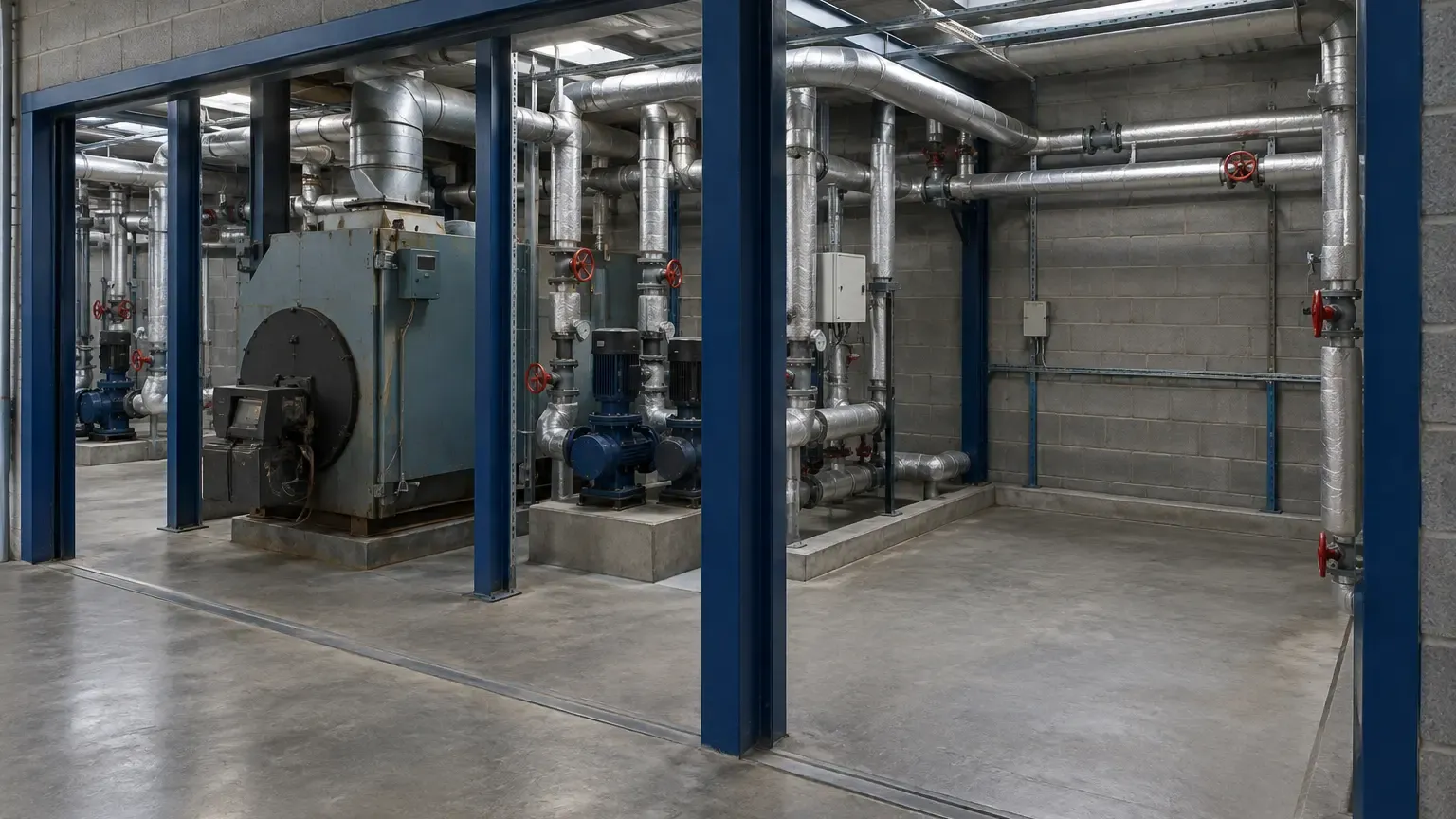
When several buildings need new heating equipment, the oldest boiler should not automatically receive the first funding. A newer pump serving an occupied building without dependable backup may deserve earlier replacement. Asset replacement planning means deciding which equipment to renew first, what preparation needs funding now and when the change can happen without avoidable disruption.
Treat the estate as one connected spending decision rather than a collection of urgent requests. Include pumps, boilers and the smaller components whose loss could stop them working or prevent their replacement. The result should be a phased plan: a practical sequence that protects important services while spreading achievable work across available budgets and shutdown opportunities.
Decide What Critical Means in Your Buildings
Critical equipment is equipment whose loss would have serious consequences in its actual setting. Consider an older heating pump in an unoccupied store, a newer pump supplying a residential wing and a boiler serving an office with another independently usable heat source. If the residential wing has no dependable alternative, its pump may take replacement priority despite being younger. The store pump may remain lower on the funded plan if its condition and support position allow.
The office boiler belongs between those examples only if the alternative can genuinely meet the building's needs. A standby is equipment intended to take over when the usual unit is unavailable; its presence alone does not establish usable backup. Ask the responsible technical person what service the alternative can sustain. A second boiler that cannot cover occupied areas does not remove the consequence of losing the first.
Write the consequence beside each candidate in ordinary language: residents would lose heating, an occupied wing would close, or a store could temporarily operate differently. Then add the condition findings and repair history already available. This separates the importance of the service from the likelihood of equipment trouble. A high-consequence asset deserves preparation even when it has not recently failed; frequent repairs on a less important asset may justify renewal for cost rather than continuity.
Keep Unsafe Equipment Outside the Budget Queue
Replacement priority is not permission to continue using unsafe plant. Equipment known or suspected to be unsafe needs prompt escalation through site safety procedures and competent assessment, not a place on next year's spending list. A suspected gas leak or carbon monoxide alarm requires the site's emergency response. Do not investigate dangerous conditions to improve a replacement record, and do not restart equipment merely because another building ranks higher for funding.
HSE's maintenance guidance requires competent maintenance and plant to be made safe before work starts. Competent means having the skills, knowledge and experience for the particular work. Isolation means securely separating equipment from hazardous energy or supplies; it is not simply turning a control off. Arrange qualified help for gas, electrical and pressure-related work. Your planning role is to secure the assessment, funding and access, not perform those tasks.
Turn Unavailable Spare Parts into a Bounded Decision
Unavailable spare parts can change a working asset's replacement date, but first establish what unavailable means. An item temporarily out of stock differs from a discontinued component with no confirmed replacement route. Keep the exact part reference, the appliance it belongs to and the dated supply response together. That gives the plan a specific reason to change rather than a general warning that the equipment is old.
If the equipment remains serviceable and the responsible technical person considers continued use safe, the bounded decision may be to prepare replacement before the next suitable shutdown. Where a supported repair route exists, compare that repair with renewal. If a required component has failed and no suitable repair is established, plan around the loss of service while competent parties assess the options. Do not assume that a similar-looking part, an improvised modification or a bypass is an acceptable bridge.
A spare held on site can buy useful time only when its identity, suitability and condition are established. It does not make an unsupported asset indefinitely supportable. Before tying up money in scarce stock, consider whether that spending would delay the funded replacement without solving the next likely obstacle. For an asset already approaching renewal, preparing the replacement route may be more useful than accumulating parts that cannot support the planned remaining period.
Let Small Components Change the Larger Plan
A boiler's main body can be serviceable while a necessary control or appliance-specific accessory makes its future uncertain. The whole-asset decision therefore needs more than a judgement about the casing. If a competent assessment finds that an essential component cannot be suitably replaced, renewal of the larger assembly may become the practical option. Conversely, a supported component repair may avoid replacing otherwise serviceable equipment.
Components can also determine the order of work. An isolation valve stops flow to a defined section; if it cannot perform that role, changing a nearby pump may require a wider interruption. The valve may need attention during an earlier shutdown so the later pump replacement can be contained. That is a reason to fund preparatory work first, not a reason to replace every valve around every pump.
Keep these linked jobs together when comparing buildings. Otherwise, an inexpensive enabling component can lose funding to a more visible boiler purchase, leaving the larger project unable to proceed. Record the relationship plainly: valve work enables pump renewal, or a controls decision determines boiler replacement scope. This makes smaller expenditure understandable through the service and future work it unlocks.
Work Backwards from a Usable Replacement Window
A replacement window is an agreed period when the affected service can be interrupted and the necessary work completed. It might coincide with a building closure, reduced occupancy or another planned project. Start with the period the building can genuinely release, then ask the appointed technical parties what must happen beforehand. Include preparation and return-to-service checks, not just removal and fitting.
Boiler renewal may involve the exhaust route, known as the flue, as well as controls, pipework, access and other connected equipment. Pump renewal may depend on nearby valves or on changes to the controls. These dependencies can make an apparently straightforward replacement unsuitable for a short window. Discovering them early allows the estate plan to separate preparatory work from the main change instead of compressing both into an unrealistic booking.
Funding must arrive early enough for the preparation it buys. Work backwards through technical assessment, scope development, quotations, approval, ordering and delivery using actual project information. If the only suitable shutdown comes before the next budget release, seek earlier preparation funding or a different achievable sequence. A nominal replacement year is not useful when its funding date makes the available window impossible to use.
Fund the Next Useful Stage, Not Just the Main Unit
Separate money needed to understand a project from money needed to deliver it. A high-consequence boiler with uncertain replacement scope may need a funded assessment now and a provisional allowance for later renewal. A clearly defined pump change may be ready for a firmer project budget. Giving both the same apparent certainty hides the work still needed and makes estate totals misleading.
Build the project allowance around the whole change. Equipment supply is only one element alongside competent installation, connected alterations, access arrangements, making disturbed finishes good and final operational checks. Ask the relevant parties to price their portions rather than applying an invented percentage. Keep uncertain allowances distinguishable from quotations so that a preliminary figure does not become an assumed fixed price.
Across the estate, fund the next stage that removes the most consequential obstacle. That might be assessing the residential wing's unsupported pump, completing valve work ahead of a shutdown, or developing the office boiler scheme before its funding deadline. Lower-priority, serviceable equipment can remain in a later phase with a stated reason. Deferral should preserve an achievable route forward, not simply move an unexplained figure into another financial year.
Keep Each Phase Achievable and Connected
Describe each phase by the service it protects, the equipment included and what it leaves for later. For example, an early phase could resolve the component and access constraints around an occupied wing, followed by pump replacement in its agreed closure. A later boiler project can then use a separate window without competing for the same interruption. Phasing should follow dependencies, not divide a connected job arbitrarily to fit annual spending limits.
Have the appointed technical team consider how early work affects later phases. A component bought solely for an appliance scheduled for removal may have little lasting value, although a necessary safe repair cannot be omitted for that reason. Revisit the sequence when parts support changes, a condition assessment changes the outlook or a building's use changes. Those events can alter priorities more meaningfully than another birthday for the equipment.
Use Supply Enquiries to Test the Funded Timing
Once a phase has a defined equipment requirement, supply enquiries can test its purchasing allowance and delivery assumptions. For commercial circulators, provide the technical team's requirement and existing equipment reference rather than asking for a match by appearance. Ask about current product information, price and availability against the intended window. An early budget enquiry should say when the equipment would be needed, not imply an immediate order.
For commercial boilers, keep the supply enquiry tied to the appliance requirement established for that phase, including separately required accessories. We supply equipment; diagnosis, system design, installation and inspection remain with the site's appointed competent parties. Availability information helps schedule procurement, but it cannot establish that an existing boiler is safe to retain or that a proposed replacement suits the building.
Conclusion
Fund first the work that protects the most consequential service and makes its replacement achievable: sometimes the main asset, sometimes an essential component, sometimes the assessment or preparatory work needed before either can proceed. Keep unsafe equipment outside that ranking and within the site's safety response. For the first defined phase, bring us the confirmed equipment requirement and required delivery period so a supply enquiry can support the timing rather than dictate the plan.