

Replacement Planning Questions Before You Commit to New Equipment
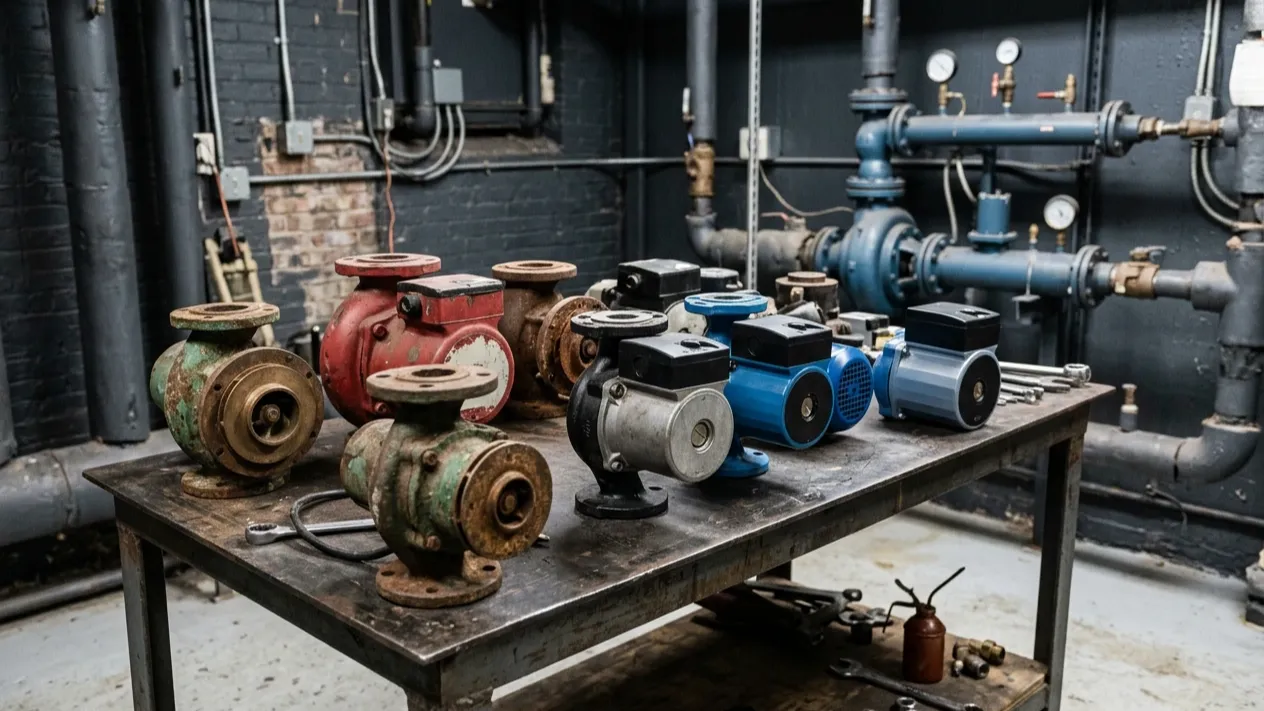
The last useful challenge to a replacement purchase should happen before the order is signed. By that stage the site is no longer ranking a whole estate, and it is not running a detailed compatibility assessment for one pump. It is holding a purchase approval meeting with one purpose: decide whether the buying pack is strong enough to commit money, lead time and operational disruption.
An equipment replacement checklist can support that meeting, but it should not become another form that simply asks whether records exist. The approval group should red-team the purchase. If the reason for buying is weak, the old duty has been copied forward, a connection is assumed, an accessory is missing or nobody can say what acceptance will look like, the answer is defer. A replacement equipment specification is only ready when it can survive those objections without relying on memory or pressure.
Open The Meeting With The Refusal Test
Start by asking what would make the site refuse the order today. That question changes the tone. Instead of moving politely through headings, the buyer, facilities lead, maintainer or project owner has to name the gap that would make the purchase unsafe, wasteful or likely to stall.
An equipment replacement checklist should stop the order if these extractable points fail:
- the asset is described only as old, unreliable or failing;
- the duty is copied from a previous model without current service evidence;
- the connection, pressure rating, flue, control or electrical detail is assumed;
- ancillary items are not included in the buying question;
- delivery and access have not been tested against the plant room;
acceptance evidence has no owner.
HSE maintenance guidance matters at this point because work equipment should be maintained in an efficient state and maintenance work needs safe planning, competent people and suitable records where they exist. In a purchase approval meeting, that does not turn procurement into a maintenance authority. It does mean the order should not be approved on a loose phrase if better evidence is available.
Challenge Why The Purchase Is Happening Now
The meeting should hear the reason for replacement as a short statement, not a story. A failed component, obsolete parts, repeated faults, water quality damage, poor access, unreliable controls, high energy use, insurance pressure and a planned capital window are different reasons. They may all lead to buying equipment, but they do not all justify the same urgency or the same scope.
Ask for the evidence behind the statement. Service records, photographs, alarm history, repair invoices, water treatment notes, run hours, model numbers and previous replacement enquiries all help separate a confirmed need from a suspected one. If a competent person has confirmed a failed component, record who confirmed it. If the driver is obsolescence, record which item or support route has changed. If the driver is still only a symptom, do not let the approval note turn it into a conclusion.
That is the first red-team moment. The question is not whether replacement might eventually be sensible. It is whether the purchase being approved today has a known reason that belongs in the specification.
Make The Old Asset Defend Its Relevance
A direct replacement can feel safe because the old asset is visible, familiar and already connected. That is exactly why the old asset should be challenged. Buildings change. Zones are altered, occupancy shifts, hot water demand moves, operating hours extend, controls are upgraded and settings are adjusted after complaints. The old model may describe the past better than the current requirement.
For pumps, DAB selection guidance highlights application, flow, head, liquid and operating conditions as core selection inputs. For boilers, the buying pack needs confirmed output, fuel, hot water demand, flue and controls information from responsible project parties. The old nameplate, previous invoice or online equivalent can support the discussion, but it should not be treated as the duty statement by itself.
Where circulation equipment is under review, commercial circulators can help the buying team see current product routes after the required duty is known. The approval pack should still state the served circuit, duty values, liquid, temperature, connection, pressure rating, electrical supply and control method, or state clearly which of those fields remains open.
Put The Blockers On The Table Before Price
The approval meeting should then ask what could stop a good product from working as an order. This is not a full installation method. It is a blocker review before commitment. Plant interface checks cover pipe connections, port-to-port length, flange rating, pressure rating, electrical supply, local isolation, BMS wiring, alarm contacts, control modes, flue accessories, condensate route, lifting access and future maintenance access can all turn a correct-looking product into a delayed purchase.
The blocker discussion should be concrete. If a circulator is being considered, ask whether the port-to-port length and connection are fixed by the existing pipework. If a boiler is being considered, ask whether flue and condensate routes are part of the purchase scope. If valves or isolation are poor, ask whether the order needs extra parts, extra time or a separate competent decision before the main asset is bought.
The Grundfos MAGNA1 25-60 listing shows why this detail matters. Published fields include product number, connection, pressure rating, port-to-port length, voltage, current and control-related features. Those are comparison points only when the project requirement has already been defined. They do not approve the site boundary or make an assumed interface safe.
Check The Hidden Shopping List
Many replacement decisions fail after approval because the meeting approves the main asset and leaves the smaller items to be discovered later. A pump may need unions, flanges, gaskets, isolation valves, non-return valves, insulation allowance or control accessories. A boiler may need flue parts, shunt pump kits, headers, controls, mounting items, condensate parts or compatible accessories. The missing item is often not expensive compared with the asset, but it can still stop the change.
The purchase record should therefore name what is included, what is excluded and what is still under review. It may be acceptable to approve a main-product enquiry only, provided the record says that accessories are not yet confirmed. What causes trouble is an approval note that sounds complete when secondary items are still unresolved.
Where isolation or connection parts are part of the decision, pump valves provide a product category for comparison. The need for a valve, the type selected and the effect on the work remain site decisions for competent parties.
Test Lead Time Against Failure Risk
Lead time should be discussed as a business risk, not a delivery footnote. If the equipment is critical and has no standby, waiting for final failure can force a rushed equivalent, temporary compromise or extended outage. If the asset has redundancy and a known replacement route, the business may choose a planned ordering window and accept a longer lead time.
The red-team question is simple: what happens if the old asset fails before the approved item arrives and can be moved into position? The answer should cover spending authority, delivery route, lifting needs, access, permits, out-of-hours entry and any surrounding equipment that must be removed before the old asset can be taken out. A product delivered to the building has not solved the problem if it cannot reach the plant room or cannot be used within the planned window.
For boiler replacement or heating plant renewal, commercial boilers can be reviewed for current listed products once output, configuration, flue and controls context is known. That review belongs after the lead-time and operational-risk questions, because stock visibility does not remove site approval or access risk.
Decide What Acceptance Will Look Like
No purchase should leave the meeting without a plain acceptance note. This does not mean the supplier commissions or verifies the system. It means the buying record states what evidence the competent installer, maintainer or project team will use to decide whether the replacement has met the requirement.
Acceptance evidence may include installed model and serial record, commissioning sheet, control settings, run signal and alarm confirmation, flow and return readings, pressure readings, photographs, updated asset register and any certificates required by the site. For gas boilers, competent Gas Safe work and manufacturer instructions sit outside the product supply enquiry and must be handled by the appropriate parties.
This protects future maintenance as much as the current purchase. If nobody records the plant interface checks, the next fault investigation starts from memory. A clear acceptance note says which need the replacement answered, which accessories were accounted for and which issues remained outside the product change.
Approve, Defer Or Refuse The Purchase
The meeting should finish with one of three decisions. Approve when the reason is confirmed, the duty has been checked, blockers are recorded, secondary items are understood, lead-time risk is acceptable and acceptance evidence has an owner. Defer when one field is missing but can be closed without changing the whole requirement. Refuse the purchase when the decision still depends on an unverified symptom, an old model number, an unknown control interface, missing flue confirmation or absent site approval.
For bounded product enquiries, contact us about current product facts, prices, availability, ordering, delivery and replacement-product questions once the approval pack has produced a clear requirement. The supplier enquiry should not ask for diagnosis, design, installation, commissioning, repair, maintenance or site suitability judgement.
A good final note is short enough to read aloud: approved because the need, duty, blockers, accessories, lead time and acceptance evidence are clear. If that sentence cannot be written without excuses, the purchase has not earned commitment yet.