

Retrofit Solutions for Non-Compliant Fixed-Speed Pumps (ErP Transition)
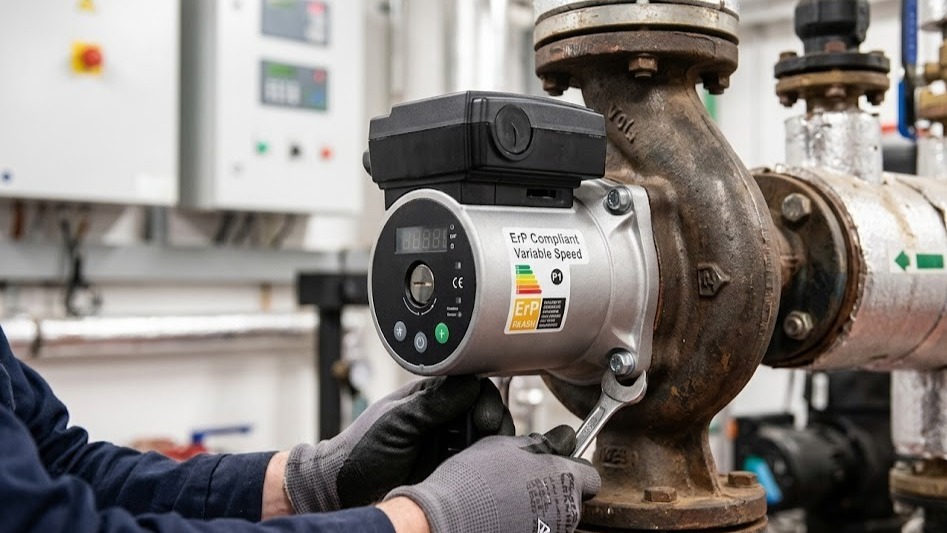
Fixed-speed circulators installed before 2013 consume 30-40% more energy than their modern variable-speed equivalents. With ErP (Energy-related Products) regulations now mandating minimum efficiency standards across commercial and domestic heating systems, building managers face a critical decision: replace entire pump assemblies or retrofit fixed-speed pumps with compliant technology.
The 2013 ErP Directive (2009/125/EC) established Energy Efficiency Index (EEI) thresholds that render most fixed-speed pumps non-compliant. Systems operating these older units now face regulatory scrutiny during building assessments, energy audits, and compliance inspections. Yet full pump replacement often proves unnecessarily disruptive and expensive when retrofit fixed speed pumps solutions can achieve identical compliance outcomes at 40-60% lower cost.
National Pumps and Boilers specialises in ErP-compliant retrofit solutions that preserve existing pipework, electrical infrastructure, and mounting configurations whilst delivering the efficiency gains regulators demand. This approach addresses the technical and financial barriers that prevent many facilities from upgrading legacy heating systems.
Understanding ErP Requirements for Circulator Pumps
The ErP Directive classifies circulators into three categories based on application: heating systems, DHW circulation, and standalone pumps. Each category faces specific EEI limits that determine compliance status.
Heating System Circulators (the most common commercial application) must achieve EEI ≤ 0.23 as of August 2015. This threshold effectively eliminates unregulated fixed-speed pumps from new installations and triggers replacement requirements during major system refurbishments. The calculation considers pump hydraulic performance against electrical input across the full operating curve, not just a single duty point.
DHW Circulators serving domestic hot water systems face identical EEI ≤ 0.23 requirements. These pumps typically operate at lower flow rates than heating circulators but run continuously or on frequent cycles, making efficiency gains particularly valuable in annual energy consumption terms.
Standalone Pumps (including booster sets and pressure maintenance systems) must meet EEI ≤ 0.27 for glandless designs. These units often serve multiple functions within building services, complicating retrofit decisions when only heating-related elements require compliance.
Building Regulations Part L (Conservation of Fuel and Power) references ErP standards as the minimum acceptable efficiency for replacement circulators in England and Wales. Scottish Building Standards Section 6 and Northern Ireland Technical Booklet F adopt equivalent requirements. Non-compliance during refurbishment triggers enforcement notices that mandate immediate remediation.
Why Fixed-Speed Pumps Fail ErP Standards
Traditional fixed-speed circulators operate at constant RPM regardless of system demand. This design principle, standard in pre-2010 installations, creates three fundamental efficiency problems that ErP regulations specifically target.
Constant Power Consumption: A fixed-speed pump draws identical electrical power whether the heating system demands full flow (cold winter morning) or minimal circulation (mild autumn afternoon). In typical UK commercial buildings, heating systems operate at less than 50% design load for 70-80% of the heating season. Fixed-speed pumps waste energy during these extended partial-load periods by maintaining unnecessary flow rates and pressure differentials.
Oversizing Practices: Installation standards from the 1990s and 2000s encouraged significant safety margins in pump selection. Engineers routinely specified pumps 20-30% larger than calculated system requirements to account for uncertainties in heat load calculations and potential future expansions. These oversized fixed-speed units consume excessive power even when systems operate at design conditions.
No Modulation Capability: Fixed-speed designs cannot adjust output to match variable system demands. When thermostatic radiator valves (TRVs) close or zone valves isolate sections of the system, flow resistance increases dramatically. Fixed-speed pumps respond by pushing against closed valves, generating noise, wasting energy, and accelerating component wear. The pump continues drawing full power whilst delivering no useful heating.
Typical fixed-speed circulators from 2005-2012 installations achieve EEI values between 0.35 and 0.50 - substantially above the 0.23 threshold. A Grundfos UPS 25-60 fixed-speed pump, common in small commercial systems, draws 85W continuously. An equivalent ALPHA2 25-60 variable-speed replacement consumes 7- 30W, depending on demand - a 65-90% reduction in electrical consumption.
Retrofit Options: Comparing Technical Approaches
Building managers evaluating ErP pump upgrade options have four distinct technical pathways, each with specific cost, disruption, and performance implications.
Direct Variable-Speed Replacement
This approach substitutes the existing fixed-speed pump with a modern ErP-compliant variable-speed equivalent that matches the original mounting footprint and connection dimensions. Wilo Stratos and Grundfos ALPHA series pumps offer direct-fit replacements for most legacy installations, maintaining identical pipe centres and electrical connection points.
Installation Requirements: Drain system, disconnect electrical supply, unbolt existing pump, install replacement, reconnect services, refill and vent system. Total downtime is typically 2-4 hours for straightforward installations.
Cost Range: £300-£800 per pump, including materials and labour (small commercial circulators). Larger commercial units (50-100mm connections) range from £1,200 to £3,50,0, depending on duty requirements.
Efficiency Gains: Variable-speed pumps automatically adjust motor speed to maintain target differential pressure or flow rate. This modulation reduces annual energy consumption by 60-80% compared to fixed-speed predecessors. A 100W fixed-speed pump operating 6,000 hours annually (typical UK heating season) consumes 600 kWh. A variable-speed replacement averages 25W for 150 kWh annual consumption - saving 450 kWh worth approximately £135 at current commercial electricity rates.
ECM Motor Retrofits
Electronic Commutated Motor (ECM) technology replaces the pump's motor and control electronics whilst retaining the existing hydraulic assembly (impeller, volute, shaft). This approach suits situations where the hydraulic design remains appropriate but the motor technology causes non-compliance.
Technical Suitability: ECM retrofits work best for pumps where hydraulic sizing proves correct but fixed-speed operation wastes energy. The existing impeller and volute must be in good condition with minimal wear. This option rarely suits pumps older than 15 years due to cumulative wear on bearings and seals.
Installation Complexity: Higher than direct replacement. Requires disassembly of pump housing, removal of original motor assembly, installation of ECM motor kit, reassembly, and commissioning. Specialist knowledge of pump mechanics is necessary. Downtime 4-8 hours, depending on pump size and access.
Cost Considerations: ECM retrofit kits cost £200-£600, depending on pump size. Labour costs typically match or exceed the kit price due to complexity. Total retrofit cost approaches full replacement cost for smaller pumps, making this approach economical primarily for larger commercial circulators (80mm+ connections) where new pumps cost £2,000+.
Inverter Drive Integration
Variable Frequency Drives (VFDs) or inverters control motor speed by varying the electrical supply frequency. This approach converts existing fixed-speed pumps into variable-speed operation without modifying the pump itself, representing another viable ErP pump upgrade options pathway.
System Architecture: The inverter is installed between the electrical supply and the pump motor, typically in a separate enclosure mounted near the pump or in a plant room control panel. The drive receives demand signals from system sensors (differential pressure transmitters, temperature sensors, or building management systems) and adjusts motor speed accordingly.
Application Scenarios: Most effective for larger commercial pumps (5.5kW+) where the cost of inverter technology (£800-£2,500) represents a smaller proportion of total replacement cost. Also valuable when multiple pumps require coordination - a single control system can manage several pumps through individual inverters.
Efficiency Performance: Inverter-controlled fixed-speed pumps achieve 50-70% energy savings compared to uncontrolled operation - less than purpose-designed variable-speed pumps but sufficient for ErP compliance in many cases. The fixed-speed motor design limits efficiency at very low speeds, preventing the 80-90% savings that integrated variable-speed pumps achieve.
Installation Requirements: Electrical work dominates. Requires isolating the supply, installing the inverter enclosure, wiring the motor through the inverter, installing the control sensors, programming drive parameters, and commissioning. Electrical contractor involvement is essential. Downtime 6-12 hours for single-pump installations.
Hydraulic Balancing and Controls Optimisation
Some fixed-speed installations approach ErP compliance through improved system design rather than pump technology changes. This approach suits systems where pumps run continuously due to poor controls rather than inherent inefficiency.
Technical Approach: Install automatic bypass valves, upgrade differential pressure controls, implement weather compensation, and add zone controls that shut pumps down during no-demand periods. These measures reduce pump operating hours and improve system efficiency without changing pump technology.
Compliance Limitations: This approach rarely achieves full ErP compliance for the pump itself, but can reduce system-level energy consumption by 30-50%. Useful as an interim measure when budget constraints prevent immediate pump replacement or when the existing pump has substantial remaining service life.
Cost Profile: £500-£2,000 per system, depending on control complexity. Provides broader system benefits beyond pump efficiency, including improved comfort control and reduced boiler cycling.
Selecting the Right Retrofit Approach
The optimal retrofit fixed speed pumps strategy depends on six critical factors that building managers must evaluate before committing to a specific technical pathway.
Pump Age and Condition: Units older than 12-15 years typically warrant full replacement regardless of compliance status. Bearings, seals, and impellers accumulate wear that reduces hydraulic efficiency and increases failure risk. Retrofitting an ECM motor to a pump with worn bearings wastes money - the hydraulic losses negate electronic efficiency gains. Pumps under 8 years old with good maintenance records make better retrofit candidates.
System Operating Profile: Buildings with highly variable heating demands (offices, schools, retail) benefit most from variable-speed technology. The pump spends most operating hours at partial load, where variable-speed efficiency advantages are greatest. Buildings with relatively constant heating demands (hospitals, care homes, some industrial processes) see smaller savings from variable-speed operation, potentially justifying simpler retrofit approaches.
Existing Pump Sizing: Correctly sized pumps justify investment in sophisticated retrofit solutions. Significantly oversized pumps (30%+ beyond system requirements) should be replaced with appropriately sized variable-speed units rather than retrofitted. The combination of better hydraulic sizing and variable-speed control delivers maximum efficiency gains.
Electrical Infrastructure: Inverter-based solutions require adequate electrical panel space, appropriate cable sizing, and sometimes upgraded motor protection devices. Buildings with limited panel space or ageing electrical distribution may find direct pump replacement more practical than inverter installation. Modern integrated variable-speed pumps require only standard electrical connections.
Budget and Payback Requirements: Direct variable-speed replacement typically pays back in 3-5 years through energy savings alone. ECM retrofits and inverter solutions extend payback to 5-8 years due to higher installation complexity. Organisations with capital budget constraints but available maintenance budgets might phase replacements over multiple years, prioritising the least efficient or most critical pumps first.
Regulatory Timeline: Buildings facing imminent compliance deadlines (enforcement notices, scheduled building assessments, or lease requirements) need rapid solutions. Direct pump replacement offers the fastest path to documented compliance. Inverter installations and ECM retrofits require longer commissioning periods and more complex compliance documentation.
Installation Best Practices for Retrofit Projects
Successful retrofit fixed speed pumps projects follow structured approaches that minimise system downtime whilst ensuring reliable long-term operation.
Pre-Installation Assessment: Document existing pump specifications, including flow rate, head pressure, pipe sizes, electrical supply, and mounting configuration. Photograph the installation from multiple angles, noting valve positions, isolation points, and electrical connections. Measure available space for replacement pumps - some modern variable-speed units have larger motors that may not fit original mounting locations.
System Preparation: Isolate and drain the affected circuit 24-48 hours before planned pump replacement. This advanced drainage reveals any isolation valve problems whilst allowing time to source replacement valves if needed. Verify electrical isolation using proper test equipment - never rely on switch positions alone. Prepare temporary heating arrangements if the affected pump serves critical areas.
Commissioning Requirements: Variable-speed pumps require proper commissioning to deliver promised efficiency gains. Set differential pressure targets based on actual system requirements, not maximum pump capability. Most installations benefit from differential pressure settings 20-30% lower than original fixed-speed pump delivery. Configure control modes appropriately - proportional pressure control for systems with TRVs, constant pressure for systems with control valves, and constant curve for specific applications.
Performance Verification: Measure and record actual pump power consumption before and after retrofit. Simple plug-in power meters cost £30-£80 and provide definitive evidence of energy savings. Monitor system performance during the first heating season, adjusting control parameters if comfort complaints arise. Document all settings and adjustments for future reference.
Compliance Documentation: Retain all product documentation showing ErP compliance markings and EEI ratings. Photograph pump nameplates showing model numbers and efficiency data. File commissioning records and performance measurements. This documentation proves compliance during building assessments and provides valuable information for future maintenance.
Cost-Benefit Analysis: Retrofit vs Replacement
A typical small commercial building with four heating zones illustrates the financial case for ErP pump upgrade options projects.
Baseline System: Four fixed-speed circulators (Grundfos UPS 25-60 equivalent), each drawing 85W continuously during the heating season. Annual operating hours: 6,000. Total annual consumption: 2,040 kWh. Annual electricity cost at £0.30/kWh: £612.
Direct Replacement Option: Four variable-speed pumps at £380 each plus £150 installation per pump. Total project cost: £2,120. Post-retrofit consumption: 400 kWh annually (80% reduction). Annual electricity cost: £120. Annual saving: £492. Simple payback: 4.3 years.
Inverter Retrofit Option: Four inverters at £450 each plus £250 installation per pump. Total project cost: £2,800. Post-retrofit consumption: 650 kWh annually (68% reduction). Annual electricity cost: £195. Annual saving: £417. Simple payback: 6.7 years.
Lifecycle Considerations: Variable-speed pumps typically provide 12-15 years of service life with minimal maintenance. Inverter-controlled fixed-speed pumps require replacement of both the inverter (8-12 year life) and eventually the pump itself, creating a two-stage replacement cycle. The direct replacement option delivers better long-term value despite similar initial costs.
Additional Benefits: Energy savings represent only the direct financial return. ErP-compliant systems also provide improved comfort control (fewer temperature fluctuations), reduced noise (no flow noise from pumps fighting closed valves), and decreased maintenance requirements (less wear on valves and heat exchangers). These secondary benefits rarely appear in formal cost-benefit calculations but significantly impact occupant satisfaction and facility management workload.
Navigating Compliance Requirements and Documentation
ErP compliance involves more than installing efficient equipment - proper documentation proves regulatory conformance during building assessments and energy audits.
Product Compliance Markings: All ErP-compliant pumps carry specific labelling showing the Energy Efficiency Index and product compliance details. Verify these markings are present and legible before accepting the equipment. Photograph labels during installation for permanent records. Suppliers must provide Declaration of Conformity documents that formally state ErP compliance - file these with building compliance records.
Building Regulations Compliance: Replacement circulators installed as part of building work (extensions, material alterations, or controlled service/fitting replacement) require Building Control notification in England and Wales. The work must comply with Part L requirements, which reference ErP standards. Submit product documentation showing ErP compliance as part of the Building Control submission. Similar requirements apply under Scottish and Northern Irish building regulations.
Energy Performance Certificates: ErP-compliant pumps contribute to improved EPC ratings through the "Low energy fixed lighting" and "Heating controls" assessment categories. Assessors require evidence of installed equipment specifications - provide pump model numbers, EEI ratings, and installation dates. Retrofit projects completed before EPC renewal can improve rating outcomes, potentially affecting property value and letting prospects.
Maintenance Records: Document all retrofit work in building maintenance logs. Record original equipment specifications, replacement pump details, commissioning settings, and performance measurements. This information proves invaluable during future troubleshooting, supports warranty claims, and demonstrates ongoing compliance during regulatory inspections.
Conclusion
The transition from fixed-speed to ErP-compliant pumping systems represents a regulatory requirement that delivers genuine operational benefits. Building managers who approach ErP pump upgrade options strategically - evaluating system-specific factors rather than applying generic solutions - achieve compliance whilst maximising energy savings and minimising disruption.
Direct replacement with modern variable-speed circulators offers the most reliable path to compliance for most commercial installations. The technology has matured to the point where performance, reliability, and cost-effectiveness all favour integrated variable-speed designs over retrofit approaches. Payback periods of 3-5 years make these investments financially attractive even without regulatory pressure.
Larger commercial systems with substantial existing pump infrastructure may justify inverter-based solutions that preserve hydraulic assemblies whilst adding variable-speed control. The higher complexity and longer payback periods suit organisations with in-house technical capabilities and longer investment horizons.
The 2015 ErP deadline has passed, but enforcement continues to intensify as building regulations evolve and energy audits become more rigorous. Facilities operating non-compliant fixed-speed pumps face increasing regulatory risk alongside unnecessary energy costs. The technical solutions exist, the financial case is compelling, and the regulatory framework is clear.
For detailed technical guidance on ErP-compliant central heating pump selection and retrofit planning, contact us for specialist support tailored to specific system requirements.