

Retrofitting Thermal Storage Systems into Existing Heating Infrastructure
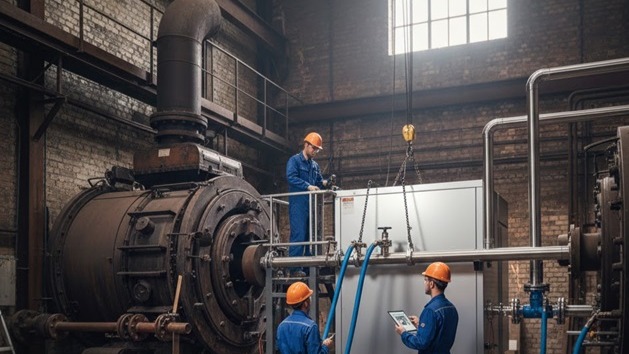
Commercial buildings across the UK face mounting pressure to reduce energy costs whilst meeting increasingly stringent sustainability targets. Rather than undertaking costly complete system replacements, thermal energy storage retrofitting offers a practical solution that enhances efficiency and reduces operational expenses. This comprehensive guide explores how property managers and facilities teams can successfully integrate thermal storage technology into existing heating infrastructure.
Understanding Thermal Energy Storage Retrofitting
Thermal energy storage retrofitting transforms conventional heating systems into intelligent, efficient operations without requiring a complete infrastructure overhaul. The process involves integrating storage tanks and associated controls into existing boiler systems, enabling buildings to store thermal energy during off-peak periods and release it when demand peaks.
What Makes Thermal Storage Retrofitting Viable
The beauty of thermal energy storage retrofitting lies in its compatibility with most existing heating configurations. Modern storage solutions work seamlessly with conventional boilers, heat pumps, and renewable heating sources. Unlike full system replacements that can cost hundreds of thousands of pounds and require extended building closures, retrofitting typically involves minimal disruption to daily operations.
Most commercial buildings already possess the essential components - functional boilers, distribution networks, and control systems. Upgrading heating systems with TES builds upon these foundations rather than replacing them. The strategic addition of insulated storage tanks creates a buffer that decouples heat generation from heat demand, fundamentally improving system efficiency.
Space requirements often concern building managers, yet thermal storage tanks come in various configurations suited to different environments. Vertical tanks maximise floor space efficiency, whilst horizontal designs fit beneath raised floors or in plant rooms with height restrictions. National Pumps and Boilers specialists can assess your facility and recommend appropriately sized storage solutions.
Key Benefits of Upgrading Heating Systems with TES
Upgrading heating systems with TES delivers immediate and long-term advantages. Energy cost reduction represents the most compelling benefit - buildings can charge thermal storage tanks during overnight economy tariff periods when electricity costs 60-70% less than peak rates. This load-shifting capability translates to annual savings of £15,000-£50,000 for medium-sized commercial properties.
Enhanced system efficiency extends boiler lifespan by reducing cycling frequency. Boilers operate most efficiently during sustained runs rather than constant start-stop cycles responding to fluctuating demand. Storage tanks enable boilers to run at optimal capacity during charging periods, then remain off whilst stored thermal energy meets building loads.
Carbon footprint reduction has become essential for meeting corporate sustainability commitments and regulatory requirements. Upgrading heating systems with TES supports renewable energy integration, stores excess heat from solar thermal systems, and enables strategic use of grid electricity when renewable generation peaks. Many organisations achieve 20-30% carbon emissions reductions through properly designed thermal storage retrofits.
Assessing Your Current Heating Infrastructure
Pre-Retrofit System Evaluation
Successful thermal energy storage retrofitting begins with a comprehensive assessment of existing infrastructure. Professional evaluation identifies compatibility factors, potential obstacles, and optimisation opportunities that influence retrofit design.
Boiler capacity assessment examines whether current equipment can efficiently charge storage tanks. Oversized boilers work well for retrofit applications, as excess capacity can charge storage rapidly during off-peak periods. Systems with multiple boilers benefit from staging strategies where individual units charge storage whilst others remain on standby.
Distribution system evaluation determines whether existing pipework, pumps, and radiators can accommodate thermal storage integration. Most central heating pumps and distribution networks require minimal modification, though some older systems may benefit from pump upgrades to maintain adequate flow rates when storage discharges.
Space availability influences storage tank selection and positioning. Thermal storage tanks typically require 2-8 cubic metres, depending on building size and heating loads. Plant rooms, basements, external enclosures, and even rooftops can accommodate storage vessels when properly specified.
Identifying Retrofit Opportunities
Peak demand analysis reveals the greatest opportunities for thermal energy storage retrofitting benefits. Buildings with predictable usage patterns - such as offices occupied9 amm-6 pm weekdays - achieve excellent results by pre-charging storage overnight and discharging during occupied hours.
Energy tariff structures dramatically affect retrofit viability. Economy 7 tariffs with distinct off-peak periods deliver immediate savings, whilst time-of-use commercial tariffs offer multiple optimisation windows throughout each day. Some buildings achieve payback periods under three years purely through energy cost arbitrage.
Building usage profilesinformsm storage sizing and control strategies. Schools and universities with extended holiday closures benefit from smaller storage volumes optimised for occupied periods. Hotels and healthcare facilities requiring 24-hour heating need larger storage capacities with sophisticated charge-discharge scheduling.
Technical Considerations for Thermal Storage Integration
Storage Tank Selection and Sizing
Proper storage tank sizing balances capital investment against operational savings. Undersized tanks fail to capture full load-shifting potential, whilst oversized vessels increase costs without proportional benefits. Professional thermal modelling calculates optimal capacity based on building heat loads, boiler output, and tariff structures.
Stratified storage tanks maintain temperature layers through careful inlet-outlet positioning and internal design features. Hot water naturally rises whilst cooler water settles, creating distinct temperature zones. Well-designed stratified tanks can maintain temperature differentials of 20-30°C between top and bottom layers, maximising usable thermal capacity.
Mixed storage tanks employ internal baffles or diffusers to reduce temperature stratification. Whilst simpler and often less expensive, mixed tanks typically deliver 15-20% less effective capacity compared to stratified designs. Selection depends on application requirements, space constraints, and budget considerations.
Insulation standards directly impact storage efficiency and heat loss rates. Premium polyurethane foam insulation with 100-150mm thickness maintains heat loss below 1°C per day, ensuring stored thermal energy remains available when needed. Poor insulation wastes energy and compromises system economics.
Hydraulic Integration Methods
Buffer tank configurations represent the simplest thermal storage retrofit approach. Expansion vessels and buffer tanks connect in parallel with existing heating circuits, absorbing excess heat production and releasing stored energy during demand periods. This arrangement requires minimal pipework modifications and often installs within single-day shutdowns.
Primary-secondary loop systems provide enhanced control and efficiency for complex applications. The primary loop circulates between boilers and storage tanks at consistent flow rates, whilst secondary loops serve individual building zones with variable flow based on demand. This hydraulic separation optimises both heat generation and distribution efficiency.
Control valve placement determines system responsiveness and performance. Motorised three-way or four-way mixing valves enable precise temperature control during storage, charging, and discharging cycles. Strategic valve positioning prevents thermal short-circuiting whilst maintaining stable supply temperatures to building zones.
Control System Upgrades
Smart controllers orchestrate charge-discharge cycles to maximise efficiency and cost savings. Advanced controls monitor energy tariffs, weather forecasts, building occupancy schedules, and thermal storage temperatures. Many systems integrate with building management platforms, enabling centralised monitoring and optimisation across multiple buildings.
Temperature monitoring requirements extend beyond simple storage tank thermostats. Multi-point temperature sensors throughout storage vessels provide detailed stratification data that informs control decisions. Flow and return temperature monitoring on charging and discharging circuits ensures the system operates within design parameters.
Integration with existing building management systems (BMS) allows comprehensive facility oversight. Modern thermal storage controllers communicate via standard protocols including BACnet, Modbus, and LonWorks. This connectivity enables facility managers to monitor performance, adjust settings, and receive maintenance alerts through familiar interfaces.
Installation and Implementation Process
Planning and Design Phase
Professional site surveys measure available space, assess structural loading, evaluate access routes for equipment delivery, and identify connection points to existing systems. Detailed measurements inform storage tank sizing, positioning, and installation methodologies that minimise building disruption.
System schematic development translates survey findings into detailed engineering drawings. Hydraulic schematics show pipework routing, valve positions, pump locations, and control sensor placement. Electrical schematics detail control wiring, power supplies, and BMS integration points. These documents guide installation teams and provide valuable as-built records for future maintenance.
Regulatory compliance checks ensure thermal energy storage retrofitting meets Building Regulations Part L requirements, pressure system regulations, and relevant British Standards. Grundfos pumps and other equipment must carry appropriate certifications. Professional installation teams handle compliance documentation, including G3 certification for unvented hot water systems where applicable.
Installation Best Practices
Minimising downtime strategies protect building operations during installation periods. Phased approaches allow partial system operation whilst retrofit work progresses. Pre-fabrication of pipework assemblies reduces on-site installation time, enabling many retrofits to be completed within planned maintenance shutdowns.
Pipework modifications typically focus on creating connections between storage tanks and existing heating circuits. New flow and return connections require careful positioning to maintain hydraulic balance. Skilled installers ensure proper support, insulation, and expansion compensation for all new pipework runs.
Commissioning procedures verify system performance and establish baseline operational parameters. Processes include pressure testing, system flushing, control calibration, and performance verification under various load conditions. Comprehensive commissioning identifies issues before they impact building operations and establishes documentation for ongoing optimisation.
Common Retrofit Challenges and Solutions
Space constraints often pose the greatest challenge in thermal energy storage retrofitting projects. Creative solutions include external tank enclosures, rooftop installations with appropriate structural assessment, or distributed storage using multiple smaller tanks. Modern tank designs maximise thermal capacity whilst minimising physical footprint.
Hydraulic balancing issues occasionally emerge when adding storage capacity to existing systems. Balancing valves, variable speed pumps, and control modifications typically resolve flow distribution problems. Professional commissioning engineers systematically test and adjust systems to achieve optimal performance.
Integration with legacy equipment sometimes requires creative approaches. Older boilers lacking modern control interfaces may need retrofitted sensors and relay modules for storage system communication. Experienced installers recognise compatibility issues and implement proven solutions that preserve existing equipment investments.
Performance Optimisation and Maintenance
Maximising Energy Savings
Optimal charging schedules align storage charging with the lowest-cost energy periods whilst ensuring adequate stored capacity for anticipated demand. Weather-compensated controls adjust charging based on outdoor temperatures and forecast conditions. Advanced systems learn building thermal characteristics and optimise schedules automatically.
Discharge strategy refinement balances storage utilisation with boiler efficiency. Aggressive discharge strategies maximise renewable energy use and time-of-use tariff benefits but may require supplemental boiler operation during peak demand. Conservative approaches maintain stored reserves but may underutilise storage capacity.
Monitoring and adjustment processes track system performance against design expectations. Monthly energy consumption analysis, cost tracking, and carbon reporting demonstrate retrofit benefits and identify optimisation opportunities. Many building management teams achieve 10-15% additional savings through systematic performance reviews and control refinements.
Ongoing Maintenance Requirements
Regular inspection schedules ensure long-term reliability and performance. Annual inspections examine storage tank condition, insulation integrity, valve operation, control sensor accuracy, and system cleanliness. Preventive maintenance prevents minor issues from developing into costly failures.
Water quality management protects system components from corrosion and scale accumulation. Regular water testing, treatment chemical dosing, and system flushing maintain water chemistry within manufacturer specifications. Poor water quality accelerates component degradation and reduces system efficiency.
System performance tracking establishes trends and identifies degradation before it significantly impacts operations. Temperature sensors, energy meters, and control system data logs provide valuable insights into system health. Comparing current performance against baseline commissioning data reveals maintenance needs.
Cost-Benefit Analysis of TES Retrofits
Initial Investment Considerations
Equipment and installation costs for thermal energy storage retrofitting vary considerably based on system complexity and storage capacity. Small commercial buildings might invest £25,000-£50,000, whilst large facilities could spend £100,000-£250,000. Accurate quotations require professional system design and site assessment.
Available grants and incentives substantially improve project economics. The government's Industrial Energy Transformation Fund supports qualifying commercial retrofits, whilst some utilities offer thermal storage incentives. Local authorities occasionally provide additional support for projects demonstrating significant carbon reductions.
Financing options enable organisations to implement thermal storage retrofits without large capital expenditures. Energy performance contracts spread costs across several years, funded by guaranteed savings. Many businesses find that monthly loan payments cost less than the energy savings achieved, delivering positive cash flow from project commencement.
Return on Investment Timeline
Energy savings projections depend on building characteristics, energy tariffs, and system design. Well-optimised retrofits typically reduce annual heating costs by 25-40%, translating to payback periods of 3-7 years. Buildings with high heating loads, significant peak-off-peak tariff differentials, or expensive existing systems achieve faster returns.
Payback periods for different applications vary predictably. Schools and offices with clear occupancy patterns often achieve 3-4 year paybacks. Healthcare facilities and hotels with 24-hour operation may require 5-6 years. Industrial applications with process heating integration sometimes deliver returns within 2-3 years through energy arbitrage opportunities.
Long-term operational benefits extend well beyond initial payback. Thermal storage systems typically operate reliably for 20-25 years with proper maintenance. Extended boiler lifespan through reduced cycling, enhanced comfort through stable temperatures, and improved sustainability credentials provide additional value throughout system life.
Real-World Applications and Case Studies
Commercial Building Retrofits
Office complexes across the UK have successfully implemented thermal energy storage retrofitting to achieve impressive results. A central London office building reduced annual heating costs by £42,000 through the installation of a 12,000-litre stratified storage tank charged overnight on Economy 7 tariffs. The system paid for itself within four years whilst reducing carbon emissions by 28%.
Healthcare facilities benefit particularly from thermal storage reliability and efficiency. A regional hospital retrofitted thermal storage to support existing boiler systems, maintaining critical heating and hot water services whilst reducing energy costs by 35%. Emergency heating capacity is improved through stored thermal reserves available during boiler maintenance or failures.
Educational institutions leverage thermal storage to match heating provision with occupancy patterns. A university campus installed distributed storage tanks across multiple buildings, pre-charging systems before morning occupancy and minimising energy consumption during expensive peak periods. The retrofit achieved annual savings exceeding £65,000 across the estate.
Industrial Applications
Manufacturing facilities use thermal energy storage retrofitting to support process heating requirements efficiently. A food processing plant integrated thermal storage with steam boilers, storing low-pressure hot water during night shifts when process demands decreased. Daytime production drew from storage, reducing boiler cycling and natural gas consumption by 30%.
Process heating integration extends beyond simple space heating applications. Metal treatment facilities, chemical processors, and textile manufacturers employ thermal storage to stabilise temperatures, improve product quality, and reduce energy costs. The buffering effect of stored thermal energy smooths process variations and enhances production consistency.
District heating connections benefit from thermal storage at both supply and demand points. Buildings connected to district networks use storage tanks to decouple building loads from network supply, reducing peak demand charges and improving network efficiency. Some district systems offer preferential tariffs for buildings with adequate thermal storage capacity.
Conclusion
Thermal energy storage retrofitting provides commercial buildings with proven pathways to enhanced efficiency, reduced costs, and improved sustainability without the disruption and expense of complete heating system replacement. Modern storage technologies integrate seamlessly with existing boilers, pumps, and controls, delivering measurable benefits typically within 3-7 years.
Successful implementation requires professional assessment, careful system design, and expert installation. The technical specialists at National Pumps and Boilers understand the complexities of upgrading heating systems with TES and provide comprehensive support from initial evaluation through commissioning and beyond.
Whether managing office buildings, healthcare facilities, educational campuses, or industrial operations, thermal storage retrofitting deserves serious consideration as energy costs rise and sustainability requirements tighten. Begin with a professional assessment to identify opportunities specific to your facility - the investment in expert guidance ensures optimal results and maximum return on your thermal storage retrofit project. For detailed consultation on how thermal storage can transform your heating infrastructure, contact us today.