

Selecting Pump Seals for High-Temperature Commercial Applications
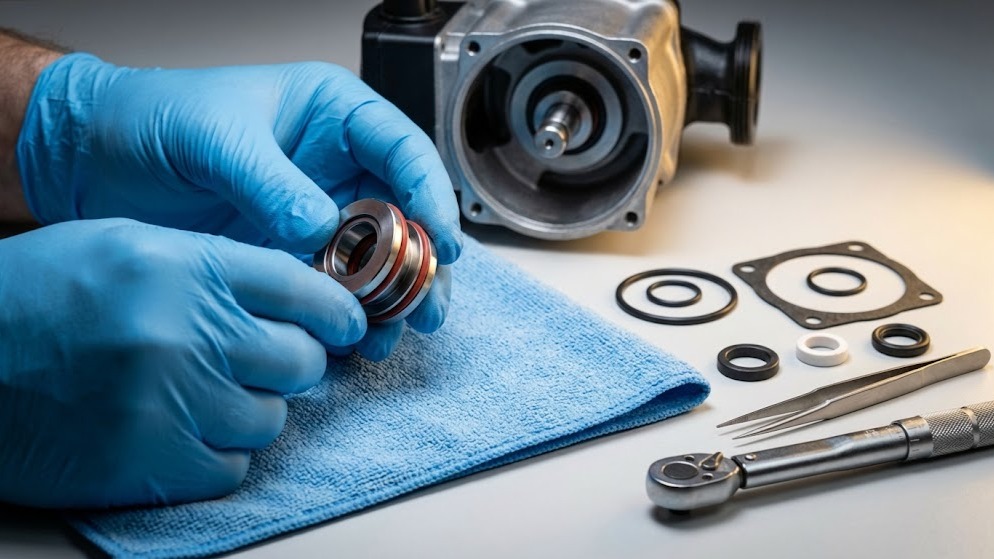
Commercial heating systems operating above 110°C place extraordinary demands on mechanical seals. When a seal fails in a high-temperature application, the consequences extend beyond simple leakage - thermal shock can damage pump housings, scalding water poses safety risks, and emergency shutdowns disrupt building operations. National Pumps and Boilers regularly advises facilities managers and mechanical contractors on pump seal selection for demanding thermal environments, where material science and engineering precision determine system reliability.
The distinction between standard and high temperature pump seals centres on material compatibility, thermal expansion management, and secondary seal resilience. A conventional EPDM elastomer seal rated to 120°C will degrade rapidly at 140°C, whilst a FFKM (perfluoroelastomer) seal maintains integrity beyond 200°C. Understanding these material thresholds prevents premature failures that typically cost £2,500-£8,000 in emergency repairs, downtime, and replacement components.
Understanding High-Temperature Seal Requirements
High temperature pump seals must withstand thermal cycling, chemical exposure, and mechanical stress simultaneously. In commercial applications - district heating networks, industrial process systems, thermal oil circuits - operating temperatures frequently exceed 150°C with pressure fluctuations during start-up and shutdown cycles.
Primary Seal Face Materials
The primary seal faces experience the most severe conditions. Silicon carbide versus carbon face combinations represent the industry standard for temperatures above 120°C, offering hardness ratings of 2,800-3,100 HV (Vickers hardness) and thermal conductivity that dissipates heat effectively. Alternative materials include tungsten carbide for highly abrasive fluids and reaction-bonded silicon carbide for extreme thermal shock resistance.
Secondary Seal Elastomers
Secondary seals - the O-rings and gaskets that contain fluid behind the primary faces - determine ultimate temperature limits. EPDM rubber serves adequately to 120°C, but Grundfos pumps operating in high-temperature commercial systems typically specify FKM (Viton) elastomers to 200°C or FFKM (Kalrez, Chemraz) compounds to 260°C. The material cost differential is substantial - FFKM secondary seals cost 8-12 times more than EPDM equivalents - but the investment proves essential in demanding thermal environments.
Critical Material Selection Factors
Effective pump seal selection requires understanding how thermal expansion coefficients govern seal face tracking at elevated temperatures. When pump components heat from 20°C to 160°C, differential expansion between seal faces, springs, and housing materials can create face separation or excessive loading. Stainless steel springs expand approximately 17 μm/m/°C, whilst silicon carbide expands only 4.5 μm/m/°C - this mismatch requires careful seal design to maintain optimal face pressure across the operating temperature range.
Carbon Graphite Seal Options
Carbon graphite seal faces, commonly specified for temperatures exceeding 200°C, offer exceptional thermal stability and self-lubricating properties. However, carbon grades vary significantly: resin-impregnated carbon serves to 260°C, antimony-impregnated grades extend to 400°C, and metal-impregnated variants reach 540°C in specialised applications. The selection depends on fluid compatibility, pressure-velocity (PV) limits, and whether the system operates continuously or cycles frequently.
Chemical Compatibility Considerations
Chemical compatibility becomes more critical at elevated temperatures. Glycol-based heat transfer fluids, commonly used in central heating systems, degrade above their thermal stability limits (typically 150-180°C depending on inhibitor packages), forming acidic compounds that attack elastomer seals. Thermal oil systems using synthetic esters or silicone fluids present different compatibility challenges, requiring FKM or PTFE secondary seals rather than standard EPDM compounds.
Seal Configuration Options for Thermal Applications
Understanding high temperature pump seals configuration options ensures optimal pump seal selection for specific applications. Single mechanical seals represent the most common configuration for commercial heating systems operating to 180°C. These designs position one set of seal faces between the pumped fluid and atmosphere, relying on the process fluid for lubrication and cooling. For DHW pumps and heating circulators, single seals with silicon carbide faces and FKM elastomers provide reliable service when properly specified.
Double Mechanical Seal Systems
Double mechanical seals introduce a barrier fluid between two sets of seal faces, isolating the pumped medium from the atmosphere. This configuration suits applications where the process fluid lacks lubricating properties, contains abrasives, or operates near its vapour pressure. The barrier fluid - typically clean water with glycol or synthetic lubricant - circulates through an external reservoir, removing heat and providing superior lubrication compared to the process fluid alone.
Pressurised Barrier Configurations
Pressurised barrier systems (API Plan 53A/53B) maintain barrier fluid pressure 1-2 bar above process pressure, ensuring that any seal leakage flows inward rather than allowing process fluid to escape. For high-temperature commercial applications above 160°C, pressurised double seals significantly extend seal life, reducing maintenance intervals from 12-18 months (typical for single seals) to 36-60 months in demanding continuous-duty service.
Cartridge Seal Assemblies
Cartridge seal assemblies simplify installation and replacement in high-temperature applications. These pre-assembled units contain all seal components - faces, springs, secondary seals, and sleeves - in a single cartridge that slides onto the pump shaft. Cartridge designs eliminate installation errors that cause 60% of premature seal failures, particularly misalignment and incorrect compression of secondary seals. The premium cost (typically 40-70% more than component seals) delivers value through reduced installation time and improved reliability.
Cooling and Flushing Arrangements
External seal cooling becomes essential when process temperatures exceed 140°C or when pumping fluids near their boiling point. Seal chamber jackets circulate cooling water around the seal area, reducing face temperatures by 30-50°C and preventing vapourisation at the seal faces. A properly designed cooling jacket maintains seal face temperatures below 100°C even when pumping 180°C thermal fluid, dramatically extending seal life.
API Flush Plan Standards
API flush plans define standardised arrangements for seal cooling and lubrication. Plan 11 (recirculation from pump discharge through the seal chamber) suits moderate-temperature applications to 150°C, whilst Plan 23 (recirculation through external heat exchanger) extends capability to 200°C by actively cooling the fluid before it reaches the seal faces. Plan 32 (injection of cool barrier fluid from an external source) provides the most effective cooling for extreme-temperature applications, though it requires a clean, compatible fluid source.
Quench System Implementation
Quench systems (API Plan 62) introduce cooling fluid to the atmospheric side of the seal, managing heat and containing minor weepage. For Wilo pumps in high-temperature commercial service, quench arrangements using facility water reduce seal chamber temperatures and provide an additional barrier against process fluid escape. The quench fluid must be compatible with both the process fluid and seal materials, as mixing inevitably occurs.
Performance Monitoring and Predictive Maintenance
Seal chamber temperature monitoring provides early warning of seal degradation. Baseline temperatures established during commissioning typically range from 15-30°C above process fluid temperature, depending on seal design and cooling arrangements. A temperature rise exceeding 10°C from baseline indicates developing problems - face wear, inadequate lubrication, or cooling system issues - allowing intervention before catastrophic failure.
Vibration Analysis and Leakage Monitoring
Vibration analysis detects mechanical issues affecting seal performance. Shaft runout exceeding 0.05mm (50 microns) TIR (total indicated runout) at the seal faces creates uneven loading that accelerates wear, particularly in high-temperature applications where thermal expansion amplifies misalignment. Facilities operating multiple Lowara pumps in critical heating systems implement quarterly vibration surveys using portable analysers, trending data to identify deteriorating bearings or shaft damage before seal failure occurs.
Seal leakage monitoring through visual inspection and drip collection quantifies performance degradation. New mechanical seals typically exhibit zero visible leakage, though technical specifications permit up to 10ml/hour for face-sealed designs. Increasing leakage rates signal face wear or secondary seal degradation, with sudden increases indicating immediate attention requirements. In high-temperature applications, even minor leakage creates safety hazards from scalding fluid and accelerates corrosion of surrounding components.
Installation Best Practices for Thermal Applications
Seal face preparation determines initial performance and longevity. Lapping seal faces to 3-5 helium light bands (approximately 0.5 microns flatness) ensures proper contact and minimal leakage. In high-temperature service, face flatness becomes even more critical as thermal distortion during operation can open gaps that vapourise the lubricating film. Carbon faces require particular care during installation - excessive handling pressure can crack the material, whilst contamination with oils or solvents creates hot spots that accelerate wear.
Secondary Seal Lubrication
Secondary seal lubrication using compatible lubricants prevents installation damage and facilitates proper seating. PTFE-based lubricants suit most elastomer materials, whilst silicone greases serve EPDM and FKM compounds. The lubricant must be compatible with the process fluid and stable at operating temperatures - petroleum-based greases that work adequately in standard applications can carbonise at 150°C, causing secondary seal failure. National Pumps and Boilers recommends manufacturer-specified lubricants for high-temperature installations to ensure material compatibility.
Shaft Surface Requirements
Shaft surface finish and runout directly impact seal performance. Shaft sleeves in the seal area require 0.4-0.8 micron Ra (arithmetic average roughness) finish - smoother surfaces reduce friction and heat generation, whilst rougher surfaces accelerate elastomer wear. Shaft runout measured at the seal faces must not exceed 0.05mm TIR, with 0.025mm preferred for demanding applications. Thermal growth during operation can increase runout, making cold-state alignment critical.
Troubleshooting Common High-Temperature Seal Failures
Blistering or cracking of elastomer secondary seals indicates thermal degradation from excessive temperatures or incompatible fluids. EPDM seals operating above their 120°C rating develop surface cracks within weeks, whilst FKM compounds exposed to temperatures exceeding 200°C exhibit similar degradation. The solution requires either upgrading to higher-temperature elastomers (FFKM for extreme service) or implementing enhanced cooling to reduce seal chamber temperatures below material limits.
Thermal Cracking and Coking Issues
Seal face thermal cracking results from excessive heat generation or thermal shock during start-up. Silicon carbide faces, whilst thermally stable, can crack when subjected to rapid temperature changes exceeding 100°C - a common occurrence when starting pumps filled with cold fluid that rapidly heats to operating temperature. Controlled warm-up procedures, gradually increasing system temperature over 30-45 minutes, prevent thermal shock damage. Alternatively, carbon graphite faces offer superior thermal shock resistance for applications with frequent start-stop cycles.
Coking or carbon buildup at seal faces occurs when process fluids degrade at elevated temperatures, depositing residues that interfere with face lubrication. Thermal oils operating beyond their maximum recommended temperatures (typically 300-320°C for synthetic esters) form carbonaceous deposits that score seal faces and jam springs. The solution requires either reducing operating temperatures, upgrading to more thermally stable fluids, or implementing external seal flushing with clean barrier fluid to prevent process fluid contact with hot seal faces.
Regulatory and Safety Considerations
Pressure Equipment Directive (PED) 2014/68/EU requirements govern seal specifications for commercial heating systems operating above 110°C and 0.5 bar. Category II and III systems require documented seal selection rationale, material certificates, and pressure testing records. For facilities operating expansion vessels and sealed heating systems, seal integrity directly affects system safety and regulatory compliance.
ATEX and Building Regulations
ATEX Directive 2014/34/EU applies when pumping flammable thermal fluids above their flashpoint. Mechanical seals in ATEX Zone 1 environments require certification demonstrating that surface temperatures remain below fluid auto-ignition temperatures and that seal failures cannot create ignition sources. Double seals with inert barrier gas (typically nitrogen) provide the safest configuration for flammable fluid service, eliminating process fluid contact with atmospheric oxygen.
Building Regulations Approved Document L2 (conservation of fuel and power in buildings other than dwellings) indirectly affects pump seal selection through efficiency requirements. Pump systems with frequent seal failures consume excess energy through reduced efficiency, increased bypass flow, and emergency operation of backup equipment. Specifying appropriate high temperature pump seals reduces maintenance-related energy waste and supports regulatory compliance for commercial building heating systems.
Economic Analysis of Seal Selection
Initial component costs represent only 15-25% of total seal ownership costs over a typical 5-year evaluation period. A standard single mechanical seal costs £180-£450 for commercial heating pumps, whilst cartridge double seals range from £850-£2,200. However, installation labour (£200-£500), downtime costs (£500-£3,000 per incident), and emergency callout premiums (£400-£800) dominate lifecycle expenses.
Long-Term Cost Benefits
Seal life expectancy varies dramatically with application severity and material selection. Standard seals in continuous 140°C service typically achieve 12-18 months MTBF (mean time between failures), whilst properly specified high temperature pump seals with appropriate cooling extend service life to 36-60 months. For a facility operating ten commercial heating circulators, upgrading from standard to high-temperature seal specifications reduces annual seal-related maintenance costs by £8,000-£15,000 through extended service intervals and reduced emergency repairs.
Energy efficiency implications of pump seal selection merit consideration in lifecycle analysis. Mechanical seal friction consumes 0.5-3.0 kW depending on pump size, seal design, and face loading. High-temperature applications requiring double seals with circulating barrier fluid add 0.2-0.8 kW for barrier circulation pumps. However, this energy penalty proves insignificant compared to the 15-40 kW consumed by the primary pump, and the reliability benefits of properly specified seals prevent efficiency losses from degraded pump performance.
Conclusion
Selecting appropriate mechanical seals for high-temperature commercial applications requires systematic evaluation of operating conditions, material compatibility, and lifecycle economics. Silicon carbide seal faces paired with FKM or FFKM secondary seals provide reliable service in most commercial heating systems operating to 180°C, whilst extreme applications demand carbon graphite faces, double seal configurations, and active cooling arrangements.
The investment in properly specified high temperature pump seals delivers measurable returns through extended service life, reduced emergency maintenance, and improved system safety. Facilities operating critical heating systems should prioritise pump seal selection during pump selection and replacement, recognising that seal-related failures account for 35-45% of all pump maintenance incidents in high-temperature commercial service.
For technical guidance on seal selection for specific commercial heating applications, building services engineers and facilities managers can contact us for application-specific recommendations based on operating conditions, fluid properties, and reliability requirements.