

Selecting Pumps for Commercial Swimming Pools and Leisure Centres
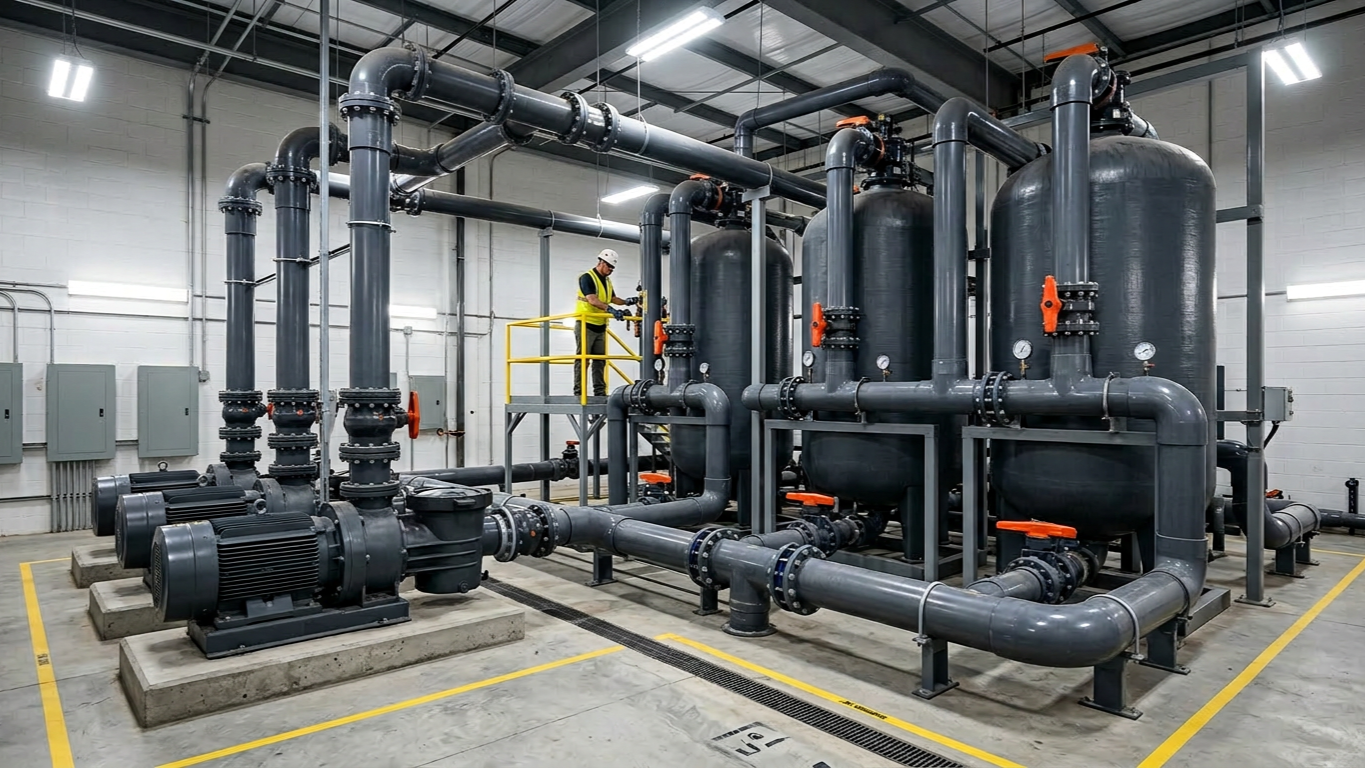
Commercial swimming pools and leisure centres demand robust, reliable pumping systems that operate continuously under demanding conditions. The swimming pool pump selection process directly affects energy costs, water quality, operational efficiency, and maintenance requirements across filtration, circulation, heating, and water feature systems.
National Pumps and Boilers specialises in commercial aquatic facility equipment, supplying pump solutions that meet the technical and regulatory demands of UK leisure facilities. Selecting the right swimming pool pump selection requires understanding flow requirements, head pressure calculations, energy efficiency standards, and system integration considerations that differ substantially from domestic applications.
Understanding Commercial Pool Pump Requirements
Commercial swimming pools operate under different parameters than residential installations. Public Health England guidelines mandate specific turnover rates - typically 2.5 to 4 hours for main pools and 30 minutes to 1 hour for hydrotherapy pools and spas. These requirements translate directly into pump sizing calculations.
A 25-metre competition pool holding approximately 625,000 litres requires complete water turnover every 3 hours under typical leisure centre conditions. This demands a circulation pump delivering roughly 208 cubic metres per hour at sufficient head pressure to overcome filter resistance, pipework friction, and elevation changes.
System Pressure Calculations
System pressure requirements vary considerably based on installation configuration. Underground plant rooms with elevated pool levels may require pumps generating 15-20 metres of head, whilst level installations with efficient pipework layouts might operate effectively at 8-12 metres. Accurate hydraulic calculations during design prevent undersized pumps from struggling to maintain flow rates or oversized units from wasting energy.
Regulatory Compliance Requirements
UK pool operators must comply with Pool Water Treatment Advisory Group (PWTAG) guidelines and Health and Safety Executive requirements. These regulations specify minimum circulation rates, filtration standards, and water quality parameters that directly influence pump specifications. Facilities failing to meet these standards risk closure notices or operational restrictions.
Pump Types for Aquatic Applications
Centrifugal End-Suction Pumps
End-suction centrifugal pumps represent the most common choice for main circulation systems in commercial pools. These units mount horizontally with a suction inlet on one side and discharge on top or side, offering straightforward installation and maintenance access.
Grundfos pumps in the NBG and NKG ranges deliver reliable performance for medium to large pool circulation, with bronze or stainless steel construction resisting chlorinated water corrosion. Flow rates from 50 to 400 cubic metres per hour cover most commercial applications, whilst IE3 motors meet current energy efficiency requirements.
In-Line Circulation Pumps
In-line pumps mount directly within pipework, with suction and discharge flanges aligned on the same centreline. This configuration saves plant room space and simplifies pipework routing in compact installations.
Wilo pumps offer in-line models specifically designed for swimming pool circulation, featuring corrosion-resistant materials and sealed motor construction. These units suit smaller leisure centres and hotel pools where plant room space limitations dictate compact equipment selection.
Variable Speed Drive Pumps
Variable speed technology transforms commercial pool pump efficiency. Traditional fixed-speed pumps operate at full capacity regardless of actual system demand, whilst VSD units adjust motor speed to match required flow rates throughout operational periods.
Energy savings typically reach 30-50% compared to fixed-speed alternatives. A leisure centre operating pumps 16 hours daily can reduce annual electricity consumption by 40,000-60,000 kWh per pump through variable speed control, translating to £6,000-£9,000 yearly savings at current commercial electricity rates.
Lowara pumps in the e-SV series integrate variable speed drives within compact pump assemblies, eliminating separate VSD panel requirements whilst providing precise flow control across 20-100% capacity range.
Filtration System Pump Considerations
Pool filtration systems impose specific requirements on swimming pool pump selection beyond simple flow rate calculations. Filter media type, vessel configuration, and backwash requirements all influence pump specification.
Sand Filter Systems
Pressure sand filters dominate commercial pool installations due to reliability and manageable maintenance demands. These systems require commercial pool filtration pumps delivering design flow rates at 10-15 metres head when filters are clean, with sufficient reserve capacity to maintain flow as filters accumulate debris and head loss increases.
A sand filter installation serving a 500,000-litre pool with a 3-hour turnover requires approximately 167 cubic metres per hour flow. The pump must deliver this flow at 12-14 metres head when filters reach maximum dirt-loading before backwash cycles.
Cartridge Filter Systems
Cartridge filtration offers superior water clarity with lower initial head loss than sand filters, though cartridge replacement costs and labour must factor into lifecycle calculations. Commercial pool filtration pumps for cartridge systems typically operate at 6-10 metres head when cartridges are clean.
Modern cartridge systems reduce backwash water consumption - a significant consideration given increasing water costs and environmental regulations. Some facilities report 70-80% reductions in backwash water usage compared to traditional sand filtration, though this benefit must be balanced against cartridge disposal costs and labour requirements.
Diatomaceous Earth (DE) Filtration
DE filters provide exceptional water clarity - crucial for competition venues and high-end facilities where water appearance matters significantly. These systems demand commercial pool filtration pumps capable of handling slightly higher head losses than sand filters, whilst maintaining precise flow control during DE cake formation.
Backwash Requirements
Sand filter backwash cycles demand substantially higher flow rates than normal filtration - typically 150-200% of design flow to properly fluidise filter media and flush accumulated debris. Some installations employ dedicated backwash pumps sized specifically for this duty, whilst others use oversized circulation pumps operating at higher speeds during backwash cycles.
Variable speed pumps excel in dual-duty applications, operating at reduced speeds during normal circulation and ramping to full capacity during backwash cycles. This flexibility eliminates separate backwash pump costs whilst optimising energy consumption during normal operation.
Heating System Circulation
Commercial pool heating systems require separate circulation through heat exchangers, heat pumps, or boiler systems. These secondary circuits operate independently from main filtration circulation, with pumps sized to deliver manufacturer-specified flow rates through heating equipment.
Heat Exchanger Circuit Pumps
A typical 500,000-litre pool maintaining 29°C water temperature requires approximately 200- 250kW heating capacity in UK conditions. Heat exchanger circuits serving this capacity demand 40-50 cubic metres per hour flow at 4-6 metres head, depending on heat exchanger design and pipework configuration.
DAB pumps in the KLP series suit heating circulation duties, offering bronze construction, mechanical seal reliability, and flow rates matching commercial heat exchanger requirements. These units integrate easily with building management systems through auxiliary contacts and external control inputs.
Heat Pump Circulation
Air source and water source heat pumps increasingly replace traditional gas boilers in commercial pool heating. These systems require precise flow control to maximise the coefficient of performance (COP) and achieve rated heating outputs. Undersized pumps reduce heat pump efficiency, whilst oversized units waste energy and may cause flow-related faults.
Water Feature and Spa Pumps
Leisure centres increasingly incorporate water features, flume rides, lazy rivers, and spa facilities that impose additional pumping requirements beyond main pool circulation.
Spa and Hydrotherapy Pumps
Hydrotherapy pools and spa facilities require rapid turnover rates - typically 30-minute cycles - with higher flow velocities through jet systems. A 20,000-litre hydrotherapy pool demands approximately 40 cubic metres per hour circulation, with additional pumps supplying 80-120 cubic metres per hour to therapy jets at 8-12 metres head.
Jet pump selection requires particular attention to noise levels, as spa facilities are often located near relaxation areas where pump noise creates a significant disturbance. Selecting pumps designed for quiet operation and specifying comprehensive acoustic treatment prevents operational complaints.
Water Feature Pumps
Decorative water features, splash pads, and play areas require dedicated pumps delivering specific flow patterns. Cascade features might need 20-30 cubic metres per hour at low head, whilst vertical fountain jets require higher pressures at lower flows.
Flume and Ride Pumps
Water slides and flume rides demand high-volume pumps delivering 100-200 cubic metres per hour at sufficient head to maintain water film thickness throughout ride profiles. Ebara pumps in the MD range offer robust construction and reliable performance for these demanding applications.
Ride pumps must maintain consistent flow rates regardless of rider loading variations. Variable speed control combined with flow monitoring ensures optimal ride performance whilst preventing excessive water consumption during periods without riders.
Material Selection and Corrosion Resistance
Chlorinated pool water aggressively attacks many common pump materials. Selecting appropriate construction materials extends service life and reduces maintenance costs significantly.
Bronze Construction
Bronze pump bodies and impellers resist chlorine corrosion effectively whilst offering good mechanical strength. Most commercial pool pumps employ bronze wetted parts as standard specification. Gun metal bronze (typically 85% copper, 5% tin, 5% zinc, 5% lead) provides superior corrosion resistance compared to standard bronze alloys.
Stainless Steel Options
316 stainless steel provides superior corrosion resistance in heavily chlorinated environments or salt-chlorinated pools. Stainless construction adds 30-50% to pump costs but extends service life substantially in aggressive conditions.
Salt chlorination systems - increasingly popular for reduced chemical handling and improved water quality - create particularly corrosive conditions. Standard bronze pumps may experience accelerated degradation in these environments, making stainless steel construction essential for acceptable service life.
Mechanical Seals
Pool pump mechanical seals face continuous exposure to chlorinated water and must resist chemical attack whilst maintaining reliable sealing. Carbon-ceramic seal faces with Viton elastomers represent the minimum specification for commercial pool applications, with silicon carbide seal faces offering extended life in demanding installations.
Seal failure represents the most common pump breakdown in commercial pool applications. Selecting quality seals from reputable manufacturers and maintaining spare assemblies minimises downtime during inevitable seal replacements.
Energy Efficiency and Operating Costs
Pump energy consumption represents 40-60% of total commercial pool operating costs. Selecting efficient pumps and optimising system operation delivers substantial financial benefits over equipment lifecycles.
Motor Efficiency Standards
IE3 motors now represent minimum efficiency standards for most commercial applications, with IE4 motors offering further savings in high-duty installations. A 15kW pump operating 5,000 hours annually consumes 75,000kWh with IE2 efficiency, reducing to 69,000kWh with IE3 motors - saving approximately £900 yearly at £0.15/kWh commercial rates.
Variable Speed Operation
Variable speed drives provide the most significant efficiency gains in pool pump applications. Flow requirements vary throughout operating periods - reduced occupancy during early mornings or late evenings permits lower circulation rates whilst maintaining water quality.
A leisure centre reducing pump speed 20% during off-peak periods (representing 40% of operating hours) cuts energy consumption approximately 22% across those periods, delivering 9% overall reduction in pump electricity costs. Over a typical 15-year pump lifecycle, these savings can exceed £50,000 per pump in large facilities.
Hydraulic Efficiency
Pump hydraulic efficiency - the ratio of useful hydraulic power output to electrical power input - varies considerably across different designs and operating points. Selecting commercial pool filtration pumps operating near their best efficiency point (BEP) at design flow rates maximises energy efficiency.
Operating pumps significantly away from BEP increases energy consumption, generates excessive heat, and accelerates mechanical wear. Accurate flow and head calculations during design ensure selected pumps operate efficiently at actual system conditions.
System Integration and Control
Modern commercial pool installations integrate pumps within building management systems, enabling remote monitoring, automated control, and optimised operation.
Flow Monitoring
Electromagnetic or ultrasonic flow meters provide continuous flow measurement, enabling automated control systems to adjust pump speeds maintaining target flow rates as filters load or system conditions change. This technology ensures regulatory compliance whilst optimising energy consumption.
Pressure Monitoring
Differential pressure measurement across filters indicates dirt loading and triggers automated backwash cycles when pressure drop exceeds preset thresholds. This prevents excessive pump energy consumption, pushing water through heavily loaded filters whilst ensuring adequate filtration performance.
Temperature Control
Heating system pumps integrate with temperature sensors, modulating flow rates to match heating demand and maintain target pool temperatures efficiently. Advanced control strategies incorporate weather compensation, occupancy schedules, and time-of-day electricity pricing to minimise operating costs.
Installation and Commissioning Considerations
Proper installation directly affects pump performance, reliability, and service life. Several critical factors demand attention during installation and commissioning phases.
Suction Conditions
Adequate suction conditions prevent cavitation damage and ensure reliable operation. Pool pump suction lines must maintain positive pressure at pump inlets, requiring careful attention to suction pipe sizing, elevation differences, and strainer pressure drops.
Suction pipe velocities should not exceed 1.5 metres per second to minimise friction losses and maintain adequate net positive suction head (NPSH). A pump requiring 100 cubic metres per hour demands a minimum 150mm suction pipework to meet this velocity limit.
Pipework Design
Properly sized discharge pipework prevents excessive system head and wasted pump energy. Discharge velocities typically range 2 to 3 metres per second, balancing reasonable pipe sizing against friction losses.
Gradual pipe transitions, long-radius bends, and minimised fittings reduce unnecessary head losses that force pumps to work harder than necessary. Each 90-degree elbow adds approximately 0.5-1.0 metres of head loss - seemingly modest individually but cumulative across complex pipework networks.
Vibration and Noise
Commercial pool pumps often operate in plant rooms adjacent to occupied spaces. Anti-vibration mounts isolate pump vibration from building structures, whilst flexible connections on suction and discharge pipework prevent vibration transmission through pipes.
Acoustic enclosures may be necessary for particularly noise-sensitive installations. These enclosures must maintain adequate ventilation to prevent motor overheating whilst providing effective sound attenuation.
Maintenance Requirements and Spare Parts
Commercial pool pumps operate continuously throughout facility opening hours - typically 4,000-6,000 hours annually. Regular maintenance prevents unexpected failures and extends equipment service life.
Mechanical Seal Inspection
Mechanical seals represent the most common wear component in pool pumps. Regular inspection identifies early signs of seal deterioration before catastrophic failure occurs. Most commercial installations maintain spare seal assemblies enabling rapid replacement during routine maintenance windows.
Bearing Lubrication
Motor bearings require regular lubrication according to manufacturer schedules - typically every 2,000-4,000 operating hours. Proper lubrication prevents premature bearing failure and extends motor life significantly. Many modern pumps incorporate sealed bearings requiring no routine lubrication, simplifying maintenance requirements.
Impeller Condition
Chlorinated water gradually erodes pump impellers, reducing efficiency and performance over time. Annual impeller inspection identifies excessive wear requiring replacement before pump performance degrades noticeably. Flow testing during routine maintenance quantifies performance degradation objectively.
National Pumps and Boilers supplies genuine manufacturer spare parts for Grundfos, Wilo, Lowara, and other leading brands, ensuring rapid parts availability and minimising downtime during maintenance activities.
Conclusion
Swimming pool pump selection for commercial swimming pools and leisure centres requires careful consideration of flow requirements, system head calculations, energy efficiency, material compatibility, and operational demands. The right swimming pool pump selection delivers reliable water circulation, optimises energy consumption, minimises maintenance requirements, and ensures regulatory compliance across filtration, heating, and water feature systems.
Variable speed technology offers the most significant opportunity for energy savings in commercial pool applications, with typical reductions of 30-50% compared to fixed-speed alternatives. Combined with efficient system design, proper installation, and regular maintenance, well-specified commercial pool filtration pumps operate reliably for 10-15 years whilst minimising lifecycle costs.
For technical guidance on swimming pool pump selection, system design support, or equipment specifications suited to specific leisure facility requirements, contact us for expert advice from experienced commercial pump specialists.