

Selecting Pumps for Industrial Process Cooling Applications
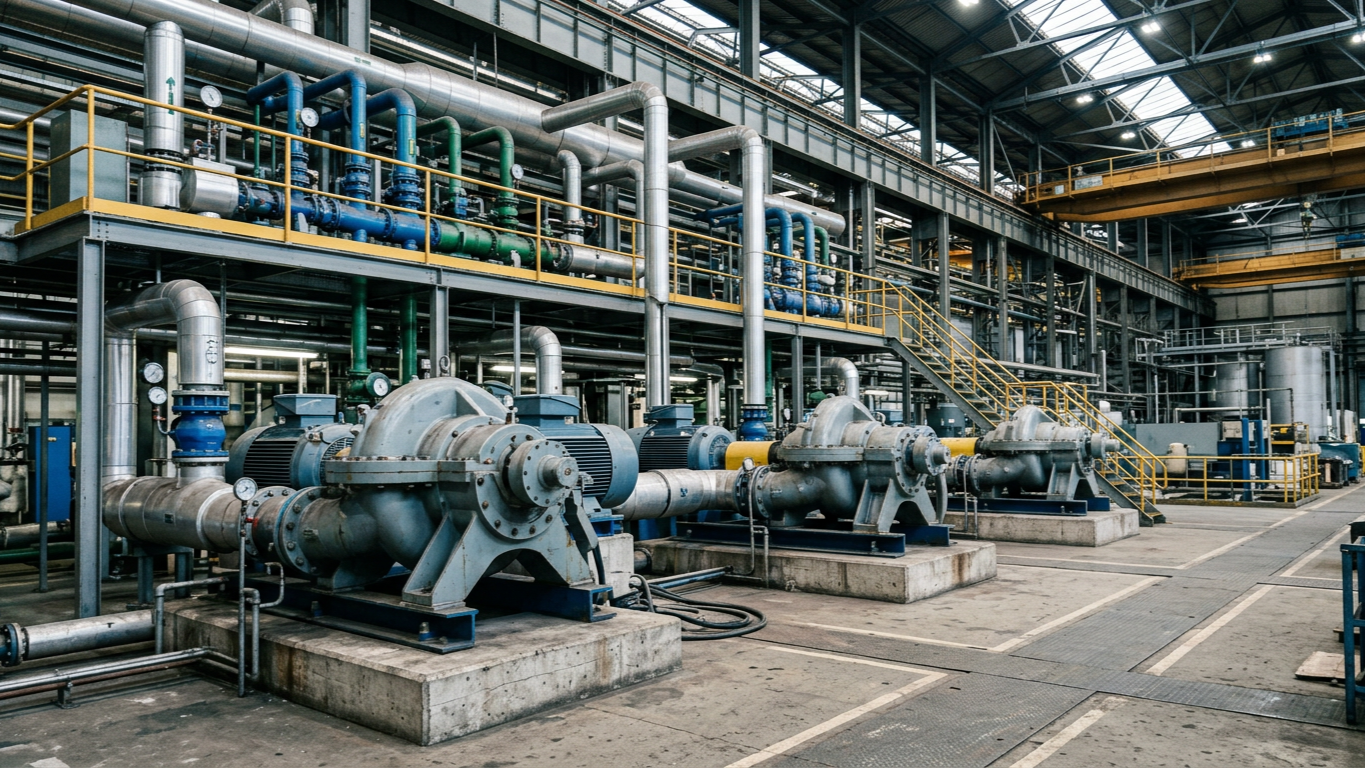
Industrial process cooling pumps maintain stable operating temperatures across manufacturing plants, chemical processing facilities, data centres, and power generation sites. When process temperatures climb beyond acceptable limits, production efficiency drops, equipment fails prematurely, and operational costs spiral. The pump circulating coolant through these systems determines whether cooling capacity meets demand reliably or creates bottlenecks that compromise entire production lines.
Selecting industrial process cooling pumps requires matching equipment specifications to thermal loads, system pressures, and fluid characteristics that vary dramatically across applications. A pump handling clean water in a food processing plant faces entirely different demands than one circulating glycol mixtures through a pharmaceutical manufacturing facility or moving corrosive fluids in chemical production. Understanding these distinctions prevents costly equipment failures and performance shortfalls.
Understanding Industrial Process Cooling Requirements
Process cooling applications differ fundamentally from central heating systems in flow rates, pressure demands, and operating conditions. Where central heating equipment typically handles relatively clean water at moderate temperatures, manufacturing cooling pump systems often circulate fluids containing additives, operate continuously at elevated temperatures, and require precise flow control to maintain process stability.
Thermal Load Calculations
Thermal loads in industrial facilities range from modest requirements in small-scale manufacturing to massive heat rejection demands in petrochemical plants or data centres. A single production line might generate 500 kW of process heat requiring removal, whilst large industrial facilities routinely handle thermal loads exceeding 10 MW. These heat loads translate directly into coolant flow rates and pump capacity requirements that must match peak demand conditions.
System pressures vary based on circuit design, elevation changes, heat exchanger pressure drops, and pipe network complexity. Simple single-loop systems might operate at 2-3 bar, whilst complex multi-zone installations with plate heat exchangers and extensive piping networks can demand 6-8 bar or higher. Calculating total system resistance accurately determines the head pressure pumps must deliver.
Critical Pump Specifications for Process Cooling
Flow rate capacity represents the volume of coolant a pump moves per unit time, typically expressed in cubic metres per hour (m³/h) or litres per second (l/s). Process cooling applications require flow rates calculated from thermal loads using the formula: Flow Rate (l/s) = Heat Load (kW) / (Specific Heat Capacity × Temperature Differential). For water-based systems with a 5°C temperature differential, removing 100 kW requires approximately 4.8 l/s flow rate.
Flow Rate Considerations
Undersizing flow capacity creates insufficient heat removal, allowing process temperatures to climb beyond acceptable limits. Oversizing wastes energy through unnecessary pumping costs and can cause flow velocity issues that accelerate pipe erosion. Matching flow capacity to actual thermal loads with appropriate safety margins ensures reliable cooling without excessive energy consumption.
Head Pressure Requirements
Head pressure capability determines whether pumps overcome system resistance to deliver required flow rates. Total system head includes static head from elevation changes, friction losses through piping and fittings, and pressure drops across heat exchangers and control valves. Grundfos for industrial applications typically provide performance curves showing flow rate versus head pressure relationships that allow precise matching to system requirements.
Selecting pumps with insufficient head pressure results in reduced flow rates that compromise cooling capacity. Manufacturing cooling pump systems with multiple zones or complex piping networks requires careful calculation of pressure losses to specify adequate pump performance. Modern pump selection software simplifies these calculations, but understanding fundamental hydraulic principles remains essential for verifying results.
Motor Efficiency and Power Consumption
Motor efficiency and power consumption directly impact operational costs in continuously running process cooling systems. Premium efficiency motors meeting IE3 or IE4 standards reduce energy consumption by 15-25% compared to standard efficiency equivalents. For pumps operating 8,000 hours annually, this efficiency gain delivers substantial cost savings that justify higher initial equipment investment.
Variable speed drive (VSD) capability adds further efficiency benefits by matching pump output to actual cooling demand. Rather than running continuously at full capacity with bypass valves controlling flow, VSD-equipped pumps reduce motor speed during periods of lower thermal load. This approach cuts energy consumption by 30-60% in applications with variable cooling requirements, delivering payback periods often under two years.
Fluid Characteristics and Material Selection
Coolant properties significantly influence pump selection beyond simple flow and pressure specifications. Water-based systems with corrosion inhibitors represent the simplest case, whilst glycol mixtures, thermal oils, and process-specific fluids introduce complications affecting pump performance and material compatibility.
Glycol Mixture Considerations
Glycol-water mixtures used for freeze protection or low-temperature applications increase fluid viscosity by 20-40% compared to pure water. This viscosity increase reduces pump flow rates by 5-15% and requires motors with higher power ratings to maintain performance. Pump curves provided by manufacturers typically assume water properties, necessitating corrections when specifying equipment for glycol systems.
Temperature Effects
Temperature affects fluid properties substantially. Coolants at 60°C exhibit lower viscosity than the same fluids at 20°C, improving pump efficiency but potentially affecting seal performance. Wilo designed for industrial applications specify maximum fluid temperatures, typically ranging from 80°C for standard models to 140°C for high-temperature variants. Exceeding these limits damages seals, bearings, and motor windings.
Material Compatibility
Material compatibility prevents corrosion, erosion, and chemical degradation that causes premature pump failure. Cast iron pump housings suit clean water systems with appropriate corrosion inhibitors but prove inadequate for aggressive fluids. Stainless steel construction resists most coolants effectively, whilst bronze or duplex stainless steel handles particularly corrosive applications. Seal materials require similar attention - standard EPDM seals work well with water and glycol mixtures, but specialised fluids may demand Viton or mechanical seal upgrades.
Single Pump Versus Duty-Standby Configurations
Reliability requirements determine whether applications need single pumps or redundant duty-standby arrangements. Manufacturing cooling pump systems where cooling system failures halt production and create significant financial losses justify redundant pump installations. The duty-standby configuration places two pumps in parallel, with one handling normal operation whilst the second remains on standby, automatically starting if the primary pump fails.
Duty-Standby Implementation
Implementing duty-standby systems requires careful attention to control logic, isolation valves, and changeover mechanisms. Automatic alternation between pumps equalises wear and ensures standby equipment remains functional when needed. Non-return valves prevent backflow through idle pumps, whilst isolation valves allow maintenance without system shutdown. National Pumps and Boilers supplies complete packaged pumpsets with integrated controls that simplify duty-standby implementation.
Duty-Assist Configurations
Critical applications in pharmaceutical manufacturing, data centres, or continuous process industries often specify duty-assist configurations where both pumps run continuously during peak demand periods. This arrangement provides full redundancy whilst maximising capacity during high thermal load conditions. Control systems modulate pump speeds to match total output to actual cooling requirements, maintaining efficiency whilst ensuring reliability.
Single Pump Applications
Single-pump installations suit less critical applications where brief cooling interruptions during maintenance create acceptable risks. Specifying pumps with readily available spare parts and straightforward maintenance requirements minimises downtime. Keeping critical wear components like seals and bearings in stock further reduces outage duration when service becomes necessary.
System Integration and Control Considerations
Modern industrial process cooling pumps integrate with temperature sensors, flow meters, and building management systems (BMS) to optimise performance. Temperature feedback controls pump speed to maintain setpoints accurately, preventing both insufficient cooling and excessive energy consumption. Flow measurement verifies system performance and identifies problems like fouled heat exchangers or partially closed valves that reduce efficiency.
Monitoring and Sensors
Pressure sensors monitor system conditions to detect leaks, blockages, or component failures before they cause production disruptions. Differential pressure measurement across heat exchangers indicates fouling that reduces thermal performance, allowing scheduled cleaning before capacity drops unacceptably. Pump valves with actuators enable automated zone control that directs cooling capacity where needed most.
Variable Speed Drive Integration
Variable speed drives provide precise flow control whilst delivering substantial energy savings, but introduce considerations for system design. Minimum flow requirements prevent pump overheating during low-demand periods, sometimes requiring bypass arrangements. Electrical installations must accommodate VSD-generated harmonics and electromagnetic interference through proper grounding and filtering. National Pumps and Boilers offers technical guidance on VSD integration that addresses these implementation details.
Communication Protocols
Communication protocols like Modbus, BACnet, or proprietary systems allow pumps to integrate with facility-wide control systems. This connectivity enables sophisticated control strategies that coordinate cooling systems with production schedules, weather conditions, and energy pricing to minimise operational costs. Remote monitoring capabilities alert maintenance teams to developing problems before they cause failures.
Sizing Calculations and Safety Margins
Accurate pump sizing balances adequate capacity against energy waste from oversized equipment. Starting with thermal load calculations based on process heat generation, ambient conditions, and desired temperature differentials establishes baseline flow requirements. Adding pressure loss calculations for piping, fittings, heat exchangers, and control valves determines the required head pressure.
Safety Margin Guidelines
Safety margins account for calculation uncertainties, future capacity expansion, and equipment performance degradation over time. Flow rate margins of 10-15% prevent undersizing whilst avoiding excessive oversizing. Head pressure margins of 15-20% accommodate calculation uncertainties and minor system modifications without requiring pump replacement.
Avoiding Oversizing
Avoiding excessive oversizing proves as important as preventing undersizing. Pumps operating far below their design point exhibit reduced efficiency, potential cavitation issues, and accelerated wear. When calculations suggest substantially oversized existing equipment, investigating actual system requirements often reveals opportunities to reduce pump speed or install smaller replacement equipment that cuts energy costs significantly.
Performance Curve Verification
Consulting pump performance curves from manufacturers like Lowara verifies that selected equipment operates within its efficient range at design conditions. The best efficiency point (BEP) should align reasonably close to expected operating conditions. Pumps forced to operate far from BEP experience shortened service life and higher energy consumption.
Maintenance Access and Serviceability
Industrial facilities operate continuously, making pump maintenance accessibility crucial for minimising downtime. Equipment specifications should consider service requirements, including seal replacement, bearing maintenance, and impeller inspection. In-line pumps with cartridge-style seal assemblies allow maintenance without disconnecting piping, substantially reducing service time.
Space Planning Requirements
Space planning around pump installations provides adequate clearance for motor removal, coupling access, and component replacement. Cramped installations that seemed acceptable during construction create expensive maintenance headaches when technicians cannot access equipment efficiently. Allowing 1-1.5 metres clearance around pumps accommodates most service requirements comfortably.
Equipment Standardisation
Standardising pump models across facilities where possible reduces spare parts inventory requirements and simplifies maintenance training. Rather than maintaining parts for six different pump models, facilities using standardised equipment from suppliers like DAB keep fewer components in stock whilst ensuring faster repairs. This standardisation extends to motor frame sizes, coupling types, and seal designs.
Predictive Maintenance Strategies
Predictive maintenance strategies using vibration analysis, thermal imaging, and motor current monitoring detect developing problems before they cause failures. Establishing baseline measurements for new equipment provides comparison data that reveals bearing wear, misalignment, or imbalance conditions. Addressing these issues during planned maintenance windows prevents unexpected failures during critical production periods.
Energy Efficiency and Lifecycle Cost Analysis
Initial equipment costs represent only 10-20% of total pump lifecycle expenses, with energy consumption dominating operational costs over typical 15-20 year service lives. Comparing pumps based solely on purchase price ignores these ongoing expenses that dwarf upfront savings from cheaper equipment. Lifecycle cost analysis reveals the true economic impact of efficiency differences between options.
Annual Energy Cost Calculations
Calculating annual energy costs requires pump power consumption, electricity rates, and annual operating hours. A 15 kW pump running 8,000 hours annually at £0.15/kWh costs £18,000 yearly in electricity. Improving efficiency by 20% through premium motors and optimised hydraulics saves £3,600 annually - recovering higher equipment costs within 2-3 years whilst continuing to deliver savings throughout the pump's service life.
Variable Speed Drive Benefits
Variable speed drives amplify efficiency benefits in applications with varying thermal loads. Rather than running continuously at full capacity, VSD-equipped pumps reduce speed during periods of lower cooling demand. Since pump power consumption varies with the cube of speed, reducing flow by 20% cuts power consumption by approximately 50%. These dramatic savings justify VSD investment in most industrial process cooling pump applications.
Performance Monitoring
Monitoring actual energy consumption through metering equipment verifies efficiency and identifies degradation over time. Pumps showing increasing power consumption relative to flow delivery indicate wear, fouling, or mechanical problems requiring attention. Addressing these issues restores efficiency and prevents progressive deterioration that culminates in equipment failure.
Conclusion
Selecting appropriate industrial process cooling pumps requires a systematic evaluation of thermal loads, system pressures, fluid properties, and reliability requirements. Flow capacity must match heat rejection demands calculated from process conditions, whilst head pressure specifications account for all system resistance, including piping, heat exchangers, and control components. Material selection addresses fluid compatibility and temperature conditions, preventing premature failures from corrosion or chemical attack.
Redundant duty-standby configurations suit critical applications where cooling system failures create unacceptable production disruptions or safety risks. Integration with control systems through variable speed drives and communication protocols optimises performance whilst reducing energy consumption substantially. Lifecycle cost analysis reveals that efficiency improvements justify premium equipment investment through ongoing operational savings.
Proper sizing with appropriate safety margins balances adequate capacity against the energy waste and performance issues created by excessive oversizing. Maintenance accessibility considerations during equipment specification reduce service time and costs throughout pump service life. For technical guidance on specifying manufacturing cooling pump systems for specific applications, contact us for expert support tailored to individual facility requirements.