
 -
- Signs Your Pump Doesn't Have Enough Suction Pressure (NPSH Problems)
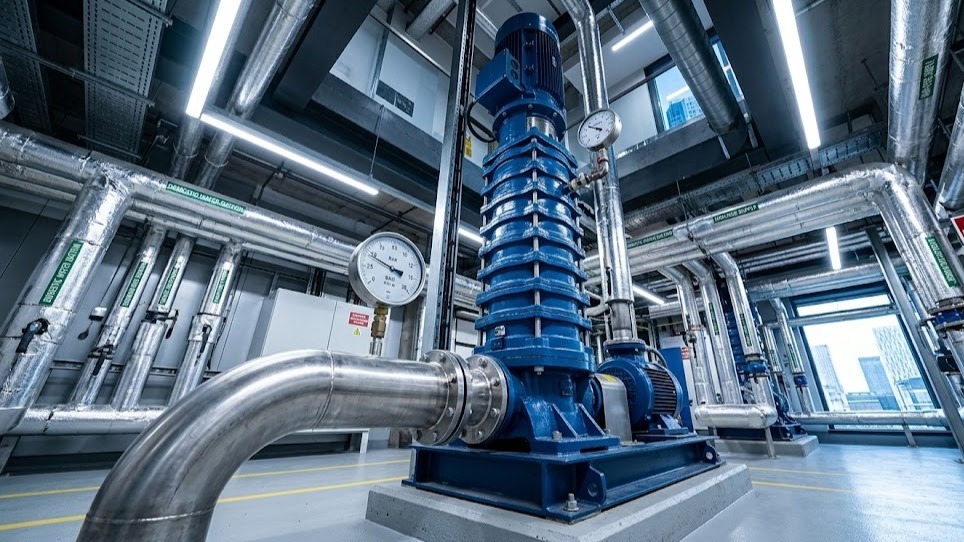
Pump cavitation damage costs UK facilities thousands in premature equipment failure, unplanned downtime, and emergency repairs. The root cause? Insufficient Net Positive Suction Head (NPSH) - a technical term that describes whether a pump receives adequate suction pressure to operate without forming vapour bubbles that collapse violently inside the impeller.
When the NPSH available falls below the NPSH required, cavitation begins. The symptoms are distinctive: rattling noises, vibration, reduced flow rates, and accelerated wear on critical components. For heating engineers, facilities managers, and pump specialists, recognising these warning signs early prevents catastrophic failure and protects system integrity.
What NPSH Actually Means for Pump Performance
Net Positive Suction Head represents the absolute pressure at the pump suction flange, minus the liquid's vapour pressure. When this value drops too low, the liquid flashes into vapour as it enters the low-pressure zones around the impeller vanes. These vapour bubbles then collapse when they reach higher-pressure areas, creating shock waves that erode metal surfaces and generate the characteristic noise associated with pump cavitation issues.
Every pump has an NPSH required value - the minimum suction pressure needed to prevent cavitation at a given flow rate. This specification appears on pump performance curves and in manufacturer technical data. The system must provide NPSH available that exceeds NPSH required by a safety margin, typically 0.5 to 1.0 metres for commercial heating applications.
Grundfos pumps and other quality manufacturers publish detailed NPSH curves showing how requirements increase with flow rate. At higher capacities, the pump demands more suction pressure because fluid velocities and acceleration forces intensify around the impeller.
Audible Signs of Insufficient Suction Pressure
The most recognisable symptom of NPSH suction pressure problems is noise. Cavitation produces a distinctive sound - often described as gravel or marbles rattling through the pump casing. This occurs as thousands of vapour bubbles collapse per second, each generating a miniature shock wave. The cumulative effect creates an unmistakable grinding or crackling noise that varies with pump speed and flow rate.
When Cavitation Noise Intensifies
The noise becomes more pronounced when:
- The pump operates at higher speeds or flow rates
- System temperature increases (raising vapour pressure)
- Suction line strainers become partially blocked
- Multiple pumps draw from a shared header with inadequate sizing
Facilities staff often hear cavitation noise before any performance degradation becomes apparent. The sound indicates that erosion damage is already occurring, even if flow rates and pressures still meet system requirements. Ignoring this warning accelerates component wear and leads to premature failure.
Vibration and Mechanical Symptoms
Cavitation creates hydraulic instability that manifests as increased vibration. The pump casing, mounting brackets, and connected pipework transmit these oscillations throughout the mechanical room. Vibration analysis reveals elevated amplitudes at blade pass frequency - the rate at which impeller vanes pass the volute cutwater.
Mechanical Consequences of Cavitation Vibration
- Accelerated bearing wear and premature failure
- Mechanical seal leakage occurs as the faces separate under vibration
- Pipe flange leaks as gaskets compress unevenly
- Structural fatigue in pump mounting systems
- Electrical connection loosening at motor terminals
Wilo pumps equipped with condition monitoring systems can detect abnormal vibration patterns before visible damage occurs. Smart pump technology alerts facilities teams to developing NPSH issues through integrated sensors that track vibration signatures and compare them to baseline performance data.
Flow Rate and Pressure Performance Degradation
Cavitation reduces pump hydraulic performance in measurable ways. As vapour bubbles occupy volume within the impeller passages, the effective liquid flow decreases. The pump curve shifts downward - delivering less head at any given flow rate compared to its published performance specification.
Observable Performance Issues
- Reduced flow rates to terminal units despite constant pump speed
- Lower differential pressure across the pump than expected
- Inability to meet design flow rates even at maximum speed
- Fluctuating pressure readings at the discharge gauge
- Variable flow to heating zones or DHW circuits
In central heating equipment applications, insufficient NPSH typically reveals itself through comfort complaints before pump damage becomes severe. Radiators take longer to heat, hot water delivery slows, and temperature control becomes inconsistent. These operational issues signal that the pump no longer delivers design performance due to pump cavitation issues.
Physical Damage to Pump Components
Cavitation erosion creates distinctive damage patterns on metallic surfaces. The impeller vanes show pitting and material loss concentrated at the inlet edges where vapour bubbles first form. As cavitation progresses, this erosion extends deeper into the vane surfaces, eventually creating holes through the metal or breaking off entire sections of vane material.
The volute casing exhibits similar pitting damage in areas where cavitation bubbles collapse. Cast iron pumps show rough, sponge-like erosion patterns. Bronze and stainless steel components develop smoother but equally destructive pitting. The damage concentrates in predictable zones based on pressure distribution within the pump hydraulic passages.
Mechanical Seal Failure From Cavitation
Mechanical seals fail prematurely in cavitating pumps through multiple mechanisms:
- Vibration causes seal faces to separate intermittently
- Thermal cycling from vapour bubble collapse degrades elastomers
- Abrasive particles from erosion damage contaminate the seal chamber
- Pressure fluctuations exceed seal design parameters
National Pumps and Boilers technical specialists regularly examine failed pumps and identify cavitation damage that could have been prevented through proper NPSH management and system design.
Common Causes of Insufficient NPSH Available
Understanding why NPSH suction pressure problems develop requires examining the entire suction system. The available NPSH depends on multiple factors that facilities teams can measure and control.
Primary Contributing Factors
Inadequate Suction Tank Elevation: When the liquid source sits too low relative to the pump centreline, static head becomes insufficient. This commonly occurs in basement mechanical rooms where DHW pumps draw from thermal storage vessels without an adequate elevation difference.
Excessive Suction Line Friction Losses: Long suction pipes, undersized diameters, multiple elbows, and partially closed isolation valves all reduce available NPSH. Each fitting and valve creates a pressure drop that subtracts from the suction pressure reaching the pump inlet.
Suction Strainer Blockage: Y-strainers and basket strainers accumulate debris over time. As the screen becomes partially blocked, the pressure drop increases dramatically. A strainer with 50% blockage can reduce available NPSH by several metres, pushing the pump into cavitation even though system static conditions remain unchanged.
High Liquid Temperature: As water temperature rises, vapour pressure increases exponentially. DHW systems operating at 60-65°C have significantly higher vapour pressure than heating systems at 40-50°C. This reduces available NPSH even when all other factors remain constant.
System Pressure Too Low: In sealed heating systems, the expansion vessel maintains minimum system pressure. If the vessel loses pre-charge or the system develops leaks, overall pressure drops. The suction side of the pump sees reduced absolute pressure, decreasing available NPSH.
Temperature Effects on Vapour Pressure
Water vapour pressure relationships directly impact NPSH available in heating systems. At 20°C, water's vapour pressure equals approximately 0.24 metres absolute. At 60°C, this rises to 2.0 metres absolute. At 100°C, vapour pressure reaches 10.3 metres - the reason water boils at atmospheric pressure.
Practical Temperature Implications
- DHW circulation pumps face higher NPSH requirements than space heating pumps
- Systems operating near the boiling point need substantial suction pressure margins
- Temperature increases during summer operation can trigger cavitation in borderline systems
- Buffer vessels and thermal storage tanks must maintain an adequate static head above pumps
The practical implication: a pump that operates satisfactorily at 40°C flow temperature may cavitate when the system temperature increases to 60°C, even though nothing else has changed. The reduced NPSH margin disappears as the vapour pressure rises with temperature.
Suction Line Design Requirements
Proper suction piping prevents NPSH problems through attention to hydraulic fundamentals. British Standard BS EN 12828 provides guidance for heating system design, including pump suction arrangements.
Critical Design Elements
Pipe Sizing: Suction lines should maintain fluid velocity below 1.5 m/s to minimise friction losses. This typically requires one or two pipe sizes larger than the pump connection. A pump with DN50 flanges often needs DN65 or DN80 suction piping, depending on flow rate and pipe length.
Straight Run Before Pump: Manufacturers specify minimum straight pipe lengths before the suction flange - typically 5 to 10 pipe diameters. This allows flow to stabilise and prevents swirl or uneven velocity distribution from reaching the impeller.
Eccentric Reducers: When reducing pipe size approaching the pump, eccentric reducers with the flat side up prevent air pocket formation at the reducer crown. Trapped air reduces effective pipe area and creates turbulence that decreases available NPSH.
Isolation Valve Position: Gate or ball valves on the suction line must be fully open during operation. Even partially closed valves create a significant pressure drop. Some installations benefit from removing the valve handle during commissioning to prevent accidental closure.
System Pressure Management Solutions
Maintaining adequate system pressure ensures sufficient NPSH available across all operating conditions. Sealed heating systems rely on expansion vessels and filling systems to control minimum pressure.
The expansion vessel pre-charge pressure sets the system's minimum cold pressure. For multi-storey buildings, this must exceed the static head to the highest point plus a safety margin. Facilities teams should verify pre-charge pressure annually, as vessels lose nitrogen charge over time through membrane permeation.
Automatic filling systems maintain pressure during minor leaks but can mask chronic problems. A system requiring frequent make-up water indicates leakage that needs investigation. The underlying pressure loss may already be affecting pump NPSH margins.
Pressurisation units provide active pressure control for larger commercial systems. These combine expansion vessels, pumps, and controls to maintain set pressure regardless of temperature variations or minor leakage. Mikrofill systems offer integrated solutions that prevent pressure-related NPSH problems in demanding applications.
Diagnostic Testing and Measurement
Confirming NPSH suction pressure problems requires systematic measurement and analysis. Facilities teams can perform field tests using installed instrumentation or temporary test equipment.
Testing Methods
Pressure Gauge Installation: A compound gauge (reading both pressure and vacuum) installed at the pump suction flange directly measures available pressure. Compare this reading to the manufacturer's NPSH required specification after converting to consistent units (metres of liquid column).
Vibration Analysis: Portable vibration analysers detect cavitation through characteristic frequency patterns. Cavitation generates broadband high-frequency energy that appears distinct from bearing defects, misalignment, or imbalance.
Performance Testing: Measure actual flow rate and differential pressure, then compare to the pump curve. Significant deviation indicates hydraulic problems, potentially including cavitation. Ultrasonic flow metres provide non-invasive flow measurement on existing installations.
Acoustic Monitoring: Ultrasonic microphones detect cavitation noise frequencies beyond human hearing range. This technology identifies early-stage cavitation before audible symptoms develop or performance degradation becomes measurable.
Corrective Actions and Solutions
Addressing NPSH problems requires identifying and eliminating root causes rather than simply replacing damaged pumps. The solution depends on which factors limit available NPSH.
Effective Remediation Strategies
Reduce Suction Line Losses: Replace undersized piping, eliminate unnecessary fittings, install full-bore isolation valves, and clean or upsize suction strainers. Each improvement increases available NPSH by reducing friction losses.
Increase System Pressure: Raise expansion vessel pre-charge, install pressurisation equipment, or add height to suction tanks. This increases absolute pressure at the pump inlet, providing more NPSH margin.
Lower Pump Installation: Relocating the pump to a lower elevation relative to the suction source increases static head. This simple change can resolve chronic NPSH problems in retrofit situations.
Reduce System Temperature: Operating at lower temperatures decreases vapour pressure, increasing available NPSH. This may require system redesign but proves effective for persistent problems.
Select Different Pump: Some applications simply demand pumps with lower NPSH required specifications. Double-suction pumps, vertical turbine pumps, or models with larger impeller eye areas reduce NPSH requirements for equivalent performance.
For heating engineers and facilities teams facing recurring pump failures, contact us for technical guidance on NPSH analysis and pump selection. Expert assessment identifies whether system modifications or alternative equipment specifications will resolve cavitation problems permanently.
Conclusion
NPSH suction pressure problems manifest through distinctive symptoms - rattling noise, excessive vibration, reduced performance, and accelerated component wear. These warning signs indicate that vapour bubbles are forming and collapsing within the pump, causing progressive damage that leads to premature failure.
Understanding the relationship between suction pressure, vapour pressure, and pump requirements allows facilities teams to prevent cavitation through proper system design and maintenance. Adequate pipe sizing, appropriate system pressure, clean strainers, and correct pump selection ensure that NPSH available exceeds NPSH required with sufficient safety margin.
When cavitation symptoms appear, systematic diagnosis identifies whether suction line restrictions, inadequate system pressure, excessive temperature, or improper pump selection causes the problem. Targeted corrective actions then resolve the root cause rather than simply replacing damaged components that will fail again under the same adverse conditions.
Heating systems incorporating quality equipment from manufacturers like Lowara pumps perform reliably when designers and installers respect NPSH fundamentals. The technical specifications exist for good reason - ignoring them invites operational problems and unnecessary maintenance costs. For complex installations or persistent pump cavitation issues, professional technical support ensures that system modifications address underlying hydraulic deficiencies rather than treating symptoms.