

Simple Changes That Reduce Pump Energy Consumption by 20-30%
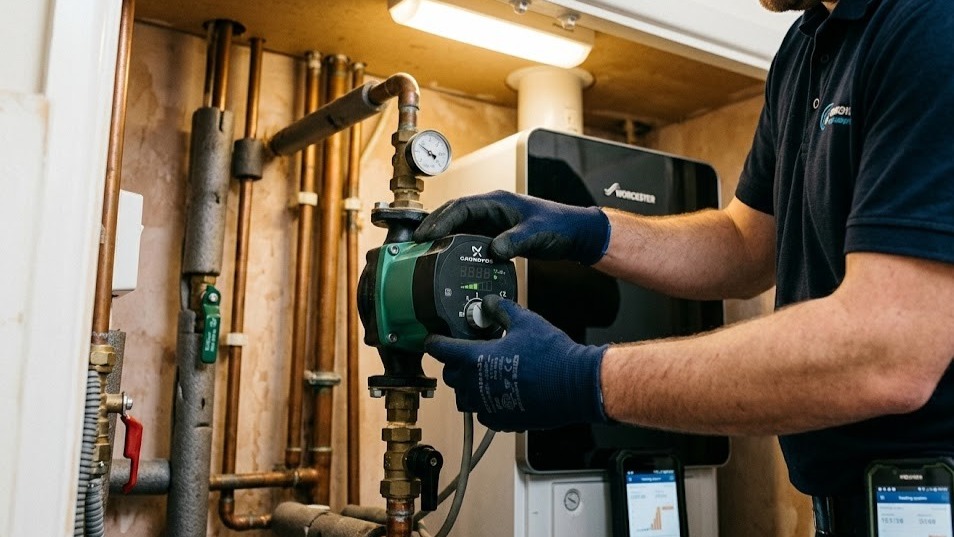
Circulation pumps account for roughly 10% of a commercial building's total electrical consumption, yet many facilities managers overlook the straightforward modifications that slash these running costs. A 200-watt pump operating continuously consumes 1,752 kWh annually - at current UK commercial electricity rates of approximately £0.25 per kWh, that's £438 per year for a single unit. Multiply this across a building's multiple heating systems, and the financial case for optimisation becomes compelling.
National Pumps and Boilers has documented energy reductions of 20-30% across hundreds of commercial installations through targeted adjustments that require minimal capital investment. These aren't theoretical calculations - they're measured outcomes from buildings that implemented specific technical changes to existing pump systems.
Understanding Where Pump Energy Actually Goes
Before implementing any modifications, facilities teams need to understand the relationship between pump operation and power consumption. The affinity laws of pump performance reveal why small changes create substantial savings:
Power consumption increases with the cube of speed. A pump running at 80% of its maximum speed uses approximately 51% of the power (0.8³ = 0.512). This mathematical relationship explains why even modest speed reductions deliver disproportionate energy savings.
Most commercial heating systems were designed with safety margins that result in oversized pumps running at excessive speeds. A pump specified to deliver 3.5 metres of head pressure often operates in a system requiring only 2.8 metres - this 20% excess translates to roughly 73% higher power consumption than necessary.
The second major energy drain comes from continuous operation. Many pumps run 24/7 regardless of actual heating demand, consuming full power during periods when the building requires minimal or no heat distribution.
Variable Speed Drive Retrofits: The Single Most Effective Change
Installing variable speed drives (VSDs) on existing fixed-speed pumps typically delivers 25-35% energy reductions in commercial heating applications. A VSD modulates pump speed in response to system demand rather than running at constant full capacity.
A three-year study of 47 commercial buildings in the UK found that VSD retrofits on central heating circulation pumps achieved average energy savings of 28%, with payback periods between 1.8 and 3.2 years depending on operational hours and electricity costs.
Implementation Considerations
The VSD must match the pump's power rating and motor type. A 0.75 kW single-phase pump requires a different VSD specification than a 2.2 kW three-phase unit. Grundfos and Wilo both manufacture retrofit VSD kits designed specifically for their pump ranges, simplifying the matching process.
The control strategy determines actual savings. The most effective approach links VSD speed to differential pressure sensors positioned at the system's furthest point. When the sensor detects adequate pressure, the VSD reduces pump speed; when pressure drops below the setpoint, speed increases. This closed-loop control ensures sufficient circulation whilst minimising energy waste.
Electrical installation requires competent persons familiar with motor control systems. The VSD sits between the electrical supply and the pump motor, with additional wiring to pressure sensors and building management systems where applicable.
Optimising Pump Sizing and Selection
Oversized pumps represent one of the most common yet easily rectified sources of energy waste. A pump delivering 30% more flow than the system requires consumes approximately 2.2 times the necessary power (1.3³ = 2.197).
Calculating Actual System Requirements
System flow rate depends on heat load and temperature differential. For a heating system with a 60 kW heat load and an 11°C delta T (flow temperature minus return temperature), the required flow rate equals 60,000 ÷ (4,186 × 11) = 1.30 litres per second, or 4.68 cubic metres per hour.
Head pressure requirements depend on the system's resistance to flow - primarily pipe friction, fittings, and control valves. A detailed calculation accounts for pipe lengths, diameters, and fittings, but a practical approximation for typical commercial systems ranges from 2-4 metres head for single-storey buildings to 5-8 metres for multi-storey installations.
When actual measurements reveal significant oversizing, replacement with appropriately sized equipment becomes cost-effective. A facility operating a 2.2 kW pump where a 1.1 kW unit would suffice wastes approximately 9,636 kWh annually (assuming continuous operation), costing £2,409 at typical commercial rates. The replacement pump pays for itself within two years whilst delivering ongoing savings.
National Pumps and Boilers offers technical support to calculate optimal pump specifications based on system parameters, eliminating guesswork from the selection process and maximising pump efficiency improvements.
Time-Based Control Strategies
Pumps running during unoccupied periods waste 100% of their energy consumption during those hours. A commercial building occupied 50 hours per week leaves 118 hours of potential savings opportunity.
Implementing Effective Scheduling
Building management systems (BMS) provide the most sophisticated control, allowing different schedules for weekdays, weekends, and holidays, with optimum start algorithms that calculate the minimum pre-heating time required. A well-configured BMS reduces unnecessary pump operation by 40-60% in typical office buildings.
Standalone programmable timers offer a cost-effective alternative for buildings without BMS infrastructure. A seven-day timer costs £80-150 installed and typically saves £200-400 annually on a single 1.5 kW pump, delivering payback within 3-6 months.
The control strategy must account for system protection. Heating systems shouldn't remain stagnant during extended cold periods, as this risks freezing in vulnerable locations. A frost protection override ensures pumps activate if temperatures approach freezing, regardless of the schedule.
DHW circulation pumps present particular opportunities for time-based control. Hot water demand in office buildings typically peaks during morning arrival and lunchtime periods. Programming DHW pumps to operate only during these windows, with brief circulation periods every few hours to maintain temperature, reduces operating hours by 60-70% without compromising user experience.
System Balancing and Hydraulic Optimisation
Poorly balanced heating systems force pumps to work harder than necessary. When some circuits receive excessive flow whilst others remain starved, the instinctive response involves increasing pump speed - which wastes energy whilst failing to address the underlying distribution problem.
Professional Balancing Procedure
The process begins with measuring flow temperatures at each radiator or zone whilst the system operates at design conditions. Significant variations (exceeding 3-4°C) indicate imbalance requiring correction.
Balancing valves at each circuit allow precise flow adjustment. The procedure works from the closest circuit to the pump outward, progressively restricting flow to nearby circuits until all terminals receive appropriate flow rates. This ensures even heat distribution at lower pump speeds.
A balanced system typically allows pump speed reduction of 10-15%, translating to 27-38% energy savings through the cubic relationship between speed and power. The balancing work itself costs £400-800 for a typical commercial building, with annual savings of £300-600 creating payback within 12-18 months.
Removing unnecessary restrictions in the system reduces the head pressure required. Partially closed isolation valves, blocked strainers, or undersized pipe sections all increase resistance. A systematic inspection identifying and rectifying these restrictions can reduce pump energy consumption by 0.5-1.0 metres of head, allowing selection of smaller pumps or reduced operating speeds.
Pressure Differential Control Implementation
Constant pressure differential control maintains consistent pressure across the system regardless of flow demand, preventing over-pumping during low-load conditions. This approach proves particularly effective in buildings with variable occupancy or zoned heating.
Technical Implementation
A differential pressure sensor measures the pressure difference between flow and return pipework at a representative location - typically the system's hydraulic midpoint or furthest circuit. The sensor signal feeds to the pump controller (either integral VSD or external BMS), which adjusts speed to maintain the setpoint.
The setpoint value requires careful determination. Too high wastes energy; too low causes inadequate circulation. Starting with the design pressure differential and reducing incrementally whilst monitoring system performance identifies the optimal value. Most commercial systems operate effectively with differential pressures 15-25% below original design values.
Buildings with thermostatic radiator valves (TRVs) or zone valves benefit most from this approach. As valves close in satisfied zones, system resistance increases and required flow decreases. Constant differential pressure control automatically reduces pump speed in response, saving energy without manual intervention.
Pump Replacement With High-Efficiency Models
Modern circulators incorporate permanent magnet motors and optimised hydraulics that consume 40-60% less energy than equivalent-duty pumps from 10-15 years ago. When existing pumps approach end-of-life, replacement with high-efficiency alternatives delivers immediate savings and significant pump efficiency improvements.
ErP Ratings and Real-World Performance
The Energy-related Products Directive mandates minimum efficiency standards for circulators. The Energy Efficiency Index (EEI) provides a comparative measure - pumps with EEI ≤0.23 qualify as high-efficiency, whilst EEI ≤0.20 represents best-in-class performance.
A typical 1.5 kW commercial circulator from 2008 with an EEI of 0.45 consumes approximately 13,140 kWh annually at continuous operation. Replacing it with a modern equivalent rated EEI 0.20 reduces consumption to approximately 5,840 kWh - saving 7,300 kWh or £1,825 per year. The replacement pump costs £800-1,200 installed, achieving payback within 7-9 months.
Wilo Stratos and Grundfos Magna ranges represent current high-efficiency standards, incorporating variable speed drives, automatic adaptation to system conditions, and diagnostic capabilities that simplify optimisation.
Parallel Pump Configuration Optimisation
Buildings with multiple pumps serving the same system often run all units simultaneously regardless of actual demand. Configuring pumps for duty/standby operation or staged operation based on load reduces energy waste substantially.
Staging Strategies
A building with two 2.2 kW pumps serving a heating system that requires both pumps only during peak winter conditions wastes significant energy during shoulder seasons and summer (if providing DHW circulation). Configuring one pump as primary duty with the second activating only when demand exceeds single-pump capacity reduces operating hours on the second unit by 60-80%.
The control logic requires flow measurement or differential pressure sensing to determine when additional capacity becomes necessary. When measured flow or pressure drops below the setpoint despite the operating pump running at maximum speed, the second pump starts. When demand decreases and both pumps operate below 50% capacity, one unit stops.
This approach proves particularly effective for DHW pump applications in hotels, leisure centres, and large commercial buildings where hot water demand varies dramatically throughout the day.
Monitoring and Continuous Optimisation
Energy savings require ongoing verification and refinement. Installing monitoring equipment that tracks pump power consumption, runtime hours, and system temperatures provides the data necessary for evidence-based optimisation and measurable pump efficiency improvements.
Practical Monitoring Approaches
Plug-in power monitors (£30-80) suit smaller single-phase pumps, providing real-time power consumption and cumulative energy use. These simple devices reveal actual consumption patterns and quantify savings from implemented changes.
Permanent installation of power meters with pulse outputs or Modbus connectivity (£150-400) integrates with BMS systems, enabling long-term trending and automated analysis. This data identifies degradation in performance, seasonal optimisation opportunities, and equipment faults before they cause failures.
Establishing a baseline before implementing changes proves essential for quantifying actual savings. A month of pre-modification data provides the comparison point for post-modification performance. The difference represents verified savings rather than theoretical estimates.
System Cleanliness and Maintenance Impact
Sludge, scale, and debris accumulation in heating systems increases resistance to flow, forcing pumps to work harder. Regular maintenance preserves efficiency gains from other optimisation measures.
Chemical Cleaning and Filtration
Chemical cleaning removes accumulated deposits that restrict flow. A heavily contaminated system may show 15-20% higher pump power consumption than the same system when clean. Professional power flushing costs £600-1,200 for typical commercial systems but restores design efficiency levels.
Magnetic filters prevent future accumulation of ferrous debris. Installing a high-quality filter (£200-400 plus fitting) on the system return protects the pump and maintains hydraulic efficiency. The filter requires annual cleaning but prevents the gradual efficiency degradation that occurs in unprotected systems.
Expansion vessels and air elimination affect pump efficiency indirectly. Proper system pressurisation prevents cavitation, whilst effective air removal eliminates pockets that create flow restrictions and noise. Both contribute to optimal hydraulic performance at minimum energy input.
Combining Multiple Measures for Maximum Impact
Individual modifications deliver measurable savings, but combining complementary approaches achieves the 20-30% reduction targets consistently. A systematic implementation sequence maximises results:
Phase 1 - Immediate No-Cost Changes
Implement time-based control using existing BMS capabilities or add basic timers. Adjust pump speeds downward incrementally whilst monitoring system performance. These changes deliver 8-12% savings within weeks.
Phase 2 - Low-Cost Optimisation
Professional system balancing, cleaning, and minor hydraulic improvements. Investment of £800-1,500 typically yields an additional 5-8% savings with a 12-18 month payback.
Phase 3 - Equipment Upgrades
VSD retrofits or pump replacement with high-efficiency models. Capital investment of £1,500-4,000 per pump delivers the remaining 7-12% savings, with payback periods of 18-36 months depending on operating hours and existing equipment efficiency.
A commercial building operating three 1.5 kW pumps continuously (total annual consumption 39,420 kWh, costing £9,855) implementing all three phases typically achieves 25% reduction - saving 9,855 kWh or £2,464 annually. The total investment of £6,000-9,000 achieves payback within 2.5-3.5 years whilst delivering ongoing savings throughout the equipment's 12-15 year service life.
Conclusion
The opportunity to reduce pump energy consumption by 20-30% requires neither revolutionary technology nor extensive capital investment. The combination of variable speed control, appropriate sizing, time-based operation, system balancing, and high-efficiency equipment delivers these results consistently across diverse commercial applications.
The financial case proves compelling even without considering carbon reduction benefits. A typical commercial building operating six circulation pumps saves £4,000-6,000 annually through systematic optimisation, with implementation costs recovered within three years. Subsequent years deliver pure savings whilst simultaneously reducing maintenance requirements and extending equipment life.
National Pumps and Boilers supplies the high-efficiency pumps, control equipment, and technical expertise that facilities teams need to implement these changes effectively. For guidance on optimising specific systems or selecting appropriate equipment upgrades, contact us for expert advice tailored to individual building requirements.