

Single Boiler vs Cascade Systems: Which Setup Works Best for Your Site
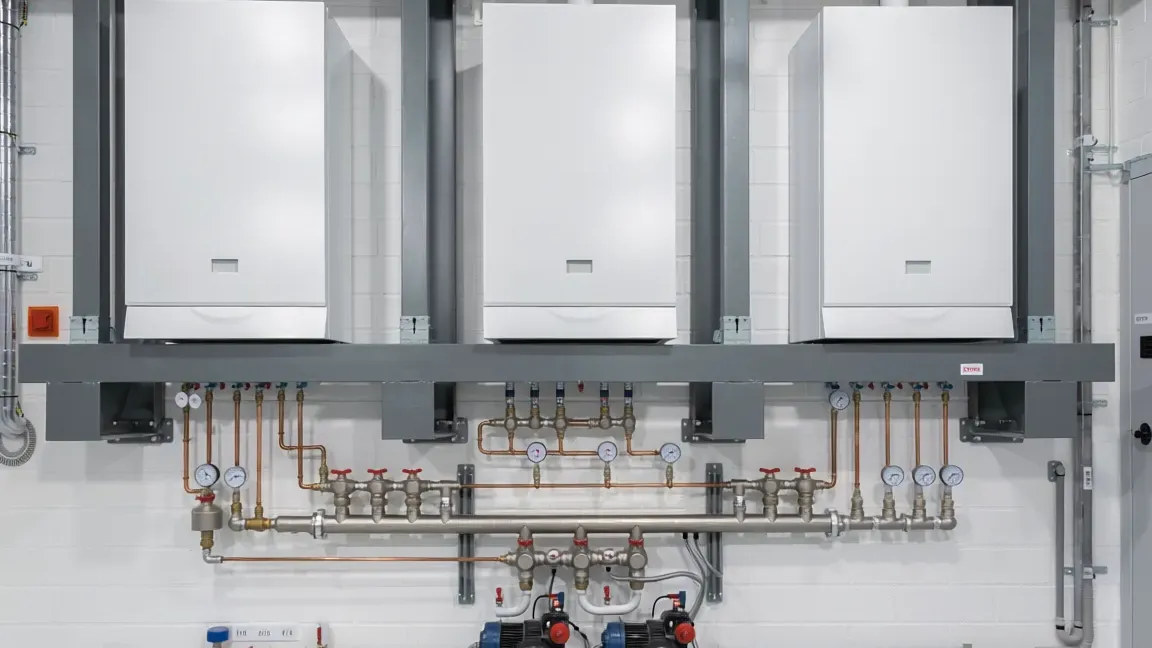
Commercial heating demands have shifted considerably over the past decade. Buildings require more flexible heat delivery, tighter efficiency margins, and guaranteed uptime that single boiler installations struggle to provide consistently. The choice between a single large boiler and a boiler cascade system UK installations increasingly favour represents more than equipment preference - it determines operational resilience, running costs, and carbon compliance for the next 15-20 years.
Traditional single boiler plantrooms served their purpose when heating loads remained relatively constant and efficiency standards permitted generous oversizing. Modern commercial buildings operate differently. Occupancy patterns fluctuate, heating zones require independent control, and Part L2 regulations demand seasonal efficiency performance that single boilers cannot consistently achieve. Understanding which configuration suits specific site conditions requires examining actual performance data rather than theoretical capacity figures or initial capital costs.
What Is a Boiler Cascade System?
A boiler cascade system connects multiple boilers through a common header, allowing them to operate in sequence based on heating demand. Rather than running one oversized unit at partial load, the system brings additional boilers online as heat requirements increase. Modern cascade controls use weather compensation, return temperature sensing, and load prediction algorithms to determine the optimal number of boilers required at any given moment, maximising efficiency whilst maintaining comfort across all building zones.
The configuration typically consists of two to six modular boilers ranging from 50kW to 300kW each, connected via low-loss headers or primary-secondary pipework arrangements. Each boiler maintains independent flue termination, gas supply, and safety controls whilst sharing a unified control strategy. Advanced systems incorporate lead-lag rotation, ensuring even wear distribution across all units and preventing any single boiler from accumulating disproportionate running hours during typical daily and seasonal operation.
Remeha commercial boilers are specifically engineered for cascade applications, offering enhanced modulation ranges and communication protocols that enable sophisticated sequencing strategies. Specifying purpose-built cascade equipment rather than adapting standard boilers to a cascade arrangement delivers better long-term efficiency and more reliable sequencing throughout the system's service life.
Single Boiler Limitations in Commercial Settings
A 500kW commercial boiler serving a mixed-use building operates at full capacity perhaps 2% of annual runtime. During spring and autumn shoulder seasons, the same installation might require only 80kW to maintain comfort temperatures - forcing the boiler to cycle on and off repeatedly or run at 16% load where combustion efficiency falls significantly below rated performance. This fundamental mismatch between installed capacity and actual demand creates multiple operational problems that compound across the equipment's lifespan.
Efficiency degradation at partial load represents the most significant penalty. Condensing boilers achieve their advertised efficiency ratings at specific flow and return temperatures under steady-state conditions. When a large boiler short-cycles to meet minimal loads, return temperatures rise, combustion quality deteriorates, and seasonal efficiency can drop 15-20 percentage points below nameplate specifications. The resulting fuel waste accumulates across thousands of operating hours annually, eroding the economic case for the initial capital saving.
System vulnerability poses another critical concern for commercial operations. When a single boiler fails or requires annual servicing, the entire building loses heating and domestic hot water production. Educational facilities, healthcare settings, and hospitality venues cannot tolerate these interruptions. Emergency call-out costs, temporary heating hire, and business disruption expenses frequently exceed the capital cost difference between single and cascade configurations within the first five years of operation.
Key Advantages of Cascade Systems
Efficiency and Part-Load Performance
Efficiency improvements represent the most quantifiable benefit of cascade configurations. By matching operating capacity to actual demand, systems maintain optimal combustion conditions across a much wider load range than any single boiler can achieve. A four-boiler cascade rated at 400kW total capacity can efficiently serve loads from 20kW to 400kW, whereas a single 400kW boiler struggles to operate efficiently below 80kW. This flexibility translates to 8-15% fuel savings in typical commercial applications.
Vaillant commercial boilers designed for cascade operation typically modulate down to 20% of maximum output before shutting down, allowing the system to match heating loads with exceptional precision and maintain condensing operation for a greater proportion of annual runtime than single-boiler configurations permit.
Redundancy and Operational Resilience
Built-in redundancy transforms maintenance planning and system reliability. When one boiler requires servicing or experiences component failure, the remaining units continue providing heat without interruption. This resilience proves invaluable in critical applications where heating continuity directly affects operations, occupant welfare, or business revenue. The ability to schedule maintenance during normal working hours rather than building closure periods reduces service costs and extends equipment life through proper preventative care.
For applications requiring dependable DHW production alongside space heating, properly specified DHW pumps within a cascade arrangement ensure hot water delivery continues uninterrupted even when one boiler is offline for maintenance - a practical advantage that single-boiler installations with identical total capacity simply cannot offer.
Carbon Reduction and Sustainability
Carbon emission reductions follow directly from improved seasonal efficiency. A cascade system consuming 12% less gas annually delivers proportional CO2 reductions that increasingly matter as building operators face carbon reporting requirements and net-zero commitments. Projects pursuing BREEAM ratings find cascade configurations essential to achieving energy benchmarks that single boiler installations consistently fail to reach, particularly under BREEAM Excellent and Outstanding assessment criteria.
Equipment longevity improves through reduced thermal stress and even wear distribution across units. Lead-lag rotation ensures each boiler accumulates similar runtime, preventing the premature failure patterns common when single boilers operate continuously at varying loads. Modular replacement becomes feasible as individual boilers can be upgraded or replaced without complete system renewal, spreading capital expenditure sensibly across longer timeframes.
Hydraulic and System Design Considerations
Hydraulic design proves critical to cascade performance and is where many installations fall short of their potential efficiency. Low-loss headers provide reliable hydraulic separation, allowing boiler circuits to operate independently from distribution circuits whilst maintaining proper flow rates through each unit. Pressure management throughout the system requires careful consideration, particularly in larger installations where flow rates change significantly as boilers sequence in and out of operation.
Mikrofill pressurisation and expansion equipment engineered for commercial cascade systems ensures stable operating pressures as system volume and temperature fluctuate with changing boiler output - a component that is often overlooked at the specification stage but directly affects long-term system stability and component service life.
When Single Boilers Still Make Sense
Small commercial premises with consistent heating loads below 200kW may find single boiler installations appropriate. A retail unit, small office building, or light industrial workshop with stable occupancy and limited DHW requirements does not experience the load variation that justifies cascade complexity. Installation costs for properly specified single boilers remain lower, and the simpler configuration reduces maintenance requirements for operators without sophisticated facilities management resources.
Budget constraints sometimes dictate single boiler selection despite operational compromises. Projects with limited capital budgets or short-term building occupancy may prioritise initial cost over lifecycle performance. However, this calculation requires honest assessment of true ownership costs including fuel consumption, maintenance expenses, and downtime risks that cascade configurations mitigate - costs that quickly erode apparent savings from lower capital expenditure.
Space-constrained plantrooms occasionally favour single boiler designs. Whilst modern modular boilers require less individual footprint than older cast iron units, cascade systems need adequate spacing for maintenance access, header arrangements, and multiple flue terminations. Buildings with severely restricted plantroom areas may find single boiler installation more practical, though this situation typically results from inadequate design planning rather than inherent cascade limitations that cannot be overcome with careful layout.
Technical Considerations for Cascade Design
Sequencing strategies determine how effectively cascade systems optimise efficiency across varying loads. Simple step control brings boilers online at fixed load thresholds, typically 80-85% of operating capacity. More sophisticated algorithms consider return temperature, outdoor reset curves, and predictive load calculations to anticipate heating requirements and minimise cycling. The optimal strategy depends on building characteristics and occupancy patterns that vary significantly across different commercial application types.
Flue arrangements require careful planning in cascade installations. Individual boilers need dedicated flue terminations or approved common flue systems designed for multiple appliance connections. For installations where flue design guidance and technical support are required, Andrews provides detailed specification assistance that accounts for termination spacing, condensate drainage requirements, and Building Regulations compliance for commercial cascade flue systems.
Control integration with building management systems enables advanced optimisation strategies. Modern cascade controllers communicate via BACnet, Modbus, or proprietary protocols, allowing BMS coordination that combines boiler sequencing with ventilation systems, occupancy schedules, and weather forecasts. This integration maximises efficiency whilst maintaining comfort conditions across complex buildings with variable occupancy patterns throughout the working day and week.
Correct flow distribution throughout the cascade arrangement requires properly specified and commissioned pump valves that balance flow across all heating circuits - preventing the short-cycling and temperature imbalances that compromise cascade efficiency and create comfort complaints in specific building zones.
Energy Performance and Running Costs
Part-load efficiency comparisons reveal cascade advantages most clearly under real operating conditions. Testing data demonstrates typical single boilers achieving 85-88% seasonal efficiency in commercial applications, whilst properly designed cascade systems reach 92-95% under identical conditions. This 5-7 percentage point improvement translates directly to fuel savings - approximately £3,500 to £5,000 annually for a 500kW installation at current commercial gas prices, compounding substantially over a 15-year equipment lifespan.
Seasonal efficiency calculations must account for actual load profiles rather than design day conditions. Buildings operate at peak capacity perhaps 50-100 hours annually, spending the majority of the heating season at 20-60% of maximum load. The cumulative effect over a typical 15-year equipment life represents £50,000 to £75,000 in avoided fuel costs for medium-scale commercial installations - a figure that reframes the capital cost comparison entirely.
For commercial central heating systems where efficiency across the full range of seasonal conditions determines the economic case, cascade configurations consistently outperform single-boiler alternatives when assessed on total lifetime cost rather than purchase price alone.
Installation Requirements and Space Planning
Plantroom footprint requirements differ less than commonly assumed between single and cascade configurations. Modern wall-hung commercial units occupy minimal floor area individually. A 400kW cascade installation using four 100kW boilers typically requires 8-10 square metres including access clearances and header arrangements - comparable to a single 400kW floor-standing boiler with adequate maintenance access on all sides. The primary physical difference lies in wall space and flue termination arrangements rather than total plantroom floor area.
Future expansion capability represents a significant cascade advantage over single-boiler designs. Adding capacity to an existing cascade requires installing additional boilers into the existing header arrangement - considerably simpler and less disruptive than replacing an undersized single boiler with a larger unit. This flexibility proves valuable when building use intensifies or extensions add heating load beyond original design parameters.
For installations requiring reliable fluid circulation as cascade systems sequence boilers in and out of operation, Ebara commercial pump solutions provide the hydraulic performance needed to maintain consistent flow rates throughout changes in system demand - ensuring each active boiler receives appropriate circulation regardless of which combination of units is operating at any given time.
National Pumps and Boilers frequently assists clients expanding cascade systems installed years earlier, demonstrating the long-term adaptability this configuration provides compared with single-boiler installations that require complete replacement when capacity needs change.
Compliance with Building Regulations Part L
Non-domestic Building Regulations Part L2 establishes minimum efficiency standards and system design requirements that cascade configurations help satisfy. The regulations specify seasonal efficiency targets rather than simple boiler ratings, recognising that system design significantly impacts actual performance. Cascade systems' superior part-load efficiency makes compliance more straightforward whilst providing margin above minimum standards that single boiler designs struggle to achieve consistently.
BREEAM requirements for commercial developments often necessitate cascade approaches to achieve target energy ratings. BREEAM Excellent and Outstanding assessments demand heating systems demonstrating exceptional efficiency and reduced carbon emissions. The 8-15% efficiency improvement cascade systems deliver frequently proves essential to reaching these thresholds, particularly when combined with weather compensation controls and optimised system hydraulics.
Documentation requirements for Building Control approval include detailed system specifications, efficiency calculations, and commissioning records. Cascade installations require additional documentation covering sequencing strategies, hydraulic design, and control integration. Thorough documentation demonstrates regulatory compliance and provides the technical record that future engineers rely on when maintaining or modifying the installation.
Choosing the Right Configuration for Your Project
The decision between single boiler and cascade systems ultimately depends on specific site characteristics, operational requirements, and long-term ownership priorities. Buildings with heating loads exceeding 250kW, variable occupancy patterns, or critical uptime requirements almost universally benefit from cascade configurations. The efficiency gains, operational resilience, and maintenance flexibility justify the modest capital premium through reduced lifecycle costs and improved performance across all operating conditions.
Smaller installations below 200kW with stable loads may find properly specified single boilers adequate, particularly when budget constraints limit capital expenditure. However, even these applications should consider dual boiler arrangements for redundancy - a practical middle ground between single boiler simplicity and full cascade sophistication. The modest additional cost provides meaningful protection against downtime that proves invaluable during equipment failures or planned maintenance periods.
For expert guidance on commercial heating system design and equipment selection tailored to specific project requirements, Contact Us to discuss how cascade or single boiler configurations best serve particular applications and long-term operational objectives.