

Single-Impeller vs Twin-Impeller DHW Pumps: Which Is Right for Your Building?
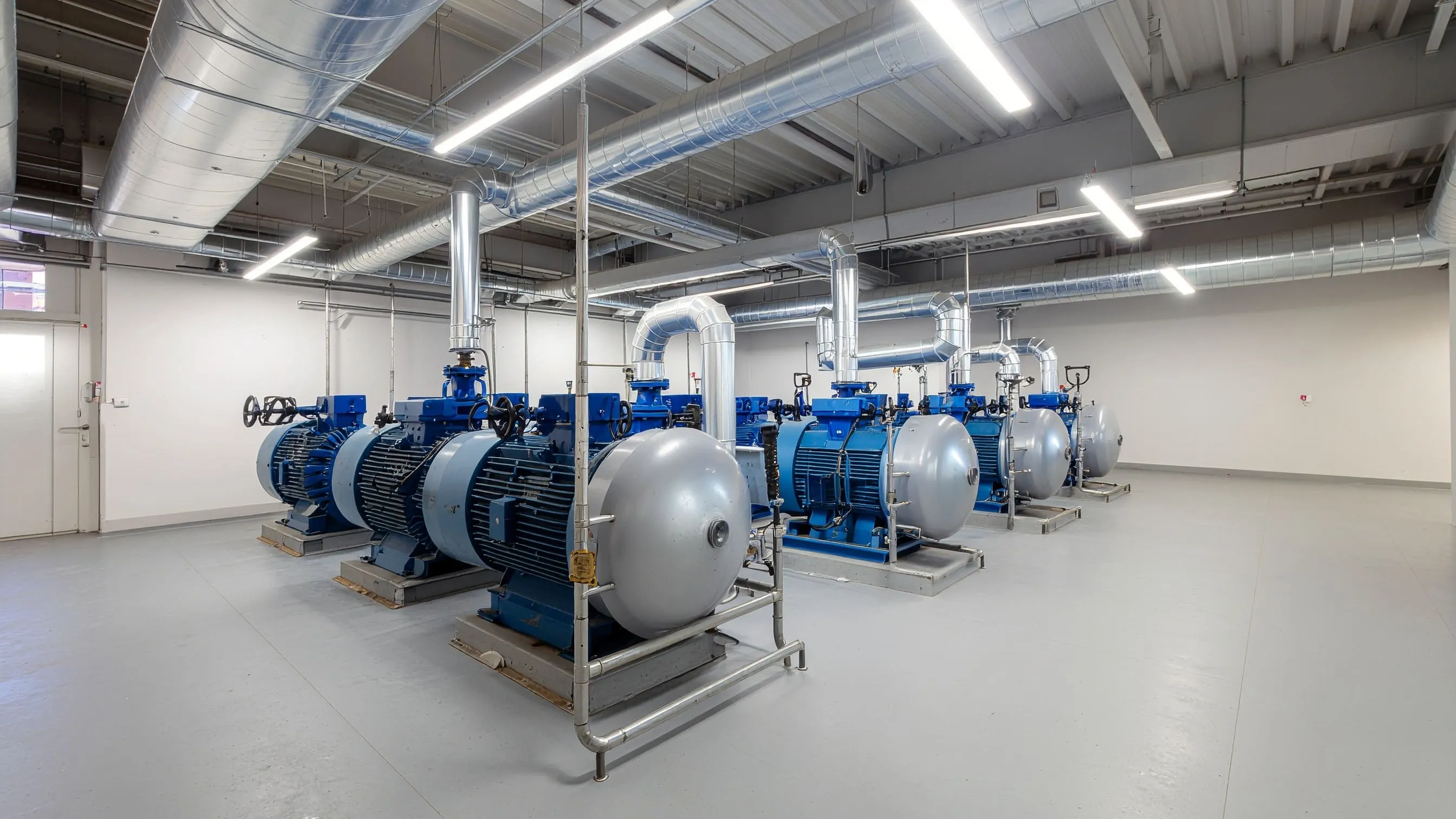
Domestic hot water circulation demands precise pump selection to maintain temperature throughout distribution networks while controlling energy consumption. The choice between single-impeller and twin-impeller DHW pumps fundamentally affects system performance, operating costs, and maintenance requirements across a building's operational life.
Single-impeller pumps dominate smaller residential and light commercial installations, where modest pressure requirements and straightforward hydraulic characteristics align with system demands. Twin-impeller DHW pumps address more challenging applications, such as taller buildings, extended pipe runs, and complex distribution networks where standard single-stage pumps can't generate sufficient head pressure to maintain circulation.
The distinction extends beyond simple performance metrics. Each configuration carries specific implications for energy efficiency, installation complexity, and long-term operational costs that building services engineers must evaluate against project requirements and British Standards compliance.
Understanding DHW Pump Impeller Configurations
Single-impeller DHW pumps employ one rotating impeller within the pump housing to generate flow and pressure. Water enters the pump axially, passes through the impeller vanes, and exits radially with increased velocity and pressure. This design suits applications requiring moderate head pressure, typically up to 6 metres for standard DHW pumps in residential and small commercial buildings.
Twin-impeller pumps incorporate two impellers mounted in series on the same shaft. Water passes through the first impeller, gaining initial pressure, then flows through the second impeller for additional pressure increase. Think of a twin-impeller pump like a multi-stage rocket. The first stage gives the water its initial push, and the second stage kicks in to drive it even higher, allowing it to reach elevations that a single burst of energy just couldn't manage.
A hydraulic performance curve demonstrates the fundamental difference between configurations. Single-impeller pumps exhibit a relatively linear relationship between flow rate and head pressure. Twin-impeller configurations shift this curve upward, achieving 8 to 12 metres of head while maintaining similar flow rates. This characteristic becomes critical when a single-stage pump head simply cannot overcome the calculated system resistance.
Single-Impeller DHW Pumps: Characteristics and Applications
Single-impeller DHW pumps deliver flow rates between 20 and 80 litres per minute at heads from 2 to 6 metres. These specifications match most residential properties and smaller commercial buildings. A reliable grundfos circulating pump is a prime example of the bronze-fitted models that dominate this market segment, offering corrosion resistance and reliable performance in potable water applications.
Typical applications include houses, small apartment blocks up to four storeys, care homes, and light commercial premises where pipe runs remain relatively short and vertical lifts stay within single-stage capabilities. These pumps maintain DHW temperature throughout circulation loops, preventing Legionella growth and minimising heat loss.
Energy consumption for single-impeller pumps ranges from 45 to 150 watts depending on pump size and duty point. Modern variable speed models adjust motor speed to match system demand, reducing average power consumption by 30-50% compared to fixed-speed predecessors. ErP Directive compliance mandates Energy Efficiency Index (EEI) values below 0.23 for most DHW circulation pumps, pushing manufacturers toward higher efficiency motor designs.
Twin-Impeller DHW Pumps: Performance Advantages
Twin-impeller DHW pumps excel when system calculations reveal head requirements exceeding 6 metres. Multi-storey residential buildings, hotels, hospitals, and commercial premises with extensive horizontal distribution networks frequently demand the enhanced pressure capabilities only twin-stage pumps provide. Specifying a premium Wilo Stratos provides a robust twin-impeller model specifically designed for these demanding applications.
The hydraulic advantage becomes apparent in pressure-critical installations. A twin-impeller pump operating at 2,850 rpm generates approximately double the head pressure of an equivalent single-impeller unit at the same speed. This characteristic eliminates the need for oversized motors or excessive rotational speeds that compromise efficiency and increase noise levels.
Flow characteristics also improve in certain applications. The staged pressure increase through two impellers creates more stable flow patterns, reducing turbulence and cavitation risk in systems with varying demand. Variable speed control integrates particularly well with a twin-stage design, allowing precise pressure adjustment across wider operating ranges.
Pressure and Flow Requirements Analysis
Accurate system calculations determine which pump configuration suits specific installations. DHW circulation systems must overcome static head, friction losses in pipework, and pressure drops through valves, fittings, and heat exchangers. British Standard BS 8558 provides calculation methodologies for DHW system design.
Static head equals the vertical distance from pump discharge to the highest draw-off point. A four-storey building with 3-metre floor heights requires approximately 12 metres of static head. This sits well beyond single-impeller capabilities and necessitates twin-impeller or alternative solutions.
Friction losses depend on pipe diameter, length, and flow velocity. A 100-metre horizontal pipe run at 22mm diameter carrying 40 litres per minute generates approximately 3 metres of head loss. Combined with vertical lift and fitting losses, total system head frequently exceeds what a single-stage pump head can deliver in larger buildings.
Temperature maintenance requirements influence pump selection indirectly. Building Regulations Approved Document G and HSE ACOP L8 guidelines mandate DHW storage at 60°C minimum to control Legionella bacteria. Circulation systems must maintain return temperatures above 50°C at the furthest point from the heat source. Inadequate pump pressure allows temperature stratification and dead legs where bacteria proliferate.
Energy Efficiency Comparison
Power consumption differences between single and twin-impeller pumps directly impact operating costs over the system lifespan. A typical single-impeller DHW pump operating continuously consumes 800-1,200 kWh annually at a 100-watt average power draw. Twin-impeller equivalents range from 1,200-2,000 kWh annually at 150-230 watts, depending on system duty and control strategy.
ErP Directive requirements apply to both configurations. Energy Efficiency Index calculations account for hydraulic performance, electrical consumption, and control capabilities. Upgrading to a permanent magnet motor provides significantly better EEI ratings than older, fixed-speed induction models.
Operating cost analysis over 15 years reveals the financial impact. At £0.24 per kWh, a 100-watt single-impeller pump costs approximately £2,100 to operate continuously for 15 years. A 150-watt twin-impeller pump costs £3,150 over the same period. However, installing an undersized single-impeller pump that fails to maintain proper circulation creates far greater costs through system inefficiency and potential Legionella remediation.
Installation and Space Considerations
Physical dimensions influence pump selection in plant room environments with limited space. Single-impeller pumps typically measure 180-250mm in length with 40-50mm pipe connections. Twin-impeller configurations extend to 280-350mm length to accommodate the second impeller stage and longer shaft assembly. National Pumps and Boilers stocks both configurations with detailed dimensional data for accurate plant room design.
Pipework connections follow identical standards for both pump types. Bronze-fitted models accept compression fittings on 22mm or 28mm copper pipe, and larger installations use flanged connections from DN32 to DN50. Horizontal mounting with the shaft parallel to the floor optimises bearing lubrication and extends service life.
Commissioning procedures differ slightly between configurations. Single-impeller pumps require straightforward flow and pressure verification against design calculations. Twin-impeller pumps benefit from stage-by-stage pressure measurement to confirm both impellers contribute the appropriate head increase.
Maintenance and Reliability Factors
Service intervals for DHW circulation pumps depend on water quality, operating temperature, and duty cycle intensity. Single-impeller pumps in well-maintained systems require inspection every 24 months, with bearing and seal replacement at 50,000-60,000 operating hours. Twin-impeller configurations follow similar schedules, but the additional impeller stage introduces a second set of wear surfaces requiring monitoring. A differential pressure gauge installed at pump suction and discharge points facilitates accurate ongoing performance monitoring.
Common failure modes include bearing wear, shaft seal deterioration, and impeller erosion from suspended particles in DHW systems. Bronze construction resists corrosion effectively, but poor water treatment allows scale accumulation that restricts impeller clearances. Regular system flushing and water treatment according to BS 8558 prevents most operational issues.
Spare parts availability favours established manufacturers. Leading brands maintain comprehensive spare parts inventories for current and legacy models, ensuring long-term serviceability. To simplify maintenance, review lowara pump troubleshooting guides for models with widely available spares and straightforward cartridge seal replacement.
Cost Analysis: Initial Investment vs Long-Term Value
Purchase prices reflect the complexity difference between configurations. Single-impeller DHW pumps range from £280-650 depending on size, materials, and control features. Twin-impeller equivalents cost £520-1,100 for comparable specifications. This premium purchases the enhanced pressure capabilities essential for taller properties.
Installation costs remain similar for both pump types. Labour requirements for pipework connections, electrical terminations, and commissioning differ minimally. Plant room modifications to accommodate slightly larger twin-impeller dimensions rarely exceed £100-150 in additional contractor time.
Energy savings calculations determine long-term value. A properly sized single-impeller pump operating 8,760 hours annually at 90 watts costs £189 per year at current electricity rates. An oversized twin-impeller pump running continuously at 160 watts costs £336 annually. Check an Armstrong commercial pump to compare whole-life costs across appropriate pump configurations for your application. Reading a hydraulic performance curve closely before purchase ensures you don't overspend on power.
Making the Right Choice for Your Building
Decision criteria centre on accurate system head calculations and realistic assessment of building characteristics. Single-impeller pumps suit residential properties up to four storeys, small commercial buildings, and any installation where total system head remains below 5 metres. These applications represent approximately 75% of DHW circulation requirements in the UK building stock.
Twin-impeller DHW pumps become necessary when total system head exceeds 6 metres. Hotels, hospitals, student accommodation blocks, and large commercial premises frequently demand twin-stage performance.
A mechanical contractor recently retrofitted a six-storey student accommodation block using an undersized unit. They discovered the single-stage pump head couldn't overcome the friction losses in the extended horizontal runs. Top-floor residents complained of lukewarm water within days. Swapping the unit for a correctly sized DAB booster pump resolved the issue immediately and restored the required 50°C return temperature.
Future-proofing considerations influence specification decisions. Building extensions, additional storeys, or system modifications may increase head requirements beyond original design parameters. Explore a central heating pump option to complement DHW pump selection with appropriately matched system components that allow for future expansion.
Conclusion: Professional Specification for DHW Systems
Single-impeller and twin-impeller DHW pumps serve distinct applications within building services engineering. Single-stage pumps deliver cost-effective performance for residential and light commercial installations where system head requirements remain within their 4-6 metre capabilities. Twin-impeller designs address demanding applications in taller buildings and complex distribution networks requiring enhanced pressure characteristics.
Proper selection demands accurate system calculations accounting for static head, friction losses, and pressure drops throughout the DHW circulation network. Energy efficiency, maintenance requirements, and total cost of ownership favour the simplest pump configuration that reliably meets system demands while complying with British Standards and Building Regulations.
Building services engineers benefit from consulting specialist suppliers during design stages to verify pump specifications against project requirements. For technical guidance on sizing and configuration specific to your project, Call Our Team Today to discuss system calculations and specification recommendations.