

Single Pump vs Twin Pump Booster Sets: Choosing the Right Configuration
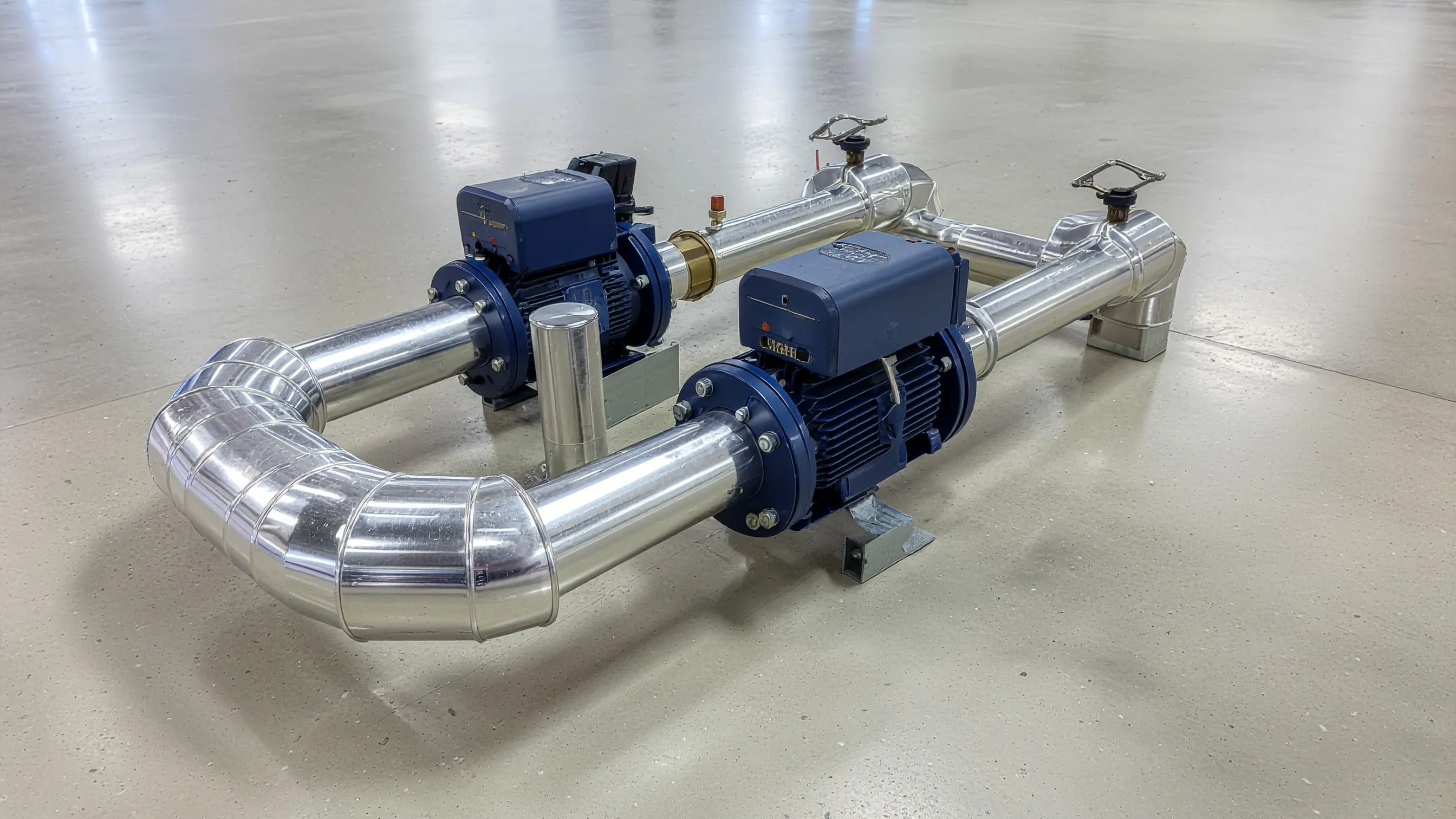
Pressure boosting systems form the backbone of reliable water supply in multi-storey buildings, yet the choice between single and twin pump booster set configurations remains one of the most consequential decisions heating engineers face during system design. This specification directly impacts system reliability, operational costs, and compliance with Building Regulations - making it far more than a routine equipment selection.
The fundamental difference between single vs twin pump booster set arrangements centres on redundancy and capacity. A single pump system relies entirely on one unit to maintain pressure, whilst twin pump arrangements distribute the workload across two units operating in various modes. Understanding these operational differences is what determines why certain buildings absolutely require twin pump systems, whilst others perform perfectly well with a single unit. Matching configuration to application prevents both costly over-specification and the equally costly consequences of under-specifying water pressure reliability.
Understanding Booster Set Configurations
Single pump booster sets contain one pump unit connected to a pressure vessel and control panel. The pump activates when system pressure drops below the set point, then deactivates once pressure restores. This straightforward arrangement suits applications where a brief interruption to boosted water supply during pump maintenance presents minimal operational risk.
Twin pump booster set configurations offer significantly more operational flexibility. In duty/standby mode, one pump handles normal demand whilst the second remains inactive, ready to assume full operation if the primary pump fails or requires maintenance. Well-designed control systems alternate which pump serves as duty unit, equalising accumulated running hours across both units and preventing standby pump seizure from prolonged inactivity.
Duty/assist configuration presents a different operational philosophy. Both pumps run simultaneously during peak demand periods, combining their flow capacity to meet loads that would overwhelm a single unit. During lower demand, only one pump operates whilst the second remains on standby. This arrangement suits applications with highly variable flow requirements, where a single pump cannot adequately meet peak demand but would be unnecessarily oversized for sustained normal operation. Understanding the distinction between these twin pump modes is fundamental to matching booster set configurations to specific building profiles.
Central heating systems in commercial buildings frequently share plant rooms and riser routes with cold water boosting equipment - specifying compatible equipment across both services at design stage simplifies installation, reduces commissioning time, and improves long-term maintenance access.
Performance Characteristics: Single Pump Systems
Single pump booster sets deliver consistent pressure across their design flow range when correctly specified. A typical 2.2kW unit generates 4-6 bar pressure whilst delivering 40-60 litres per minute, providing adequate capacity for buildings up to four storeys with moderate occupancy patterns.
Variable speed drive technology enables these pumps to maintain steady outlet pressure regardless of demand variation. As outlets open and water flows, the pump automatically increases speed. When demand drops, it reduces speed rather than cycling off completely. This modulation reduces energy consumption by 30-40% compared to fixed-speed pumps operating with conventional pressure switches, and eliminates the pressure surges associated with repeated motor starts.
Energy consumption in single pump systems follows demand directly. During peak morning and evening periods, the pump operates at higher speeds, consuming proportionally more electricity. Overnight, when demand drops, power consumption falls correspondingly. Annual energy costs for a 2.2kW single pump system typically range from £400-£600 depending on usage patterns and electricity tariffs.
Grundfos single pump systems range from 0.75kW to 7.5kW, covering the majority of domestic and light commercial applications - the full range includes models matched to a wide variety of duty profiles, with detailed performance curves to support accurate specification against calculated system requirements.
Performance Characteristics: Twin Pump Systems
Twin pump configurations deliver fundamentally different performance characteristics. In duty/assist mode, combined flow capacity reaches 180-200% of a single pump's output, enabling the system to meet peak demands that would overwhelm a single unit. This capability proves essential in buildings with simultaneous high-demand events such as commercial kitchens, shower facilities used during shift changes, or industrial process requirements.
Redundancy represents the most significant operational advantage of twin pump systems. When one pump requires maintenance or experiences failure, the system continues operating on the remaining unit. For critical applications - hospitals, care homes, commercial premises - this continuity justifies the additional capital investment. Building Regulations Approved Document G specifically addresses water supply reliability, noting that systems serving premises where supply interruption poses health or safety risks require redundant capacity.
Load distribution extends component lifespan considerably. Rather than one pump accumulating all operating hours, twin pump systems alternate duty cycles so that each pump operates approximately half the time, reducing wear on bearings, seals, and impellers. This distribution typically extends individual pump lifespan by 40-50% compared to single pump installations handling similar total demand.
Wilo twin pump systems are available in both duty/standby and duty/assist configurations, with detailed technical datasheets supporting sizing calculations for specific building heights, occupancy profiles, and simultaneous demand scenarios - a practical starting point for any project where water pressure reliability is a primary specification concern.
Reliability and Maintenance Implications
Single pump systems present an obvious vulnerability - complete loss of boosted water supply during pump failure or scheduled maintenance. For a typical residential building, engineers can schedule maintenance during periods of low occupancy, minimising disruption. However, unexpected failures still result in total system downtime until repairs are completed, which in urgent cases means emergency call-out charges and significant tenant or occupant disruption.
Maintenance scheduling becomes significantly more flexible with twin pump arrangements. Engineers can isolate and service one pump whilst the system continues operating on the remaining unit. This capability eliminates the need for out-of-hours emergency call-outs in the event of routine maintenance needs, reducing costs and improving service quality for building operators and occupants alike.
Component lifespan differences prove substantial over the equipment's operational life. Single pump systems accumulate operating hours continuously, typically reaching 4,000-6,000 hours annually in residential and light commercial applications. Twin pump systems operating in alternating duty mode accumulate roughly half those hours per pump. Given that bearing and mechanical seal life correlates directly with operating hours, this reduction translates to measurably longer intervals between major component replacements.
Armstrong twin pump systems incorporate run-hour equalisation controls that automatically balance duty assignments, preventing premature wear on a single pump and maximising the lifespan advantage that duty/standby operation delivers over continuous single-pump running.
Application-Specific Requirements
Building height directly influences pressure requirements and consequently pump configuration decisions. For buildings up to four storeys, a correctly specified single pump typically provides adequate pressure - approximately 1 bar per storey plus 2 bar for distribution losses and fixture requirements. Beyond four storeys, combined pressure and flow requirements increasingly favour twin pump systems with inverter controls to maintain consistent pressure across all levels.
Usage pattern analysis reveals whether duty/assist capability justifies its additional cost. Buildings with pronounced peak demand periods - student accommodation, hotels, sports facilities, and leisure centres - benefit significantly from the additional flow capacity twin pump duty/assist provides. Conversely, buildings with relatively consistent demand throughout the day, such as small office blocks or residential conversions, rarely utilise the second pump to its full advantage during normal operation.
Criticality assessment determines whether pump redundancy justifies the investment. Healthcare facilities, care homes, food production premises, and commercial buildings where operational disruption costs exceed several hundred pounds per hour should specify twin pump systems as a baseline requirement. Domestic hot water supply systems face similar criticality considerations, particularly in larger residential and hospitality applications where supply interruption affects multiple occupants simultaneously - reviewing the DHW pumps range confirms compatible configurations for combined cold and hot water boosting requirements within the same plant room.
Space constraints occasionally dictate configuration choices in retrofit applications. Plant rooms in older commercial buildings may lack sufficient floor area for standard twin pump installations, though compact twin pump sets are available at a cost premium. Engineers must balance space limitations against reliability requirements when specifying systems for existing buildings.
Cost Analysis: Initial Investment vs Long-Term Value
Capital expenditure for single pump systems typically ranges from £800-£2,000 depending on capacity and control specification. Twin pump configurations for equivalent capacity cost £1,800-£4,500. This premium represents the most immediately visible barrier to twin pump specification, though total cost of ownership calculations tell a more nuanced story.
Operating costs differ less than the capital figures suggest. Twin pump systems operating in duty/standby mode consume essentially identical energy to single pump systems under normal conditions, since only one pump runs at a time. Duty/assist configurations consume additional energy only during peak demand periods when both pumps operate simultaneously. Annual energy cost differences in most applications amount to less than £100 - a marginal figure against the reliability benefits delivered.
National Pumps and Boilers supplies pressure-boosting equipment across both single and twin pump configurations, with specification support to identify the most cost-effective arrangement for specific applications - balancing capital investment, operating costs, and reliability requirements across the full system lifespan.
Maintenance budget implications favour twin pump systems over their operational lifespan. Extended component life reduces replacement part costs by approximately £200-£400 per pump over a 10-year period. Reduced emergency call-out requirements produce further savings of £300-£500 over the same period. These savings partially offset the higher initial capital investment and shift the total cost of ownership comparison considerably.
Total cost of ownership calculations over 15 years - a typical booster set operational lifespan - indicate that twin pump systems cost approximately 15-25% more than single pump installations when all factors are combined. For critical applications where a single supply interruption costs upwards of £500 in direct losses, twin pump systems typically deliver positive return on investment within 2-3 years.
Regulatory and Standards Compliance
Building Regulations Approved Document G Section 3 addresses cold water supply systems, requiring adequate pressure and flow rates at all draw-off points. Whilst the regulations do not explicitly mandate twin pump systems, they require that reasonable provision be made to ensure water supply systems do not create or contribute to health risks. For buildings where supply interruption poses health or safety consequences, this requirement effectively drives twin pump specification.
BS 8558:2015 provides detailed guidance on water supply system design and recommends twin pump configurations for buildings exceeding five storeys, healthcare facilities, and premises where supply interruption would generate significant operational or economic disruption. Compliance with BS 8558 demonstrates due diligence in system design and can reduce professional liability exposure in the event of system failure.
Insurance considerations increasingly influence specification decisions. Commercial property insurers now routinely assess water supply system redundancy during underwriting. Buildings without redundant supply may face higher premiums or coverage exclusions for water damage claims. DAB twin pump systems with alternating duty operation satisfy most insurer requirements for supply redundancy - the packaged range ships pre-wired and factory-tested, reducing installation time and simplifying the documentation required for insurance compliance records.
Water Supply (Water Fittings) Regulations 1999 focus primarily on backflow prevention and water quality rather than system redundancy. However, the requirement that water fittings be of appropriate quality and standard supports twin pump specification where reliability requirements are demonstrably justified by building type or occupancy.
Making the Configuration Decision
Risk assessment provides the most robust framework for configuration decisions. Calculating the cost of water supply interruption for durations of one hour, four hours, and one full day establishes a clear financial case for or against twin pump investment. Direct costs such as lost production, operational disruption, and emergency repair call-outs should be combined with indirect costs - tenant complaints, reputation damage, and potential regulatory notices - to produce a realistic total interruption cost figure.
Future capacity planning influences configuration choices significantly. Buildings likely to undergo occupancy increases or use changes benefit from twin pump systems with forward-specified capacity. Adding a third pump to an existing twin pump system costs substantially less than a complete replacement of an undersized single pump installation.
Pump valves require careful specification in both single and twin pump configurations to ensure correct isolation capability, backflow prevention, and protection against pressure surges during pump start-up and shutdown sequences - an element of the system often overlooked until commissioning, when incorrect valve specification requires costly remediation.
Specification guidelines based on building type provide useful starting benchmarks. Residential buildings under four storeys with fewer than 12 units typically operate successfully with single pump systems. Buildings exceeding these thresholds, commercial premises, healthcare facilities, and any application where supply interruption poses health, safety, or significant economic risk warrant twin pump specification as the baseline design approach.
Conclusion
The single vs twin pump booster set decision ultimately balances initial capital investment against operational requirements and acceptable risk tolerance. Single pump systems deliver cost-effective performance for applications where temporary supply interruption poses minimal risk and usage patterns remain relatively consistent. Twin pump booster set configurations provide the redundancy and combined capacity that critical applications demand, with operational advantages in reliability, component longevity, and maintenance flexibility that partially offset their higher capital cost across the system's lifespan.
Heating engineers must assess each application individually, weighing building height, occupancy patterns, water supply criticality, regulatory compliance requirements, and total cost of ownership. The growing emphasis on system reliability in Building Regulations and insurance underwriting increasingly favours twin pump specification for commercial and multi-residential applications where booster set configurations must deliver consistent water pressure reliability without interruption.
For technical guidance on booster set specification tailored to specific building types and performance requirements, Contact Us to discuss project parameters with experienced pump specialists.