

Soft Start Technology: Protecting Pump Motors From Electrical Stress
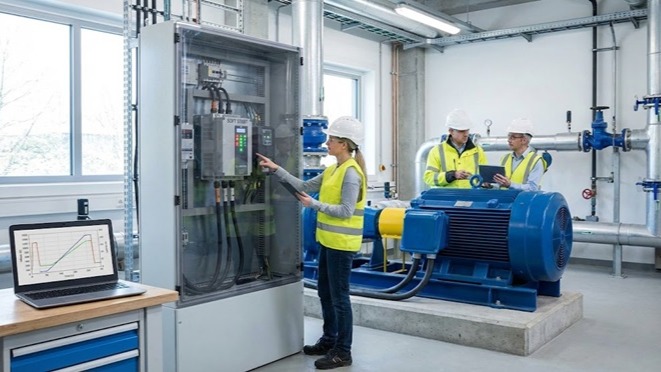
Pump motors endure significant mechanical and electrical stress during startup - a reality that costs UK facilities thousands in premature equipment failure. The inrush current during direct-on-line starting can reach 6-8 times the motor's rated current, creating thermal stress, mechanical shock, and voltage sags that damage windings, bearings, and connected equipment. Pump soft start technology eliminates these destructive forces by controlling voltage ramp-up, extending motor lifespan by 40-60% whilst reducing energy costs and maintenance interventions.
National Pumps and Boilers supplies advanced motor protection pumps with soft start solutions across commercial HVAC, building services, and industrial applications where pump reliability directly impacts operational continuity. The technology has evolved from basic voltage ramp controllers to intelligent systems that monitor torque, current, and thermal conditions in real-time, protecting motors rated from 4kW to 630kW in heating, cooling, and process water applications.
Why Direct-on-Line Starting Damages Pump Motors
Conventional direct-on-line (DOL) starting applies full mains voltage instantaneously to a stationary motor. The initial inrush current - typically 600-800% of full load current - generates electromagnetic forces that stress stator windings and rotor bars. This mechanical shock propagates through couplings, shafts, and impellers, accelerating wear in bearings and mechanical seals.
Electrical Stress Manifestations
The electrical stress manifests in three destructive ways. First, the high inrush current creates localised heating in motor windings, degrading insulation materials over repeated cycles. Second, the sudden torque spike generates torsional vibration that fatigues shaft components and coupling elements. Third, the voltage dip affects other equipment on the same electrical supply, causing control system resets and lighting flicker in sensitive environments.
Commercial heating systems demonstrate these effects clearly. A Grundfos pump rated at 15kW draws approximately 100A during DOL starting versus 28A at full load. This 3.6x overcurrent occurs for 2-4 seconds during each start, creating thermal cycling that reduces winding insulation life by 30-40% compared to controlled starting methods.
Water Hammer and Mechanical Consequences
Water hammer presents an additional mechanical consequence. The instantaneous acceleration forces liquid in the pipework to rapidly change velocity, generating pressure transients that stress pipe joints, valve bodies, and heat exchanger tubes. Building services engineers frequently observe leaks developing at flanged connections downstream of DOL-started pumps, particularly in older installations with rigid pipework.
How Soft Start Technology Controls Motor Acceleration
Pump soft start technology employs thyristor-based power electronics to gradually increase voltage supplied to the motor during startup. The controller adjusts the firing angle of silicon-controlled rectifiers (SCRs), modulating the AC waveform to deliver a smooth voltage ramp from typically 30-40% to 100% over a programmable period of 5-30 seconds.
Current Reduction and Torque Control
This controlled acceleration reduces starting current to 2-4 times full load current - a 50-75% reduction compared to DOL methods. The gradual torque buildup eliminates mechanical shock whilst allowing sufficient starting torque to overcome system inertia and friction. Modern motor protection pumps incorporate microprocessor control that adjusts voltage ramp profiles based on load characteristics and motor response.
Three-phase soft starters control each phase independently, maintaining balanced current delivery throughout the acceleration period. This phase balancing prevents the uneven magnetic forces that contribute to bearing wear and shaft deflection in conventional starting methods. The electronics monitor current imbalance continuously, providing fault protection if one phase develops excessive resistance or a connection degrades.
Adaptive Torque Curves
The technology adapts to different load types through programmable torque curves. Centrifugal pump applications benefit from quadratic torque ramps that match the pump's torque-speed characteristic, minimising energy waste during acceleration. Positive displacement pumps require linear torque profiles to overcome higher breakaway friction whilst avoiding pressure spikes in the discharge pipework.
Thermal Protection Advantages
Thermal protection represents a critical advantage over DOL starters. Soft start controllers incorporate electronic overload relays that model motor temperature based on current magnitude and duration, protecting against both locked rotor conditions and sustained overload scenarios. This thermal modelling provides significantly faster fault detection than traditional bimetallic overload devices, preventing winding damage during abnormal operating conditions.
Electrical Benefits for Building Services Applications
Commercial building services present demanding electrical environments where pump soft start technology delivers measurable operational advantages. The reduced starting current eliminates voltage dips that affect lighting circuits, computer systems, and building management equipment. Facilities managers report elimination of LED flicker and computer resets that previously occurred during large pump starts in office buildings and data centres.
Power Factor and Generator Benefits
Power factor improvement occurs naturally during soft starting. The controlled voltage ramp reduces the reactive current component during acceleration, maintaining power factor above 0.85 throughout the starting sequence versus 0.3-0.5 typical of DOL starting. This improvement reduces demand charges on commercial electricity tariffs and minimises reactive power penalties imposed by distribution network operators.
Generator-backed installations gain particular benefit from current limiting. Emergency generator sets typically provide 3-4 times their continuous rating for motor starting, limiting the number of pumps that can start simultaneously. Wilo pumps equipped with soft starters draw sufficiently low starting current to permit sequential starting of multiple pumps without exceeding generator capacity, critical for maintaining building services during mains power failures.
Harmonics Reduction
Harmonics reduction represents an often-overlooked advantage. Whilst soft starters introduce some harmonic distortion during the acceleration period, the brief duration and lower current magnitude generate significantly less harmonic energy than the prolonged inrush current of DOL starting. This becomes relevant in installations with sensitive electronic equipment or where harmonic limits apply under G5/4-1 recommendations.
Mechanical Protection and Equipment Longevity
The mechanical benefits of controlled acceleration extend throughout the pump assembly and connected pipework. Bearing manufacturers specify maximum radial acceleration forces that bearings can withstand during starting - forces that DOL starting frequently exceeds. Motor protection pumps with soft start technology maintain acceleration within these design limits, preventing brinelling damage to bearing races and extending bearing service life by 40-50%.
Seal and Impeller Protection
Mechanical seal reliability improves substantially under controlled starting conditions. The gradual acceleration allows seal faces to establish a proper lubricating film before full operating speed, preventing the dry running and thermal shock that cause seal face cracking and premature leakage. Heating engineers report seal life extending from 18-24 months to 36-48 months when retrofitting soft starters to existing central heating pump installations.
Impeller stress reduction becomes critical in larger commercial pumps where impeller mass creates significant inertia. The sudden acceleration of DOL starting generates centrifugal forces that stress impeller vanes and hub connections, particularly in cast iron and composite impeller designs. Controlled acceleration maintains stress levels within the impeller's fatigue limit, preventing the cracking and catastrophic failure observed in high-cycle DOL applications.
Coupling and Pipework Benefits
Coupling life extends dramatically under soft start conditions. Flexible couplings absorb the torsional shock of DOL starting through elastic deformation of rubber or polymer elements, generating heat and mechanical fatigue. The gradual torque buildup of soft starting eliminates this shock loading, extending coupling service intervals from 2-3 years to 5-7 years in typical commercial applications.
Pipework systems benefit from elimination of water hammer and pressure transients. The controlled flow acceleration prevents the pressure spikes that stress pipe joints, expansion vessels, and pump valves. Building services contractors report significant reduction in joint leakage and valve seat damage when implementing pump soft start technology across commercial heating and cooling installations.
Application Considerations for Different Pump Types
Centrifugal pumps in HVAC applications represent the ideal soft start application. The quadratic torque-speed characteristic means starting torque requirements remain modest, allowing aggressive current limiting without risk of stalling. Variable speed circulators benefit particularly from soft starting, as the combination of controlled acceleration and speed modulation provides comprehensive motor protection across the full operating range.
DHW and Booster Set Applications
DHW pumps in commercial buildings demonstrate measurable reliability improvements with soft start implementation. The frequent start-stop cycling inherent to domestic hot water systems - often 20-30 starts per day - accelerates motor wear under DOL conditions. Soft starting reduces this cumulative stress, extending motor life from 5-7 years to 10-12 years whilst maintaining rapid hot water delivery response.
Booster set applications require careful soft start configuration to prevent pressure control issues. The gradual acceleration must complete sufficiently quickly to maintain system pressure within acceptable limits, typically requiring 10-15 second ramp times versus 20-30 seconds for less critical applications. Modern soft starters provide pressure feedback integration, adjusting ramp profiles dynamically to maintain pressure stability during starting.
High Inertia and Parallel Installations
End suction pumps with higher inertia loads benefit from extended ramp times that prevent motor stalling. The soft starter must deliver sufficient starting torque to overcome static friction whilst limiting current to acceptable levels - a balance achieved through torque boost functions that temporarily increase voltage during the initial acceleration phase. This proves essential for pumps handling viscous fluids or operating against high static head pressures.
Parallel pump installations gain operational flexibility through sequential soft starting. Rather than starting multiple pumps simultaneously and exceeding supply capacity, intelligent control systems sequence starts with 30-60 second intervals, maintaining total starting current within acceptable limits. This approach permits installation of larger motor protection pumps without electrical supply upgrades, reducing project costs whilst improving system redundancy.
Integration With Building Management Systems
Modern soft start controllers provide extensive communication capabilities that integrate seamlessly with building management systems (BMS). Modbus RTU, Modbus TCP, and BACnet protocols enable real-time monitoring of motor current, voltage, power factor, and thermal status, providing facilities managers with comprehensive equipment health visibility.
Predictive Maintenance Capabilities
Predictive maintenance capabilities emerge from continuous monitoring of starting current profiles. Gradual increases in starting current over time indicate bearing wear, impeller damage, or system blockages, allowing proactive maintenance intervention before catastrophic failure occurs. BMS trending of starting current data identifies degradation patterns 3-6 months before traditional maintenance indicators become apparent.
Energy monitoring through soft start controllers provides accurate pump power consumption data without additional metering hardware. The integrated current and voltage sensing calculates real power, apparent power, and power factor continuously, supporting energy management initiatives and validating system efficiency calculations required under Building Regulations Part L compliance.
Alarm and Remote Control
Alarm and fault logging capabilities enhance troubleshooting efficiency. Soft starters record overcurrent events, phase imbalance conditions, and thermal overload trips with timestamp data, enabling maintenance teams to identify intermittent faults and operating anomalies that would otherwise remain undetected. This diagnostic capability reduces troubleshooting time by 40-60% compared to conventional motor protection devices.
Remote control functionality permits starting, stopping, and parameter adjustment from central control rooms or mobile devices, reducing response times for equipment issues and enabling operational flexibility. National Pumps and Boilers specifies communication-enabled soft starters for commercial installations where remote monitoring and control deliver operational efficiency improvements.
Sizing and Selection Criteria
Proper soft starter sizing requires matching the controller's continuous current rating to the motor's full load current with appropriate safety margin. Standard practice specifies soft starters rated at 110-125% of motor full load current to accommodate sustained operation at full load without thermal derating. Applications with frequent starting or high ambient temperatures require additional derating per manufacturer specifications.
Voltage and Environmental Ratings
Voltage rating must match the motor supply voltage precisely - 400V three-phase for standard UK commercial installations, with 690V ratings available for industrial applications. Single-phase soft starters suit smaller pumps up to 4kW, whilst three-phase controllers handle motors from 4kW to 630kW in standard configurations, with larger ratings available for specialist applications.
Environmental protection rating determines suitability for different installation locations. IP20 ratings suit clean electrical rooms with controlled environments, whilst IP54 or IP65 ratings provide protection against dust and moisture in plant rooms, basements, and outdoor installations. Pump room applications typically specify IP54 minimum to prevent moisture ingress from pipe condensation and occasional water exposure.
Torque and Control Features
Starting torque requirements influence controller selection and configuration. Standard soft starters provide 50-70% of full load torque during starting, sufficient for most centrifugal pump applications. High-inertia loads or pumps operating against significant static head require soft starters with torque boost capability, delivering 80-100% starting torque whilst maintaining current limiting benefits.
Control features determine operational flexibility and protection capabilities. Basic models provide simple voltage ramp control with fixed acceleration times, whilst advanced controllers offer programmable torque curves, phase imbalance protection, ground fault detection, and comprehensive communication interfaces. The selection should match the application's operational requirements and maintenance support capabilities.
Cost-Benefit Analysis for Commercial Installations
The capital cost of pump soft start technology ranges from £200-£400 for 4kW motors to £1,500-£3,000 for 45kW commercial pump applications, representing 15-25% of total pump and motor cost. This initial investment delivers quantifiable returns through reduced maintenance costs, extended equipment life, and improved electrical efficiency.
Motor and Component Savings
Motor replacement cost avoidance provides the most significant financial benefit. Extending motor life from 8 years under DOL starting to 12-15 years with soft starting defers a £2,000-£8,000 replacement cost (for typical 15-30kW commercial pump motors), generating net present value of £1,200-£5,000 over the equipment lifecycle at 3.5% discount rates.
Bearing and seal replacement frequency reductions deliver ongoing maintenance savings. Commercial heating pumps typically require bearing replacement every 3-4 years under DOL conditions versus 6-8 years with soft starting, saving £400-£800 per intervention including labour. Mechanical seal life extension from 2 years to 4 years saves £300-£600 per replacement cycle, accumulating to £2,000-£4,000 over 15-year equipment life.
Energy and Downtime Savings
Energy savings remain modest but measurable. Whilst soft starters don't reduce running energy consumption, the elimination of inrush current reduces demand charges on commercial tariffs by £50-£150 annually for larger installations. The primary energy benefit comes from improved system reliability - preventing the inefficient operation that occurs when pumps run continuously due to failed contactors or damaged motor windings.
Downtime cost avoidance represents the most variable but potentially largest financial impact. A failed heating pump in a commercial building during winter can cost £500-£2,000 per day in emergency repairs, temporary heating, and business disruption. Soft start technology's contribution to equipment reliability reduces failure probability by 40-60%, translating to substantial risk-adjusted cost savings over the equipment lifecycle.
Installation and Commissioning Requirements
Soft starter installation requires mounting in electrical enclosures with adequate ventilation and clearance for heat dissipation. Controllers generate 2-4% of motor power as heat during starting, requiring 100-150mm clearance above and below the unit for natural convection cooling. Forced ventilation or air conditioning becomes necessary in confined spaces or high ambient temperature environments.
Electrical and Control Connections
Electrical connections demand careful attention to cable sizing and termination quality. Input cables must handle the limited starting current without excessive voltage drop, typically requiring one cable size smaller than DOL equivalents. Output cables to the motor should maintain the same sizing as DOL installations to handle full load current continuously without thermal stress.
Control wiring integration connects the soft starter to existing pump control systems, BMS interfaces, and safety circuits. Potential-free contacts provide start/stop control from building management systems, whilst auxiliary outputs signal running status, fault conditions, and remote alarm requirements. Proper cable segregation between power and control circuits prevents electromagnetic interference affecting control signals.
Parameter Configuration and Commissioning
Parameter configuration optimises soft starter performance for specific pump characteristics and system requirements. Acceleration time settings balance smooth starting against acceptable startup duration, typically 10-20 seconds for commercial heating pumps. Current limit settings prevent excessive starting current whilst ensuring sufficient torque to reliably start the pump under all operating conditions.
Commissioning verification confirms proper operation across the full range of operating scenarios. Starting current measurement validates that current limiting functions correctly, whilst motor temperature monitoring during multiple start cycles confirms thermal protection settings suit the application. Documentation of parameter settings and commissioning test results provides essential reference for future maintenance and troubleshooting activities.
Conclusion
Pump soft start technology transforms motor protection from reactive maintenance to proactive equipment preservation, delivering 40-60% motor life extension whilst eliminating the electrical disturbances and mechanical shock that compromise system reliability. The controlled voltage ramp reduces starting current by 50-75%, protecting motor windings, bearings, and mechanical seals from the destructive forces of direct-on-line starting.
Commercial building services gain particular benefit from soft starting implementation, where the combination of frequent cycling, electrical supply constraints, and operational criticality justify the modest capital investment. The technology prevents voltage dips affecting sensitive equipment, reduces demand charges on commercial electricity tariffs, and extends maintenance intervals across the entire pump assembly.
Modern soft starters integrate seamlessly with building management systems, providing comprehensive monitoring capabilities that support predictive maintenance strategies and energy management initiatives. The diagnostic data and alarm logging functionality reduce troubleshooting time whilst identifying degradation patterns months before traditional maintenance indicators become apparent.
National Pumps and Boilers supplies soft start solutions across commercial HVAC, industrial process, and building services applications, with technical support to ensure proper sizing, configuration, and integration with existing control systems. The investment delivers quantifiable returns through reduced maintenance costs, extended equipment life, and improved operational reliability - benefits that accumulate throughout the 15-20 year lifecycle of commercial pump installations.
For technical guidance on soft starter selection for specific pump applications, or to discuss retrofit opportunities in existing installations, contact us for application-specific recommendations and system integration support.