

Suction Pipe Best Practices: Preventing Air Entry and Vortex Formation
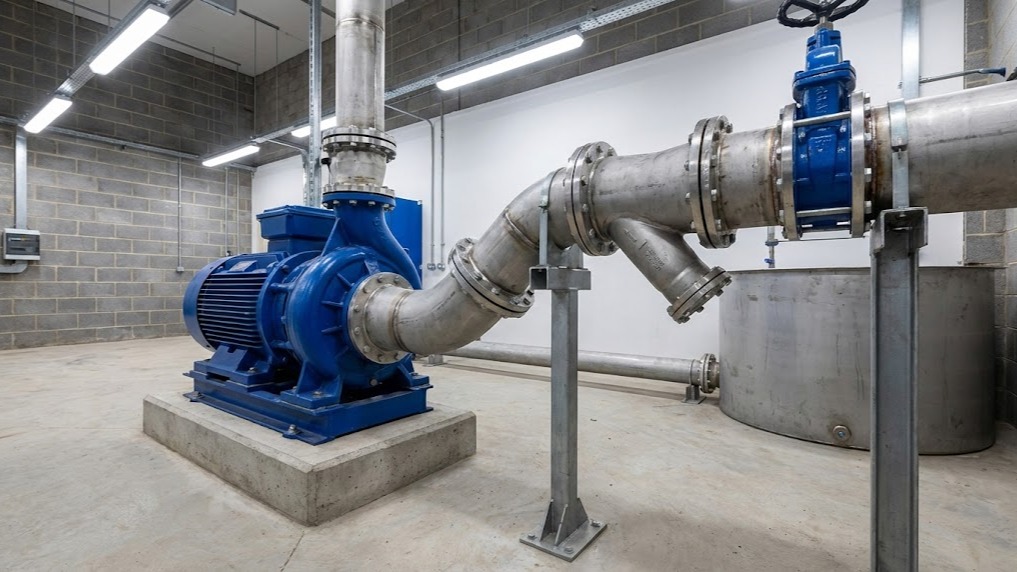
Pump failures in commercial heating systems rarely announce themselves with warning signs. One moment, a circulation pump operates normally. The next, cavitation damage has destroyed impeller surfaces, reduced flow rates by 30%, and triggered a cascade of system failures across multiple floors. The root cause? Poor pump suction line design that allowed air entry and vortex formation - problems entirely preventable through proper engineering.
National Pumps and Boilers encounters these issues regularly when servicing commercial installations. The pattern repeats: undersized suction pipes, inadequate submergence depths, and sharp bends positioned too close to pump inlets. Each mistake compounds the others, creating conditions where air infiltration becomes inevitable and pump performance deteriorates rapidly.
Understanding Air Entry Mechanisms in Suction Systems
Air enters suction pipes through three primary mechanisms, each requiring different prevention strategies. Surface vortices form when inadequate liquid depth above the suction inlet creates a funnel that draws air directly into the pipe. This occurs most commonly in open tanks and sumps where water levels fluctuate during operation.
Free surface vortices differ from submerged vortices, which form beneath the liquid surface without breaking through. Submerged vortices still introduce air by creating low-pressure zones that pull dissolved gases out of solution. Both types damage pump performance, but surface vortices cause more immediate and severe problems.
Three Primary Air Entry Routes
Leakage represents the second air entry route. Any connection, joint, or seal on the suction side operates under negative pressure. Even microscopic gaps allow atmospheric air to infiltrate the system. Thread sealants deteriorate over time, mechanical seals wear, and thermal expansion creates gaps in poorly designed pipe supports.
The third mechanism involves dissolved air coming out of solution when pressure drops below saturation point. This happens naturally in suction pipes as velocity increases and static pressure decreases. Water at 20°C contains approximately 2% dissolved air by volume at atmospheric pressure. When suction pressure drops to 0.5 bar absolute, that air separates into bubbles that accumulate in high points and reduce effective pipe diameter.
Critical Submergence Requirements for Vortex Prevention
Submergence depth - the vertical distance from liquid surface to suction inlet centreline - determines whether vortices form. Insufficient submergence allows rotational flow patterns to develop, creating the characteristic funnel shape that draws air downward.
The minimum submergence depth depends on pipe diameter, flow velocity, and Froude number. For standard central heating applications with suction velocities between 1.0-1.5 m/s, suction pipe best practices require submergence equal to 2.5 times the pipe diameter plus 0.3 metres.
Calculating Minimum Submergence
A 100mm suction pipe therefore needs minimum submergence of 0.55 metres (2.5 × 0.1m + 0.3m). Increase this by 50% for installations where liquid level fluctuates significantly or where multiple pumps draw from the same sump. Commercial buildings with variable heating loads require the higher safety margin because flow rates change throughout the day.
Bell mouth inlets reduce required submergence by approximately 15% compared to plain pipe ends. The smooth radius entry reduces turbulence and delays vortex formation. However, bell mouths cannot compensate for grossly inadequate tank depth - they provide marginal improvement, not fundamental problem-solving.
Distance from tank walls and floor matters equally. Position suction inlets at least 1.5 pipe diameters from any solid surface. Closer positioning creates boundary layer effects that promote vortex formation. A 150mm pipe needs 225mm clearance minimum from walls, floors, and other obstructions.
Suction Pipe Sizing and Velocity Control
Undersized suction pipes create the velocity increases that trigger both cavitation and air separation. Every commercial heating system design starts with proper pipe sizing, yet contractors routinely compromise this to reduce material costs or fit pipes into tight spaces.
Maximum recommended velocity in suction pipes ranges from 1.0-1.5 m/s for most heating applications. Higher velocities increase friction losses, reduce available NPSH (Net Positive Suction Head), and create conditions where dissolved air comes out of solution. Grundfos circulators and other quality manufacturers specify maximum suction velocities in their technical documentation - specifications that installers must follow.
Pipe Diameter Calculation
Calculate required pipe diameter using the formula: D = √(4Q/πV), where D represents diameter in metres, Q equals flow rate in m³/s, and V equals target velocity in m/s. For a system moving 20 litres per second (0.02 m³/s) with target velocity of 1.2 m/s:
D = √(4 × 0.02 / 3.142 × 1.2) = √0.0212 = 0.146m or 146mm
Select the next standard pipe size up - in this case, DN150 (150mm nominal diameter). Never round down. The marginal cost difference between DN125 and DN150 pipe pales against the expense of premature pump failure and system downtime.
Suction pipe diameter should equal or exceed pump suction connection size. Reducers installed immediately before the pump inlet create turbulence and velocity spikes that damage performance. If diameter reduction becomes necessary, position eccentric reducers at least 5 pipe diameters upstream from the pump, with the flat side on top to prevent air pocket formation.
Preventing Air Accumulation Through Proper Pipe Routing
Horizontal suction pipes seem straightforward until air accumulation begins. Every horizontal run creates potential for air pockets, particularly at high points where pipes change direction or elevation. Once air accumulates, it reduces effective pipe diameter and creates flow restrictions that cascade through the entire system.
Design suction pipes with continuous upward slope toward the pump - minimum gradient 1:200 (0.5%). This ensures any air bubbles migrate toward the pump inlet rather than accumulating in the pipe. Even slight downward slopes create traps where air collects until enough volume accumulates to cause pump cavitation.
Routing Guidelines
Avoid high points entirely where possible. Route suction pipes along the shortest, most direct path from source to pump. Every bend, elevation change, and direction reversal introduces turbulence and potential air accumulation points. The ideal suction pipe rises continuously in a straight line from sump to pump with no intermediate high points.
When elevation changes become unavoidable, position automatic air vents at each high point. Size vents appropriately for the air volume they must handle - undersized vents cannot evacuate air fast enough to prevent accumulation. Float-type vents work reliably for heating systems operating below 100°C, while spring-loaded vents handle higher temperatures and pressures.
Sharp bends positioned close to pump inlets create asymmetric flow patterns that promote vortex formation inside the pipe. Following pump suction line design principles, maintain straight pipe length equal to at least 5 pipe diameters immediately before the pump suction flange. This allows flow to stabilise and velocity profile to even out before entering the impeller.
Eliminating Leakage Points and Air Infiltration
Every joint and connection on the suction side represents a potential air entry point. Thread connections, flanges, mechanical seals, and pump valves all operate under negative pressure that actively draws air inward through any gap or imperfection.
Welded connections eliminate leakage risk entirely but require skilled labour and create permanent joints. For commercial heating systems requiring periodic maintenance access, flanged connections with proper gaskets provide the next best option. Use full-face gaskets rather than ring-type gaskets for suction flanges - they seal more reliably and tolerate minor flange imperfections.
Sealing Methods
Thread sealants must suit the specific application. PTFE tape works adequately for low-pressure applications but requires correct application technique - wrap clockwise (viewed from pipe end) with 50% overlap for three complete turns. Thread sealant paste provides more reliable sealing for larger diameter connections and higher pressures.
Mechanical seals on pump shafts require correct installation and regular inspection. Even high-quality Wilo pumps develop seal leaks if installation damages sealing faces or misaligns components. Follow manufacturer torque specifications exactly when tightening seal gland bolts - overtightening damages seals as surely as undertightening.
Suction-side valves introduce multiple potential leak paths. Valve stems penetrate the pressure boundary, creating opportunities for air infiltration around packing or O-rings. Gate valves generally seal more reliably than globe valves on suction lines because they create straight-through flow paths with minimal turbulence when fully open.
Pressure Testing
Pressure testing suction piping before commissioning identifies leaks before they cause operational problems. Apply vacuum equivalent to maximum expected suction lift plus 20% safety margin. Hold for 30 minutes minimum - pressure should remain stable throughout. Any pressure rise indicates air leakage requiring investigation and correction.
Sump and Tank Design Considerations
The suction source itself - whether break tank, expansion vessel, or sump - significantly influences air entry risk. Poor tank design creates turbulence, promotes vortex formation, and introduces air that no amount of careful pipe design can eliminate.
Tank inlet pipes discharging above the liquid level create surface turbulence and entrain air into the water. Position inlet pipes to discharge below the minimum water level, ideally through submerged diffusers that dissipate energy and prevent turbulence. For systems where above-surface discharge becomes unavoidable, install baffle plates between the inlet and suction zones to calm water before it reaches the pump intake.
Multiple Pump Configurations
Multiple pumps drawing from a shared sump require careful suction inlet positioning to prevent interaction. Space suction inlets at least 3 pipe diameters apart (centre-to-centre) and position them to draw from different zones of the tank. Inadequate spacing allows one pump's suction to influence flow patterns around adjacent inlets, creating cross-currents that promote vortex formation.
Tank geometry affects flow patterns significantly. Rectangular tanks with length-to-width ratios between 2:1 and 3:1 provide better flow distribution than square tanks. Position suction inlets in the tank's lengthwise dimension, away from corners where rotational flows develop naturally.
Debris and Sediment Management
Floating debris and sediment accumulation interfere with suction flow and promote vortex formation. Install suction strainers sized for 3-5 times the pipe velocity area to prevent velocity increase through the screen. Clean strainers before pressure drop exceeds 0.1 bar - higher pressure drops reduce available NPSH and risk cavitation damage.
Installation Standards and British Regulations Compliance
British Standard BS 1710 specifies identification requirements for pipework systems, while BS 5449 addresses design requirements. These standards don't mandate specific suction pipe velocities or submergence depths, but they establish the framework for professional installation that prevents operational problems.
Building Regulations Part L (Conservation of Fuel and Power) indirectly affects pump suction line design through energy efficiency requirements. Undersized suction pipes increase pump power consumption by forcing pumps to work against higher friction losses. Proper sizing reduces energy waste and helps systems meet Part L requirements.
Water Supply Regulations
The Water Supply (Water Fittings) Regulations 1999 apply to systems connected to a mains water supply. Regulation 18 specifically addresses backflow prevention - relevant for heating systems with automatic filling arrangements. Suction pipes drawing from break tanks must include appropriate backflow prevention devices to protect potable water supplies.
Professional installation by qualified heating engineers ensures compliance with manufacturer specifications and industry standards. Involving mechanical services engineers during the design phase for commercial circulators installations exceeding 100kW heating capacity prevents expensive remedial work when poor suction pipe design causes operational failures.
Troubleshooting Common Suction Problems
Cavitation noise - the characteristic rattling or gravel-like sound - indicates air entry or inadequate NPSH. Check suction pressure gauge readings first. Pressure below the manufacturer's minimum NPSH requirement confirms the diagnosis. Inspect the suction pipe for leaks using soap solution at all joints while the pump operates. Bubbles indicate air infiltration points requiring immediate correction.
Diagnosing Performance Issues
Intermittent pump performance suggests air pockets are accumulating and periodically releasing. Verify pipe slope toward pump using a spirit level - even sections appearing horizontal may slope backward slightly. Install additional air vents at suspect high points and monitor whether performance stabilises.
Reduced flow rate compared to original commissioning data often results from partial air blockage in suction pipes. Shut down the system, isolate the suction pipe, and vent thoroughly from multiple points. If the flow doesn't recover, investigate potential strainer blockage or impeller damage from previous cavitation.
Prime Loss Problems
Pump losing prime repeatedly indicates significant air entry that overcomes the pump's self-priming capability. The severity of the problem requires a comprehensive suction system inspection. Check tank water level, verify submergence depth meets requirements, and pressure test the entire suction pipe for leaks.
Conclusion
Proper suction pipe best practices prevent the air entry and vortex formation that destroy pump performance and reliability. The principles remain straightforward: maintain adequate submergence depth, size pipes for velocities below 1.5 m/s, eliminate high points and air traps, and seal every connection against infiltration. Each requirement serves specific purpose backed by fluid mechanics principles and decades of field experience.
Commercial heating systems deserve the same engineering rigour in pump suction line design that designers apply to pump selection and control systems. The cost difference between correct and inadequate suction piping amounts to perhaps 15-20% of pipe material costs - trivial compared to premature pump replacement, system downtime, and energy waste from poor performance.
For technical guidance on pump selection and suction system design for specific applications, contact us for expert support. Proper system design from the outset prevents the expensive remedial work that follows inadequate suction pipe installation.