

The Business Case for Installing System Monitoring Equipment in 2026
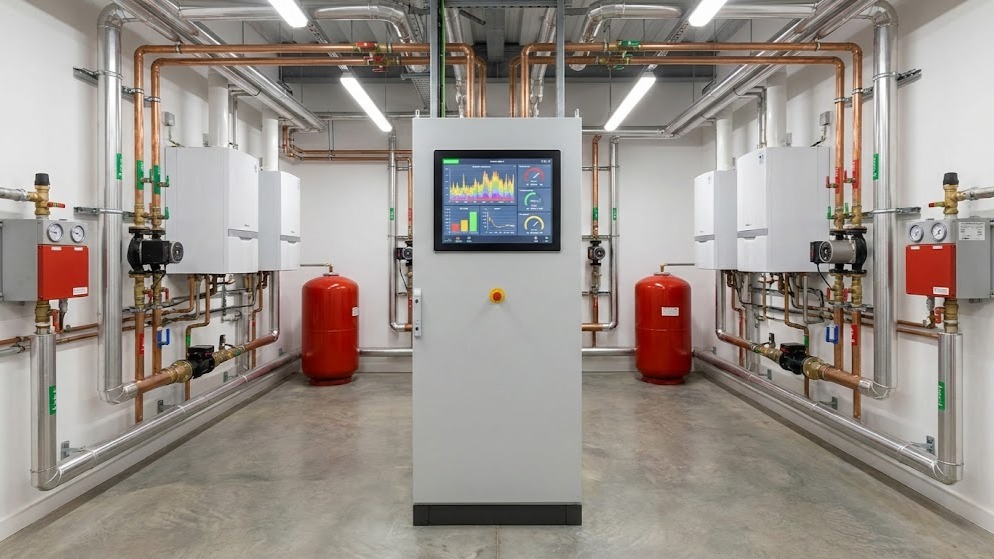
Heating system failures cost UK businesses an average of £12,400 per incident when accounting for emergency repairs, lost productivity, and potential property damage. Yet 73% of commercial heating failures could be prevented through early detection, precisely what modern system monitoring equipment delivers.
The question facing facilities managers and property owners is not whether monitoring technology works, but whether the investment delivers measurable returns. With energy costs remaining volatile and regulatory pressure increasing, the financial argument for real-time system monitoring has never been clearer. Understanding the system monitoring business case requires examining multiple return streams.
The Hidden Costs of Reactive Maintenance
Most commercial heating systems operate on a reactive maintenance model where equipment runs until something breaks, then engineers respond to the emergency. This approach creates predictable financial drains that monitoring equipment eliminates.
Emergency callouts typically cost 2.5 to 3 times standard service rates. A weekend boiler failure requiring immediate attention might cost £1,800 for labour alone, before parts or consequential damage. Businesses running critical operations such as care homes, hospitals, and data centres face additional costs when heating failures disrupt services or compromise safety.
The larger expense comes from secondary damage. A failed circulation pump that goes undetected for 48 hours can cause boiler overheating, expansion vessel damage, and system contamination requiring complete flushes. What begins as a £450 pump replacement becomes a £6,000 system restoration project.
Monitoring equipment shifts this equation entirely. Grundfos pumps with integrated sensors detect performance degradation weeks before complete failure, allowing scheduled maintenance during normal business hours at standard rates. The cost differential between planned and emergency intervention typically pays for monitoring systems within 18 months. This ROI building performance analysis demonstrates clear financial benefits.
Quantifying Energy Savings Through Performance Monitoring
Heating systems rarely fail catastrophically without warning; they degrade gradually, consuming increasing energy while delivering diminishing performance. This degradation remains invisible without monitoring, creating ongoing waste that compounds monthly.
A circulation pump operating at 70% efficiency due to wear or air entrainment consumes 30% more electricity whilst delivering reduced flow rates. Across a commercial building running pumps 16 hours daily, this inefficiency costs approximately £340 annually per pump. Larger facilities with multiple DHW pumps and heating circuits multiply this waste across numerous components.
System monitoring identifies efficiency losses in real time. When flow rates drop or power consumption increases beyond normal parameters, alerts trigger investigation before energy waste accumulates. Facilities managers report average energy savings of 12-18% within the first year after installing comprehensive monitoring, reductions that continue indefinitely.
The Building Regulations Part L compliance requirements for 2025 onwards mandate efficiency monitoring for commercial heating systems above 70kW output. Properties without existing monitoring will require retrofitting to meet these standards, making early adoption both financially prudent and regulatory preparation. The system monitoring business case includes avoiding future compliance costs.
Preventing Catastrophic Failures and Property Damage
The most compelling financial argument for system monitoring involves preventing the worst-case scenarios, complete system failures that cause extensive property damage or business interruption.
Expansion vessel failures exemplify this risk. When expansion vessels lose pre-charge pressure, systems develop excessive pressure during heating cycles. Without monitoring, this condition persists until pressure relief valves discharge or pipework joints fail, potentially releasing hundreds of litres of hot water into building spaces.
A monitoring system detecting abnormal pressure fluctuations costs approximately £850 installed for a typical commercial building. The average insurance claim for water damage from heating system failures exceeds £18,000, with business interruption claims adding substantially more for commercial properties. The risk-adjusted return on monitoring investment becomes obvious when viewed through this lens.
Manufacturing facilities and data centres face particularly acute risks. A heating system failure in a pharmaceutical cleanroom or server facility can trigger production shutdowns costing tens of thousands hourly. For these applications, monitoring systems with redundant sensors and multiple alert pathways represent essential infrastructure, not optional upgrades. ROI building performance calculations must include avoided catastrophic loss.
Real-Time Data for Informed Decision Making
Beyond preventing failures, monitoring equipment provides operational intelligence that improves long-term planning and capital allocation. Historical performance data reveals patterns invisible to periodic manual inspections.
Pump performance curves tracked over months show gradual efficiency decline that indicates impending bearing failure or impeller wear. This data enables predictive maintenance, replacing components based on actual condition rather than arbitrary service intervals. The approach reduces unnecessary maintenance whilst preventing unexpected failures.
Energy consumption patterns correlated with external temperatures reveal system inefficiencies or control problems. A boiler consuming excessive fuel during mild weather suggests oversized equipment, poor modulation, or control system faults, all correctable issues that monitoring data identifies before they waste thousands in unnecessary fuel costs.
For multi-site property portfolios, aggregated monitoring data enables comparative analysis. Facilities managers can identify which buildings operate most efficiently, then replicate those conditions across other properties. This benchmarking approach typically reveals 8-12% efficiency improvements in underperforming sites. The system monitoring business case strengthens with portfolio-wide implementation.
Integration With Building Management Systems
Modern monitoring equipment integrates seamlessly with existing Building Management Systems, creating unified control platforms that enhance overall facility performance. This integration multiplies the value of monitoring investments.
When heating system data flows into central BMS platforms alongside HVAC, lighting, and security systems, facilities managers gain comprehensive operational visibility. Automated responses become possible, reducing heating output when buildings reach unoccupied status, or triggering alerts when multiple systems show unusual behaviour simultaneously.
Wilo pumps with BMS connectivity enable sophisticated control strategies impossible with standalone equipment. Variable speed drives adjust pump output based on real-time demand, weather forecasts, and occupancy patterns, optimising energy consumption whilst maintaining comfort levels.
The integration also simplifies compliance reporting. Building Regulations increasingly require documented evidence of system performance and efficiency measures. Monitoring systems automatically log operational data, generating reports that demonstrate regulatory compliance without manual record-keeping. ROI building performance verification benefits from automated documentation.
Calculating Return on Investment
A typical monitoring installation for a 10,000 square foot commercial building costs £3,200-4,800 depending on system complexity and sensor requirements. This investment delivers multiple return streams:
Energy savings of 12-18% reduction in heating costs typically saves £1,800-2,400 annually for average commercial properties.
Maintenance cost reduction by shifting from reactive to predictive maintenance reduces annual service costs by 25-35%, saving £800-1,200 yearly.
Emergency avoidance by preventing one major failure every 3-4 years saves £12,000+ in emergency repairs and consequential damage.
Extended equipment life through optimised operation and early intervention extends pump and boiler lifespan by 20-30%, deferring capital replacement costs.
Insurance benefits as some commercial insurers offer 5-10% premium reductions for properties with comprehensive monitoring systems.
Conservative calculations show payback periods of 18-30 months for most commercial installations. Properties with older equipment, multiple heating zones, or critical operations see faster returns, often recovering costs within 12 months. The system monitoring business case delivers measurable financial returns.
Regulatory Drivers and Future Requirements
The regulatory environment increasingly mandates performance monitoring for commercial heating systems. Understanding these requirements helps justify monitoring investments as compliance necessities rather than optional upgrades.
Building Regulations Part L 2025 requires heating systems above 70kW to include efficiency monitoring with automated alerts for performance degradation. Existing buildings undergoing major renovations must retrofit monitoring to meet these standards. Properties installing monitoring proactively avoid rushed compliance installations when regulations take effect.
The Energy Savings Opportunity Scheme (ESOS) requires large organisations to audit energy consumption every four years. Comprehensive monitoring data simplifies ESOS compliance whilst identifying efficiency improvements that audits recommend. Organisations with monitoring systems complete ESOS assessments faster and implement recommendations more effectively.
Minimum Energy Efficiency Standards (MEES) for commercial properties continue tightening. Properties below EPC Band B face letting restrictions from 2030. Heating system monitoring enables the efficiency improvements necessary to achieve required ratings, providing documented evidence of performance for EPC assessments. ROI building performance includes regulatory compliance value.
Selecting Appropriate Monitoring Solutions
Not all monitoring systems deliver equal value. Selecting equipment appropriate to building size, system complexity, and operational requirements ensures maximum return on investment.
For smaller commercial properties with single boilers and simple distribution, basic monitoring covering boiler efficiency, pump operation, and system pressure provides essential protection. These systems cost £1,200-1,800 installed and deliver core benefits without unnecessary complexity.
Medium-sized facilities with multiple heating zones benefit from comprehensive monitoring including individual pump performance, zone temperatures, and flow rates. This granularity enables optimisation of complex systems whilst maintaining reasonable equipment costs of £3,000-4,500.
Large commercial or industrial facilities require sophisticated monitoring with redundant sensors, multiple alert pathways, and BMS integration. These installations cost £8,000-15,000 but provide the detailed operational intelligence that complex facilities demand.
National Pumps and Boilers supplies monitoring equipment suitable for all commercial applications, from basic standalone systems to fully integrated BMS solutions. Selecting appropriately scaled equipment ensures monitoring delivers value without excessive capability that remains unused.
Implementation Considerations
Successful monitoring installations require careful planning beyond simply purchasing equipment. Several factors influence implementation costs and ongoing effectiveness.
Sensor placement critically affects monitoring accuracy. Flow sensors must install in straight pipe runs with adequate upstream and downstream clearance. Pressure sensors require isolation valves for maintenance access. Temperature sensors need thermal wells that do not disrupt system operation. Experienced installers understand these requirements and position sensors for reliable long-term performance.
Connectivity infrastructure affects installation costs in existing buildings. Wireless monitoring systems eliminate cabling expenses but require reliable signal coverage throughout mechanical spaces. Wired systems offer greater reliability but increase installation labour, particularly in buildings where cable routes present challenges.
Alert configuration determines monitoring effectiveness. Systems generating excessive false alarms create alert fatigue, causing facilities managers to ignore genuine warnings. Properly configured thresholds and alarm escalation procedures ensure alerts receive appropriate attention whilst minimising nuisance notifications.
Staff training completes successful implementations. Facilities teams need clear guidance on interpreting monitoring data, responding to alerts, and using historical information for maintenance planning. This training typically requires 2-4 hours and dramatically improves monitoring system utilisation. The system monitoring business case depends on effective implementation.
Conclusion
The financial case for installing system monitoring equipment in 2026 rests on multiple converging factors, including energy cost volatility, regulatory requirements, and the proven ability of monitoring systems to prevent expensive failures whilst optimising ongoing performance.
For commercial properties, the question is not whether monitoring delivers returns, but how quickly those returns accumulate. With typical payback periods under 30 months and benefits continuing indefinitely, monitoring represents one of the highest-return facility improvements available. ROI building performance analysis confirms compelling investment returns.
Properties approaching major central heating system upgrades or replacements should integrate monitoring from the outset. The marginal cost of adding sensors and controls during new installations remains minimal compared to retrofitting later, whilst benefits begin immediately.
For expert guidance on selecting and implementing monitoring solutions appropriate to specific facility requirements, contact the technical team at National Pumps and Boilers. Proper system design ensures monitoring investments deliver maximum returns whilst meeting current and future regulatory requirements.