

The Environmental Impact of Proper Commercial HVAC Equipment Disposal
Commercial HVAC systems reaching end-of-life represent one of the most significant environmental challenges facing the building services sector. Each year, thousands of tonnes of commercial heating, ventilation, and air conditioning equipment are decommissioned across the UK. This redundant plant contains refrigerants with global warming potentials up to several thousand times that of carbon dioxide ($CO_2$), alongside heavy metals, toxic oils, and complex electronic components. The manner in which you dispose of this equipment determines whether these materials become environmental liabilities or valuable resources in a circular economy.
The environmental stakes extend far beyond simple waste management. Improper disposal of a single commercial chiller unit can release refrigerants equivalent to the annual carbon emissions of several passenger vehicles. Multiply this across the nation's commercial building stock, and the cumulative impact becomes staggering. Yet despite stringent UK regulations, enforcement data from the Environment Agency suggests compliance gaps persist, particularly among smaller contractors and building operators who aren't familiar with the technical requirements.
The Hidden Environmental Costs of HVAC Equipment
Commercial HVAC systems contain materials that pose significant environmental risks when mishandled. Refrigerant gases remain the primary concern: substances like R410A, R407C, and older R22 systems still in operation carry global warming potentials ranging from 1,800 to 4,000 times that of $CO_2$. When these gases escape during improper decommissioning, they contribute directly to climate change, with effects persisting for decades in the atmosphere.
Beyond refrigerants, the material composition of commercial HVAC equipment presents multiple environmental hazards. Compressors contain lubricating oils that can quickly contaminate soil and groundwater if spilled. Heat exchangers incorporate copper and aluminium, which are highly valuable materials but require energy-intensive mining and refining processes to produce originally. Electronic control boards contain heavy metals including lead, mercury, and cadmium, which are toxic substances that bioaccumulate in ecosystems.
The embodied energy within HVAC equipment represents another often-overlooked environmental cost. Manufacturing a commercial air handling unit requires substantial energy inputs for material extraction, processing, component fabrication, and assembly. When equipment reaches end-of-life prematurely or gets disposed of without material recovery, this embodied energy is wasted. This loss necessitates fresh extraction and manufacturing cycles that perpetuate environmental damage.
Landfill disposal compounds these problems over the long term. Commercial HVAC components buried in landfills undergo slow degradation processes that release contaminants into surrounding environments. Refrigerants eventually escape containment, metals leach into groundwater, and plastics fragment into microparticles. The spatial footprint also matters because bulky HVAC equipment consumes valuable landfill capacity that could easily accommodate less problematic waste streams.
Understanding UK Regulations for HVAC Disposal
The regulatory framework governing commercial HVAC disposal in the UK operates through several interconnected pieces of legislation. The Waste Electrical and Electronic Equipment (WEEE) Directive, transposed into UK law through the WEEE Regulations 2013, classifies commercial HVAC systems as Category 1 equipment. This classification imposes specific collection, treatment, and recovery obligations on producers and waste handlers.
The F-Gas Regulations 2015 establish even more stringent requirements specifically targeting fluorinated greenhouse gases used as refrigerants. These regulations mandate that only certified technicians may recover refrigerants from decommissioned equipment, and that all recovered gases must be properly reclaimed, recycled, or destroyed. Achieving complete F-Gas regulations compliance requires meticulous logging of all recovered gas weights.
Duty of Care obligations under the Environmental Protection Act 1990 apply to all commercial waste producers, including building operators decommissioning HVAC systems. This duty requires proper waste classification, use of authorised waste carriers, and verification that disposal facilities hold appropriate environmental permits. These regulations establish a clear baseline for environmental commercial HVAC disposal by ensuring that all hazardous waste is strictly tracked.
Building operators should note that National Pumps and Boilers supplies equipment from manufacturers who increasingly design for end-of-life considerations, incorporating features that facilitate proper disposal and material recovery. This design-for-disassembly approach aligns with circular economy principles and simplifies compliance with disposal regulations. Operators must keep in mind that failure to fulfil these obligations carries severe penalties, including unlimited fines and potential criminal prosecution.
Refrigerant Recovery and Its Critical Importance
Refrigerant recovery stands as the single most critical environmental step in commercial HVAC disposal. Common refrigerants like R410A possess a global warming potential of 2,088, meaning one kilogram released has the climate impact equivalent to 2,088 kilograms of $CO_2$. A typical commercial chiller might contain 50 to 200 kilograms of refrigerant, which represents potential emissions equivalent to 100 to 400 tonnes of $CO_2$ if released directly to the atmosphere.
During a recent office block decommission in Manchester, an uncertified contractor attempted to speed up chiller removal by simply cutting the refrigerant lines. The resulting R410A blowout not only triggered a severe local environmental hazard but also resulted in an expensive Environment Agency investigation for the building operator. Swapping to a certified recovery team ensured that subsequent phases of the project were completed without further incident.
To prevent atmospheric damage, certified technicians must execute specific refrigerant recovery procedures using specialised equipment. Recovery machines create vacuum conditions that draw refrigerant from all system components including evaporators, condensers, and interconnecting pipework. The recovered refrigerant transfers to certified cylinders for transport to reclamation facilities, where it undergoes purification for reuse or proper destruction if contaminated beyond recovery standards.
Only technicians holding valid F-Gas certification may legally perform refrigerant recovery on commercial systems. This certification ensures competency in proper recovery techniques, leak prevention, and documentation requirements. Building operators must retain accurate audit logs to prove their F-Gas regulations compliance during safety inspections. Leading manufacturers including grundfos design pumps for modern systems using lower-GWP refrigerants, though proper disposal remains essential regardless of refrigerant type.
Material Recovery and Circular Economy Principles
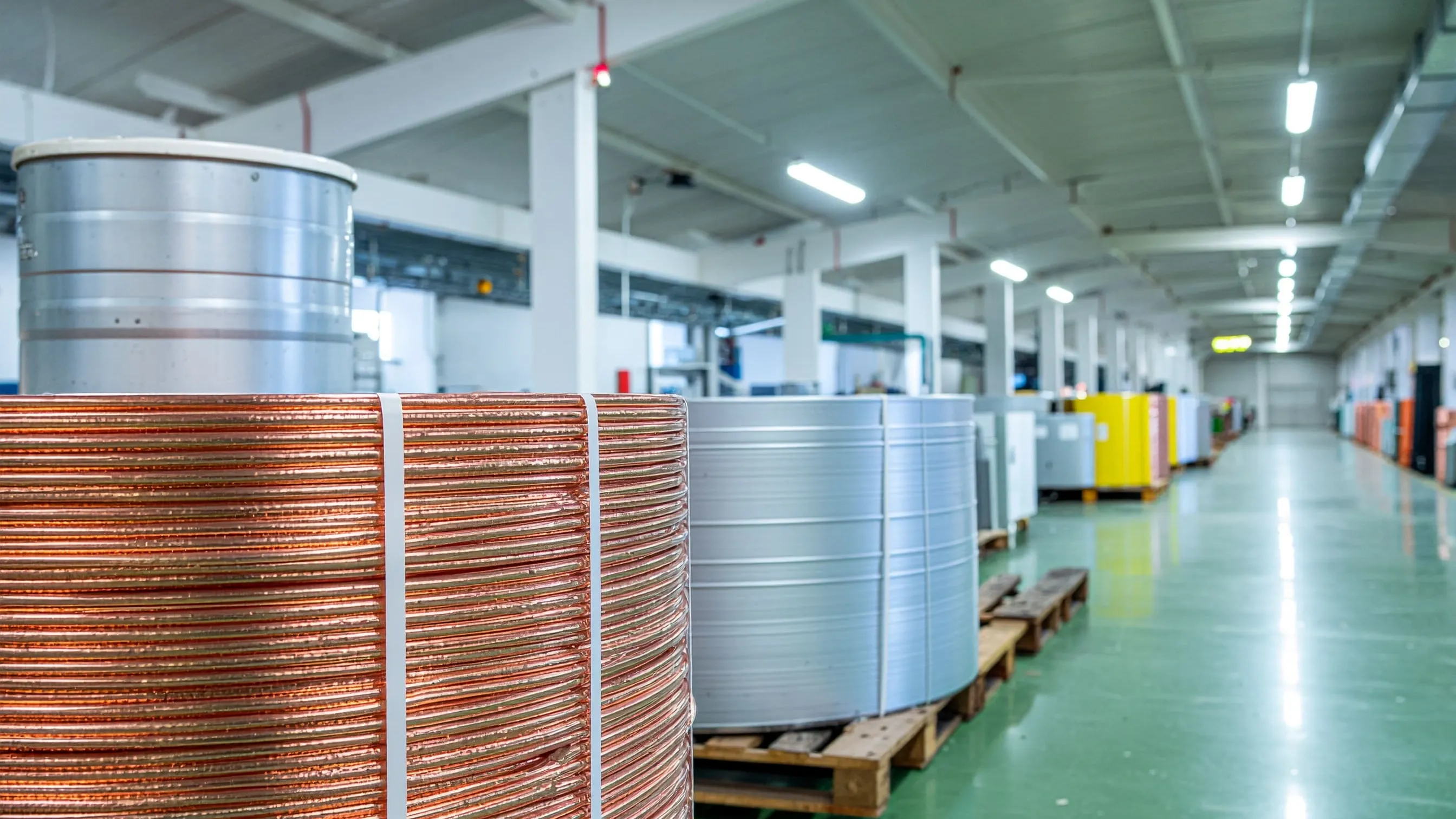
Commercial HVAC equipment contains valuable materials that merit recovery rather than disposal. Copper comprises 20 to 30% of typical unit weight, appearing in heat exchanger coils, refrigerant lines, and electrical windings. Aluminium features prominently in heat exchanger fins, fan blades, and structural components. Together, these metals represent substantial intrinsic value and significant environmental benefits when recovered.
Think of decommissioned HVAC units like old shipping containers. Instead of letting them rust in a yard, they can be broken down, melted, and repurposed into new structural steel, turning an idle physical footprint into active, valuable resources. Effective commercial HVAC recycling transforms potential waste into high-grade raw manufacturing materials.
Metal recovery rates from properly processed HVAC equipment exceed 90% at authorised treatment facilities. Recovered copper and aluminium require only 5 to 10% of the energy needed to produce virgin materials from ore, translating directly to reduced carbon emissions. The economics support recovery too because metal values often offset processing costs, creating financial incentives aligned with environmental objectives.
Central heating systems and commercial installations increasingly incorporate design features facilitating disassembly and material separation, with industry leaders like Wilo pump highlighting these lifecycle benefits. Advanced HVAC material recovery is a cornerstone of modern sustainable building management. Specialist refurbishers test, certify, and resell recovered components, extending useful life and avoiding manufacturing impacts associated with replacement parts.
Best Practices for Commercial HVAC Decommissioning
Proper commercial HVAC decommissioning begins with a comprehensive pre-disposal assessment. This assessment documents refrigerant type and quantity, identifies hazardous materials requiring special handling, and evaluates components suitable for recovery or refurbishment. Detailed photographic records and equipment specifications support subsequent processing decisions and provide documentation for compliance purposes.
Refrigerant extraction must occur before any other decommissioning activities. Technicians isolate the system, connect recovery equipment to service ports, and extract refrigerants under controlled conditions that prevent atmospheric release. Standard decommissioning checklists mandate that refrigerant recovery procedures are completed before cutting any pipework. Recovery continues until system pressure reaches specified vacuum levels, confirming complete extraction.
Component segregation follows refrigerant recovery. Compressors are removed intact to prevent oil spillage, with lubricants drained separately for proper disposal. Heat exchangers are separated by material type, meaning copper coils are removed from aluminium fins where feasible. Electrical components including control boards, wiring harnesses, and motors are segregated for electronics recycling. The mechanical stripping phase represents the core of HVAC material recovery where metals are sorted.
Documentation requirements extend throughout the decommissioning process. Waste transfer notes must accompany materials moving to disposal facilities, specifying waste classifications, quantities, and destination facilities. Every decommissioning project must document refrigerant weights to ensure F-Gas regulations compliance remains flawless. These records must be retained for a minimum of five years and made available for regulatory inspection.
Equipment from leading manufacturers like lowara water pump lines often includes manufacturer documentation specifying materials of construction and recommended disposal procedures. This information proves highly valuable during decommissioning, enabling more effective material segregation and recovery.
The Role of Specialist Disposal Services
Authorised waste carriers and treatment facilities form essential links in proper HVAC disposal chains. These specialists hold environmental permits authorising them to transport and process HVAC equipment, with permit conditions specifying handling procedures, storage requirements, and processing methods. Engaging authorised operators fulfils Duty of Care obligations and ensures equipment reaches appropriate treatment facilities.
Certified waste carriers provide collection services with vehicles and equipment suitable for HVAC system transport. They issue waste transfer documentation at the collection point, establishing a legal chain of custody. Many industrial facilities rely on heavy-duty DAB pump systems for washdown areas, and transport of these systems requires similar care. Reputable carriers maintain comprehensive insurance coverage and demonstrate financial stability, which are important considerations given potential environmental liabilities.
Authorised treatment facilities operate under environmental permits that specify processing methods and recovery targets. These facilities employ trained personnel and specialised equipment for refrigerant extraction, material separation, and component processing. Authorised facilities handle commercial HVAC recycling by separating ferrous metals from non-ferrous electronics. Many facilities achieve metal recovery rates exceeding 95%, with residual materials directed to energy recovery rather than landfill disposal.
End-of-life certificates provide documentary evidence that equipment has been properly processed. These certificates specify materials received, processing methods employed, and final disposal routes for all material fractions. Building operators should retain these certificates as compliance evidence, particularly for systems containing significant refrigerant quantities or hazardous materials. Selecting licensed operators ensures your environmental commercial HVAC disposal complies fully with local emissions targets.
Environmental Benefits of Proper Disposal
Quantifying the environmental benefits of proper commercial HVAC disposal reveals substantial positive impacts. Refrigerant recovery alone prevents greenhouse gas emissions equivalent to removing thousands of vehicles from roads annually. Industry estimates suggest that comprehensive compliance across the UK commercial sector avoids approximately 50,000 tonnes of $CO_2$-equivalent emissions each year. This figure continues growing as older, higher-GWP systems reach end-of-life.
Material recovery delivers complementary environmental benefits through reduced primary resource extraction. Recovering copper from decommissioned HVAC systems avoids mining operations, ore processing, and smelting activities. These carbon-heavy processes generate substantial emissions and local environmental impacts. Through advanced commercial HVAC recycling, thousands of tonnes of copper and steel return to the supply chain.
The cumulative effect of metal recovery from HVAC equipment proves significant at a sector level. Annual copper recovery from UK commercial HVAC disposal likely exceeds 5,000 tonnes, preventing approximately 12,500 tonnes of $CO_2$ emissions. Aluminium recovery contributes additional benefits because recycled aluminium requires only 5% of the energy needed for primary production. This shift translates to emissions reductions of 95% per tonne of recovered material.
Proper disposal also prevents long-term ecosystem contamination. Heavy metals contained in electronic components, when properly recovered through electronics recycling streams, avoid soil and groundwater contamination that persists for decades. Lubricating oils extracted from compressors undergo proper treatment or destruction rather than leaching into environments. The long-term benefits of environmental commercial HVAC disposal are clear when looking at the tonnage of metals saved from landfills.
Modern equipment from leading brands, including the remeha boiler series, increasingly incorporates recyclable materials and reduced hazardous substance content. This design evolution reflects growing industry recognition that environmental responsibility extends throughout product lifecycles, from initial manufacture through operational life to final disposal.
Conclusion
The environmental implications of commercial HVAC disposal extend far beyond simple waste management, encompassing climate change mitigation, resource conservation, and ecosystem protection. Proper disposal practices, particularly refrigerant recovery and material recycling, deliver measurable environmental benefits while fulfilling legal obligations under UK regulations. The contrast between compliant disposal and improper handling could not be starker: one path prevents thousands of tonnes of greenhouse gas emissions and recovers valuable materials, while the other perpetuates environmental damage and squanders resources.
Building operators, facilities managers, and contractors bear responsibility for ensuring commercial HVAC systems reach appropriate end-of-life destinations. This responsibility encompasses engaging certified technicians for refrigerant recovery, using authorised waste carriers for equipment transport, and verifying that treatment facilities hold proper environmental permits. The documentation trail, from initial decommissioning through final material disposition, provides evidence of compliance and demonstrates environmental stewardship.
The commercial HVAC sector continues evolving toward circular economy principles, with equipment increasingly designed for material recovery and component reuse. Prioritising proper refrigerant recovery procedures ensures that hazardous greenhouse gases are safely contained. Ultimately, investing in proper HVAC material recovery protects local ecosystems from toxic heavy metal contamination. For guidance on equipment selection, disposal planning, or compliance requirements, Contact Our Team to discuss how proper lifecycle management enhances both environmental performance and regulatory compliance.