
 -
- The Hidden Costs of Cheap Pumps: A Long-Term Financial Analysis
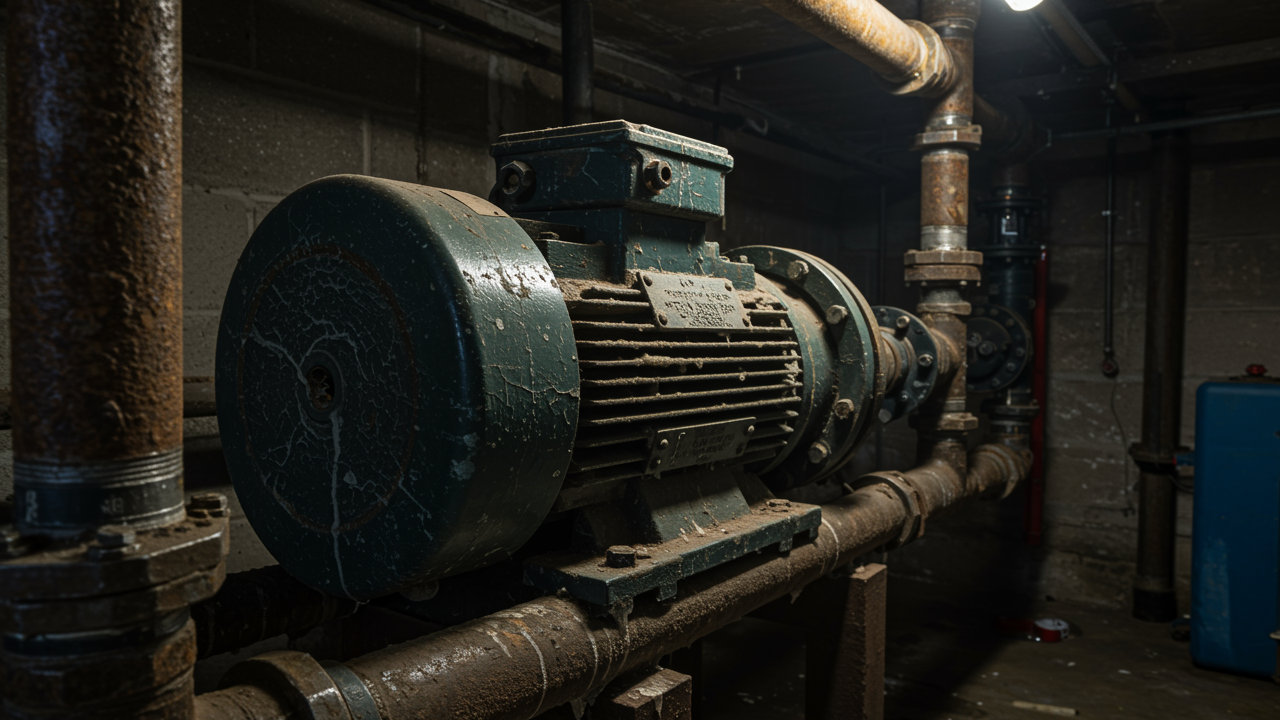
Budget pumps promise immediate savings, but heating engineers and facilities managers consistently discover the same pattern - initial purchase price represents just 15-20% of total lifetime costs. The remaining 80-85% accumulates through energy consumption, maintenance, downtime, and premature replacement.
When a commercial building specifies a £300 circulator instead of an £800 premium model, the decision feels financially prudent. Five years later, that same building has spent £2,400 more on the cheaper option through efficiency losses, emergency callouts, and early replacement. This analysis examines where those low-cost pump risks emerge and quantifies their impact on commercial heating systems.
The True Cost Structure of Pump Ownership
Pump economics follow a predictable pattern across commercial and domestic installations. Purchase price accounts for roughly 15% of the total cost of ownership over a typical 10-year operational period. Energy consumption dominates at 60-70%, whilst maintenance, repairs, and downtime constitute the remaining 15-25%.
Cheap pumps typically achieve 30-40% lower initial efficiency ratings compared to premium alternatives. A cheap circulator rated at 0.18 ErP consumes approximately 40% more electricity than a 0.23 ErP premium model performing identical work. Over 8,760 annual operating hours, this efficiency gap translates to 350-450 kWh additional consumption per pump, per year.
Energy Cost Penalties
At current commercial electricity rates of £0.28/kWh, each budget pump costs an additional £98-126 annually in energy alone. Multiply this across a commercial building running 8-12 circulation pumps, and annual energy penalties reach £784-1,512 - dwarfing any initial savings within 18-24 months.
National Pumps and Boilers supplies both economy and premium ranges, and facilities managers consistently report that Grundfos pumps deliver measurable energy savings that recover their higher purchase cost within 2-3 years of continuous operation.
The Lifecycle Cost Reality
The fundamental economic problem with cheap pumps lies in their disproportionate operational costs. A £300 pump saving £500 upfront compared to an £800 alternative appears attractive until facilities managers calculate the £2,000-3,500 in additional costs accumulated over just five years of operation.
Maintenance Frequency and Emergency Callout Costs
Budget pumps demonstrate significantly higher failure rates across their operational lifespan and represent substantial low-cost pump risks. Industry data from commercial heating contractors indicates that cheap circulators require maintenance interventions 2.5-3.5 times more frequently than premium alternatives over comparable periods.
Routine Maintenance Costs
A typical maintenance callout costs £120-180 for labour plus parts. Budget pumps average 3-4 service interventions during their shortened 5-7 year lifespan, whilst quality alternatives require 1-2 interventions across 10-15 years. This maintenance differential adds £240-540 to the budget pump lifetime costs.
Emergency Failure Expenses
Emergency failures impose steeper penalties. When a circulation pump fails during heating season, emergency callout rates reach £200-300, often requiring overnight or weekend attendance. Budget pumps fail unexpectedly 3-4 times more frequently than premium models, creating unplanned expenditure that disrupts facilities budgets.
Bearing failures represent the most common budget pump weakness. Cheap pumps use lower-grade bearings that deteriorate rapidly under continuous operation, particularly in systems with poor water quality or inadequate filtration. Premium manufacturers like Wilo pumps specify ceramic or high-grade stainless bearings engineered for 100,000+ operating hours.
System Efficiency Degradation Over Time
Pump performance deteriorates progressively throughout operational life, but degradation rates vary dramatically between quality tiers. Budget circulators lose 15-25% of initial efficiency within 3-4 years through bearing wear, impeller erosion, and seal degradation. Premium models maintain 90-95% of original efficiency across 8-10 years.
Accelerating Energy Penalties
This performance decay compounds energy costs exponentially. A budget pump that initially consumed 40% more energy than premium alternatives may consume 60-70% more by year four as efficiency degrades. The cumulative energy penalty accelerates rather than remaining constant - one of the most significant low-cost pump risks that many facilities managers fail to anticipate during initial procurement.
Motor Quality Impact
Motor quality determines degradation trajectory. Cheap pumps use basic induction motors with minimal electronic control, whilst premium alternatives deploy permanent magnet motors with intelligent speed adjustment. These advanced motors maintain consistent efficiency across variable load conditions and adapt automatically to system demand changes.
Flow rate accuracy also deteriorates faster in budget equipment. As internal components wear, actual flow delivery diverges from nominal specifications, forcing the pump to work harder for equivalent heat distribution. This creates a cascading effect where declining pump performance stresses other system components, accelerating overall system degradation.
Downtime Costs and Business Disruption
Pump failures in commercial buildings create costs far exceeding repair expenses. A failed circulation pump in a 50-room hotel during winter potentially disrupts operations across multiple floors, generating guest complaints, room credits, and reputational damage valued at £2,000-5,000 per incident.
Commercial Building Impacts
Office buildings face similar disruption costs. When heating fails in commercial spaces, Building Regulations require minimum temperature maintenance. Failure to achieve 16°C in occupied spaces may necessitate building closure, creating lost productivity costs of £150-300 per affected employee per day.
Industrial Facility Consequences
Manufacturing and industrial facilities encounter even steeper penalties. Process heating failures can halt production lines worth £5,000-50,000 per hour, depending on sector and scale. Budget pump failures in critical heating applications impose costs that dwarf equipment expenses by factors of 100-1,000.
Spare parts availability compounds the downtime duration. Budget pump manufacturers frequently discontinue models after 2-3 years, rendering replacement parts unavailable. Premium brands like Lowara pumps maintain parts availability for 10-15 years, enabling rapid repairs that minimise operational disruption.
Replacement Cycle Economics
Cheap pumps typically require replacement after 5-7 years, whilst premium alternatives deliver 10-15 years of reliable service. This shortened lifespan forces building operators to purchase, install, and commission replacement equipment twice as frequently.
Installation Cost Multiplication
Installation costs remain constant regardless of pump quality. A heating engineer charges £180-250 to remove an old circulator, install a replacement, commission the system, and verify performance. Budget pump operators incur these costs every 5-7 years; premium pump users every 10-15 years.
Over a 30-year building lifecycle, budget pump strategies require 4-5 complete replacement cycles compared to 2-3 cycles for premium equipment. This generates £540-750 in additional installation costs per pump position, before considering equipment purchase expenses.
System Compatibility Challenges
System modifications during replacement create further costs. Pump mounting standards and pipe connections evolve over time. Budget pumps discontinued after 3-4 years may require pipework modifications for replacement models, adding £150-300 to installation expenses. Premium manufacturers maintain consistent mounting patterns across product generations, enabling direct replacement without modification.
Water Quality and System Protection Requirements
Budget pumps demonstrate reduced tolerance for water quality variations common in commercial heating systems. Suspended solids, dissolved minerals, and corrosion products accelerate wear in cheap circulators, whilst premium models incorporate protective features that extend operational life despite imperfect water conditions.
Enhanced Treatment Requirements
Systems with budget pumps require more aggressive water treatment and filtration to achieve acceptable pump longevity. Installing and maintaining magnetic filters, chemical dosing systems, and regular water quality testing adds £200-400 annually to system operating costs.
Alternatively, accepting reduced pump life in poor water quality conditions accelerates replacement cycles from 5-7 years to 3-4 years. This strategy trades water treatment costs for increased replacement frequency, but the total cost of ownership remains elevated compared to premium pump approaches.
Material Specifications
Premium manufacturers engineer pumps with stainless steel wetted components, ceramic bearings, and protective coatings that resist corrosion and abrasion. These materials specifications enable reliable operation across wider water quality parameters, reducing auxiliary system requirements and associated costs.
Energy Efficiency Regulations and Future-Proofing
ErP (Energy-related Products) Directive establishes minimum efficiency standards for circulation pumps, with regulations tightening progressively. Budget pumps typically meet current minimum standards with minimal margin, whilst premium models exceed requirements by 20-40%.
Regulatory Compliance Risks
Future regulatory tightening will render current budget pumps non-compliant for replacement installations, potentially requiring premature replacement even if mechanically functional. Premium pumps engineered to exceed current standards remain compliant longer, protecting against forced early replacement due to regulatory changes.
Building Energy Performance Certificates increasingly scrutinise heating system efficiency. Budget pumps with marginal ErP compliance may trigger EPC downgrades, affecting property values and rental potential in commercial real estate. Premium efficient circulators contribute positively to EPC ratings, supporting asset value maintenance.
Incentive Programme Eligibility
Government incentives and grants increasingly favour high-efficiency equipment. Budget pumps rarely qualify for available funding programmes, whilst premium alternatives access grants that offset 30-50% of purchase costs. Factoring available incentives into procurement decisions often reverses apparent cost advantages of budget equipment.
Comparative Total Cost of Ownership Analysis
Consider a commercial building requiring eight circulation pumps for a mixed heating system serving 5,000 m² of floor space. Budget approach specifies £350 pumps (£2,800 total initial cost). Premium approach specifies £850 pumps (£6,800 total initial cost).
Budget Pump Approach (10-Year Costs)
Initial purchase: £2,800
Energy consumption (8 pumps × £115 annual penalty × 10 years): £9,200
Maintenance (8 pumps × 3.5 callouts × £150 average): £4,200
Emergency repairs (8 pumps × 1.5 failures × £250): £3,000
First replacement cycle (8 pumps × £350 equipment + £200 installation): £4,400
Water treatment enhancement: £2,400
Total 10-year cost: £26,000
Premium Pump Approach (10-Year Costs)
Initial purchase: £6,800
Energy consumption: baseline
Maintenance (8 pumps × 1.2 callouts × £150 average): £1,440
Emergency repairs: £500
Replacement cycle: £0
Water treatment: standard
Total 10-year cost: £8,740
Financial Analysis
The premium approach delivers £17,260 savings over 10 years despite £4,000 higher initial investment - a 4.3:1 return on additional upfront expenditure. This analysis excludes downtime costs, productivity losses, and reputational impacts that further favour premium equipment.
Strategic Procurement Considerations
Facilities managers and mechanical contractors face budget pressures that favour lowest initial cost procurement. However, sophisticated organisations increasingly adopt total cost of ownership evaluation frameworks that capture lifecycle economics rather than purchase price alone.
Application-Appropriate Specifications
Specifying pump quality appropriate to application criticality represents sound risk management. Budget equipment may suit non-critical applications with easy access and minimal downtime consequences. Critical heating applications serving occupied spaces, sensitive processes, or difficult-to-access locations justify premium equipment that minimises failure risk and lifecycle costs.
Manufacturer Support Value
Manufacturer reputation and technical support availability constitute often-overlooked cost factors. Premium brands provide comprehensive technical documentation, sizing software, and application support that reduce specification errors and installation problems. Budget manufacturers offer minimal support, increasing the risk of incorrect equipment selection that creates performance problems and additional costs.
National Pumps and Boilers maintains technical specialists who assist with pump selection, system design, and troubleshooting across all equipment tiers. This support proves particularly valuable when specifying equipment for complex commercial applications where incorrect pump selection creates expensive performance problems.
Warranty Coverage and Manufacturer Support
Warranty terms reveal the manufacturer's confidence in product longevity. Budget pumps typically carry 1-2 year warranties with limited coverage, excluding wear components. Premium alternatives offer 3-5 year comprehensive warranties covering all components, including bearings, seals, and electronics.
Financial Risk Mitigation
Extended warranty coverage reduces financial risk during early operational years when infant mortality failures occasionally occur, even in quality equipment. Comprehensive coverage eliminates parts and labour costs during warranty periods, providing financial predictability for facilities budgets.
Claim Process Efficiency
Warranty claim processes differ dramatically between budget and premium manufacturers. Budget brands often require equipment return to central facilities for assessment, creating extended downtime. Premium manufacturers provide advanced replacement programmes where new equipment ships immediately upon claim notification, minimising operational disruption.
Technical support quality correlates strongly with equipment price positioning. Premium manufacturers maintain UK-based technical support teams with heating engineering expertise who provide application guidance, troubleshooting assistance, and specification verification. Budget manufacturers offer limited support through overseas call centres with generic product knowledge.
Making the Business Case for Quality Equipment
Presenting the total cost of ownership analysis to budget decision-makers requires clear documentation of hidden costs associated with budget equipment. Facilities managers successfully secure approval for premium specifications by quantifying energy penalties, maintenance frequency, downtime risks, and replacement cycle economics.
Proposal Development
Comparative proposals should present 10-year lifecycle costs rather than purchase prices alone. Including energy consumption calculations, maintenance projections, and replacement cycle costs demonstrates that apparent savings from budget equipment vanish within 18-36 months whilst accumulated penalties compound throughout equipment life.
Risk Quantification
Risk assessment strengthens business cases for critical applications. Quantifying potential downtime costs, business disruption, and emergency repair expenses highlights financial exposure created by budget equipment in applications where reliability directly impacts operations and revenue.
Referencing industry standards and manufacturer specifications provides objective support for quality recommendations. British Standards, CIBSE guidance, and Building Regulations increasingly emphasise lifecycle efficiency and total cost of ownership, providing regulatory backing for premium equipment specifications.
For expert guidance on pump selection appropriate to specific applications and budget parameters, heating engineers can contact us for technical support and total cost of ownership analysis tailored to individual projects.
Conclusion
Cheap pumps create a financial illusion - apparent savings evaporate within 2-3 years as energy penalties, maintenance costs, and premature replacement expenses accumulate. The 15% saved on initial purchase transforms into 200-300% additional lifecycle costs through efficiency losses, increased maintenance, and shortened operational life.
Commercial heating applications particularly suffer from budget pump economics. Buildings operating multiple circulators for extended periods face energy penalties reaching thousands of pounds annually, whilst maintenance and downtime costs compound financial impacts. Premium equipment recovers higher purchase costs within 2-3 years through energy savings alone, then continues delivering financial benefits throughout 10-15 year operational lifespans.
Sophisticated procurement strategies evaluate the total cost of ownership rather than purchase price, recognising that initial equipment costs represent just 15-20% of lifecycle expenses. Facilities managers who adopt this approach consistently specify premium pumps for critical applications whilst reserving budget equipment for non-critical roles where failure consequences remain minimal.
The heating industry increasingly recognises that cheap pumps prove expensive through hidden costs that emerge steadily throughout operational life. Understanding low-cost pump risks enables better procurement decisions that prioritise long-term value over short-term savings. Quality equipment from established manufacturers delivers superior financial returns through enhanced efficiency, reduced maintenance, extended lifespan, and minimised downtime - advantages that dwarf any initial price premiums across realistic evaluation periods.