

The Impact of Chlorinated Water on Pump Component Lifespan
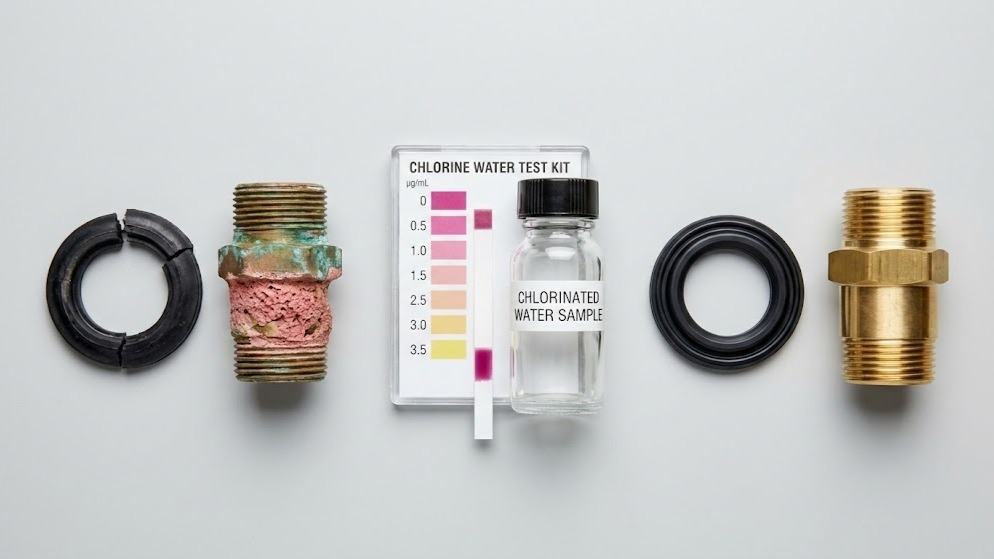
Chlorinated water circulates through thousands of heating and cooling systems across the UK, silently degrading pump components at rates that catch many facilities managers off guard. A 2023 study by the Building Services Research and Information Association found that pumps exposed to chlorinated water experience 40-60% shorter operational lifespans compared to those handling treated or dechlorinated fluids. This accelerated deterioration translates to premature failures, unplanned downtime, and replacement costs that compound year after year.
The challenge extends beyond simple corrosion. Chlorine interacts with pump materials in complex ways, attacking seals, degrading impellers, and compromising mechanical integrity through mechanisms that vary by concentration, temperature, and component composition. Understanding these interactions allows engineers and facility managers to implement targeted protection strategies that extend equipment life and reduce the total cost of ownership.
How Chlorine Attacks Pump Components
Chlorine exists in water systems primarily as free chlorine (hypochlorous acid and hypochlorite ions) or combined chlorine (chloramines). Both forms act as powerful oxidising agents that initiate electrochemical reactions with metallic surfaces. When chlorinated water contacts pump components, chlorine molecules strip electrons from metal atoms, creating soluble metal chlorides that wash away with the fluid stream.
Temperature and Flow Velocity Effects
This process accelerates dramatically under specific conditions. Water temperatures above 60°C increase reaction rates exponentially - a pump handling 80°C chlorinated water degrades approximately three times faster than identical equipment operating at 40°C. Flow velocity matters equally; turbulent flow patterns at impeller tips and valve seats concentrate chlorine exposure, creating localised attack zones where material loss occurs most rapidly.
Component-Specific Degradation Patterns
The chlorinated water pump impact manifests differently across component types. Cast iron housings develop pitting corrosion that penetrates deep into the material matrix, whilst stainless steel components face stress corrosion cracking when chlorine concentrations exceed 200 ppm. Bronze impellers experience dezincification, where zinc selectively leaches from the alloy, leaving behind porous copper structures with dramatically reduced mechanical strength. This chlorine pump corrosion affects not only the impeller but extends throughout the entire pump assembly when left unaddressed.
Material-Specific Vulnerability Patterns
Cast Iron and Mild Steel Components
Standard cast iron pump housings show particular vulnerability to chlorinated water. The graphite flakes embedded in cast iron's microstructure create galvanic cells when exposed to chlorine, accelerating localised corrosion. Field data from commercial heating systems indicates cast iron pumps handling chlorinated fill water develop through-wall perforations within 5-8 years, compared to 15-20 year lifespans in dechlorinated systems.
Mild steel pump shafts face similar challenges. Chlorine penetrates protective oxide layers, initiating uniform corrosion that reduces shaft diameter. A reduction of just 0.5mm can compromise bearing fits and increase vibration levels, leading to secondary failures in mechanical seals and bearings. Grundfos pumps and other premium manufacturers address this through upgraded shaft materials in chlorinated water applications.
Stainless Steel Considerations
Stainless steel grades commonly used in pump construction - particularly 304 and 316 - offer improved chlorine resistance compared to carbon steels, but they're not immune. Chloride ions concentrate in crevices and under deposits, breaking down the passive chromium oxide layer that normally protects stainless steel. This pitting corrosion initiates at microscopic defects and propagates inward, creating cavities that compromise structural integrity.
Higher chlorine concentrations amplify this effect. Systems maintaining residual chlorine above 5 ppm show pitting initiation within 18-24 months on 304 stainless components. Grade 316 stainless steel, with its molybdenum addition, performs better but still develops chlorine pump corrosion when chlorine levels exceed 10 ppm combined with elevated temperatures. Duplex stainless steels provide superior resistance but appear primarily in specialised industrial applications due to cost considerations.
Bronze and Brass Alloys
Bronze impellers, widely used in DHW pumps and domestic heating applications, undergo dezincification when exposed to chlorinated water. This selective corrosion removes zinc from the copper-zinc alloy, leaving behind porous copper with approximately 60% of the original material strength. The affected areas appear reddish-brown rather than bronze's characteristic golden colour, providing a visual indicator of degradation.
Dezincification proceeds from the surface inward at rates determined by chlorine concentration and water chemistry. In soft, acidic water with 2-3 ppm chlorine, bronze impellers show measurable dezincification within 12-18 months. The resulting material loss reduces impeller thickness, decreases pump efficiency, and increases the risk of catastrophic blade failure during operation.
Elastomer and Seal Degradation
Mechanical seals and elastomer components face distinct challenges from chlorinated water. Chlorine attacks the polymer chains in rubber compounds, breaking molecular bonds and causing hardening, cracking, and loss of elasticity. Nitrile rubber (NBR) seals, common in standard pump applications, show accelerated ageing in chlorinated water - a seal rated for 5 years in clean water may fail within 18-24 months when exposed to 3-5 ppm chlorine.
Ethylene propylene diene monomer (EPDM) provides better chlorine resistance than NBR, maintaining flexibility and sealing performance in chlorinated applications. However, even EPDM degrades when chlorine concentrations exceed 10 ppm or temperatures rise above 70°C. The degradation manifests as surface cracking, compression set (permanent deformation), and eventual seal failure that allows fluid leakage.
Mechanical seal faces experience additional stress from chlorinated water. Carbon-ceramic seal faces, standard in many Wilo pumps and similar equipment, perform adequately in moderate chlorine concentrations. Silicon carbide seal faces offer superior resistance and extended life in aggressive chlorinated environments, though at higher initial cost. The seal face selection directly influences maintenance intervals and total lifecycle costs.
Temperature and Concentration Interactions
The chlorinated water pump impact intensifies through the combined effects of temperature and chlorine concentration. At 20°C with 1 ppm chlorine, corrosion rates remain relatively modest. Increase the temperature to 80°C whilst maintaining 1 ppm chlorine, and corrosion rates triple. Raise chlorine concentration to 5 ppm at 80°C, and degradation accelerates by a factor of ten compared to baseline conditions.
Closed-Loop vs Once-Through Systems
This exponential relationship creates particular challenges in systems where chlorinated mains water feeds heating circuits. The initial fill may contain 0.5-1.5 ppm chlorine (typical UK mains water levels), but automatic top-up systems continuously introduce fresh chlorinated water to compensate for system losses. Over months and years, this chlorine exposure accumulates, progressively damaging pump components.
Commercial buildings with once-through cooling systems face even greater challenges. These systems draw chlorinated mains water, pass it through heat exchangers and pumps, then discharge it - meaning pumps handle continuous chlorine exposure rather than the gradually depleting concentrations found in closed heating systems. Pumps in these applications require materials specifically selected for chlorinated water service.
Identifying Chlorine-Related Pump Damage
Visual Inspection Indicators
Early detection of chlorine-related degradation allows intervention before catastrophic failures occur. Visual inspection reveals several characteristic indicators. Bronze impellers showing reddish-copper colouration rather than golden-bronze indicate dezincification. Cast iron housings with rough, pitted surfaces suggest chlorine attack, particularly when pitting concentrates in specific zones rather than appearing uniformly distributed.
Performance Monitoring
Mechanical seal leakage provides another warning sign. Seals that previously maintained tight shutoff but begin weeping or dripping may have elastomer components degraded by chlorine exposure. The leakage often starts intermittently, appearing during warm-up cycles when thermal expansion stresses already-compromised seals, then stopping once the system stabilises.
Performance degradation offers functional evidence of chlorine pump corrosion. Pumps showing reduced flow rates or head pressures compared to commissioning data may have impellers thinned by corrosion or dezincification. A 15-20% performance decline typically indicates significant material loss requiring immediate investigation. Increased vibration levels similarly suggest shaft corrosion affecting bearing clearances or impeller balance.
Protection Strategies for Chlorinated Water Service
Material Selection and Upgrades
Specifying chlorine-resistant materials from initial installation provides the most effective protection. For new installations or pump replacements, consider components specifically rated for chlorinated water service. This includes 316 stainless steel or duplex stainless shafts, silicon carbide mechanical seal faces, and EPDM or fluoroelastomer (FKM) seals.
National Pumps and Boilers supplies pumps with material specifications matched to application requirements, including chlorinated water variants of standard models. The incremental cost of chlorine-resistant materials typically represents 15-25% premium over standard specifications, but this investment extends service life by 200-300%, delivering substantial lifecycle savings.
Water Treatment Approaches
Dechlorination systems remove chlorine from fill and top-up water before it enters heating or cooling circuits. Activated carbon filters effectively remove free chlorine through adsorption, reducing concentrations to negligible levels. A properly sized carbon filter removes 95-99% of chlorine, dramatically reducing the chlorinated water pump impact on system components.
For systems already filled with chlorinated water, chemical treatment offers remediation. Sodium sulphite or ascorbic acid additions neutralise residual chlorine through chemical reduction reactions. However, this approach requires careful dosing and monitoring to avoid introducing other water chemistry issues. British Standard BS 7593 provides guidance on water treatment for heating and cooling systems, including chlorine management protocols.
System Design Considerations
Closed-loop heating systems naturally reduce chlorine exposure by limiting fresh water additions. Installing expansion vessels sized to accommodate thermal expansion without venting minimises the need for automatic top-up, reducing cumulative chlorine introduction. Proper system sealing and pressure maintenance prevents the air ingress that necessitates frequent water additions.
For systems requiring regular make-up water, installing dedicated dechlorination on the fill line protects all system components, not just pumps. This whole-system approach prevents chlorine-related issues in heat exchangers, valves, and pipework whilst extending pump life. The installation cost typically recovers within 3-5 years through reduced maintenance and extended component service intervals.
Maintenance Protocols for Chlorinated Water Systems
Inspection Schedules
Regular inspection intervals become critical in chlorinated water applications. Quarterly visual inspections should examine pump housings for pitting, check mechanical seals for leakage, and monitor performance parameters. Annual detailed inspections include impeller examination, seal face condition assessment, and bearing clearance verification.
Water Quality Testing
Water quality testing provides early warning of developing issues. Monthly chlorine residual testing identifies systems where concentrations exceed design parameters, allowing corrective action before significant damage occurs. Testing should measure both free chlorine and total chlorine (including chloramines), as both contribute to component degradation.
Predictive maintenance techniques offer additional value in chlorinated water applications. Vibration analysis detects shaft corrosion and bearing wear before failures occur, whilst infrared thermography identifies mechanical seal degradation through abnormal heat patterns. These non-invasive techniques allow condition-based maintenance scheduling rather than reactive repairs.
Economic Impact of Chlorine-Related Failures
The financial implications of chlorinated water pump impact extend beyond component replacement costs. Unplanned pump failures disrupt building operations, potentially affecting tenant comfort, process continuity, or critical cooling requirements. A commercial office building losing heating circulation during winter occupancy faces not only repair costs but also tenant relations issues and potential lease implications.
Emergency Replacement Costs
Emergency pump replacements typically cost 40-60% more than planned replacements due to expedited procurement, after-hours labour rates, and limited equipment selection. A £2,500 planned pump replacement becomes a £4,000-5,000 emergency repair when failure occurs unexpectedly. Multiply this across a building portfolio with dozens of pumps, and the economic case for chlorine management becomes compelling.
Lifecycle Cost Analysis
Lifecycle cost analysis demonstrates the value of chlorine-resistant specifications. A standard bronze-fitted pump costing £1,800 with a 6-year service life in chlorinated water compares unfavourably to a £2,300 stainless-fitted variant lasting 15 years. The stainless pump delivers 43% lower annualised cost whilst reducing failure risk and maintenance requirements. These calculations justify material upgrades in most chlorinated water applications.
Regulatory and Standards Context
British Standard BS 7593 addresses water treatment for heating and cooling systems, providing guidance on acceptable chlorine levels and water quality parameters. Whilst the standard doesn't prohibit chlorinated water, it recommends limiting chlorine residuals and implementing corrosion inhibitor programmes when chlorinated fill water is unavoidable.
Building Regulations Part L (Conservation of Fuel and Power) indirectly addresses chlorine impact through efficiency requirements. Pumps degraded by chlorine pump corrosion operate less efficiently, increasing system energy consumption. Maintaining pump condition through appropriate chlorine management supports regulatory compliance whilst reducing operational costs.
The Water Supply (Water Fittings) Regulations require backflow prevention and appropriate materials for components in contact with potable water. When pumps handle drinking water or systems connected to mains supplies, material selection must consider both chlorine resistance and drinking water compliance - a specification challenge requiring careful attention to approved materials lists.
Conclusion
Chlorinated water fundamentally alters pump component lifespan through corrosion mechanisms that attack metals, degrade elastomers, and compromise mechanical integrity. The impact varies by material type, chlorine concentration, and operating temperature, but the pattern remains consistent - pumps handling chlorinated water require either upgraded materials, water treatment, or acceptance of significantly shortened service intervals.
The economic argument for proactive chlorine management proves compelling across most applications. Material upgrades, dechlorination systems, or enhanced maintenance protocols all deliver positive returns through extended equipment life and reduced failure rates. Systems designed without consideration for chlorine exposure face premature failures, unplanned downtime, and lifecycle costs substantially exceeding properly specified alternatives.
Facilities managers and specifiers addressing chlorinated water challenges should evaluate whole-system approaches that protect all components, not just pumps. This includes appropriate pump valves and controls specified for chlorinated service, properly sized expansion vessels to minimise make-up water requirements, and water treatment protocols aligned with British Standards guidance.
For technical guidance on pump specifications for chlorinated water applications or assistance selecting appropriate materials and protection strategies, contact us at National Pumps and Boilers. Our experience across commercial HVAC and building services applications provides practical insights for managing chlorine-related challenges whilst optimising equipment lifecycle costs.