

The Impact of Improper Installation on Pump Lifespan (and What Goes Wrong)
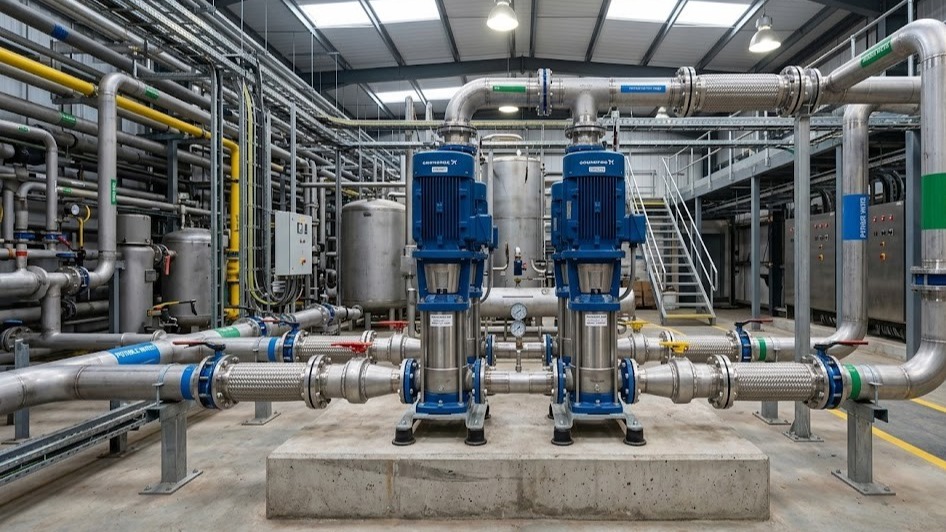
A circulation pump installed incorrectly will fail early - not occasionally, but predictably. National Pumps and Boilers sees the same patterns repeatedly: pumps that should deliver 15-20 years of service failing within 3-5 years because fundamental installation principles were ignored. The financial impact extends beyond replacement costs - system downtime, emergency callouts, and consequential damage to connected equipment multiply the initial mistake.
The frustrating reality for heating engineers and facility managers is that most premature pump failures stem from preventable pump installation mistakes. A Grundfos technical study found that approximately 60% of early pump failures traced back to installation issues rather than manufacturing defects or normal wear. Understanding what goes wrong - and why - provides the foundation for protecting equipment investments and maintaining system reliability.
Why Installation Quality Determines Pump Longevity
Circulation pumps operate in demanding conditions: continuous rotation, thermal cycling, pressure fluctuations, and exposure to system contaminants. When installed correctly, modern pumps handle these stresses for decades. When installation compromises the operating environment, those same stresses accelerate wear exponentially.
The relationship between improper pump installation and premature failure follows predictable patterns. Mechanical stress concentrates at weak points created during installation. Thermal expansion damages components that should flex freely. Contamination enters systems through inadequate preparation. Electrical supply issues create motor stress that accumulates over thousands of operating hours.
British Standard BS 7074 provides comprehensive guidance for pump installation in building services, yet field observations reveal consistent gaps between specification and practice. The standard exists precisely because the consequences of poor installation are severe and well-documented.
The Most Common Installation Errors That Destroy Pumps
Inadequate Pipe Support and Alignment
Pumps should never bear the weight of connected pipework. When installers fail to provide independent pipe support, the pump body becomes a structural element - a role it was never designed for. The resulting stress manifests in several ways:
Flange connections develop micro-movements that break seals and create leaks. Motor shafts experience radial loading that accelerates bearing wear. Pump casings crack at stress concentration points. Vibration increases as alignment deteriorates, creating a cascade of secondary problems.
A commercial central heating system installed in a UK facility demonstrated this failure mode clearly. The installer supported 100mm steel pipework directly from the pump flanges without independent brackets. Within 18 months, bearing noise became audible. At 24 months, the pump required complete replacement - a Wilo pump rated for 20-year service life destroyed by installation stress.
Proper installation requires rigid pipe support within 300mm of each pump connection, with alignment verified before tightening flange bolts. The pump should mount to a solid base with anti-vibration pads, isolated from pipe loads.
Incorrect Electrical Supply and Wiring
Three-phase pumps are particularly vulnerable to electrical installation errors. Phase imbalance, inadequate cable sizing, and missing motor protection create conditions that overheat windings and degrade insulation.
Phase imbalance above 2% causes uneven current distribution in motor windings. The overloaded phase runs hotter, accelerating insulation breakdown. A 3.5% voltage imbalance can increase motor temperature rise by 25%, cutting insulation life by half according to NEMA standards.
Cable sizing errors compound the problem. Undersized cables create voltage drop under load, forcing motors to draw higher current to maintain speed. The additional current generates heat in both cables and motor windings. A 5% voltage drop can reduce motor efficiency by 10% whilst increasing operating temperature significantly.
Missing or incorrectly rated motor protection allows damaging conditions to persist. Thermal overload relays must match motor full-load current ratings. Installers who use oversized protection - or bypass it entirely - remove the safety margin that prevents catastrophic failure.
System Contamination During Installation
Clean systems are essential for pump longevity, yet installation often introduces the contamination that destroys internal components. Welding debris, pipe scale, jointing compound, and installation dirt enter the system and concentrate at the pump - the first component with tight internal clearances.
Abrasive particles act like grinding paste on rotating components. Pump impellers wear unevenly, reducing efficiency and increasing vibration. Mechanical seals develop grooves that allow leakage. Bearing surfaces pit and score, creating noise and heat.
A heating system serving a commercial building in the UK required three pump replacements within five years. Investigation revealed the original installation included no system flushing. Black iron oxide particles from new steel pipework had circulated continuously, destroying each replacement pump in turn. Only after complete system cleaning and installation of pump valves with isolation and drain facilities did pump life normalise.
British Standard BS 7593 specifies pre-commission cleaning procedures for hydronic heating systems, including chemical cleaning, flushing, and water quality testing. These steps are not optional - they are fundamental to equipment protection.
Ignoring Flow Direction and Orientation
Centrifugal pumps are designed for specific flow directions and mounting orientations. Reversed flow creates turbulence that damages impellers and reduces efficiency. Incorrect orientation affects bearing lubrication, seal operation, and air elimination.
Flow direction seems obvious - an arrow on the pump body indicates the correct orientation. Yet site observations reveal reversed installations with surprising frequency, particularly during emergency replacements when installers work under pressure.
The consequences extend beyond reduced performance. Reversed flow creates pressure patterns that stress impeller vanes, particularly at startup when flow establishes. Mechanical seals designed for specific pressure directions may leak when flow reverses. Air trapped in pump bodies can't reach vent points, creating vapour lock and cavitation.
Mounting orientation matters equally. Horizontal shaft pumps installed vertically place radial loads on bearings designed for axial thrust. Lubrication patterns change, and bearing life drops. Seals designed for horizontal operation may leak when oriented vertically due to gravity effects on seal faces.
The Cascade Effect: How One Error Triggers Multiple Failures
Pump installation mistakes rarely occur in isolation, and their effects compound. A pump mounted without proper pipe support develops alignment issues. Misalignment increases bearing loads and vibration. Vibration loosens electrical connections, creating resistance and heat. Heat accelerates insulation breakdown. Motor failure follows, often attributed to "poor quality" rather than installation stress.
This cascade effect explains why some installations experience repeated failures whilst others run trouble-free for decades. The difference is not luck - it is installation quality.
System Design Issues That Masquerade as Installation Problems
Some apparent installation errors actually reflect design flaws. Undersized pumps run continuously at maximum capacity, accelerating wear. Oversized pumps operate inefficiently, cycling frequently or running against closed valves. Systems without adequate expansion vessels subject pumps to pressure surges during thermal cycling.
Distinguishing pump installation mistakes from design problems requires system-level analysis. Flow rates, pressure drops, and thermal loads must match pump specifications. When they do not, even perfect installation cannot prevent premature failure.
The heating engineer's responsibility includes verifying that specified equipment suits the application. Installing equipment correctly matters little if system requirements exceed pump capabilities.
What Proper Installation Actually Requires
Quality pump installation follows a defined sequence that addresses mechanical, hydraulic, and electrical requirements systematically.
Pre-Installation System Preparation
Pre-installation system preparation includes complete flushing, chemical cleaning if required, and water quality testing. Contamination must be removed before introducing precision equipment. Pipe supports must be installed and checked for alignment. Electrical supply must be verified for voltage, phase balance, and circuit protection.
Mechanical Installation
Mechanical installation begins with a solid mounting base - typically a concrete pad or structural steel frame designed to support pump weight and resist vibration. Anti-vibration mounts isolate the pump from building structure whilst maintaining stability. Flexible connections at pipe flanges accommodate thermal expansion without loading the pump body.
Alignment verification uses precision measuring tools, not visual estimation. Flange faces must be parallel within 0.5mm across the diameter. Bolt holes must align without forcing. Gaskets must be clean and correctly sized. Tightening follows a star pattern to even load distribution.
Hydraulic Commissioning
Hydraulic commissioning includes filling the system slowly to purge air, checking for leaks at all connections, and verifying flow direction. Isolation valves allow pump removal without system drainage. Drain points facilitate future maintenance. Pressure gauges on suction and discharge sides enable performance verification.
Electrical Connection
Electrical connection requires cable sizing according to motor full-load current and cable run length. Terminations must be tight and properly insulated. Earth connections are mandatory. Motor protection settings must match pump specifications. Control integration must prevent dry running and provide overload protection.
Initial Operation
Initial operation proceeds gradually. The installer verifies rotation direction before full operation. Flow rates and pressure rises should match pump curves. Operating temperature should stabilise within expected ranges. Noise and vibration should remain minimal.
The Cost Analysis: Installation Quality Versus Premature Replacement
The financial argument for proper installation is straightforward. A commercial DHW pump costs £800-2,500 depending on specification. Professional installation adds £400-800 for labour and materials. Total initial investment: £1,200-3,300.
Improper pump installation that halves pump life from 15 years to 7.5 years requires one additional replacement over the system's design life. That replacement includes not only equipment cost but emergency callout charges (£150-300), system downtime, and potential consequential damage. Total additional cost: £1,500-4,000.
The calculation becomes more severe for critical applications. A heating system serving a commercial building cannot remain offline during winter. Emergency replacement at premium rates, potential frost damage to pipework, and business disruption costs dwarf the original installation savings.
Facility managers who understand this calculation specify installation quality explicitly. Contractor selection emphasises competence and compliance with British Standards rather than lowest price. The approach reduces lifecycle costs substantially whilst improving system reliability.
Verification and Documentation: Proving Installation Quality
Installation quality requires verification, not assumption. Competent installers document their work with photographs, test results, and commissioning records. This documentation serves multiple purposes: it demonstrates compliance with specifications, provides baseline data for future troubleshooting, and protects against unwarranted warranty claims.
Key documentation includes pipe support locations and methods, electrical test results showing voltage and phase balance, system cleanliness verification, pressure test results, and initial performance measurements matching pump curves. This record should accompany the equipment through its service life.
Building Services Regulations require commissioning records for notifiable work. Beyond compliance, these records provide the evidence that installation met professional standards. When pumps fail prematurely, this documentation distinguishes installation issues from manufacturing defects or operational problems.
Training and Competence: The Human Factor
Installation quality ultimately depends on installer competence. Mechanical services engineering requires understanding of fluid mechanics, electrical principles, and system integration - knowledge that develops through training and experience.
Professional qualifications indicate baseline competence. City & Guilds qualifications in plumbing and heating, NVQ Level 3 in Mechanical Services Engineering, and manufacturer-specific training programmes provide the technical foundation for quality installation. However, qualification alone does not guarantee performance. Site supervision, quality checking, and accountability systems ensure that knowledge translates to practice.
Moving Forward: Protecting Pump Investments
The relationship between improper pump installation and reduced lifespan is direct, measurable, and preventable. Pumps installed according to manufacturer specifications and British Standards deliver their design life reliably. Pumps installed without attention to mechanical support, electrical supply, system cleanliness, and hydraulic principles fail early and expensively.
For heating engineers, the message is clear: installation quality is not negotiable. The time and cost invested in proper installation returns multiples through extended equipment life, reduced callbacks, and professional reputation. For facility managers and building owners, specifying installation standards and verifying compliance protects capital investments and maintains system reliability.
The technical knowledge exists. The standards are published. The tools are available. What remains is the commitment to apply them consistently, even when time pressure and budget constraints create temptation to cut corners. That commitment separates installations that last from those that fail.
Conclusion
Understanding what goes wrong when pumps are installed improperly provides the foundation for getting it right. Every circulation pump represents an investment in system performance and reliability. Protecting that investment begins with installation quality - the factor that determines whether a pump delivers 20 years of service or fails within five.
Avoiding pump installation mistakes requires systematic attention to pipe support, electrical supply, system cleanliness, flow direction, and mounting orientation. Each element contributes to long-term reliability, and each shortcut compounds failure risk.
For technical guidance on pump selection, installation best practices, or troubleshooting support, contact us for expert assistance tailored to specific applications.