

The Impact of Pump Efficiency on 10-Year Energy Costs
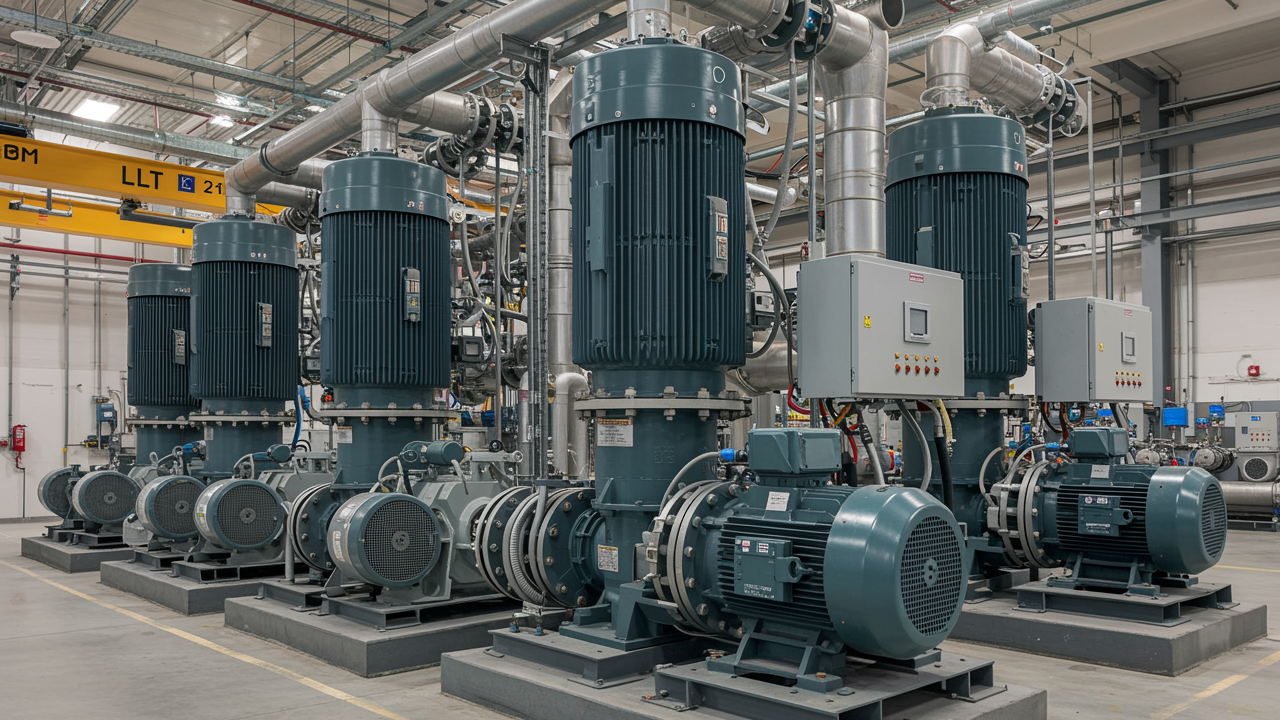
A single circulator pump running inefficiently can cost a commercial building £15,000 more over ten years than its high-efficiency equivalent - yet many facilities still operate outdated equipment that drains budgets year after year. When heating engineers and building managers assess pump specifications, initial purchase price often overshadows long-term operating costs, creating a false economy that compounds over decades of continuous operation.
The mathematics of pump efficiency becomes stark when calculated across typical equipment lifespans. A commercial heating system operating 8,760 hours annually with an inefficient pump consuming just 200 watts more than necessary wastes 1,752 kWh per year. At current UK commercial electricity rates averaging £0.25 per kWh, this seemingly minor inefficiency costs £438 annually - £4,380 over ten years from a single pump. Multiply this across multiple pumps in a commercial building, and the financial impact becomes substantial.
Understanding Pump Efficiency Ratings
ErP (Energy-related Products) Directive classifications provide standardised efficiency benchmarks for circulator pumps across the European market. The Energy Efficiency Index (EEI) scale ranges from 0.27 (highest efficiency) to 0.23 or below for premium models, with regulatory minimums progressively tightening to eliminate the least efficient equipment from new installations.
Grundfos pumps and other leading manufacturers now produce A-rated circulators that consume 80% less energy than unregulated models from the early 2000s. This efficiency improvement stems from permanent magnet motor technology, optimised impeller design, and intelligent control systems that adjust pump output to match real-time system demand rather than running at fixed speeds regardless of actual requirements.
The efficiency difference between an EEI 0.23 pump and an older EEI 0.40 model translates directly to operational costs. A 100-watt commercial circulator operating continuously consumes 876 kWh annually. An equivalent pump drawing 180 watts due to lower efficiency consumes 1,577 kWh - a difference of 701 kWh per year, costing £175 annually at £0.25/kWh. Over ten years, this single efficiency gap costs £1,750 in unnecessary electricity consumption.
Calculating Lifetime Energy Costs
Accurate lifetime cost analysis requires three core data points: pump power consumption under typical operating conditions, annual runtime hours, and projected electricity pricing over the equipment lifespan. Most commercial heating systems operate circulators between 4,000-8,760 hours annually, depending on climate, building occupancy patterns, and system design.
Methodology for Calculating 10-Year Energy Costs
A methodology for calculating 10-year pump energy costs:
Determine pump electrical consumption (watts) at the typical duty point, multiply by annual operating hours to establish kWh consumption, apply current electricity rates with conservative inflation projections, calculate cumulative costs across expected equipment lifespan, and compare against alternative pump specifications to quantify savings.
For a medium-sized commercial building with six heating circulators, the efficiency calculation becomes compelling. Six pumps at 150 watts each (older technology) consume 900 watts continuously. At 6,000 annual operating hours, total consumption reaches 5,400 kWh per year, costing £1,350 annually. Upgrading to Wilo pumps with 60-watt consumption reduces total load to 360 watts, consuming 2,160 kWh annually at £540 cost - an annual saving of £810 and a 10-year pump energy costs saving of £8,100.
Fixed-Speed Versus Variable-Speed Technology
Traditional fixed-speed circulators operate at constant output regardless of actual system demand, consuming full electrical load even when buildings require minimal heating. This operational pattern wastes substantial energy during shoulder seasons, overnight periods, and partially occupied conditions when heating loads drop significantly below design maximums.
Variable-Speed Pump Advantages
Variable-speed pumps equipped with ECM (electronically commutated motor) technology adjust rotational speed to match real-time system requirements. When a building management system reduces heating demand by 50%, variable-speed pumps decrease power consumption by approximately 87.5% - because pump power follows the cube law relationship between speed and energy use. Halving pump speed reduces energy consumption to one-eighth of full-load operation.
This dynamic efficiency creates dramatic cost differences across annual operating cycles. A fixed-speed pump consuming 200 watts continuously uses 1,752 kWh annually, regardless of actual heating demand. A comparable variable-speed circulator averaging 75 watts across varied load conditions consumes just 657 kWh annually - saving 1,095 kWh per year, worth £274 annually and £2,740 over ten years per pump.
National Pumps and Boilers supplies both fixed and variable-speed circulators across commercial and domestic applications, with technical specifications clearly indicating expected energy consumption patterns under typical operating profiles. The capital cost premium for variable-speed technology typically ranges from £150 to £400 per pump, depending on capacity, creating payback periods of 18-36 months in most commercial applications before delivering net savings for the remaining equipment lifespan.
Oversizing Penalties and System Matching
Pump oversizing represents one of the most common yet overlooked sources of energy waste in heating systems. When installers select pumps with excessive head pressure or flow rate capacity "for safety margin," the equipment operates inefficiently at the left side of its performance curve, where motor efficiency drops significantly.
Proper Pump Sizing
An oversized pump forcing 15 litres per minute through a system designed for 10 l/min creates unnecessary pressure drop, increases electrical consumption, generates noise through throttled valves, and accelerates wear on system components. The efficiency penalty compounds over years of operation as the pump motor works harder than necessary to deliver unneeded performance.
Proper pump sizing requires accurate calculation of system volume, pipe sizing, radiator or heat emitter requirements, and total pressure drop across the longest circuit. Central heating equipment specifications should match actual system requirements with minimal safety margin - typically 5-10% additional capacity rather than the 50-100% oversizing common in conservative installations.
A correctly sized pump operating at its best efficiency point (BEP) delivers maximum flow per watt of electrical input. Moving away from BEP in either direction - through undersizing or oversizing - increases energy consumption per unit of useful heating delivered. For a commercial system, optimising six pumps to operate at BEP rather than 40% oversized conditions can reduce total electrical consumption by 200-300 watts continuously, saving £300-£450 annually.
Maintenance Impact on Long-Term Efficiency
Pump efficiency degrades over operational life without proper maintenance. Scale accumulation, bearing wear, impeller erosion, and motor winding deterioration gradually increase electrical consumption while reducing hydraulic output. A five-year-old pump without service intervention may consume 15-25% more electricity than when new, while delivering reduced flow rates.
Regular Maintenance Requirements
Regular maintenance preserves efficiency across equipment lifespan:
Annual bearing inspection and lubrication prevent friction losses, three-year impeller cleaning removes scale and deposits, five-year seal replacement prevents internal recirculation, electrical connection inspection ensures proper motor performance, and system water quality maintenance prevents internal corrosion.
The cost differential between maintained and neglected equipment becomes significant over ten years. A 100-watt pump experiencing 20% efficiency degradation draws 120 watts after five years of neglect. Over the second five-year period, this increased consumption costs an additional £219 compared to properly maintained equipment. Across six commercial circulators, deferred maintenance wastes £1,314 in unnecessary electricity costs over the second half of the equipment's lifespan.
Pump valves and system controls also affect overall efficiency. Properly functioning isolation valves, check valves, and balancing valves ensure pumps operate against the designed system resistance rather than fighting closed circuits or short-cycling through bypass loops that waste energy without delivering useful heating.
Efficiency Comparisons
Comparing actual equipment specifications reveals the financial impact of pump selection decisions. A standard commercial circulator rated at 180 watts power consumption operating 7,000 hours annually consumes 1,260 kWh per year at a £315 annual cost. A premium efficiency model rated at 65 watts consumes 455 kWh annually at £114 cost - an annual saving of £201 and a 10-year pump energy costs saving of £2,010.
DHW Pump Efficiency Comparisons
For DHW pumps in commercial buildings, efficiency differences compound further due to year-round operation. Domestic hot water circulation typically operates 8,760 hours annually regardless of seasonal heating requirements. A 150-watt DHW circulator consumes 1,314 kWh annually at a cost of £329. Upgrading to a 55-watt high-efficiency model reduces consumption to 482 kWh at £120, saving £209 annually and £2,090 over ten years.
The capital cost difference between standard and premium efficiency pumps ranges from £100 to £300, depending on capacity and specification. Simple payback calculations demonstrate return on investment within 12-30 months for most commercial applications, with the remaining 8-9 years of equipment life delivering net savings that directly improve building operating margins.
Building Regulations and Compliance Considerations
Building Regulations Part L mandates minimum efficiency standards for circulator pumps in new installations and system replacements. Compliance requires ErP-rated equipment meeting current Energy Efficiency Index thresholds, with progressive tightening of requirements driving continuous improvement in available equipment specifications.
Non-domestic buildings face additional scrutiny through Energy Performance Certificate (EPC) assessments and BREEAM ratings that evaluate mechanical system efficiency. Inefficient pumps directly impact building energy ratings, potentially affecting property valuations, tenant appeal, and regulatory compliance for commercial landlords.
The regulatory environment increasingly penalises inefficient equipment through both direct compliance requirements and indirect financial mechanisms. The UK's trajectory toward net-zero carbon emissions by 2050 will likely introduce additional efficiency mandates, carbon pricing, and incentive structures that further advantage high-efficiency mechanical equipment.
Forward-looking building managers recognise that pump efficiency investments made today provide increasing returns as electricity prices rise and carbon regulations tighten. Equipment specified in 2024 will likely operate until 2034-2039, spanning a period of significant energy market transformation that rewards early efficiency adoption.
Calculating Return on Investment
ROI calculations for pump efficiency upgrades require comparing total lifecycle costs rather than initial capital expenditure alone. A comprehensive analysis includes capital cost differential between standard and high-efficiency equipment, installation labour costs (typically identical for both options), annual energy savings based on consumption differences, maintenance cost variations across equipment lifespan, expected equipment life before replacement, and electricity price inflation projections.
Six-Pump System Upgrade Example
For a six-pump commercial heating system upgrade, the financial case becomes clear. Replacing six 180-watt fixed-speed circulators with six 65-watt variable-speed models costs approximately £1,800 more in equipment (£300 premium per pump). Annual energy savings of £1,206 (based on 7,000 operating hours at £0.25/kWh) create a 1.5-year payback period. Over ten years, net savings reach £10,260 after recovering the initial investment - a 570% return on the efficiency premium paid.
These calculations assume static electricity pricing, but UK commercial rates have increased 45% since 2020. Incorporating modest 3% annual electricity inflation extends 10-year pump energy costs savings to £13,850 for the same six-pump upgrade, improving ROI to 770% on the efficiency investment.
Conclusion
Pump efficiency directly determines long-term operational costs in commercial and domestic heating systems, with efficiency differences creating £2,000-£15,000 cost variations over typical ten-year equipment lifespans. The transition from fixed-speed to variable-speed technology, proper system sizing, and selection of A-rated ErP equipment delivers measurable financial returns that compound annually through reduced electricity consumption.
Building managers and heating engineers who prioritise lifecycle cost analysis over initial capital expenditure reduce operating expenses, improve regulatory compliance, and future-proof mechanical systems against rising energy costs. The mathematics consistently favour high-efficiency equipment, with payback periods of 18-36 months followed by years of net savings that directly improve building operating margins.
National Pumps and Boilers specialises in high-efficiency circulator pumps across commercial and domestic applications, providing technical specifications, performance data, and sizing guidance that enables informed equipment selection based on total cost of ownership rather than purchase price alone. For detailed efficiency comparisons and system-specific recommendations, contact us for expert guidance on optimising pump specifications for long-term cost performance.