

The Importance of Hydraulic Balancing After a Commercial Heating Retrofit
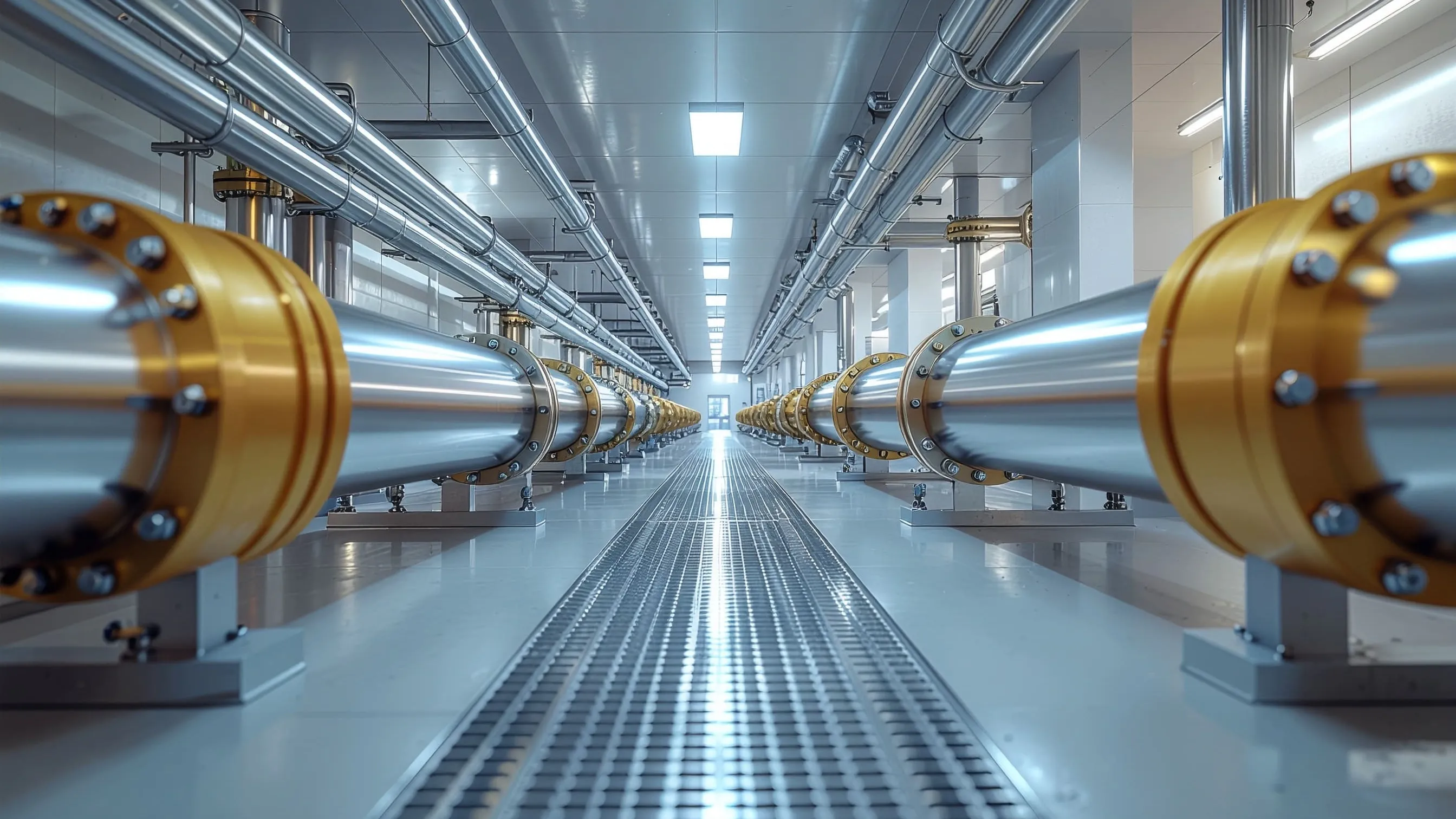
Installing a brand new array of high-efficiency boilers represents a massive capital investment. However, simply bolting new heat generators onto an old pipe network does not guarantee comfort or energy savings. If the hot water cannot reach the furthest corners of your building, the entire retrofit is fundamentally flawed. This is precisely why commercial hydraulic balancing is an absolute necessity following any major mechanical upgrade.
Upgrading the plant room fundamentally alters the pressure and flow dynamics of the entire building. The new pumps push water differently, and the new boilers require specific flow rates to condense efficiently. If you ignore the distribution network, your brand new equipment will fight against unbalanced pipework. This causes premature mechanical failure, skyrocketing energy bills, and endless occupant complaints.
The Physics of Water Distribution
Water operates on a very simple, undeniable rule of physics. It will always take the absolute path of least resistance. In a large commercial building, the path of least resistance is always through the radiators or air handling units located closest to the primary plant room. If left unchecked, the water will simply short-circuit through these first few units and return straight to the boilers.
Think of an unbalanced heating system like watering your garden with a garden hose that has fifty tiny punctures along its length. All the water pressure escapes through the first few holes, leaving absolutely nothing but a trickle for the plants at the very end of the hose. Proper commercial hydraulic balancing acts like patching those early holes. It forces the water pressure to travel the full distance of the network. National Pumps and Boilers regularly advises facility managers that without this vital step, heating equality across a large site is physically impossible.
Why Heating Retrofits Mandate Re-Balancing
When you strip out a 30-year-old plant room, you remove the heavy, fixed-speed pumps that previously forced water around the building through sheer brute force. Modern retrofits utilise highly sensitive variable speed technology. This massive shift in technology completely alters your building's hydraulic profile. Every single piece of historical commissioning data becomes instantly obsolete the moment you cut the old pipes.
If you install a new differential pressure valve in the basement, the resistance across the upper floors changes immediately. You cannot expect the new equipment to operate efficiently on the old settings. Proper commercial hydraulic balancing ensures the new smart pumps work in total harmony with the legacy distribution pipework. Skipping this step places immense mechanical strain on your new investment.
Managing System Pressure Dynamics
Modern commercial buildings feature hundreds of thermostatic radiator valves that open and close constantly throughout the day. When fifty valves close simultaneously on the sunny side of the building, the water pressure in the rest of the pipework spikes violently. You must control this erratic pressure to protect your central heating system.
Engineers achieve this by installing a differential pressure control valve on every major sub-circuit. A differential pressure control valve acts as a dedicated shock absorber for that specific floor or wing. It senses the rising pressure and physically bypasses the excess flow. If you fail to install a differential pressure control valve during your retrofit, the excess pressure will force the remaining open radiator valves to whistle incredibly loudly, causing severe noise complaints from the occupants.
Protecting Variable Speed Pump Logic
Modern intelligent circulators are designed to save massive amounts of electricity. A high-efficiency grundfos magna3 reads the hydraulic resistance of the pipework and slows its motor down when the building is warm. However, this intelligent logic relies entirely on a perfectly balanced network.
If the building is unbalanced, the pump receives chaotic, conflicting pressure data. It will constantly speed up and slow down, attempting to satisfy impossible parameters. This phenomenon is known as pump hunting. Achieving proper variable speed pump optimisation stops this hunting entirely. Accurate variable speed pump optimisation ensures the motor runs at a smooth, continuous curve. This heavily extends the life of the pump bearings and guarantees the electrical savings promised by the manufacturer. If you skip variable speed pump optimisation, you turn a highly intelligent machine into a confused, erratic liability.
Real-World Consequences of Unbalanced Networks
A local authority recently spent eighty thousand pounds on a new boiler plant for their regional office. However, they skipped the distribution checks entirely to save money. By mid-winter, the ground floor staff were opening windows because the temperature hit 28 degrees. Meanwhile, the top floor staff were wearing heavy winter coats at 14 degrees. The new boilers were firing perfectly, but the thermal energy simply could not reach the extremities. Fixing this required extensive retroactive commissioning.
Furthermore, balancing is not restricted solely to space heating. When upgrading domestic hot water returns, you must install a highly accurate thermal balancing valve. A proper thermal balancing valve prevents hot water stagnation in the secondary return loop. If you fail to install a thermal balancing valve, the furthest taps will run dangerously cool, creating a severe legionella breeding ground. An upgraded Wilo variable speed pump relies entirely on these valves to push safe, high-temperature fluid evenly across the entire hotel or hospital.
The Physical Commissioning Process
The physical balancing process requires highly methodical engineering. Engineers perform strict radiator lockshield adjustment to restrict the water flow deliberately at the units closest to the plant room. Proper radiator lockshield adjustment forces the thermal energy to travel further down the pipework to the index circuit. The index circuit is the absolute furthest, hardest-to-heat point in the entire building.
Without precise radiator lockshield adjustment, the system will always take the lazy route and short-circuit. Engineers use specialized ultrasonic flow meters to verify the exact litre-per-second flow rate at every terminal. They adjust the commercial heating circulator speed to provide just enough pressure to satisfy that distant index circuit. Once the entire building achieves proportional balance, the engineer generates a formal commissioning certificate to prove total regulatory compliance.
Conclusion
Upgrading a commercial plant room is functionally useless if the generated heat cannot reach the building occupants. Commercial hydraulic balancing is the ultimate key that unlocks the true efficiency of your new boilers and smart pumps. It eliminates cold spots, stops radiator noise, and slashes your electrical consumption drastically.
Never allow a mechanical contractor to hand over a newly retrofitted plant room without providing a comprehensive, verified balancing report. If you are experiencing uneven heating across your facility after a recent plant room upgrade, Speak to a Balancing Expert at our commercial engineering desk today to restore your building's comfort and efficiency.