

The Role of Differential Pressure Sensors in Pump System Optimisation
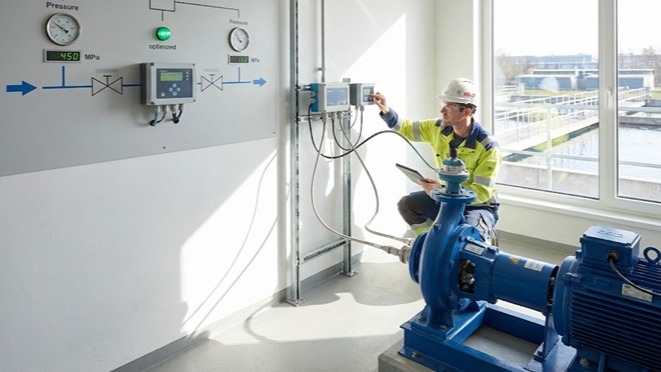
Differential pressure sensors pumps have transformed how commercial heating systems operate, shifting pump control from fixed-speed guesswork to real-time precision. These sensors measure the pressure difference between two points in a system - typically across a pump or section of pipework - and feed that data to variable speed drives that adjust pump output to match actual demand. The result: energy savings of 30-50% in typical commercial installations, extended equipment life, and elimination of the flow and noise problems that plague oversised, constantly-running pumps.
For heating engineers and building services contractors working on commercial projects, understanding how DP sensor pump control integrates with modern pump systems has become essential specification knowledge. The technology addresses a fundamental inefficiency in traditional heating installations: pumps sized for peak winter demand running at full capacity regardless of actual load, wasting energy and creating system imbalances that compromise comfort and accelerate component wear.
How Differential Pressure Sensors Work in Pump Applications
A differential pressure sensor contains two pressure ports connected to different points in the heating system. In a typical central heating application, one port connects to the pump discharge (high pressure side) and the other to the return pipework before the pump inlet (low pressure side). The sensor measures the difference between these two pressures - the differential pressure - which directly correlates to system flow resistance and demand.
When thermostatic radiator valves close in rooms that have reached temperature, system resistance increases and differential pressure rises. The sensor detects this change and signals the pump's variable speed drive to reduce motor speed, maintaining the target differential pressure setpoint. Conversely, when additional zones call for heat and valves open, differential pressure drops and the pump speeds up to maintain adequate flow.
This closed-loop control mechanism ensures the pump delivers exactly the flow rate required by the system at any given moment, rather than running continuously at a fixed speed designed for worst-case scenarios. National Pumps and Boilers supplies Grundfos pumps and Wilo pumps with integrated differential pressure sensors and variable speed drives as standard in their commercial circulator ranges.
Energy Savings Through Proportional Pressure Control
The energy consumption of a centrifugal pump follows the affinity laws: power consumption varies with the cube of speed. Reducing pump speed by 20% cuts energy use by approximately 50%. This cubic relationship makes variable speed control extraordinarily effective for energy reduction.
A fixed-speed pump in a 200kW commercial heating system might consume 3kW continuously during the heating season. With DP sensor pump control allowing the pump to run at an average 60% speed during partial load conditions (which represent 80% of operating hours), energy consumption drops to approximately 0.65kW for those periods - a reduction of nearly 80% during part-load operation.
Annual Savings Analysis
Across a typical UK heating season with 2,000 operating hours, this translates to savings of approximately 3,800 kWh for a single pump. At current commercial electricity rates of £0.25/kWh, that represents £950 annual savings per pump. In larger commercial buildings with multiple pump groups serving different zones, total annual savings frequently exceed £5,000-£10,000.
The payback period for retrofitting differential pressure sensors pumps to existing fixed-speed installations typically ranges from 18-36 months, depending on system size and operating hours. For new installations, the incremental cost of specifying pumps with integrated sensors versus basic fixed-speed models adds approximately 15-25% to pump costs but delivers immediate operational savings.
Proportional vs Constant Differential Pressure Control
Differential pressure sensors can operate in two distinct control modes, each suited to different system configurations and performance requirements.
Constant Differential Pressure Control
Constant differential pressure control maintains a fixed pressure difference regardless of flow rate. The sensor monitors differential pressure and adjusts pump speed to hold this setpoint constant. This approach works well for systems with relatively consistent pressure requirements across all operating conditions and provides simple, predictable control.
Proportional Differential Pressure Control
Proportional differential pressure control (also called proportional pressure control) varies the target differential pressure based on flow rate, reducing the pressure setpoint as flow decreases. This more sophisticated approach recognises that lower flow rates require less pressure to overcome system resistance, allowing further pump speed reduction and additional energy savings of 10-20% compared to constant pressure control.
Most modern central heating equipment with integrated differential pressure sensors defaults to proportional control, with the control curve adjustable through the pump's interface or building management system integration. For retrofit applications, the choice between constant and proportional control depends on system complexity, valve authority, and the sophistication of existing controls.
Systems with poor valve authority (oversised control valves with insufficient pressure drop at full flow) benefit more from constant pressure control to maintain adequate control range. Well-designed systems with properly sized valves achieve optimal efficiency with proportional control.
Sensor Placement and System Design Considerations
Correct sensor placement determines control accuracy and system performance. The fundamental principle: measure differential pressure where it best represents actual system demand and where the measurement remains stable across all operating conditions.
Primary Circulation Loops
For primary circulation loops in commercial heating systems, the optimal sensor location measures differential pressure across the entire distribution network - one sensor port at the pump discharge header, the other at the return header before the pump suction. This configuration captures total system resistance and provides the most representative control signal.
Secondary Circuits
Secondary circuits serving individual zones benefit from dedicated differential pressure sensors pumps measuring pressure across that specific zone. This allows independent control of multiple pump groups, each responding to the actual demand in its served area rather than reacting to conditions elsewhere in the building.
Common Sensor Placement Mistakes
Common sensor placement mistakes include:
- Positioning sensor ports too close together (less than 3 pipe diameters apart), which captures local turbulence rather than system pressure
- Placing sensors downstream of significant restrictions like partially closed balancing valves, which skews readings
- Installing sensors in locations subject to water hammer or pressure surges from other equipment
- Failing to account for static head in tall buildings, where elevation differences create pressure variations unrelated to flow resistance
For systems with significant static head variation - typical in buildings over four storeys - differential pressure sensors should measure dynamic pressure only, excluding static pressure components. This requires careful consideration of sensor port locations relative to system elevation changes.
Integration With Variable Speed Drives and Building Controls
Differential pressure sensors function as the feedback mechanism in a control loop, but the variable speed drive executes the actual pump speed adjustments. Modern pump packages integrate both components with pre-configured control parameters, but retrofit applications require proper drive programming to achieve optimal performance.
PID Control Loop Operation
The control loop operates through a PID (Proportional-Integral-Derivative) algorithm that processes the sensor signal and adjusts motor speed to minimise the error between measured differential pressure and the setpoint. Proper PID tuning prevents oscillation (pump speed hunting up and down) whilst maintaining responsive control.
Most manufacturers provide default PID parameters suitable for typical heating applications, but systems with unusual characteristics - very long pipe runs, large system volumes, or numerous control zones - may require tuning adjustment. Symptoms of poor PID tuning include:
- Pump speed cycling every few seconds (excessive proportional gain)
- Slow response to demand changes, with differential pressure drifting far from setpoint (insufficient proportional gain)
- Persistent offset between measured and target pressure (insufficient integral action)
- Overshoot and oscillation following demand changes (excessive integral or derivative action)
Building Management System Integration
Building management system integration allows differential pressure setpoints to be adjusted based on outdoor temperature, occupancy schedules, or other parameters. This adaptive control optimises energy consumption across varying conditions - for example, reducing the differential pressure setpoint during mild weather when lower flow rates satisfy heating demand.
Pump valves with integrated actuators and position feedback can work in coordination with DP sensor pump control, providing zone-level flow limiting whilst the differential pressure sensor maintains overall system pressure.
Differential Pressure Monitoring for System Diagnostics
Beyond energy-efficient control, differential pressure sensors provide valuable diagnostic information about system condition and performance degradation. Continuous monitoring of differential pressure patterns reveals problems before they cause comfort complaints or equipment damage.
Identifying System Resistance Issues
A gradual increase in differential pressure required to maintain target flow indicates increasing system resistance - typically from sludge accumulation, scaling, or partially closed valves. This trend appears as the pump running at progressively higher speeds to maintain the differential pressure setpoint, visible in building management system logs or pump operating data.
Detecting Acute Problems
Sudden differential pressure changes signal acute problems:
- Abrupt pressure increase suggests a valve closure, strainer blockage, or pipe restriction
- Sudden pressure decrease indicates a valve stuck open, bypass activation, or system leak
- Erratic pressure fluctuations point to air entrainment, cavitation, or control valve instability
System Balancing Analysis
Comparing differential pressure across multiple pump groups in the same building reveals system imbalances. A circuit requiring consistently higher differential pressure than similar circuits likely suffers from undersised pipework, excessive fitting losses, or inadequate flow distribution.
Seasonal differential pressure patterns provide insights into system sizing and control optimisation opportunities. A system requiring maximum pump speed only during extreme weather conditions is well-sized. One running at maximum speed throughout the heating season is undersised and requires capacity upgrades or load reduction. Conversely, a system rarely exceeding 50% speed is oversised, indicating opportunities to downsize pumps during future replacements for additional energy savings.
Retrofit Applications and Compatibility Considerations
Retrofitting DP sensor pump control to existing fixed-speed pump installations delivers substantial energy savings with manageable installation complexity. The process involves three main components: adding the differential pressure sensor, installing a variable speed drive, and configuring the control loop.
Most commercial heating systems with pumps rated 0.75kW and above justify retrofit investment. Smaller domestic systems may not generate sufficient savings to offset installation costs unless multiple pumps are upgraded simultaneously or other system improvements are being undertaken.
Compatibility Considerations
Compatibility considerations for retrofit projects:
Pump motor suitability: Standard three-phase induction motors work with variable speed drives, but older motors may lack adequate cooling at reduced speeds for continuous low-speed operation. Motors specifically rated for inverter duty provide optimal performance, but standard motors typically operate satisfactorily in heating applications where low-speed operation coincides with reduced ambient temperatures.
Electrical infrastructure: Variable speed drives generate harmonic currents that can affect power quality. Drives above 10kW may require harmonic mitigation measures, and electrical distribution boards must have adequate capacity for drive installation.
Control system integration: Standalone differential pressure control operates independently of existing building controls, but integration with building management systems maximises benefits through coordinated control strategies.
Pipework modifications: Sensor installation requires two connection points for pressure tapping, typically achieved through existing test points or by installing tee fittings with isolation valves for sensor removal without system drainage.
Reputable manufacturers including those available through National Pumps and Boilers offer retrofit kits containing matched sensors, drives, and mounting hardware with pre-configured parameters for common heating applications, simplifying installation and commissioning.
Maintenance Requirements and Sensor Reliability
Differential pressure sensors pumps in heating applications operate in relatively benign conditions - clean water at moderate temperatures - resulting in high reliability and minimal maintenance requirements. Quality sensors typically provide 10-15 years of trouble-free operation when properly installed and commissioned.
Routine Maintenance
Routine maintenance involves annual verification that sensor readings remain accurate. This requires comparing sensor output against temporary test gauge readings at the same measurement points. Drift exceeding ±5% of full scale indicates sensor degradation requiring recalibration or replacement.
Sensor Protection Measures
Sensor protection measures extend service life:
- Install isolation valves at both sensor ports to allow removal without system drainage
- Fit strainers upstream of sensor connections to prevent debris accumulation in sensing chambers
- Ensure proper sensor orientation per manufacturer specifications to prevent air trap formation
- Protect sensor wiring from mechanical damage and moisture ingress
Common Sensor Failure Modes
Common sensor failure modes include:
Diaphragm degradation: The sensing diaphragm may develop leaks or lose elasticity over time, causing inaccurate readings or complete failure. This typically manifests as erratic signals or readings stuck at zero.
Port blockage: Debris or scale can obstruct sensor ports, preventing accurate pressure measurement. Symptoms include readings that change slowly or fail to respond to system changes.
Electronic component failure: Circuit board degradation affects signal processing, causing drift, noise, or complete signal loss.
Most sensor failures produce obvious symptoms - pump speed remaining constant regardless of system demand, or erratic speed changes unrelated to actual load. Building management system alarms configured to detect differential pressure readings outside normal operating ranges provide early warning of sensor problems.
Conclusion
Differential pressure sensors pumps represent proven, mature technology that transforms pump system efficiency in commercial heating applications. The combination of real-time pressure monitoring and variable speed control delivers energy savings of 30-50%, reduces mechanical wear, and provides valuable diagnostic capabilities for system optimisation.
For heating engineers specifying new installations, pumps with integrated DP sensor pump control should be considered standard practice for any commercial system above 10kW capacity. The modest incremental cost pays back within 2-3 years through energy savings whilst improving system performance and reliability.
Retrofit applications offer similar benefits for existing installations, with payback periods typically under three years for systems operating more than 1,500 hours annually. The technology integrates readily with existing pipework and controls, requiring minimal disruption during installation.
Proper sensor placement, control configuration, and integration with building management systems maximises performance gains. Regular monitoring of differential pressure patterns provides insights into system health and identifies optimisation opportunities that extend equipment life and reduce operating costs.
For technical guidance on selecting differential pressure-controlled pumps for specific applications, contact us for expert advice on system design and equipment specification.