

The Role of Dirt Separators in Protecting Your Pump Investment
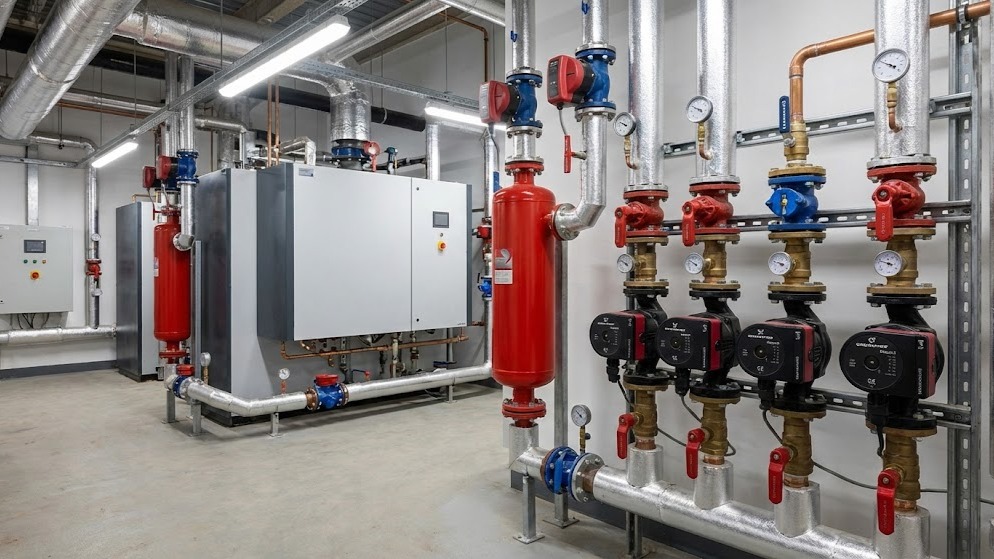
Heating system pumps represent a significant capital investment, yet many installations overlook a simple component that could extend pump lifespan by years: the dirt separator. Magnetite, sludge, and debris circulating through heating systems cause 40% of premature pump failures in UK installations, according to recent industry analysis. Effective dirt separator pump protection intercepts these contaminants before they reach critical pump components, protecting impellers, seals, and bearings from accelerated wear.
The financial case is straightforward. A Grundfos pump for a typical domestic heating system costs £150-400, whilst a quality dirt separator costs £80-150. When that separator prevents even one premature pump replacement, it has paid for itself. For commercial installations with multiple pumps, the economics become even more compelling. Proper sediment removal heating systems maintain optimal performance throughout their service life.
How Contaminants Enter Heating Systems
Heating systems accumulate debris from multiple sources throughout their operational life. New installations introduce welding flux, pipe swarf, and jointing compound residues during construction. These sharp metallic particles cause immediate damage if they reach pump internals before the system has been properly flushed.
Corrosion represents the more insidious long-term threat. Steel radiators and pipework oxidise gradually, producing magnetite, a magnetic iron oxide that forms black sludge. A typical domestic heating system generates 500-800 grams of magnetite over 10 years. This material has an abrasive consistency similar to grinding paste, making it particularly destructive to pump components operating at 2,800-3,000 rpm.
Older systems often contain limescale deposits that break free during temperature cycling. These calcium carbonate fragments combine with magnetite to form a particularly abrasive compound. Systems with aluminium components face additional risks from galvanic corrosion, which accelerates debris formation when dissimilar metals contact each other in the presence of water.
The Mechanics of Pump Damage
Circulator pumps move water through impellers spinning at high speed within tight clearances. Grundfos Alpha and Wilo Stratos pumps, for example, maintain clearances of 0.3-0.5mm between impeller and housing. When abrasive particles enter these spaces, they act like sandpaper against precision-machined surfaces.
The damage follows a predictable progression. Initial contamination causes microscopic scoring on impeller surfaces, reducing hydraulic efficiency by 5-8%. This forces the pump to work harder to maintain the same flow rate, increasing power consumption and heat generation. Seals begin leaking as debris damages their contact surfaces, allowing water to reach bearing assemblies not designed for wet operation.
Bearing failure typically follows within 12-18 months of heavy contamination. The pump develops audible noise, initially a slight hum, progressing to grinding sounds as bearings disintegrate. By this stage, the pump has lost 30-40% of its original efficiency. Complete seizure often occurs suddenly, leaving the heating system inoperative until replacement. Effective sediment removal heating protection prevents this costly damage progression.
How Dirt Separators Function
Dirt separator pump protection operates on straightforward physical principles. These devices install in-line within the heating circuit, creating a chamber where water velocity drops dramatically. This velocity reduction allows suspended particles to settle out of the flow stream through gravity.
Quality separators incorporate powerful neodymium magnets that capture ferrous particles before they settle. The magnetic field strength typically ranges from 8,000-12,000 gauss, sufficient to extract even fine magnetite particles from the flow. Non-magnetic debris settles into a collection chamber at the base of the unit, where it can be removed during routine maintenance.
The internal design creates a cyclonic flow pattern that enhances separation efficiency. Water enters tangentially, spiralling downward whilst particles migrate to the outer wall. Clean water exits from the centre of the device, having been stripped of 95-98% of suspended solids larger than 5 microns.
Modern separators achieve this filtration with minimal pressure drop, typically 0.05-0.15 bar at normal flow rates. This ensures they do not compromise system performance whilst providing continuous protection. Units sized correctly for the system flow rate can operate effectively for decades with only annual cleaning required. Sediment removal heating systems benefit significantly from this continuous protection.
Positioning Within the System
Separator placement significantly affects protection effectiveness. The optimal location sits on the return pipe immediately before the pump inlet. This configuration captures debris before it reaches pump internals, providing maximum protection for the most vulnerable component.
Installing on the return line rather than flow offers several advantages. Water temperature is lower, reducing thermal stress on separator seals and housings. Debris concentrations run higher in return water, as particles settle out during circulation and accumulate in cooler zones. The lower temperature also improves magnetic separation efficiency, as magnetite exhibits stronger magnetic properties when cooler.
For systems with multiple pumps, individual separators for each pump provide better protection than a single large unit. This approach ensures every pump receives filtered water, even if one separator requires maintenance. Commercial installations often combine a primary high-capacity separator on the main return with smaller units protecting individual pump groups.
The separator should install with sufficient straight pipe runs either side, typically 5 pipe diameters upstream and 3 diameters downstream. This ensures stable flow conditions and prevents turbulence that could reduce separation efficiency. Isolation valves either side of the separator simplify maintenance without draining the entire system.
Sizing Considerations
Proper sizing matches separator capacity to system flow rate. Undersized units create excessive pressure drop and allow particles to bypass the separation chamber. Oversized separators waste money and installation space without providing additional protection.
Domestic heating systems typically require 22mm or 28mm separators rated for 10-25 litres per minute. A Grundfos Alpha2 pump operating at typical settings moves approximately 15 litres per minute, making a 22mm separator with 20 l/min capacity appropriate for most installations.
Commercial systems demand larger units. A 50mm separator handles 60-80 l/min, suitable for small commercial buildings or multi-dwelling installations. Industrial applications may require 80mm or 100mm units processing 150-300 l/min. These larger separators often incorporate automatic drain valves and differential pressure monitoring to simplify maintenance.
The system volume also influences separator selection. Larger systems generate more debris and benefit from higher-capacity collection chambers. A separator serving a 300-litre system should offer at least 500ml collection capacity to avoid frequent cleaning. Systems exceeding 1,000 litres often justify separators with 1-2 litre chambers that can operate for 12-18 months between services.
Integration With System Protection
Dirt separators form one component of comprehensive system protection. They work most effectively alongside other devices addressing different threats. Expansion vessels manage pressure fluctuations that can dislodge settled debris, whilst chemical inhibitors slow corrosion that generates new contamination.
System filters provide complementary protection by capturing smaller particles that separators might miss. A separator removes bulk debris and magnetite, whilst a 100-micron filter downstream catches finer particles. This two-stage approach extends pump life further than either device alone.
Automatic air vents prevent air locks that reduce circulation efficiency and create conditions where debris settles in pipework rather than reaching the separator. Pump valves with integral check valves prevent reverse flow that could disturb settled debris during pump shutdown.
For new installations, proper commissioning procedures complement separator protection. Power flushing before final connection removes construction debris that would otherwise overload the separator immediately. Adding inhibitor during commissioning establishes corrosion protection from day one, minimising future debris generation. This comprehensive approach maximises dirt separator pump protection effectiveness.
Maintenance Requirements
Dirt separators require minimal but essential maintenance to sustain protection levels. The collection chamber should be drained and cleaned annually for domestic systems, or every 6 months for commercial installations with higher debris loads. This simple procedure takes 10-15 minutes and requires only a bucket and adjustable spanner.
The process involves closing isolation valves, connecting a hose to the drain valve, and opening the valve to flush collected debris into a bucket. The volume and composition of debris indicate system health, as excessive material suggests active corrosion requiring investigation. Clean water flowing after initial discharge confirms the chamber has been emptied.
Magnetic elements require periodic cleaning to maintain capture efficiency. Accumulated magnetite forms a coating that reduces the effective magnetic field strength. Removing the magnet assembly and wiping it clean restores full performance. Some separators incorporate removable magnetic cartridges that can be cleaned without draining the system.
Inspection during maintenance reveals developing problems. Unusual debris types, including aluminium particles, rubber fragments, or limescale chunks, indicate specific system issues requiring attention. Addressing these problems early prevents accelerated pump wear and extends overall system life.
Cost-Benefit Analysis
The investment in dirt separator pump protection delivers returns through multiple mechanisms. Direct savings from avoided pump replacements represent the most obvious benefit. A domestic pump replacement costs £300-600 including parts and labour. Preventing one premature failure pays for the separator twice over.
Energy savings provide ongoing returns. Clean pumps operate at design efficiency, whilst contaminated units draw 15-25% more power to deliver the same performance. For a typical Alpha2 pump running 2,000 hours annually, this represents £25-40 in additional electricity costs per year. The separator pays for itself through energy savings alone within 3-4 years.
System reliability improvements reduce call-out costs and tenant complaints in rental properties. Heating failures during winter create significant inconvenience and potential liability. The separator reduces failure risk by 60-70% according to field data from social housing installations.
Commercial installations see proportionally larger benefits. A Wilo Stratos GIGA serving a commercial building costs £2,000-4,000. Protecting this investment with a £400 separator represents insurance against catastrophic failure. The downtime costs from pump failure in commercial buildings often exceed replacement costs through lost productivity and emergency call-out premiums. Effective sediment removal heating protection delivers substantial returns for commercial facilities.
Conclusion
Dirt separator pump protection represents one of the most cost-effective upgrades available for heating systems. These devices intercept debris before it reaches pump internals, preventing the accelerated wear that causes 40% of premature pump failures. The modest investment, typically £80-150 for domestic installations, pays for itself through avoided replacement costs, reduced energy consumption, and improved system reliability.
Proper specification requires matching separator capacity to system flow rate and positioning the unit on the return line immediately before the pump inlet. Annual maintenance takes minutes but sustains protection effectiveness for decades. When combined with proper commissioning, chemical inhibitors, and routine system care, dirt separators extend pump life by 50-100% whilst maintaining peak efficiency.
National Pumps and Boilers supplies dirt separators from leading manufacturers including Fernox, Spirotrap, and Magnaclean, alongside the pumps they protect. For guidance on selecting the optimal separator for specific installations or to discuss system protection strategies, contact the technical team for expert advice tailored to individual requirements.