

The Role of Gas Interlock Systems in Commercial Boiler Rooms
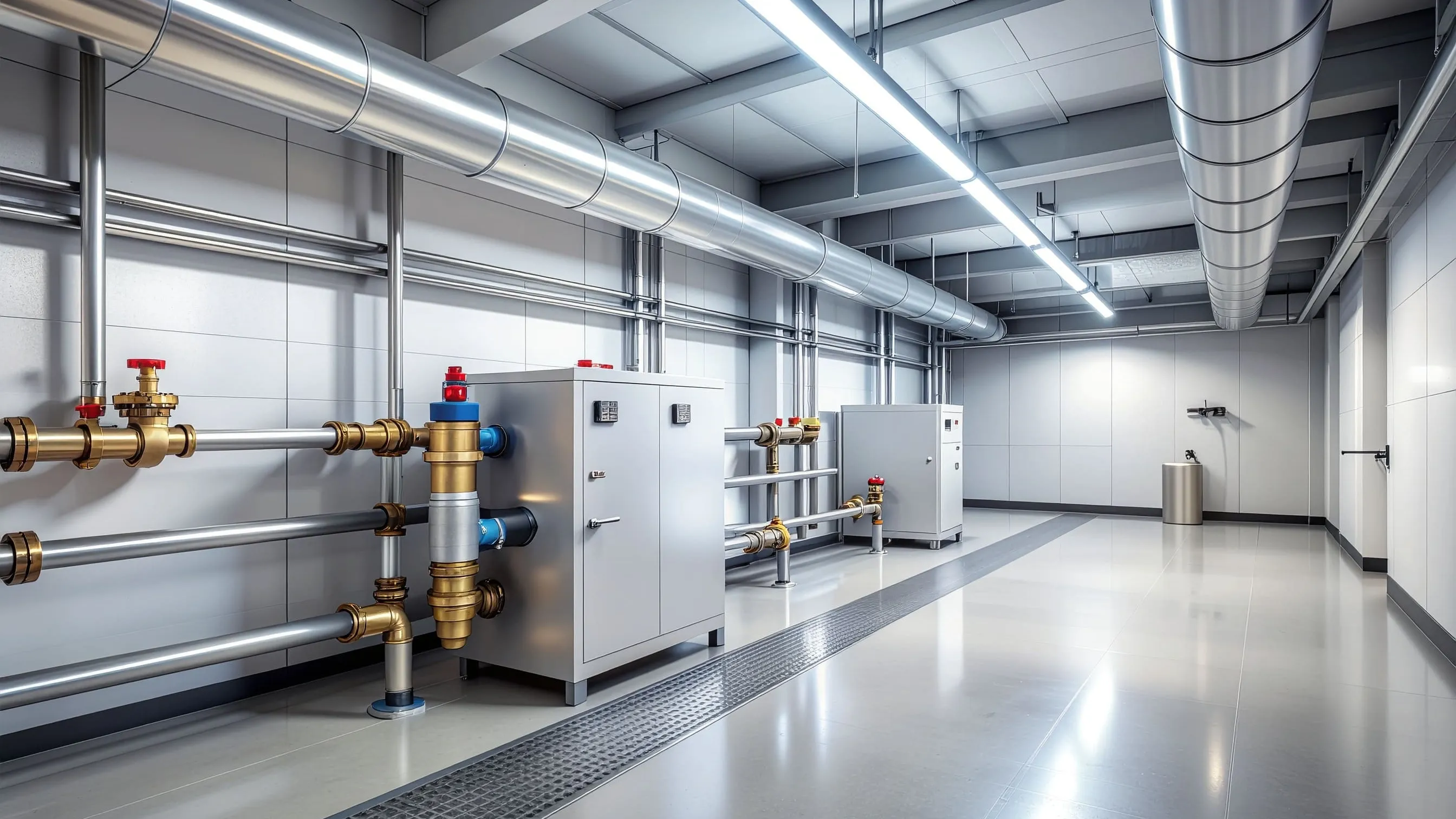
Commercial boiler rooms present unique safety challenges that go beyond simple ventilation. Gas interlock systems solve these challenges by creating a strict safety barrier between your gas supply and ventilation performance. This relationship is crucial. It determines whether combustion products exhaust safely or build up to dangerous levels.
The core principle is simple but vital. Gas-fired heating equipment needs constant mechanical ventilation to run safely. If that ventilation fails or drops below safe limits, the gas supply must shut off immediately. This automated response removes human error completely. It prevents dangerous scenarios where boilers keep firing in poorly ventilated spaces.
What Gas Interlock Systems Do
Gas interlock systems actively monitor your ventilation in real-time. They control the gas supply based on this data. A pressure differential switch constantly measures the airflow moving through your ventilation ductwork. It compares this actual performance against the minimum safe threshold for combustion.
National Pumps and Boilers supplies compliant safety components for commercial plant rooms to ensure you meet all current regulations. If the airflow drops below this safe level, the system triggers a shutdown. Whether it is due to fan failure, blocked ducts, or power loss, the system immediately closes a gas solenoid valve. This instantly cuts the fuel supply to all connected appliances.
This setup creates a reliable failsafe. The boiler simply cannot fire unless proper ventilation is running. If ventilation fails during operation, the gas isolates within seconds. Think of it like a dead-man's switch on a train. If the driver releases the controls, the train stops automatically to prevent disaster. Similarly, if the air drops, the gas stops.
Modern setups also include early alarm features. They warn your building management system about ventilation issues before a full gas shutdown is needed. This lets your maintenance team fix developing problems early.
Legal Requirements for Commercial Boiler Rooms
Building Regulations Approved Document J sets out strict rules for these systems in commercial settings. Any boiler room relying on mechanical fans for combustion air must use a mechanical ventilation interlock. This system must isolate the gas if the ventilation drops. This applies to all sizes, though larger setups face tighter Building Control checks.
The Gas Safety (Installation and Use) Regulations 1998 back up these rules strongly. They place the legal burden on gas installers and facility managers to ensure proper ventilation. Running gas appliances without proper interlocks in mechanically ventilated spaces breaks the law. It carries heavy legal and insurance risks.
It is critical to apply the correct standards. While commercial kitchens strictly require BS 6173 compliance for their interlocks, commercial boiler rooms are governed by BS 6644 and IGEM/UP/10. Achieving compliance across a large facility means meeting strict performance targets for pressure switches and valve closure times for both heating and catering setups.
If you install a remeha boiler in a fan-ventilated room, you must fit a compliant interlock. The manufacturers detail compatible parts in their manuals, but legal compliance always remains your ultimate responsibility.
Core Components of a Gas Interlock System
The pressure differential switch acts as the brain of the operation. It measures the pressure difference between the boiler room and the outside air. When fans work correctly, they create a slight negative pressure. This confirms good airflow. If the pressure drops, the switch signals a failure.
The gas solenoid valve acts as the physical barrier. This electrically operated valve stays closed until the pressure differential switch confirms good airflow. Only then does the system open the valve to allow gas through. If ventilation stops, the valve loses power and springs shut mechanically. This ensures gas isolation even during power cuts.
Control panels tie everything together. They provide power, monitor circuits, and send out alarms. High-quality panels use time delays to prevent annoying nuisance trips caused by brief pressure drops. They also record activation events. Proper recording helps you prove BS 6644 and BS 6173 compliance during safety audits across your facility.
Ventilation fan integration is the final piece of the puzzle. The mechanical ventilation interlock must prove the fans are actually moving air, not just receiving power. Systems that only monitor electrical current are less safe. They cannot tell if a fan belt is broken or if filters and pump valves in the wider system are totally blocked.
How Gas Interlocks Prevent Dangerous Situations
Carbon monoxide build-up is the biggest danger in poorly ventilated plant rooms. When appliances burn gas without enough fresh air, they create high levels of carbon monoxide. In a closed space, this deadly gas reaches dangerous levels very quickly. Gas interlock systems physically prevent this by stopping the boilers from firing without sufficient air.
Good air supply also keeps your equipment running efficiently. Boilers firing in stale air produce sooty flames and high emissions. By maintaining correct ventilation rates, interlocks ensure your heating system burns cleanly and efficiently.
During a recent winter maintenance visit at a local hospital, an engineer found a blocked intake grille that had caused the plant room's mechanical ventilation to fail. Because a proper mechanical ventilation interlock was in place, the system had already safely shut down the gas supply to the boilers. The facility avoided a potentially fatal carbon monoxide build-up and simply needed the grille cleared to restore heating safely.
Protecting against bad combustion extends your equipment's lifespan. A Vaillant boiler running without enough air suffers from soot build-up, corrosive condensation, and thermal stress. Using an interlock protects your expensive heating assets from premature wear.
Installation Considerations for Commercial Applications
Boiler room size dictates your ventilation needs and interlock thresholds. BS 6644 demands specific mechanical ventilation rates based on total boiler output. For forced draught systems, you typically need 2.6 cubic metres of air per hour for every kilowatt of capacity. These calculations set the baseline that your gas interlock systems must maintain.
Ventilation needs change depending on the boiler type. Rooms with room-sealed boilers need less air than open-flued setups. However, if they use mechanical fans, they still require interlock protection. When calculating for multiple boilers or integrated heating system components, you must use the combined total heat input.
Where you place the pressure sensors is critical for reliability. Sensors must measure actual airflow conditions near the boilers. Complex ductwork might need multiple sensors to avoid blind spots. If you place a sensor too close to a grille, you might get false readings that do not reflect the whole room.
Modern interlocks link easily with building management systems. They send live ventilation data directly to your central control platform. This lets you schedule maintenance based on real performance rather than guesswork.
Common Applications in Commercial Settings
Hotel boiler rooms usually run non-stop to provide hot water and space heating. These spaces often incorporate an andrews gas fired water heater working alongside main boilers. This creates a high heat load in a small space. The interlock must handle changing demands safely, especially overnight when staffing is low.
Industrial heating plants bring their own unique design challenges. They operate at massive capacities with several large boilers firing at once. The fans move huge volumes of air, so you need tough pressure switches that read accurately in turbulent air.
Schools and universities face cyclical heating demands. They need maximum heat during term time but almost none during holidays. Interlocks in these buildings must work perfectly even after weeks of sitting idle. They need dust-resistant parts that won't seize up.
Healthcare sites demand the strictest safety levels of all. A ventilation failure here can impact critical patient care. These setups usually use duplicate parts, like double pressure switches and backup batteries for the gas isolation valve. They also use advanced alarms to alert engineers instantly.
Maintenance and Testing Protocols
You must perform a functional test on your interlock setups every single month. This involves turning off the fans or blocking the airflow to simulate a failure. You then check that the gas solenoid valve closes and the alarms trigger correctly. You should do this when turning off the heating will not cause major disruption.
Annual inspections require a fully qualified gas engineer. They must check all parts, test the calibration, and confirm full compliance with BS 6644, whilst also verifying BS 6173 compliance for any connected commercial kitchen equipment on site. They will record the exact pressure switch trigger points and valve closure times to prove everything works perfectly.
Common faults include worn pressure switch diaphragms, burnt-out coils, and blocked sensor tubes. Dust and moisture slowly ruin diaphragm sensitivity, causing false alarms. High heat can melt valve coil insulation, making them unreliable.
Keeping accurate records proves you are managing safety responsibly. You must log every test, part replacement, and fault. These records are vital if your insurance company investigates a heating incident.
Selecting the Right System for Your Installation
Accurate load calculations define exactly what your interlock must do. Engineers calculate the total heat output from every gas appliance in the room. They then set ventilation rates that meet the legal minimums with a safe margin. If you undersize the fans, the interlock will trip constantly.
Your chosen interlock parts must match your ventilation setup perfectly. A room with natural draught ventilation needs different pressure switches than a room with forced fan extractors. Mixed setups need very careful sensor placement to read the real airflow accurately.
Failsafe features separate basic systems from highly reliable ones. Critical sites use twin pressure switches so a single broken part doesn't cause a false trip. You should always specify a spring-return gas solenoid valve. This ensures it snaps shut if the power fails, keeping the room safe.
Always follow the manufacturer's technical specifications. A grundfos ventilation fan will have specific performance curves. Matching these correctly to your pressure switch calibration prevents annoying commissioning issues down the line.
Conclusion
Gas interlock systems perform a non-negotiable safety job in commercial boiler rooms. They provide an automated shield against ventilation failures that could otherwise be deadly. The strict laws surrounding these systems reflect just how vital they are for public safety.
Choosing the right parts, placing sensors correctly, and testing the system regularly ensures it protects your building for years. The small cost of installing a proper interlock offers massive insurance against fines, legal action, and tragedy.
You must always use qualified engineers who understand the current rules. These systems are highly engineered safety barriers. They must be designed, fitted, and tested perfectly so they work instantly when things go wrong. If you need help specifying a compliant system for your facility, Get Expert Advice from our team of specialist commercial heating engineers.