

The Role of Mixing Valves in Multi-Zone Heating Systems
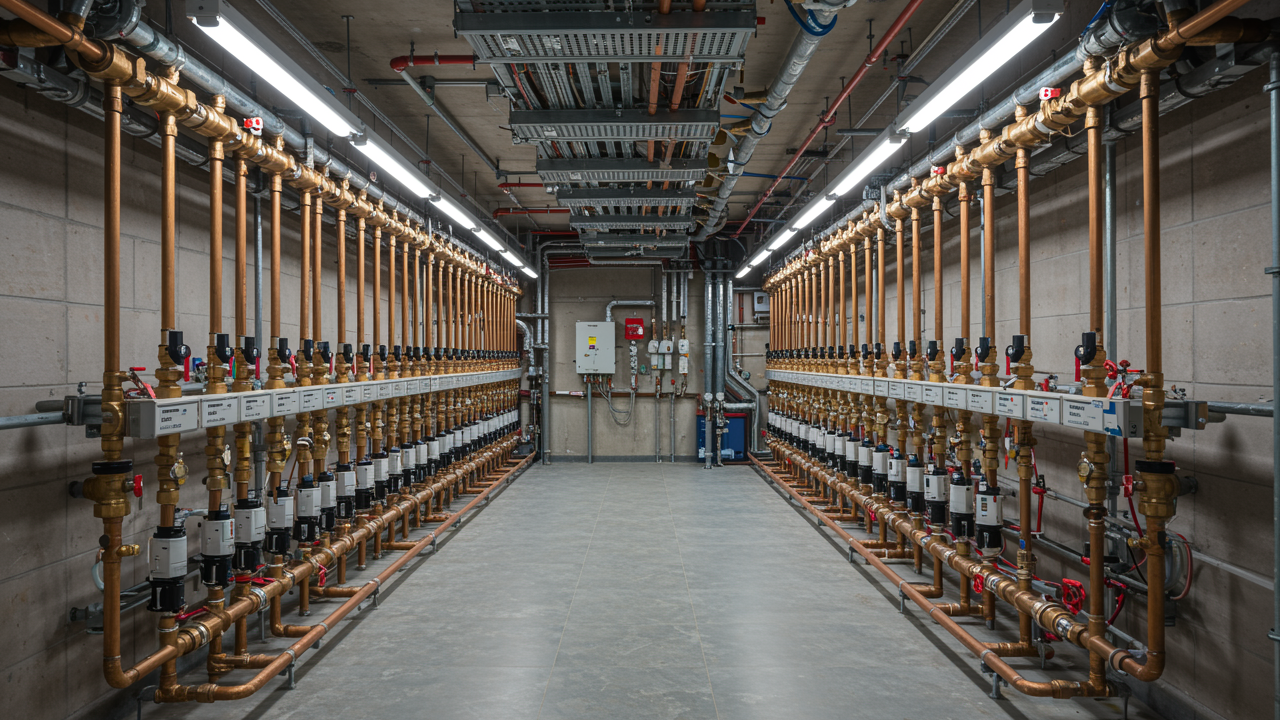
A mixing valve blends hot water from the boiler or heat source with cooler return water to achieve a specific target temperature for a particular heating zone. This seemingly simple function solves a fundamental challenge in multi-zone systems: different areas often require different water temperatures to maintain comfort whilst maximising efficiency.
Consider a commercial building with both radiator circuits and underfloor heating. Radiators typically operate efficiently with flow temperatures between 60-80°C, whilst underfloor heating systems require much lower temperatures, usually 35-45°C. Without mixing valves, the system would either overheat the underfloor zones or underheat the radiator circuits. The mixing valve creates the precise temperature each zone needs from a single heat source.
Thermostatic vs Motorised Mixing Valves
Thermostatic mixing valves respond directly to temperature changes through a wax or liquid-filled element that expands and contracts, mechanically adjusting the valve position. These self-regulating devices work without external power or control signals, making them reliable for domestic applications and smaller commercial systems.
Motorised mixing valves use an electric actuator controlled by a thermostat or building management system. A controller compares the actual mixed water temperature against the setpoint and adjusts the valve position accordingly. This active control provides greater precision and allows integration with weather compensation systems that adjust flow temperatures based on outdoor conditions. Wilo pumps frequently incorporate motorised mixing valve systems for German-engineered reliability and high-performance heating applications.
Valve Configurations: Three-Way and Four-Way
Three-way mixing valves have one outlet and two inlets - one for hot water from the boiler and one for cooler return water. The valve modulates between these two flows to achieve the target temperature. Four-way valves add a second outlet, allowing more complex piping arrangements in larger systems. Configuration selection depends on system complexity, space constraints, and piping layout requirements.
Why Multi-Zone Heating Systems Require Mixing Valves
Buildings rarely have uniform heating requirements. Ground floors often need more heat than upper floors due to heat rising naturally. South-facing rooms gain solar heat during the day, requiring less input from the heating system. Spaces with high ceilings, large windows, or external walls lose heat faster than interior rooms with standard construction.
Mixing valves enable each zone to receive water at the optimal temperature for its specific characteristics. A ground-floor underfloor heating zone might receive water at 40°C, whilst first-floor radiators operate at 70°C, and a conservatory with significant glazing gets 75°C to compensate for higher heat loss. Each zone maintains comfort without wasting energy by overheating or cycling on and off excessively. Proper central heating equipment selection ensures each zone receives the temperature it needs.
Energy Efficiency Through Temperature Optimisation
Modern condensing boilers achieve their highest efficiency when return water temperatures drop below 55°C, allowing the boiler to extract latent heat from flue gases. In a single-temperature system, the boiler must heat all water to the temperature required by the most demanding zone, often resulting in return temperatures too high for condensing operation.
Mixing valves solve this by allowing the boiler to operate at a moderate temperature whilst individual zones receive their specific requirements. Lower-temperature zones like underfloor heating create cooler return water that improves boiler efficiency. The system delivers comfort where needed whilst the boiler operates in its most efficient range.
A study of commercial buildings found that properly configured multi-zone systems with mixing valves reduced heating energy consumption by 15-25% compared to single-temperature systems. The savings come from eliminating overheating in low-demand zones and allowing the boiler to condense more effectively. National Pumps and Boilers specialises in multi-zone heating solutions that maximise efficiency through proper valve and component selection. System stability is further enhanced through integration with expansion vessels that manage pressure variations as zones cycle independently.
Types of Mixing Valves for Different Applications
Pressure-Independent vs Pressure-Dependent Designs
Valve authority describes how effectively the valve controls flow across varying system pressures. A valve with poor authority in a particular installation might struggle to maintain stable temperatures as other zones cycle on and off, changing system pressure. Achieving good authority typically requires differential pressure regulators or pressure-independent valve designs in complex systems.
Pressure-independent valves maintain consistent flow regardless of system pressure changes, providing stable control as multiple zones cycle. Valve Kv values specify the flow rate in cubic metres per hour that creates a 1 bar pressure drop, allowing engineers to match valve capacity to zone requirements. Effective pump valve selection ensures integration with the system's circulation capabilities and available pressure.
Technical Considerations for Mixing Valve Installation
Sizing and System Integration
Selecting the right mixing valve requires understanding several technical parameters. The valve must handle the zone's flow rate without excessive pressure drop, which would reduce circulation and compromise heat delivery. Engineers match Kv values to zone requirements and available pump pressure, ensuring adequate flow for heat delivery.
Flow rate calculations for different zones determine the valve's required capacity. Pressure drop considerations across valve assemblies prevent circulation problems that reduce system effectiveness. DAB pumps systems often include booster sets that work alongside mixing valves to maintain adequate pressure for multi-zone heating in large buildings.
Control Integration and Sensors
Modern multi-zone systems integrate mixing valves with sophisticated controls that optimise performance. Weather compensation adjusts setpoints based on outdoor temperature - as conditions warm, the system reduces flow temperatures to match lower heat demand. This prevents overheating and improves efficiency without requiring manual adjustment.
Building management systems coordinate multiple mixing valves across different zones, adjusting temperatures based on occupancy schedules, space usage, and real-time demand. A meeting room might receive full heating 30 minutes before a scheduled booking, then reduce to setback temperature when vacant. The mixing valve in that zone responds to control signals, delivering precise temperatures that match actual requirements.
Temperature sensors must be positioned correctly to provide accurate feedback for valve control. Sensors placed too close to the valve might read temperatures before complete mixing occurs, whilst those positioned too far away create lag in the control loop. Manufacturers specify optimal sensor locations, typically 1-2 metres downstream from the valve in a straight pipe section.
Grundfos integrated pump and motorised valve systems provide coordinated control where the pump and valve work together to deliver precise temperatures and flows. Control signal types including 0-10V modulation and on/off control enable flexible integration with various building management systems.
Installation Best Practices
Proper installation significantly affects mixing valve performance and longevity. Valves need straight pipe runs before and after the valve body - typically 5 pipe diameters upstream and 2 diameters downstream - to ensure stable flow patterns. Turbulent or uneven flow can cause temperature instability and premature wear on internal components.
Air elimination is crucial in zones controlled by mixing valves. Trapped air creates flow problems that affect heat delivery and can cause the valve to hunt - repeatedly overshooting and undershooting the target temperature. Automatic air vents positioned at high points in the zone piping remove air as it accumulates, maintaining stable circulation.
Central heating equipment selection includes proper valve sizing and integration. Bypass arrangements for system protection ensure that if a zone valve closes, water can continue circulating through the boiler. Insulation requirements prevent heat loss from pipes and valve bodies, maintaining system efficiency. Accessibility for maintenance and adjustment allows future inspection and control signal testing.
Commercial and Residential Applications
Commercial Building Multi-Zone Systems
Commercial office buildings represent ideal applications for multi-zone systems with mixing valves. Perimeter zones with external walls and windows require higher temperatures than interior zones buffered by surrounding spaces. Meeting rooms need rapid warm-up capability before scheduled use, whilst back-office areas maintain steady background temperatures. Commercial circulators paired with properly sized mixing valves deliver the flow rates and temperature control these diverse requirements demand.
Schools and educational facilities benefit particularly from zone-based temperature control. Classrooms occupied during the day receive full heating, whilst corridors and ancillary spaces operate at lower temperatures. Gymnasiums and sports halls, with their high ceilings and ventilation rates, need higher flow temperatures than standard teaching spaces. Assembly halls used intermittently can warm quickly before events then reduce to setback temperatures when empty.
Retail spaces with different heating zones manage diverse requirements across large floor areas. Lowara pumps support commercial systems where multiple zones operate simultaneously, providing the flow rates needed for complex multi-zone installations in industrial and retail environments.
Residential Multi-Zone Heating
Large residential properties increasingly incorporate multi-zone heating with mixing valves to balance comfort and running costs. A typical installation might include underfloor heating on the ground floor, radiators upstairs, and a separate zone for a conservatory or garden room. Each zone operates at its optimal temperature, controlled independently based on occupancy and time of day.
Properties combining different emitter types particularly benefit from mixing valve technology. Underfloor heating responds slowly to temperature changes and works best with continuous low-temperature operation. Radiators heat spaces more quickly and tolerate intermittent operation at higher temperatures. Mixing valves allow both systems to operate from a single boiler, each at its ideal temperature.
Holiday homes and properties with irregular occupancy use zone control to heat only occupied areas. Owners might maintain a frost-protection temperature throughout the property but bring specific zones to comfortable temperatures before arrival. This selective heating reduces energy waste whilst ensuring comfort when needed. DHW pumps circulation systems work alongside mixing valves in residential applications to deliver domestic hot water efficiently to multiple zones.
Mixing Valves Within Complete Heating Systems
Mixing valves work alongside other components to create complete multi-zone systems. Expansion vessels accommodate water volume changes as zones heat and cool independently. Pressurisation units maintain system pressure across varying loads as different zones cycle. These components ensure stable operation regardless of how many zones are active simultaneously.
Zone valves or actuators control flow to individual zones, opening when heat is required and closing when the space reaches temperature. The mixing valve adjusts water temperature for the zone, whilst the zone valve determines whether flow occurs. This two-stage control provides both temperature and on/off capability, maximising efficiency and comfort.
Variable-speed pumps paired with mixing valves create highly efficient systems that adapt circulation rates to actual demand. As zones reach temperature and close their zone valves, system pressure increases. The variable-speed pump responds by reducing speed, maintaining stable differential pressure whilst consuming less electricity. The mixing valve continues providing correct temperatures at whatever flow rate is needed.
Maintenance and Performance Optimisation
Regular Inspection and Testing
Mixing valves require periodic inspection to maintain accurate temperature control. Annual checks should verify that the valve reaches its full range of travel, responding correctly to control signals or temperature changes. Valves that stick partially open or closed create temperature problems and waste energy by preventing proper zone control.
Temperature accuracy testing involves comparing actual mixed water temperature against the setpoint across the valve's operating range. Drift of more than 2-3°C indicates calibration problems or wear in thermostatic elements. Motorised valves might need actuator recalibration or replacement if they fail to position accurately.
Scale buildup affects mixing valves in hard water areas, particularly around seats and ports where water velocity changes. This restricts flow and prevents smooth operation. Regular system water treatment and periodic valve servicing prevent scale-related problems. NPB range solutions provide cost-effective alternatives, whilst Vaillant boiler system compatibility ensures proper integration with domestic heating installations. Some installations include filters upstream of mixing valves to protect internal components from debris.
Troubleshooting Common Issues
Temperature hunting - where zone temperature oscillates above and below the setpoint - usually indicates control problems rather than valve failure. Excessive sensor lag, incorrect control parameters, or inadequate valve authority cause hunting. Adjusting control settings or improving valve selection typically resolves these issues without valve replacement.
Zones that fail to reach target temperature despite the mixing valve being fully open might indicate undersized components, pump problems, or air in the system. Checking flow rates, verifying pump operation, and eliminating air should precede any assumption of valve failure. The valve might be working correctly within a system that has other limitations.
Sudden temperature changes when other zones cycle on or off suggest pressure-dependent valve behaviour in a system with inadequate pressure regulation. Adding differential pressure regulators or upgrading to pressure-independent valves provides stable control regardless of system pressure variations.
Selecting the Right Mixing Valve for Your Application
System Size and Control Complexity
Choosing between thermostatic and motorised mixing valves depends on system complexity and control requirements. Smaller domestic systems with two or three zones often work well with thermostatic valves that require no external power or controls. Larger installations with multiple zones, weather compensation, or building management system integration need motorised valves that accept electronic control signals.
Flow rate requirements determine valve size. Undersized valves create excessive pressure drop that reduces circulation and heat delivery. Oversized valves might have poor control characteristics at low flows, creating temperature instability. Manufacturers provide sizing tables and software that match valve capacity to zone requirements.
Brand Selection and Support
Brand selection matters for long-term reliability and parts availability. Grundfos offers motorised mixing valves integrated with their pump systems for coordinated performance. NPB range solutions provide cost-effective mixing valve alternatives for budget-conscious installations. Vaillant boiler system compatibility ensures proper integration with domestic heating systems. Choosing established manufacturers ensures replacement parts remain available and technical support continues throughout the valve's service life.
Conclusion
Mixing valves transform single-temperature heating systems into sophisticated multi-zone installations that deliver comfort, efficiency, and control. By providing each zone with water at its optimal temperature, these devices eliminate the compromises inherent in single-temperature systems - overheating some areas to adequately heat others, or accepting uncomfortable temperatures to reduce energy consumption.
Proper mixing valve selection, installation, and maintenance create heating systems that respond to building requirements rather than forcing buildings to accept whatever the system provides. Ground-floor underfloor heating operates at 40°C whilst first-floor radiators receive 70°C, all from a single boiler running at peak efficiency. Occupied zones maintain comfort whilst vacant areas reduce to setback temperatures, cutting energy waste without sacrificing comfort when spaces are used.
The technical considerations around valve sizing, control integration, and system design require expertise that develops through experience and training. Working with knowledgeable suppliers and installers ensures mixing valves are specified correctly for each application and integrated properly with pumps, controls, and other system components.
For buildings with diverse heating requirements - different emitter types, varying occupancy patterns, or spaces with distinct thermal characteristics - multi-zone systems with mixing valves deliver performance that single-temperature systems cannot match. The investment in proper zone control returns savings through reduced energy consumption, improved comfort, and heating systems that adapt to how buildings are actually used.
Contact Us to discuss how mixing valves and zone control can improve performance in your specific application. The technical team can help specify the right components and design approaches for systems that deliver reliable, efficient heating for you.