

The Role of Radiators and Underfloor Heating in Hydronic Systems
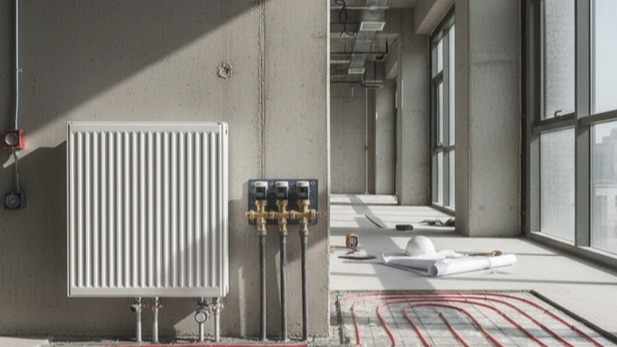
Heat emitter selection represents a critical decision in hydronic system design, with hydronic heating radiators and underfloor heating hydronic systems offering fundamentally different approaches to space warming. These technologies determine not only heating performance and efficiency but also profoundly impact interior aesthetics, installation complexity, and long-term operating costs. This comprehensive guide examines both heat emitter types across multiple criteria, enabling informed selection decisions aligned with specific building requirements and occupant priorities.
Understanding Heat Emitter Fundamentals
Before comparing specific technologies, understanding fundamental heat transfer principles provides essential context for evaluating emitter performance.
How Radiators Transfer Heat
Despite their name, radiators transfer heat through both radiation and convection, with the relative contribution varying by design. Panel radiators typically deliver 60-70% of output through convection with air circulating across warm surfaces, whilst 30-40% radiates directly to surrounding objects and occupants.
Heat output mechanisms depend on maintaining substantial temperature differences between emitter surfaces and surrounding air. Traditional systems operated at 80°C flow temperatures achieving high outputs from compact emitters. Modern efficient systems target 60-70°C flow temperatures, requiring larger emitters delivering equivalent heat at reduced temperatures.
Temperature requirements directly impact system efficiency, particularly with condensing boilers achieving maximum efficiency when return temperatures fall below 55°C. Larger radiators operating at lower temperatures enable superior condensing performance, improving overall system efficiency by 5-10%. Grundfos heating circulators provide efficient circulation whilst minimising electrical consumption.
How Underfloor Heating Works
Underfloor heating hydronic systems warm floors which radiate heat upward, gently warming occupants and objects through predominantly radiant heat transfer. This bottom-up heating creates uniquely comfortable conditions with feet warmer than head height - reversing the uncomfortable stratification common with convective heating.
Radiant heating principles involve infrared energy transferring directly between warm surfaces and cooler objects without heating intervening air. This direct transfer proves more comfortable at lower air temperatures, enabling thermostat setbacks of 1-2°C maintaining equivalent comfort. Heat distribution patterns prove remarkably uniform across floor surfaces, eliminating cold spots and temperature variations.
Low-temperature operation typically specifies 35-45°C flow temperatures - ideal for condensing boilers and heat pumps. These reduced temperatures maximise efficiency whilst maintaining comfortable floor surface temperatures of 23-28°C. Thermal mass benefits from concrete or screed floors create thermal inertia stabilising indoor temperatures, with floors storing heat during operation and continuing to release warmth after heating stops.
Types of Radiators for Hydronic Systems
Hydronic heating radiators encompass diverse designs offering varying performance characteristics, aesthetic options, and cost implications.
Panel and Column Radiators
Panel radiators dominate modern installations, offering excellent performance-to-cost ratios. Construction involves welded steel panels forming water channels, with optional convection fins enhancing output. Single panel radiators suit well-insulated spaces, whilst double panel double convector designs deliver maximum output from compact dimensions.
Column radiators feature vertical tubes creating classic aesthetic appeal. Traditional cast iron construction offers exceptional longevity, whilst modern steel column designs reduce weight whilst maintaining visual character.
Convector and Designer Radiators
Enhanced convection features deliver high outputs from compact dimensions, with output ratings 50-100% higher than comparable panel radiators. Designer radiators provide aesthetic flexibility with vertical, horizontal, and sculptural designs. Material options extend beyond steel to stainless steel and aluminium, though performance vs appearance balance requires careful consideration.
Underfloor Heating System Types
Underfloor heating hydronic installations utilise various configurations suited to different applications and retrofit scenarios.
Wet Hydronic Systems
Pipe configurations include serpentine layouts winding across floor areas and spiral patterns starting at perimeters working inward. Spiral layouts prove most common, delivering even temperature distribution with balanced pipe lengths. Installation methods vary by floor construction, with in-screed systems embedding pipes within concrete providing excellent thermal mass, whilst overlay systems install above existing floors suitable for retrofits.
Control requirements include manifolds distributing water to individual zones, mixing valves maintaining appropriate supply temperatures, and room thermostats managing zone operation. Wilo heating circulators often serve underfloor systems requiring precise flow control. Performance characteristics include gentle, even heat distribution, excellent efficiency through low operating temperatures, and comfortable environments.
Screed vs Overlay Systems
Construction differences primarily involve thermal mass magnitude and installation complexity. Screed systems provide maximum thermal mass but require substantial floor build-up of 65-100mm, whilst overlay systems sacrifice some thermal mass enabling simpler retrofits adding only 15-30mm floor height.
Response time variations reflect thermal mass differences. Screed systems warm and cool slowly, favouring continuous operation over rapid cycling. Overlay systems respond faster, suiting intermittent heating schedules. Retrofit suitability proves superior for overlay systems, though well-designed overlay systems achieve 90-95% of screed system output.
Comparative Performance Analysis
Understanding performance differences between hydronic heating radiators and underfloor heating hydronic guides appropriate selection.
Heat Output and Efficiency
Energy consumption comparison reveals underfloor systems typically consuming 10-15% less energy than radiator systems heating equivalent spaces. This advantage stems from lower operating temperatures and radiant heat transfer enabling comfortable conditions at reduced air temperatures.
Operating temperature differences prove substantial - underfloor systems operate at 35-45°C whilst radiators typically require 60-75°C. Lower temperatures improve condensing boiler efficiency and enable heat pump integration. Central heating systems benefit from mixing both technologies optimising performance.
Comfort and Temperature Distribution
Temperature uniformity across rooms proves superior with underfloor heating eliminating cold spots and temperature variations common with point-source radiators. Entire floor surfaces contribute warmth creating remarkably consistent conditions. Vertical temperature gradients differ dramatically, with radiators creating warmest temperatures near emitters whilst underfloor heating maintains warmest temperatures at floor level where occupants dwell.
Air quality impacts differ significantly, with radiators creating convection currents circulating dust whilst underfloor systems maintain naturally still air conditions. This characteristic particularly benefits occupants with respiratory sensitivities or allergies.
Response Times
Warm-up characteristics favour radiators heating spaces within 30-60 minutes from cold. Underfloor screed systems require 2-4 hours reaching full output from cold starts, though continuous or gently setback operation eliminates this concern. Cool-down behaviour mirrors warm-up patterns, with radiators cooling quickly after deactivation whilst underfloor systems maintain warmth for hours through thermal mass.
Control implications differ substantially, with radiators suited to rapid cycling and significant setbacks whilst underfloor systems favour continuous operation or gentle setbacks maintaining stored heat. Radiators better serve intermittently occupied spaces requiring rapid warming, whilst underfloor heating excels in continuously occupied spaces.
Installation Considerations
Installation complexity, costs, and disruption vary dramatically between technologies.
Radiator Installation
Mounting requirements involve securing brackets to walls providing adequate support. Pipe connection methods include compression fittings, push-fit systems, or soldered copper. Space planning ensures adequate clearances for air circulation, with minimum 50mm from walls and 150mm from floors.
Underfloor Heating Installation
Floor construction requirements vary by system type, with screed systems demanding structural capacity for added weight. Ground floors require minimum 100mm insulation beneath heating pipes. Installation complexity exceeds radiator installation, requiring careful planning, precise pipe laying, and professional installation.
Retrofit Feasibility
Existing building adaptations favour radiators requiring minimal structural modifications. Underfloor retrofits include floor height increases potentially affecting door clearances. Disruption levels prove substantially higher for underfloor installations. Cost comparisons typically show underfloor retrofit costs 2-3 times radiator alternatives.
System Design and Sizing
Proper sizing ensures adequate heat delivery without excessive costs or compromised efficiency.
Radiator Selection
Heat loss calculations determine required heat output for each space considering insulation, ventilation, glazing, and orientation. Professional calculations ensure accurate sizing avoiding undersized or excessively oversized emitters. Temperature considerations impact sizing significantly, with lower operating temperatures requiring larger emitters. Design for 60-70°C flow temperatures enabling efficient condensing operation whilst maintaining reasonable radiator sizes.
Underfloor Heating Design
Pipe spacing calculations determine loop intervals achieving required heat output at design temperatures, with typical spacing ranging 150-300mm depending on floor construction and covering. Zone layout planning divides buildings into logical control zones based on usage patterns and thermal characteristics, with individual rooms or combined spaces forming effective zones.
Mixed Systems
Combining radiators and underfloor heating leverages advantages of both technologies. Common approaches include underfloor heating in ground floor living spaces with radiators upstairs, or underfloor in bathrooms with radiators elsewhere. Zone coordination ensures proper flow distribution and temperature control across mixed emitter types, with separate mixing valves serving underfloor zones.
Control and Zone Management
Effective control maximises comfort whilst minimising energy consumption.
Radiator Control Options
Thermostatic radiator valves provide room-level control automatically adjusting radiator output maintaining setpoint temperatures. Modern TRVs offer programmable setback schedules and remote control capabilities. Zone valve systems divide buildings into control zones with motorised valves directing flow based on thermostat demands, suiting larger installations requiring coordinated control.
Underfloor Heating Controls
Room thermostats manage zone operation activating circulation when temperatures fall below setpoints. Underfloor systems benefit from weather compensation anticipating heating needs rather than responding reactively. Manifold configuration includes zone valves or actuators at distribution manifolds controlling flow to individual zones, with quality manifolds featuring flow meters enabling precise balancing.
Mixing valves maintain appropriate supply temperatures for underfloor systems typically lower than boiler output temperatures, blending hot boiler water with cooler return water achieving target temperatures.
Aesthetic and Space Considerations
Visual impact and space utilisation significantly influence emitter selection.
Radiator Visual Impact
Wall space utilisation proves significant with radiators occupying 1-3 square metres per room limiting furniture placement and artwork display. Design statement potential varies by radiator selection, with standard panel radiators proving functional but visually unremarkable, whilst designer models create architectural features. Colour and finish options from standard white to custom colours enable design coordination.
Underfloor Heating Advantages
Invisible heating eliminates visible emitters entirely, preserving clean architectural lines and wall surfaces. This characteristic particularly appeals to minimalist designs prioritising uncluttered spaces. Maximised usable space results from eliminating radiators freeing walls for furniture and storage. Architectural freedom allows unrestricted room layouts without accommodating radiator positions, enabling floor-to-ceiling glazing and flexible furniture arrangements.
Operating Costs and Efficiency
Long-term operating expenses significantly impact total ownership costs.
Energy Consumption Patterns
Fuel usage comparison reveals underfloor systems typically consuming 10-15% less energy than radiator alternatives in equivalent applications. Lower operating temperatures and radiant heat transfer enabling comfortable conditions at reduced air temperatures drive these savings. Temperature requirements differ substantially, with underfloor systems operating at 35-45°C compared to 60-75°C for radiators.
Long-Term Cost Analysis
Operating cost projections over 20 years demonstrate underfloor systems' cumulative savings offsetting higher installation costs, with typical payback periods ranging 7-12 years depending on fuel costs and usage patterns. Lifecycle cost comparison considering installation, operation, maintenance, and replacement over building life generally favours underfloor heating despite substantially higher upfront investment.
Maintenance Requirements
Ongoing maintenance demands vary between technologies.
Radiator Maintenance
Bleeding and air removal represents the primary routine maintenance, required annually or semi-annually. External cleaning includes dusting and vacuuming between panels maintaining appearance and convection efficiency. Valve servicing involves occasional thermostatic radiator valve cleaning ensuring proper operation. Longevity expectations see quality radiators lasting 20-30 years with proper maintenance.
Underfloor Heating Maintenance
System inspection involves annual visual checks of manifolds, pumps, and controls verifying proper operation. Pressure testing every 5-10 years verifies system integrity identifying potential leak development. Problem diagnosis proves more complex than radiators with concealed pipework complicating leak detection, though thermal imaging cameras assist locating problems.
Suitability for Different Applications
Application-specific requirements strongly influence emitter selection.
Residential Applications
New build considerations slightly favour underfloor heating where installation integrates easily with construction sequencing. Renovation projects often favour radiators minimising disruption and structural modifications. Room-specific recommendations include underfloor heating for bathrooms, kitchens, and open-plan living areas where comfort proves paramount, whilst bedrooms suit radiators enabling rapid warming.
Commercial Applications
Office spaces benefit from underfloor heating providing comfortable working environments without space-consuming radiators. Retail environments value underfloor heating freeing wall space for merchandise display whilst maintaining customer comfort. Healthcare facilities increasingly specify underfloor heating improving infection control through eliminated convection currents.
Making the Right Choice
Emitter selection requires weighing multiple factors against specific priorities.
Decision Criteria
Priority assessment determines relative importance of efficiency, comfort, aesthetics, installation costs, and flexibility. Weight these factors based on specific project requirements. Budget considerations extend beyond installation to lifecycle costs including operation and maintenance, with long-term thinking often justifying higher underfloor installation costs through operational savings.
When to Choose Each System
Radiators excel in retrofit projects minimising disruption, budget-constrained installations, applications requiring rapid response, and situations where underfloor installation proves impractical. Budget constraints favouring radiators include projects where underfloor installation costs prove prohibitive or operational savings fail to justify higher installation expenses.
Underfloor heating suits new construction where installation integrates smoothly, well-insulated buildings maximising efficiency advantages, and spaces where comfort and aesthetics prove paramount. Efficiency priorities justify underfloor heating where operational savings prove important and ownership timescales enable payback realisation.
Hybrid System Benefits
Best of both worlds approaches combine technologies leveraging respective advantages. Ground floor underfloor heating with upstairs radiators proves particularly popular maximising comfort where most appreciated whilst managing costs. Strategic allocation places underfloor heating where benefits prove greatest and radiators where they prove adequate.
Conclusion
Both hydronic heating radiators and underfloor heating hydronic systems offer compelling advantages for different priorities and applications. Radiators provide proven performance, retrofit flexibility, and lower installation costs whilst underfloor heating delivers superior comfort, efficiency, and architectural integration. Hybrid approaches combining both technologies often provide optimal solutions maximising respective benefits.
Selection requires careful evaluation of specific building characteristics, occupant priorities, budget constraints, and long-term goals rather than applying universal recommendations. Professional guidance ensures emitter selection aligned with project requirements whilst avoiding expensive mismatches.
For expert system design assistance and professional installation ensuring optimal performance, contact us to discuss your project with National Pumps and Boilers' experienced engineers. Professional assessment and quality installation deliver heating systems meeting comfort, efficiency, and reliability expectations throughout decades of satisfying service.