
 -
- The Role of Side-Stream Filtration in Large Commercial Heating Networks
Maintaining optimal water quality is the absolute cornerstone of commercial heating efficiency. Side-stream filtration represents one of the most reliable and cost-effective engineering methods for protecting large commercial heating networks. When properly implemented, these advanced systems can safely extend your equipment's operational life by decades.
They also actively reduce energy consumption by preventing the insulating scale that ruins heat transfer efficiency. Untreated commercial systems circulating thousands of litres of water constantly generate destructive debris. Over time, internal corrosion creates abrasive iron oxide, while hard water deposits calcium carbonate directly onto your most expensive heat exchangers.
Managing this continuous contamination requires a highly systematic approach. Relying on simple, occasional flushing is completely inadequate for large-scale operations like hospitals, university campuses, or sprawling industrial estates. This is exactly where targeted side-stream filtration technology provides a permanent, highly effective solution.
Understanding Side-Stream Filtration Fundamentals
Side-stream filtration operates by continuously treating a very small, highly controlled portion of the system's total water volume. The partial flow passes through dedicated filtration equipment before returning cleanly to the main circuit. This setup gradually improves the overall water quality without ever requiring a disruptive system shutdown.
Think of side-stream filtration exactly like the human kidneys. Rather than attempting to filter all the body's blood at once, your kidneys continuously process a small percentage of the flow. They maintain perfect overall balance and remove harmful toxins without ever interrupting the heart's main pumping action.
This core principle differs fundamentally from full-flow filtration, where all circulating water passes through a central filter. In large commercial networks boasting massive flow rates, full-flow filtration becomes mathematically impractical due to severe pressure drop considerations. Treating water continuously at manageable volumes overcomes these limitations beautifully. The technical specialists at National Pumps and Boilers frequently specify this configuration for complex commercial plant rooms.
Critical Benefits for Large Commercial Networks
The economics of capturing waterborne debris at scale become compelling very quickly. A large heating network processing just 50 litres per minute through a dedicated filter can extract kilograms of suspended solids every single month. This is highly abrasive contamination that would otherwise accumulate inside your expensive building services pump.
Heat transfer efficiency improvements deliver immediate, highly tangible financial returns. Accurate industry data from organisations like the Carbon Trust demonstrates that just 1mm of scale reduces heat transfer efficiency by roughly 7% to 10%. In practical terms, a commercial building consuming heavy winter heating loads saves thousands of pounds annually simply by keeping its heat exchangers perfectly clean.
Furthermore, equipment protection extends well beyond these basic energy savings. Suspended solids actively accelerate wear on expensive mechanical seals and precision bearings. Side-stream filtration aggressively targets this suspended debris, with documented case studies showing that major maintenance intervals extend significantly after a proper installation.
Technical Specifications and Sizing Considerations
Proper sizing ensures optimal performance without wasting your capital expenditure. Industry guidelines, specifically BSRIA BG 29, recommend that ideal side-stream flow rates should sit between 5% and 10% of the main system flow rate. Alternatively, the equipment can be sized to filter the entire system volume completely every 24 hours.
Filtration efficiency depends entirely on understanding the particle size distribution within your specific system. New installations primarily generate large, coarse particles from construction debris and welding slag. However, mature systems produce incredibly fine magnetite particles from ongoing, low-level corrosion. Your filter selection must match these predominant particle sizes to successfully protect your main commercial HVAC pump from destructive wear.
The pressure drop across your filters dictates your loading capacity and maintenance requirements. Clean filters typically operate at very low differential pressures. However, when this pressure drop becomes excessive, cleaning is absolutely necessary. Many advanced setups utilise automatic backwashing systems to handle this automatically. These automatic backwashing systems reverse the water flow periodically to flush all accumulated debris straight to the drain.
Installation Best Practices for Commercial Systems
Location selection significantly impacts your filtration effectiveness across the entire network. Installing units on the return header just before the boilers actively protects your primary heat exchangers from returning contamination. However, positioning them after your main grundfos central heating pump might prove necessary if the available pressure differential is insufficient for the filter to operate correctly.
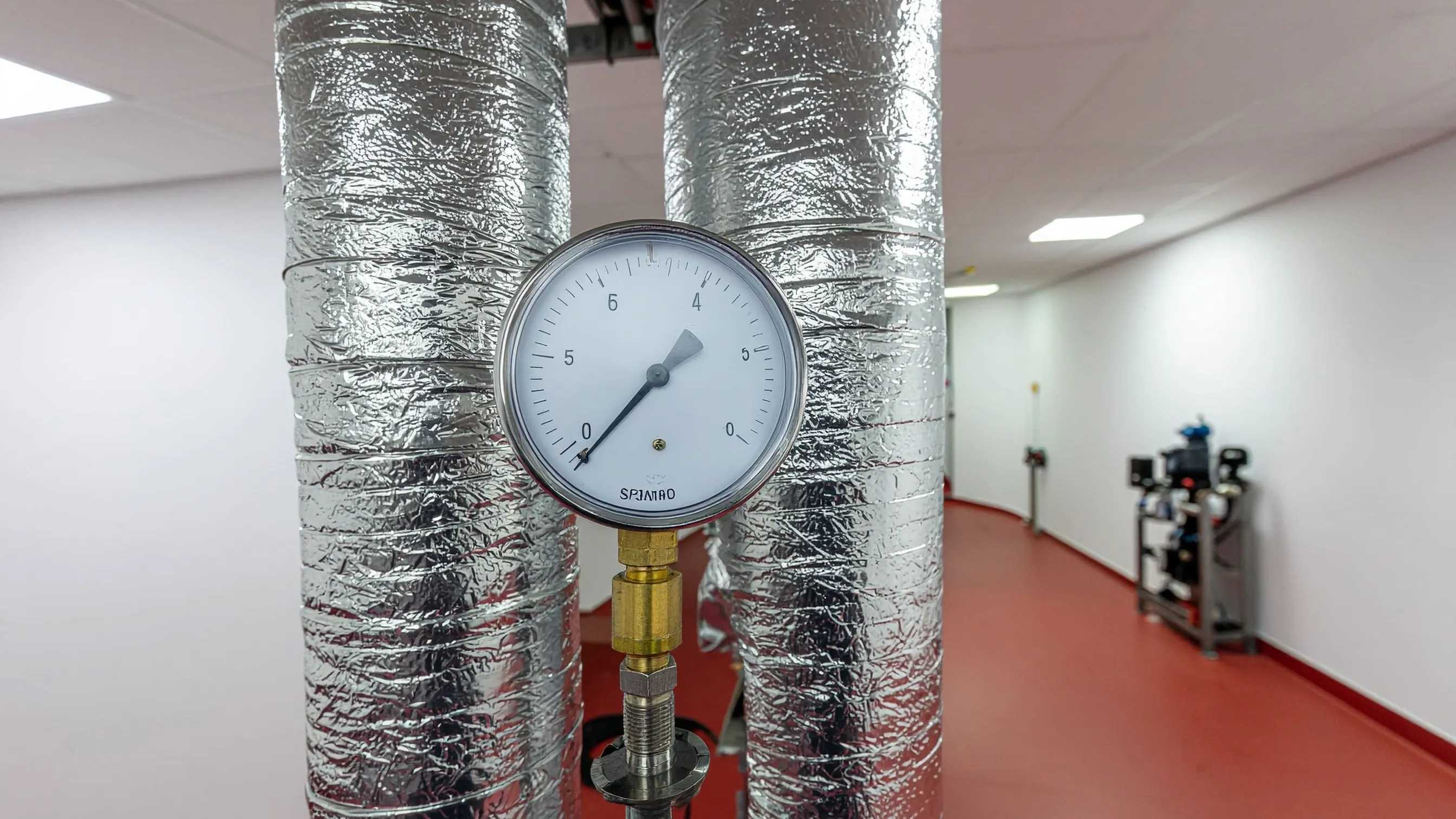
Bypass arrangements are mandatory because they allow essential maintenance without ever shutting down the heating system. Full-port isolation valves installed on both the inlet and outlet connections enable safe filter servicing whilst maintaining continuous facility operations. Pressure gauges located immediately before and after the filter clearly indicate loading conditions and verify proper flow during the initial commissioning.
Air venting prevents highly disruptive vapour locking inside the filtration chambers. You must install automatic air vents, strictly rated for your specific system temperature and pressure, at all high points. Generous drain connections also facilitate maintenance by allowing rapid filter flushing and providing highly convenient water sampling points for your monthly testing.
Integration with Water Treatment Programmes
Mechanical filtration perfectly complements chemical water treatment, but it certainly can't replace it entirely. Corrosion inhibitors, scale preventers, and biocides actively address dissolved contaminants that mechanical filters simply cannot capture. However, running physically clean water allows these expensive chemicals to work much more effectively at far lower concentrations.
Active monitoring of water quality parameters strictly guides your ongoing treatment decisions. Weekly testing for pH, conductivity, dissolved solids, and inhibitor levels ensures your systems remain within the manufacturer's specification. When these chemical parameters drift, it can cause severe cavitation or seal damage to a hardworking lowara water pump.
Maintaining incredibly steady system pressure is also crucial for preventing fresh air ingress, which actively drives new corrosion. Equipment like Mikrofill pressurisation units work synergistically with your filtration setup by keeping the system pressure completely constant. Together, Mikrofill pressurisation units and a robust magnetic separation filter achieve exceptional water quality standards.
Essential Monitoring and Maintenance Checklist
Even the most advanced filtration equipment requires structured human oversight. Establishing a strict baseline during commissioning enables highly accurate predictive maintenance later on. Work through this routine checklist to guarantee optimal performance and prevent unexpected failures:
- Record the initial pressure drop, side-stream flow rates, and water clarity during the system commissioning phase.
- Perform weekly visual inspections through the equipment sight glasses during the initial heavy cleanup phase.
- Check filter differential pressure gauges weekly, as elements will blind rapidly during the first month of operation.
- Manually clean the heavy-duty magnetic separation filter quarterly in moderately contaminated commercial systems, not annually.
- Replace the mechanical filter bag or cartridge immediately once the differential pressure reaches the manufacturer's specified limit, which is typically every three to six months.
Economic Analysis and Return on Investment
A facilities manager at a large university campus was forced to replace a massive commercial boiler every five years due to severe sludge buildup. After investing in a comprehensive magnetic separation filter on the return header, they entirely stopped the magnetite accumulation. This single intervention extended their remaining boiler lifespans by over fifteen years and saved them countless hours of emergency winter maintenance.
Energy savings always provide the most immediate financial returns for facility budgets. A 10% improvement in heat transfer efficiency on a massive commercial gas bill delivers spectacular, undeniable financial savings. Reduced power consumption also plays a major part, as clean systems require far less pressure for a central heating system pump to maintain its critical design flow rates.
Equipment life extension provides massive long-term value that property owners simply can't ignore. Boilers and chillers operating in perfectly clean systems achieve significantly longer service lives compared to those running in heavily contaminated conditions. Deferring heavy capital replacement represents massive annual value through entirely avoided expenditure.
Common Pitfalls and Troubleshooting Solutions
Undersizing remains the most frequent implementation error across the commercial industry. Specifying filters based on the full system flow rather than dedicated side-stream flow rates results in excessive pressure drop and incredibly rapid blinding. Proper engineering calculations considering the actual side-stream requirements prevent this expensive issue completely.
Poor bypass arrangements complicate basic maintenance and ruin system reliability. Failing to install proper pump valves and convenient drain points during the initial setup costs marginally less, but it wastes significant time during operation. Retrofitting these simple components later proves incredibly expensive and highly disruptive to the building.
Neglecting your water chemistry whilst relying solely on physical filtration leads directly to ongoing corrosion. A physical filter removes suspended iron solids beautifully, but it can't magically fix dissolved oxygen or highly acidic pH levels. Maintaining comprehensive, chemically balanced water treatment programmes ensures complete system protection.
Conclusion
Side-stream filtration technology has finally matured into an absolutely essential component of large commercial heating network design. The powerful combination of verified energy savings, drastically reduced maintenance costs, and extended equipment life delivers highly compelling returns on your investment. It also actively supports modern facility sustainability objectives through drastically reduced gas consumption.
Long-term success depends entirely on proper system engineering, high-quality installation, and seamless integration with a comprehensive chemical water treatment programme. When these critical elements align perfectly, commercial building operators achieve highly reliable heating performance with very minimal mechanical intervention.
If you are a facility manager considering vital system retrofits or an engineer specifying new commercial layouts, professional guidance guarantees optimal outcomes. Please Get the Right Solution from our technical experts to ensure your commercial heating network performs flawlessly for decades to come.